Connect with us

Business

Google Cloud CEO lays out 3-part AI plan after identifying it as the ‘most problematic thing’

Published

on


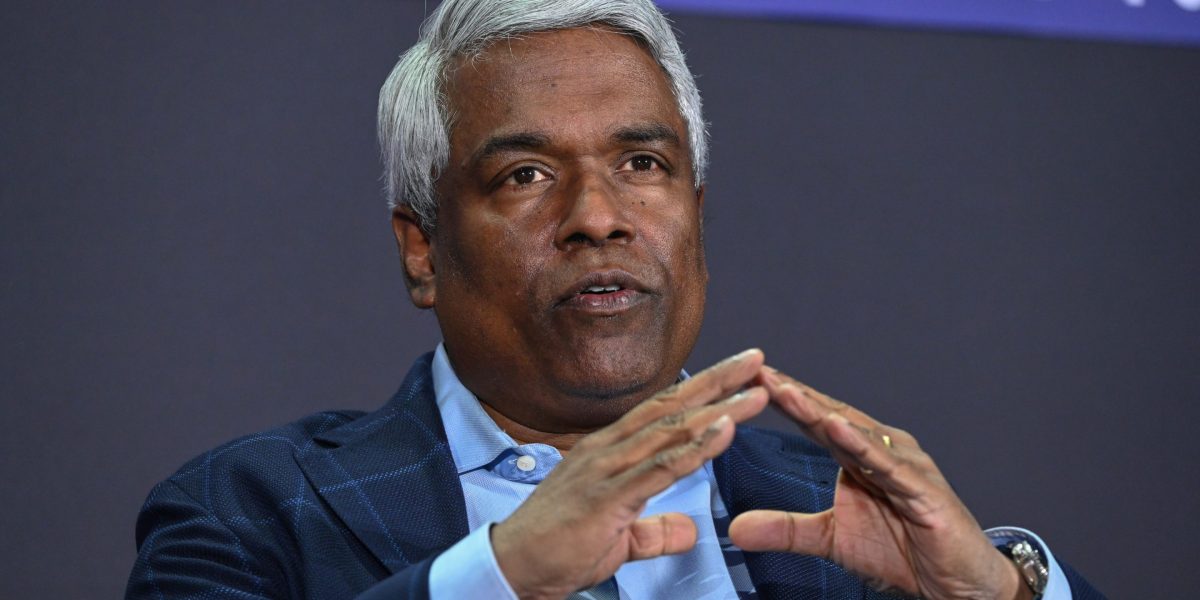
The immense electricity needs of AI computing was flagged early on as a bottleneck, prompting Alphabet’s Google Cloud to plan for how to source energy and how to use it, according to Google Cloud CEO Thomas Kurian.

Speaking at the Fortune Brainstorm AI event in San Francisco on Monday, he pointed out that the company—a key enabler in the AI infrastructure landscape—has been working on AI since well before large language models came along and took the long view.

“We also knew that the the most problematic thing that was going to happen was going to be energy, because energy and data centers were going to become a bottleneck alongside chips,” Kurian told Fortune’sAndrew Nusca. “So we designed our machines to be super efficient.”

The International Energy Agency has estimated that some AI-focused data centers consume as much electricity as 100,000 homes, and some of the largest facilities under construction could even use 20 times that amount.

At the same time, worldwide data center capacity will increase by 46% over the next two years, equivalent to a jump of almost 21,000 megawatts, according to real estate consultancy Knight Frank.  

At the Brainstorm event, Kurian laid out Google Cloud’s three-pronged approach to ensuring that there will be enough energy to meet all that demand.

First, the company seeks to be as diversified as possible in the kinds of energy that power AI computation. While many people say any form of energy can be used, that’s actually not true, he said.

“If you’re running a cluster for training and you bring it up and you start running a training job, the spike that you have with that computation draws so much energy that you can’t handle that from some forms of energy production,” Kurian explained.

The second part of Google Cloud’s strategy is being as efficient as possible, including how it reuses energy within data centers, he added.

In fact, the company uses AI in its control systems to monitor thermodynamic exchanges necessary in harnessing the energy that has already been brought into data centers.

And third, Google Cloud is working on “some new fundamental technologies to actually create energy in new forms,” Kurian said without elaborating further.

Earlier on Monday, utility company NextEra Energy and Google Cloud said they are expanding their partnership and will develop new U.S. data center campuses that will include with new power plants as well.

Tech leaders have warned that energy supply is critical to AI development alongside innovations in chips and improved language models.

The ability to build data centers is another potential chokepoint as well. Nvidia CEO Jensen Huang recently pointed out China’s advantage on that front compared to the U.S.

“If you want to build a data center here in the United States, from breaking ground to standing up an AI supercomputer is probably about three years,” he said at the Center for Strategic and International Studies in late November. “They can build a hospital in a weekend.”


Source link

Continue Reading

Business

AI is taking over managers’ busywork—and it’s forcing companies to reset expectations

Published

on


AI isn’t just a new tool for the modern workplace; it’s already quietly reshaping how some companies are organized. Companies including Amazon, Moderna, and McKinsey are already eliminating management layers, working to flatten organizations, and deploying AI agents to automate routine work. 

As AI rewrites the corporate org chart, humans can avoid some managerial drudgery, according to industry leaders at Fortune’s Brainstorm AI conference. Managers currently spend a lot of time bogged down with digital tools and administrative tasks, Danielle Perszyk, a Cognitive Scientist at Amazon’s AGI SF Lab, said: “Whether you are a manager or an IC, you are tethered to your computer screen, and all of the productivity apps that we are using are actually undermining our productivity.”

AI agents functioning as “universal teammates” and doing some of these tasks could help managers escape this cycle, Perszyk said, allowing them to focus on strategy. Aashna Kircher, Group General Manager in the Office of the CHRO at Workday, said this could free up managers’ time for other kinds of work. “The role of the manager will very much be as a coach and enabler and a team work director, which theoretically has always been the role,” she said.

Toby Roberts, SVP of Engineering and Technology at Zillow, said that the shift toward AI agents could fundamentally change management structure. Escaping day-to-day minutiae could allow managers to oversee larger teams, he said.

However, as AI automates more of managers’ work, companies may need to reset expectations around what management means in the AI age.

“Historically, we’ve measured management by the output of their teams, not necessarily by the human qualities of being a manager,” Kircher said. Organizations need to build “accountability and incentive structures around rewarding the things that are going to be absolutely critical moving forward for people leaders.”

What AI can’t do

AI can also have negative downstream effects on interpersonal relationships if it is overused or misused. When managers over-rely on AI for collaborative work, organizations risk deteriorating people’s ability to work together effectively, said to Kate Niederhoffer, Chief Scientist and Head of BetterUp Labs.

“Direct reports’ perceptions of managers go down the more they perceive AI and agents to be used in moments of recognition or providing constructive feedback,” Niederhoffer said. “People perceive that humans are better at these empathetic and more essentially human tasks.”

Some managers already struggle with the emotional side of leadership, with many becoming “accidental managers”—employees who were promoted for their professional talents rather than people skills. 

But AI’s “synthetic empathy”—even if it’s sometimes more consistent than human interactions—is not the answer, said Stefano Corazza, Head of AI Research at Canva. “The more AI there is, the more authenticity is valued,” he said. “If your manager really shows that he will spend time with you and cares, that goes a long way.”


Source link

Continue Reading

Business

Jeff Williams, who just retired from Apple after 27 years, got called to join Disney’s board

Published

on


The Walt Disney Company is looking to expand its board of directors, and it’s nominated Jeff Williams, the former Apple COO once considered heir apparent to CEO Tim Cook, to join. Williams, who served as Apple’s chief operating officer from 2015 until stepping down in July and finally retiring on Nov. 15, will stand for election as an independent director at Disney’s 2026 annual shareholders meeting.

“Jeff Williams is a highly accomplished executive who for decades helped steward one of the most innovative and admired companies that serves billions of consumers across the globe,” James Gorman, chairman of the board at Disney, said in a press release. “Jeff’s proven leadership and unique experience at the intersection of technology, global operations and product design make him a valuable nominee to our board as the company continues to focus on creative storytelling and groundbreaking innovation.”

​Adding Williams, an Apple veteran of 27 years, would expand Disney’s board from 10 to 11 members. The current board includes James Gorman as chairman, along with GM CEO Mary Barra; former Cisco executive Amy Chang; former Sky CEO Jeremy Darroch; Permira senior advisor Carolyn Everson; Michael Froman, president of the Council on Foreign Relations; Disney CEO Bob Iger; WE Family offices CEO and managing partner Maria Elena Lagomasino, Lululemon CEO Calvin McDonald, and former CVS president Derica Rice.

The nomination comes at a critical time for Disney. The company is investing heavily in AI, mixed-reality experiences, and streaming technology as it works to modernize its business model. Disney has established an Office of Technology Enablement to pioneer AI-driven personalization across its platforms, while Iger has described plans to transform Disney+ into “a portal to all things Disney” using AI.

Williams brings a track record that aligns closely with these priorities. During his nearly three decades at Apple, he was responsible for launching the Apple Watch and architecting the company’s health and fitness strategy. He also oversaw Apple’s design team after its longtime chief Jony Ive retired in 2019, while also managing the company’s global supply chain, service, and support functions.

“I have long admired Disney’s legacy of pairing imagination with innovation—leveraging new technologies in bold, creative ways to bring to life timeless stories and entertain its guests,” Williams said in a statement. “It is an honor to be nominated to the board of this storied company. I look forward to working with Disney’s talented leadership team and contributing to the company’s ongoing journey of creativity and excellence.”

Williams joined Apple in 1998 as head of worldwide procurement and played a key role in rescuing the very first iPhone launch in 2007 from becoming a total disaster. He was promoted to vice president of operations in 2004 and became COO in 2015. Two years prior to that, in 2013, he began leading the Apple Watch project, which launched in 2015, and subsequently spearheaded the company’s expansion into health and fitness.

His retirement from Apple was announced in July, with Williams saying he wanted to “spend more time with friends and family, including five grandchildren and counting.” He officially left the company last month after a transition period during which he continued overseeing Apple’s design team directly under Cook. Sabih Khan, who had been serving as senior vice president of operations, succeeded Williams as COO.

Disney shareholders will vote on Williams’ election, along with the re-election of the company’s current 10 directors, at the 2026 annual meeting, which will likely be in March or April. The board is also leading the succession process for Iger. Last October, Gorman said the company expects to name his successor in early 2026; his current contract runs through December 2026. ​


Source link

Continue Reading

Business

Instacart may be jacking up grocery prices using AI, study shows—a practice called ‘smart rounding’

Published

on


Instacart tried to replace “Yesterday’s price is not today’s price” with “Today’s price might not be the same price for everyone.” The online grocery giant is experimenting with algorithmic pricing that can cost shoppers an extra $1,200 per year, a study released yesterday found.

The methodology: In September, Consumer Reports and the progressive think tank Groundwork Collaborative used ~200 volunteers to check prices on 20 items in four cities. The volunteers simultaneously chose the same product from the same store and found price differences in ~75% of items. Costco, Kroger, Safeway, and Target were among the retailers included.

The price is not right for everyone

  • Instacart uses pricing tools from Eversight, an AI company it purchased in 2022, that can create as much as a 23% increase in prices for customers and 2%–5% jump in profit for stores, according to CR.
  • Experts told CR that Instacart was testing customers’ price sensitivity. This was confirmed when an email between Instacart and Costco that called the practice “smart rounding” was accidentally sent to CR by Costco.

Shop of horrors: This type of dynamic pricing, which has proliferated in the age of AI, can contribute to steeper costs, according to an academic paper released this year. And Instacart is all in on AI: The company and OpenAI just announced a partnership that will allow customers to cook up recipes in ChatGPT and pay for groceries without leaving the chat interface.—DL

This report was originally published by Morning Brew.

Join us at the Fortune Workplace Innovation Summit May 19–20, 2026, in Atlanta. The next era of workplace innovation is here—and the old playbook is being rewritten. At this exclusive, high-energy event, the world’s most innovative leaders will convene to explore how AI, humanity, and strategy converge to redefine, again, the future of work. Register now.


Source link

Continue Reading

Trending

Copyright © Miami Select.