Connect with us

Business

Google and Character.AI agree to settle lawsuits over teen suicides linked to AI chatbots

Published

on


Google and Character.AI have agreed to settle multiple lawsuits filed by families whose children died by suicide or experienced psychological harm allegedly linked to AI chatbots hosted on Character.AI’s platform, according to court filings. The two companies have agreed to a “settlement in principle,” but specific details have not been disclosed, and no admission of liability appears in the filings. 

The legal claims included negligence, wrongful death, deceptive trade practices, and product liability. The first case filed against the tech companies concerned a 14-year-old boy, Sewell Setzer III, who engaged in sexualized conversations with a Game of Thrones chatbot before he died by suicide. Another case involved a 17-year-old whose chatbot allegedly encouraged self-harm and suggested murdering parents was a reasonable way to retaliate against them for limiting screen time. The cases involve families from multiple states, including Colorado, Texas, and New York.

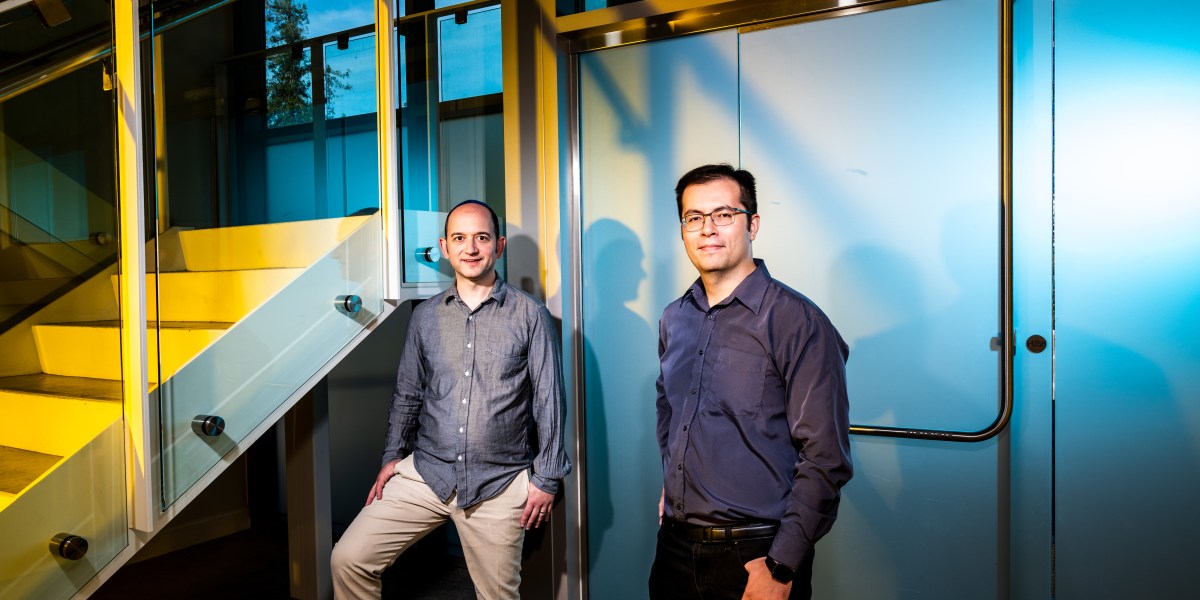
Founded in 2021 by former Google engineers Noam Shazeer and Daniel De Freitas, Character.AI enables users to create and interact with AI-powered chatbots based on real-life or fictional characters. In August 2024, Google re-hired both founders and licensed some of Character.AI’s technology as part of a $2.7 billion deal. Shazeer now serves as co-lead for Google’s flagship AI model Gemini, while De Freitas is a research scientist at Google DeepMind.

Lawyers have argued that Google bears responsibility for the technology that allegedly contributed to the death and psychological harm of the children involved in the cases. They claim Character.AI’s co-founders developed the underlying technology while working on Google’s conversational AI model, LaMDA, before leaving the company in 2021 after Google refused to release a chatbot they had developed.

Google did not immediately respond to a request for comment from Fortune concerning the settlement. Lawyers for the families and Character.AI declined to comment.

Similar cases are currently ongoing against OpenAI, including lawsuits involving a 16-year-old California boy whose family claims ChatGPT acted as a “suicide coach,” and a 23-year-old Texas graduate student who allegedly was goaded by the chatbot to ignore his family before dying by suicide. OpenAI has denied the company’s products were responsible for the death of the 16-year-old, Adam Raine, and previously said the company was continuing to work with mental health professionals to strengthen protections in its chatbot.

Character.AI bans minors

Character.AI has already modified its product in ways it says improve its safety, and which may also protect it from further legal action. In October 2025, amid mounting lawsuits, the company announced it would ban users under 18 from engaging in “open-ended” chats with its AI personas. The platform also introduced a new age-verification system to group users into appropriate age brackets.

The decision came amid increasing regulatory scrutiny, including an FTC probe into how chatbots affect children and teenagers.

The company said the move set “a precedent that prioritizes teen safety,” and goes further than competitors in protecting minors. However, lawyers representing families suing the company told Fortune at the time they had concerns about how the policy would be implemented and raised concerns about the psychological impact of suddenly cutting off access for young users who had developed emotional dependencies on the chatbots.

Growing reliance on AI companions

The settlements come at a time when there is a growing concern about young people’s reliance on AI chatbots for companionship and emotional support.

A July 2025 study by the U.S. nonprofit Common Sense Media found that 72% of American teens have experimented with AI companions, with over half using them regularly. Experts previously told Fortune that developing minds may be particularly vulnerable to the risks posed by these technologies, both because teens may struggle to understand the limitations of AI chatbots and because rates of mental health issues and isolation among young people have risen dramatically in recent years.

Some experts have also argued that the basic design features of AI chatbots—including their anthropomorphic nature, ability to hold long conversations, and tendency to remember personal information—encourage users to form emotional bonds with the software.


Source link

Continue Reading

Business

Trump calls for one-year cap on credit card rates at 10%

Published

on


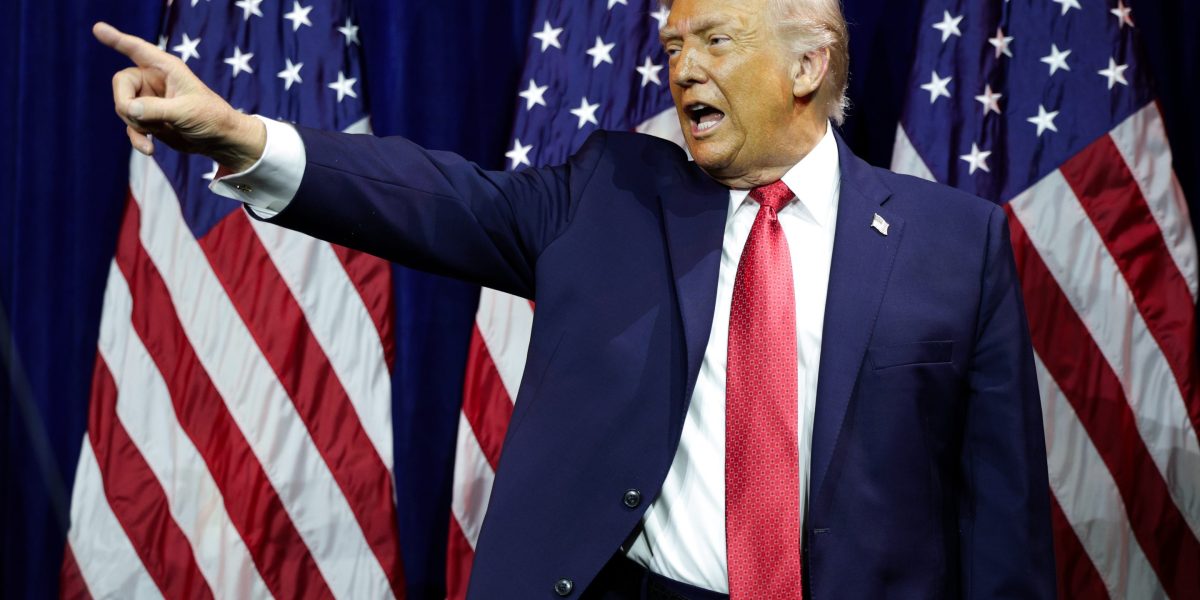
President Donald Trump on Friday called for a one-year cap on credit card interest rates at 10%, effective Jan. 20, without specifying details.

“Please be informed that we will no longer let the American Public be ‘ripped off’ by Credit Card Companies that are charging Interest Rates of 20 to 30%, and even more, which festered unimpeded during the Sleepy Joe Biden Administration. AFFORDABILITY!” he wrote on social media.

It’s not clear whether credit card companies will respond to his call, or what actions he might take to force any change.

The post comes as the Trump administration intensifies efforts to demonstrate to voters that the president is addressing concerns about costs and prices that have emerged as a central issue in the November midterm elections.

During the 2024 presidential campaign, Trump pledged to seek limits on the interest credit card companies can charge.

Hours before his message on Friday, Senator Bernie Sanders, a Vermont independent, said on X: “Trump promised to cap credit card interest rates at 10% and stop Wall Street from getting away with murder. Instead, he deregulated big banks charging up to 30% interest on credit cards.”

In a letter last year to Sanders and Senator Josh Hawley, a Missouri Republican, a group of banking trade groups painted a dire outcome for consumers if the government ever capped interest rates on credit cards at 10%, as the senators had proposed.

“Many consumers who currently rely on credit cards would be forced to turn elsewhere for short-term financing needs, including pawn shops, auto title lenders or worse — such as loan sharks, unregulated online lenders and the black market,” the group wrote.

The Bank Policy Institute said in a report last year that “while the proposed cap is a well-intentioned effort to reduce the high debt burden some households are facing, it would harm consumers’ access to card credit.” The group also said such a move could force card issuers to reduce cardholder benefits, including lucrative rewards tied to purchases. 

Responding to Trump’s post on Friday, Hawley said on X: “Fantastic idea. Can’t wait to vote for this.”


Source link

Continue Reading

Business

Asian households still save as much as half their wealth in cash. Fintech platforms like Syfe want to change that

Published

on


Growing up in India, Dhruv Arora’s mother gave him one key piece of financial advice: Put his money in the bank. 

But Arora, now the founder of Singapore-based fintech platform Syfe, quickly realized that following his mother’s advice meant his money “did absolutely nothing.”

“We have quite a heavy culture of saving,” Arora says, citing Asia’s often unstable economic and policy history. But inflation and low interest rates end up eroding the value of household savings. “Over time, the $100 you put in the bank doesn’t become $101, but effectively $98” due to the effects of inflation.

Asian households sometimes keep as much as 50% of their net worth in cash, rather than in investments or assets. In contrast, in developed markets like the U.S. and Europe, that figure is closer to 15%. 

But that conservative attitude in Asia is starting to change. Asians are getting wealthier, pushing them to explore different investment options. Strong stock market performance is also driving a new wave of retail investors across the Asia-Pacific.

“Asian households are slowly dipping their toes into stock markets,” HSBC economists wrote in a Jan. 9 report, though noted that “overall equity investment remains quite low.” The bank predicts that a steady shift from low-yield cash to higher-yield investments will mean “more money will continue to rotate into equity markets over the next few years,” reducing a reliance on foreign investors. 

A slew of fintech apps have emerged in recent years to tap a growing interest in investing and wealth management among Asian users. These alternative finance platforms, such as Syfe, Stashaway and Endowus, often offer a range of investment options, ranging from cash management to managed portfolios and options trading. The challenge, Arora says, is how to “bridge the gap between holding money and growing wealth,” and “give more people the confidence to put their savings to work.”

Arora began his career as an investment banker for UBS in Hong Kong in 2008, soon after the Global Financial Crisis. Despite Asia’s relatively quick recovery, Arora noticed that the region’s professionals were building wealth yet didn’t know how to manage it. “These were smart people like doctors, lawyers and consultants, who were doing well professionally, but just did not know what to do with their money,” he says. 

He launched Syfe in 2019, just a few months before another global crisis: The COVID-19 pandemic. Yet the pandemic ended up being an opportunity for fintech platforms like Syfe. “It acted as a catalyst for a shift in investor behavior,” Arora explained, as people suddenly had the time to engage with financial markets.

In the U.S., for example, people stuck at home began to get involved in stock trading through platforms like Robinhood. Fueled by social media, these retail investors began to heavily trade in so-called meme stocks like Gamestop and AMC.

Syfe has since expanded from its home market of Singapore to new Asia-Pacific economies like Australia and Hong Kong. The platform continues to grow both its userbase and company revenue, and the company claimed it reached profitability in Q4 2025. It’s now a “self-sustaining organization,” Arora says. 

Syfe closed an $80 million Series C funding round last year, and is backed by major investors like NYC-based Valar Ventures and UK-based investment firm Unbound.

The platform’s users generated $2 billion worth of returns while saving $80 million in fees last year, according to the company. 

Currently, Arora wants to deepen Syfe’s presence in its existing markets. Last year, the platform began to roll out bespoke offerings for its users, like private credit for accredited investors looking to diversify their portfolios on Syfe. Syfe will launch options trading in 2026.

Arora notes that many of Syfe’s users, over time, have grown more comfortable with taking larger investment risks, moving from putting their money in Syfe-managed portfolios, to more actively trading on brokerages and income portfolios.

Yet he eventually wants to bring Syfe to new markets in North Asia and the Middle East, which boast sizable populations of what Arora terms the “mass affluent,” a population with significant investable assets and higher-than-average incomes, though still not in the high-net-worth category. 

“This demographic has historically been ‘stuck in the middle’: too large for basic retail banking, yet often underserved by traditional private banks,” he explains.

This story was originally featured on Fortune.com


Source link

Continue Reading

Business

Lawmakers and victims criticize new limits on Grok’s AI image as ‘insulting’ and ‘not effective’

Published

on


Elon Musk’s xAI has restricted its AI chatbot Grok’s image generation capabilities to paying subscribers only, following widespread condemnation over its use to create non-consensual sexualized images of real women and children.

“Image generation and editing are currently limited to paying subscribers,” Grok announced via X on Friday. The restriction means the vast majority of users can no longer access the feature. Paying, verified subscribers with credit card details on file can still do so, but theoretically they can be identified more easily if the function is misused.

However, experts, regulators, and victims say that the new restrictions aren’t a solution to the now widespread problem.

“The argument that providing user details and payment methods will help identify perpetrators also isn’t convincing, given how easy it is to provide false info and use temporary payment methods,” Henry Ajder, a UK-based deepfakes expert, told Fortune. “The logic here is also reactive: it is supposed to help identify offenders after content has been generated, but it doesn’t represent any alignment or meaningful limitations to the model itself.”

The UK government has called the move “insulting” to victims, in remarks reported by the BBC. The UK’s prime minister’s spokesperson told reporters on Friday that the change “simply turns an AI feature that allows the creation of unlawful images into a premium service.

“It is time for X to grip this issue; if another media company had billboards in town centers showing unlawful images, it would act immediately to take them down or face public backlash,” they said.

A representative for X said they were “looking into” the new restrictions. xAI responded with the automated message: “Legacy Media Lies.”

Over the past week real women have been targeted at scale with users manipulating photos to remove clothing, place subjects in bikinis, or position them in sexually explicit scenarios without their consent. Some victims reported feeling violated and disturbed by the trend, with many saying their reports to X went unanswered and images remained live on the platform.

Researchers said the scale at which Grok was producing and sharing images was unprecedented as, unlike other AI bots, Grok essentially has a built-in distribution system in the X platform. 

One researcher, whose analysis was published by Bloomberg, estimated that X has become the most prolific site for deepfakes over the last week. Genevieve Oh, a social media and deepfake researcher who conducted a 24-hour analysis of images the @Grok account posted to X, found that the chatbot was producing roughly 6,700 sexually suggestive or nudifying images per hour. By comparison, the five other leading websites for sexualized deepfakes averaged 79 new AI undressing images hourly during the same period. Oh’s research also found that sexualized content dominated Grok’s output, accounting for 85% of all images the chatbot generated.

Ashley St. Clair, a conservative commentator and mother of one of Musk’s children, was among those affected by the images. St. Clair told Fortune that users were turning images on her X profile into explicit AI-generated photos of her, including some she said depicted her as a minor. After speaking out against the images and raising concerns about deepfakes on minors, St Clair also said X took away her verified, paying subscribers status without notifying her or refunding her for the $8 per month fee.

“Restricting it to the paid-only user shows that they’re going to double down on this, placing an undue burden on the victims to report to law enforcement and law enforcement to use their resources to track these people down,” Ashley St Clair said of the recent restrictions. “It’s also a money grab.”

St Clair told Fortune that many of the accounts targeting her were already verified users: “It’s not effective at all,” she said. “This is just in anticipation of more law enforcement inquiries regarding Grok image generation.”

Regulatory pressure

The move to limit Grok’s capabilities comes amid mounting pressure from regulators worldwide. In the U.K., Prime Minister Keir Starmer has indicated he is open to banning the platform entirely, describing the content as “disgraceful” and “disgusting.” Regulators in India, Malaysia, and France have also launched investigations or probes.

The European Commission on Thursday ordered X to preserve all internal documents and data related to Grok, stepping up its investigation into the platform’s content moderation practices after describing the spread of nonconsensual sexually explicit deepfakes as “illegal,” “appalling,” and “disgusting.”

Experts say the new restrictions may not satisfy regulators’ concerns: “This approach is a blunt instrument that doesn’t address the root of the problem with Grok’s alignment and likely won’t cut it with regulators,” Ajder said. “Limiting functionality to paying users will not stop the generation of this content; a month’s subscription is not a robust solution.”

In the U.S., the situation is also likely to test existing laws, like Section 230 of the Communications Decency Act, which shields online providers from liability for content created by users. U.S. Senators Ron Wyden, Edward J. Markey, and Ben Ray Luján have issued a statement urging Apple and Google to “immediately remove the X and Grok apps from their app stores” following Grok’s alleged use for generating “nonconsensual sexualized images of women and children at scale.” The lawmakers called the images “disturbing and likely illegal,” and said the apps should remain unavailable until Musk addresses the concerns.

The Council on American-Islamic Relations (CAIR) has also called for Grok to be blocked from generating “sexually explicit images of children and women, including prominent Muslim women.”

Riana Pfefferkorn of Stanford’s Institute for Human-Centered Artificial Intelligence previously told Fortune that liability surrounding AI-generated images is murky. “We have this situation where for the first time, it is the platform itself that is at scale generating non-consensual pornography of adults and minors alike,” she said. “From a liability perspective as well as a PR perspective, the CSAM laws pose the biggest potential liability risk here.”

Musk has previously stated that “anyone using Grok to make illegal content will suffer the same consequences as if they upload illegal content.” However, it remains unclear how accounts will be held accountable.


Source link

Continue Reading

Trending

Copyright © Miami Select.