Connect with us

Business

Goldman’s chief information officer has 4 tips on how to AI-proof your career, including ‘posing provocative, non-obvious questions’

Published

on


As artificial intelligence continues to reshape workplaces around the world, Goldman Sachs Chief Information Officer Marco Argenti believes professionals can thrive—not by competing with machines, but by learning how to conduct, question, and collaborate with them.

In Friday’s edition of Goldman’s briefings newsletter, Argenti outlined four strategies on “How to Get the Most out of AI in Your Career” as autonomous agents increasingly take on complex tasks once reserved for humans.

1. Become a Conductor, Not Just a Doer

Argenti argues that the modern professional must evolve from executing work to orchestrating it. Success, he explains, will no longer hinge on the code one personally writes or the analysis one single-handedly produces. Instead, the mark of leadership will be managing agile teams of human and AI collaborators—delegating, coordinating, and integrating outputs to achieve greater results than either type of contributor could alone. “Your ability to manage a hybrid team of human and AI resources” will be key to thriving, Argenti says.

2. Ask Provocative, Non-Obvious Questions

One of the most valuable human skills in an AI-driven environment is curiosity, according to Argenti, who urged employees to “get creative with AI, posing provocative, non-obvious questions.” While AI systems excel at synthesizing existing data, they struggle to generate breakthroughs without human provocation. By posing bold, imaginative, and sometimes unconventional questions, people can push AI beyond predictable patterns and uncover insights that would otherwise remain hidden. “While AI excels at refurbishing existing knowledge,” Argenti writes, “its true creative potential is unlocked by human curiosity.”

Rahsaan Shears, principal and aIQ program lead at KPMG U.S., previously told Fortune that AI adoption has moved from a “fear factor” that AI will displace most white-collar work to a “cognitive fatigue” as workers realize that AI’s maturity level is what she characterized as a “toddler” level. She said there’s a “persistent need for human engagement,” and critical thinking, questioning, and adaptability are increasingly valuable human skills to have.

3. Build a Personalized Toolkit of AI Models

Rather than relying on one dominant platform, Argenti advises professionals to curate a customized mix of AI tools suited to different tasks. No single model will outperform all others across the board, he notes. The key lies in knowing which system excels at which function—whether it’s data analysis, content generation, or coding—and assembling those systems into a tailored digital toolkit. “The expert will curate a personal toolkit of models and assistants,” according to Argenti, and “knowing which one to deploy for which task.”

4. Verify AI Outputs with Skepticism

Argenti cautions that even the most sophisticated AI systems can produce “plausible-sounding errors.” As these tools become more deeply integrated into workflows, validating their results will demand both domain expertise and investigative rigor. “A blend of deep knowledge and a detective’s skepticism,” he writes, will be essential to separate reliable insights from confident falsehoods.

KPMG’s Shears flagged this as a particular pitfall, telling Fortune that she’s seen a propensity among younger workers, supposedly “digital natives,” to trust their devices and technology. Because AI is “more early in its maturity, they need to be more skeptical, which is a different kind of relationship than they historically had from a digital interaction perspective.”

The Human Edge in the Age of AI

Argenti’s message is ultimately one of empowerment: AI is not replacing human talent but redefining what it means to be skilled. The future belongs to those who combine technological fluency with creativity, discernment, and leadership—the qualities that machines still struggle to replicate.

For this story, Fortune used generative AI to help with an initial draft. An editor verified the accuracy of the information before publishing. 

Fortune Global Forum returns Oct. 26–27, 2025 in Riyadh. CEOs and global leaders will gather for a dynamic, invitation-only event shaping the future of business. Apply for an invitation.


Source link

Continue Reading

Business

Trump says he’ll allow Nvidia to sell advanced chips to ‘approved customers’ in China

Published

on


President Donald Trump said Monday that he would allow Nvidia to sell an advanced type of computer chip used in the development of artificial intelligence to “approved customers” in China.

There have been concerns about allowing advanced computer chips to be sold to China as it could help the country better compete against the U.S. in building out AI capabilities, but there has also been a desire to develop the AI ecosystem with American companies such as chipmaker Nvidia.

The chip, known as the H200, is not Nvidia’s most advanced product. Those chips, called Blackwell and the upcoming Rubin, were not part of what Trump approved.

Trump said on social media that he had informed China’s leader Xi Jinping about his decision and “President Xi responded positively!”

“This policy will support American Jobs, strengthen U.S. Manufacturing, and benefit American Taxpayers,” Trump said in his post.

Nvidia said in a statement that it applauded Trump’s decision, saying the choice would support domestic manufacturing and that by allowing the Commerce Department to vet commercial customers it would “strike a thoughtful balance” on economic and national security priorities.

Trump said the Commerce Department was “finalizing the details” for other chipmakers such as AMD and Intel to sell their technologies abroad.

The approval of the licenses to sell Nvidia H200 chips reflects the increasing power and close relationship that the company’s founder and CEO, Jensen Huang, enjoys with the president. But there have been concerns that China will find ways to use the chips to develop its own AI products in ways that could pose national security risks for the U.S., a primary concern of the Biden administration that sought to limit exports.

Nvidia has a market cap of $4.5 trillion and Trump’s announcement appeared to drive the stock slightly higher in after hours trading.


Source link

Continue Reading

Business

Google Cloud CEO lays out 3-part AI plan after identifying it as the ‘most problematic thing’

Published

on


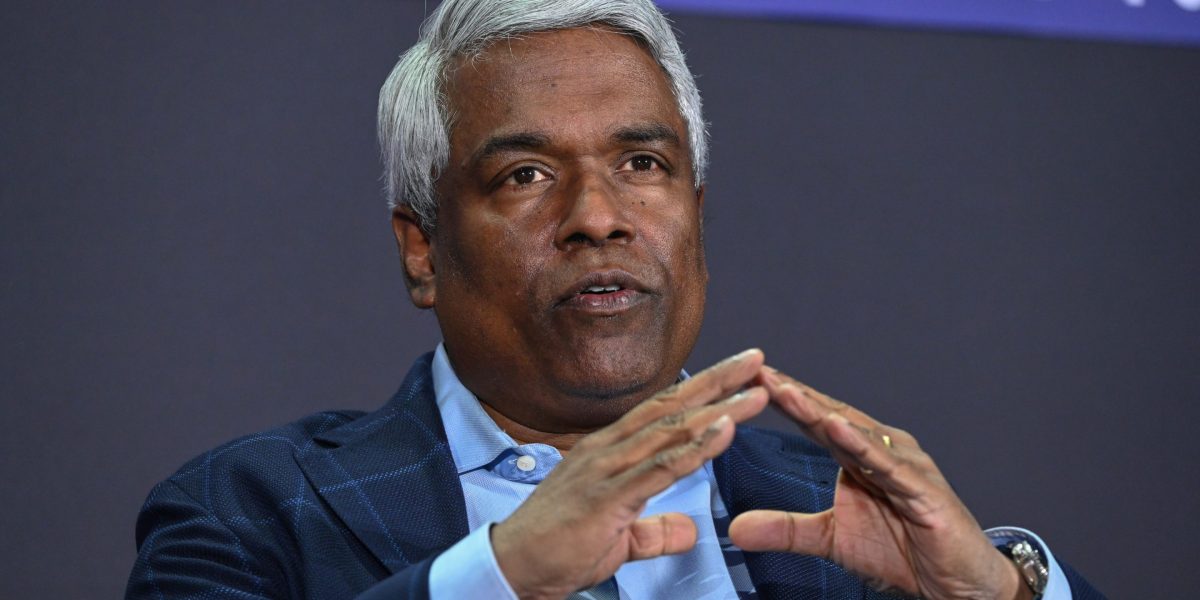
The immense electricity needs of AI computing was flagged early on as a bottleneck, prompting Alphabet’s Google Cloud to plan for how to source energy and how to use it, according to Google Cloud CEO Thomas Kurian.

Speaking at the Fortune Brainstorm AI event in San Francisco on Monday, he pointed out that the company—a key enabler in the AI infrastructure landscape—has been working on AI since well before large language models came along and took the long view.

“We also knew that the the most problematic thing that was going to happen was going to be energy, because energy and data centers were going to become a bottleneck alongside chips,” Kurian told Fortune’sAndrew Nusca. “So we designed our machines to be super efficient.”

The International Energy Agency has estimated that some AI-focused data centers consume as much electricity as 100,000 homes, and some of the largest facilities under construction could even use 20 times that amount.

At the same time, worldwide data center capacity will increase by 46% over the next two years, equivalent to a jump of almost 21,000 megawatts, according to real estate consultancy Knight Frank.  

At the Brainstorm event, Kurian laid out Google Cloud’s three-pronged approach to ensuring that there will be enough energy to meet all that demand.

First, the company seeks to be as diversified as possible in the kinds of energy that power AI computation. While many people say any form of energy can be used, that’s actually not true, he said.

“If you’re running a cluster for training and you bring it up and you start running a training job, the spike that you have with that computation draws so much energy that you can’t handle that from some forms of energy production,” Kurian explained.

The second part of Google Cloud’s strategy is being as efficient as possible, including how it reuses energy within data centers, he added.

In fact, the company uses AI in its control systems to monitor thermodynamic exchanges necessary in harnessing the energy that has already been brought into data centers.

And third, Google Cloud is working on “some new fundamental technologies to actually create energy in new forms,” Kurian said without elaborating further.

Earlier on Monday, utility company NextEra Energy and Google Cloud said they are expanding their partnership and will develop new U.S. data center campuses that will include with new power plants as well.

Tech leaders have warned that energy supply is critical to AI development alongside innovations in chips and improved language models.

The ability to build data centers is another potential chokepoint as well. Nvidia CEO Jensen Huang recently pointed out China’s advantage on that front compared to the U.S.

“If you want to build a data center here in the United States, from breaking ground to standing up an AI supercomputer is probably about three years,” he said at the Center for Strategic and International Studies in late November. “They can build a hospital in a weekend.”


Source link

Continue Reading

Business

Pepsi to cut product offering nearly 20% in deal with $4 billion activist Elliott

Published

on


PepsiCo plans to cut prices and eliminate some of its products under a deal with an activist investor announced Monday.

The Purchase, New York-based company, which makes Cheetos, Tostitos and other Frito-Lay products as well as beverages, said it will cut nearly 20% of its product offerings by early next year. PepsiCo said it will use the savings to invest in marketing and improved value for consumers. It didn’t disclose which products or how much it would cut prices.

PepsiCo said it also plans to accelerate the introduction of new offerings with simpler and more functional ingredients, including Doritos Protein and Simply NKD Cheetos and Doritos, which contain no artificial flavors or colors. The company also recently introduced a prebiotic version of its signature cola.

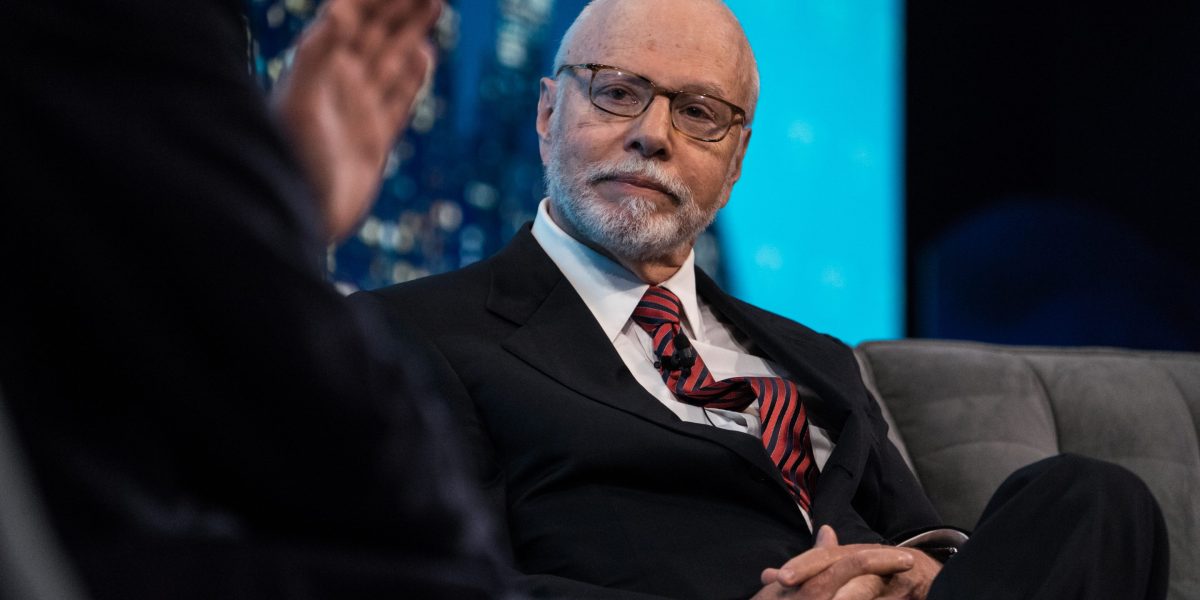
PepsiCo is making the changes after prodding from Elliott Investment Management, which took a $4 billion stake in the company in September. In a letter to PepsiCo’s board, Elliott said the company is being hurt by a lack of strategic clarity, decelerating growth and eroding profitability in its North American food and beverage businesses.

In a joint statement with PepsiCo Monday, Elliott Partner Marc Steinberg said the firm is confident that PepsiCo can create value for shareholders as it executes on its new plan.

“We appreciate our collaborative engagement with PepsiCo’s management team and the urgency they have demonstrated,” Steinberg said. “We believe the plan announced today to invest in affordability, accelerate innovation and aggressively reduce costs will drive greater revenue and profit growth.”

Elliott said it plans to continue working closely with the company.

PepsiCo shares were flat in after-hours trading Monday.

PepsiCo said it expects organic revenue to grow between 2% and 4% in 2026. The company’s organic revenue rose 1.5%. the first nine months of this year.

PepsiCo also said it plans to review its supply chain and continue to make changes to its board, with a focus on global leaders who can help it reach its growth and profitability goals.

“We feel encouraged about the actions and initiatives we are implementing with urgency to improve both marketplace and financial performance,” PepsiCo Chairman and CEO Ramon Laguarta said in a statement.

PepsiCo said in February that years of double-digit price increases and changing customer preferences have weakened demand for its drinks and snacks. In July, the company said it was trying to combat perceptions that its products are too expensive by expanding distribution of value brands like Chester’s and Santitas.


Source link

Continue Reading

Trending

Copyright © Miami Select.