Connect with us

Business

GoFundMe CEO says the economy is so bad that more of his customers are crowdfunding just to pay for their groceries

Published

on


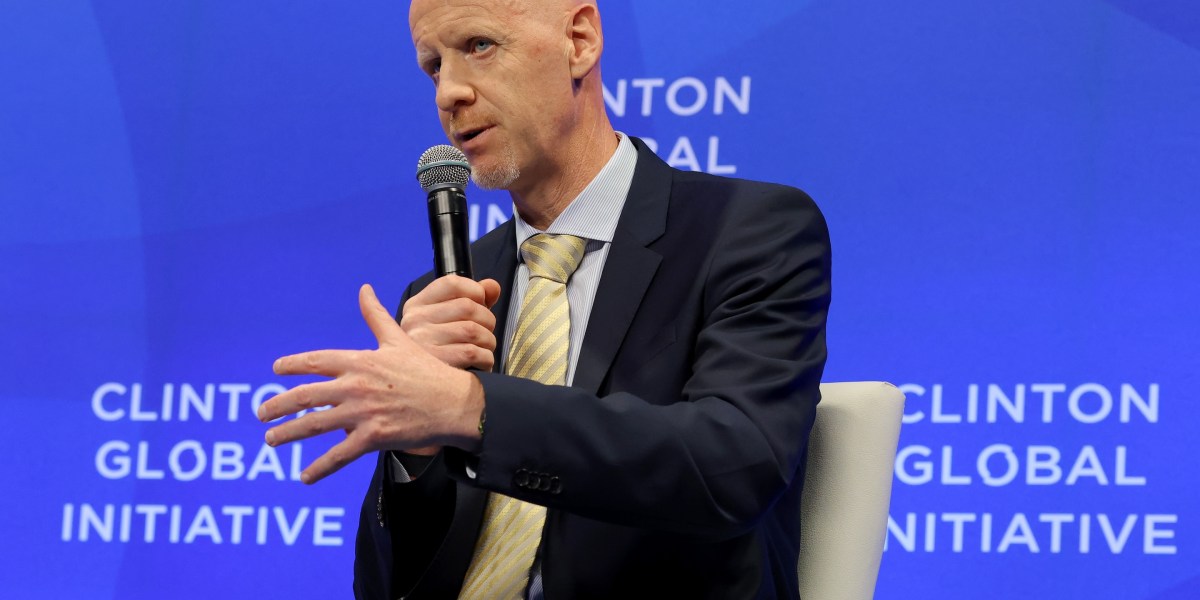
GoFundMe’s CEO just said the quiet part out loud: in this economy, more Americans are crowdfunding groceries to get by.

The head of GoFundMe, Tim Cadogan, told Yahoo! Finance the economy is so challenged that more Americans are raising money to buy food—an arresting data point that captures the widening gap between household budgets and basic needs.

In a recent interview on the Opening Bid Unfiltered podcast with Brian Sozzi, he described a notable rise in campaigns for essentials like groceries, a shift from one-off emergencies toward everyday survival.

“Basic things you need to get through life [have] gone up significantly in the last three years in practically all our markets,” Cadogan said.

That evolution underscores the new economic reality for many Americans: persistent inflation, higher borrowing costs, and thin financial cushions are forcing many households to triage bills, juggle debt, and seek help in new ways.

Groceries as the new emergency

Cadogan’s observation—that more people are asking strangers to help pay for staples—marks a sobering turn for a platform historically associated with medical bills, disaster relief, and community projects. When the cost of food stretches paychecks past the breaking point, crowdfunding morphs from altruism to a parallel safety net.

In previous Fortune coverage of inflation’s long tail, consumers’ coping tactics have included trading down brands, shrinking baskets, delaying car repairs, and leaning on credit cards. The shift Cadogan describes suggests those tactics have run out of runway for a growing slice of the country, especially younger and lower-income households who rent, commute, and carry variable-rate debt.

The inflation aftershock

Even as headline inflation cools from its peak, elevated price levels remain embedded in household budgets. Fortune has tracked how cumulative inflation, not just the monthly prints, weighs on families. For instance, groceries cost more than they did two or three years ago, rents have reset higher, and child care is straining paychecks.

Wage gains helped many workers, but unevenly and often after costs had already jumped. For families without savings buffers, a higher cost baseline is the real story. That backdrop explains why an uptick in grocery campaigns on GoFundMe isn’t a curiosity—it’s a barometer of the current economy.

The credit crunch at the kitchen table

Household balance sheets have been whipsawed by stubbornly high prices on necessities as well as steeper borrowing costs on credit cards and auto loans. Fortune’s reporting has highlighted rising delinquency rates among younger borrowers and the squeeze from student loan repayments resuming after a long pause. For some, the social capital of friends, community groups, and online donors now substitutes for financial capital. Crowdfunding groceries is a last-mile solution in a system where wages, benefits, and public supports haven’t fully bridged the gap.

The Great Wealth Transfer meets a giving plateau

Cadogan also frames this moment as an opportunity: the U.S. is entering a historic wealth transfer as baby boomers pass tens of trillions to heirs and philanthropy. Yet overall charitable giving as a share of GDP has struggled to break out sustainably above roughly 2%. A central challenge is converting private balance-sheet strength into public generosity at scale. Fortune has explored the paradox of robust asset markets—fueled by equities, real estate, and private investments—coexisting with widespread financial insecurity. The wealth transfer could amplify that divergence or narrow it, depending on whether inheritors and living donors commit to more dynamic, needs-based giving.

Gen Z, millennials, and a new donor thesis

The GoFundMe CEO hopes younger donors, who are often more values-driven, digitally native, and community-oriented, will push giving higher and faster.

These cohorts already power mutual aid networks and micro-giving online; the question is whether that instinct can scale beyond one-off campaigns to sustained support for food security, housing stability, and local services.

If employer matching, donor-advised vehicles, and purpose-built funds become easier to use—and if transparency and immediacy remain high—small-dollar giving could compound into a measurable macro effect.

What comes next

Many Americans remain one shock away from going into arrears. More GoFundMe campaigns for groceries fits that narrative and raises a challenge to wealth holders on the cusp of inheritance decisions.

If the wealth transfer is the economic story of the decade, the generosity transfer might be its moral counterpart. Whether giving can rise meaningfully above its long-running share of the economy will hinge on channeling today’s empathy into tomorrow’s infrastructure, so that no one needs to pass the hat to put food on the table.

For this story, Fortune used generative AI to help with an initial draft. An editor verified the accuracy of the information before publishing. 

Fortune Global Forum returns Oct. 26–27, 2025 in Riyadh. CEOs and global leaders will gather for a dynamic, invitation-only event shaping the future of business. Apply for an invitation.


Source link

Continue Reading

Business

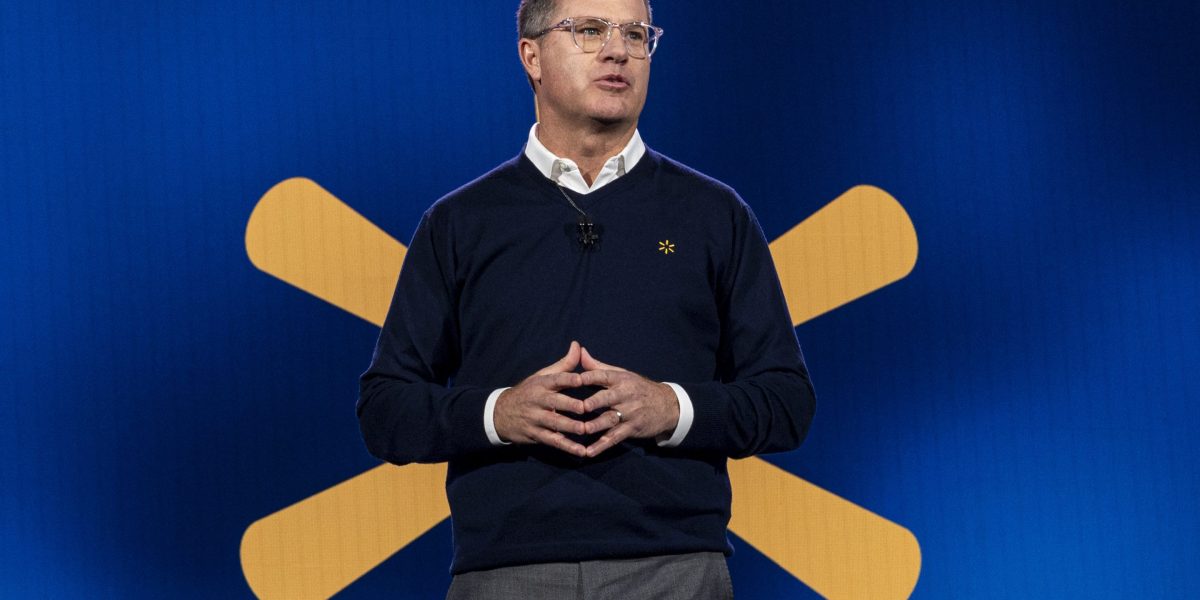
What it’s like to be mentored by Walmart CEO Doug McMillon

Published

on


Good morning. I’m always fascinated by who CEOs turn to for feedback, and who they choose to mentor outside their companies. Some relationships develop organically through working with people who become friends after you move on. (I feel fortunate to remain connected to former bosses like Norman Pearlstine, as well as numerous colleagues over the years.)

Then there are the leaders whose names come up because they offered advice or made a gesture that was meaningful to another CEO. One of those names is Walmart’s Doug McMillion, who is retiring as CEO next month after 12 years at the helm. A lot will be written about his legacy in transforming the world’s largest retailer into a daunting competitor in the digital realm. But Carla Vernón, CEO of the Honest Company, recently recounted a story about him that stuck with me.

About a year ago, Vernón said, she had an opportunity to meet McMillion for about 30 seconds at an event. Instead of talking about the business that her $383 million-a-year company does with the $704 billion-a-year Walmart, she took a different tack: “I said, ‘I want to be an extraordinary CEO. You are, in my view, one of the best of our time. So, if I could borrow a bit more time from you, I would love to ask you a question or two.”

McMillion shared his email with Vernón, who’d been CEO since 2023, and told her to get in touch. “I thought it would be like a Zoom call, but he invited me to come to Bentonville with one of my leaders and set up an entire day of one-on-ones for us,” she said. “He connected us with everybody who we needed to know strategically, everybody on his executive team who he thought might be able to help me build a strong executive team in the C-Suite. There was no agenda and this was Q4, which is the season for retailers that’s super busy.”

She compares her experience in Bentonville to being in a regional dance company and getting invited to go backstage and watch the New York City Ballet rehearse The Nutcracker. “If I can, for one day, watch what the very best at what they do do, then I’m going to forever realize what’s possible from myself as a leader,” said Vernón, who brought her VP of Sales. “When you meet somebody who you think of as some kind of iconic business brilliant mind, and realize they are just human, trying to have a good life, trying to be good to others, it’s helpful to put in perspective what is possible for you.”

It’s clear she was moved by McMillon’s desire to help her in a meaningful way. “I’m Afro-Latina. I’m female … In these companies that we get to run, the people are changing. They are changing in their generational values. They’re changing in what they look like. The companies that we love will be run by different kinds of people in the next 20 or 30 years,” she said. “I wish that, in our sector of CEOs, we took more time to help coach, grow and build each other, so that maybe we could be a stronger body doing right by businesses, employees, culture and society. We’re in such units of one and we don’t have to be.”

Contact CEO Daily via Diane Brady at diane.brady@fortune.com

Top news

Do Kwon given 15 years in prison

The founder of Terraform Labs and its algorithmic stablecoin TerraUSD, which collapsed in 2022, costing investors $40 billion and triggering a “crypto winter,” was sentenced on fraud charges.

Lululemon CEO ousted for not being cool enough

Despite tripling sales at the athletic-wear company since 2018, Calvin McDonald will leave the company in January. Founder Chip Wilson blamed him for the company’s “loss of cool.” Although the company most recently reported a 7% increase in revenues, its sales in the americas were down 2%.  Finance chief Meghan Frank and chief commercial officer André Maestrini will serve as interim co-CEOs.

Why Trump is targeting Venezuelan oil ships

Ninety percent of Venezuelan exports are oil, the WSJ says, and by threatening Maduro’s ability to export the fuel it forces Maduro to discount its sales and drain the country’s reserves. It could ultimately destabilize the regime.

HSBC ends 160-year-old management track

HSBC has closed its historic “International Manager” program, founded at the company in the 1800s, which rotated an elite group of generalist executives from country to country. “HSBC employees don’t need this special status,” a source told the FT. “There is this snooty attitude and haughty air attached to being an IM.”

OpenAI releases new model

OpenAI released its new AI model GPT-5.2 on Thursday, less than a month after its predecessor, as competition from rivals like Google and Anthropic heats up. The company claims that the model is particularly apt at coding, mathematical reasoning, and “knowledge work.”

Disney announces partnership with OpenAI

Disney announced a $1 billion investment and three-year licensing deal with OpenAI that allows users on Sora, OpenAI’s video generation platform, to create content featuring Disney’s copyrighted characters. In a statement announcing the agreement, Disney CEO Bob Iger stated that the partnership will allow the company to “thoughtfully and responsibly extend the reach of our storytelling through generative AI.”

Powell fears K-shaped economy

U.S. Federal Reserve Chair Jerome Powell confirmed that a “K-shaped economy” appeared to be developing in the U.S. and questioned whether it was “sustainable.”

The markets

S&P 500 futures were flat this morning. The last session closed up 0.21% to hit a new reofrd high of 6,901. STOXX Europe 600 was up 0.37% in early trading. The U.K.’s FTSE 100 was up 0.38% in early trading. Japan’s Nikkei 225 was up 1.37%. China’s CSI 300 was up 0.63%. The South Korea KOSPI was up 1.38%. India’s NIFTY 50 was up 0.51%. Bitcoin went to $92K.

Around the watercooler

Exclusive: YouTube launches option for U.S. creators to receive stablecoin payouts through PayPal by Ben Weiss

Apple’s Steve Jobs told students to never ‘settle’ in their careers: ‘If you haven’t found it yet, keep looking’ by Emma Burleigh

Why Jerome Powell’s latest rate cut still won’t help you get a lower mortgage rate by Sydney Lake

‘We have not seen this rosy picture’: ADP’s chief economist warns the real economy is pretty different from Wall Street’s bullish outlook by Eleanor Pringle

‘We’re not just going to want to be fed AI slop for 16 hours a day’: Analyst sees Disney/OpenAI deal as a dividing line in entertainment history by Nick Lichtenberg

CEO Daily is compiled and edited by Joey Abrams, Jim Edwards, and Lee Clifford.


Source link

Continue Reading

Business

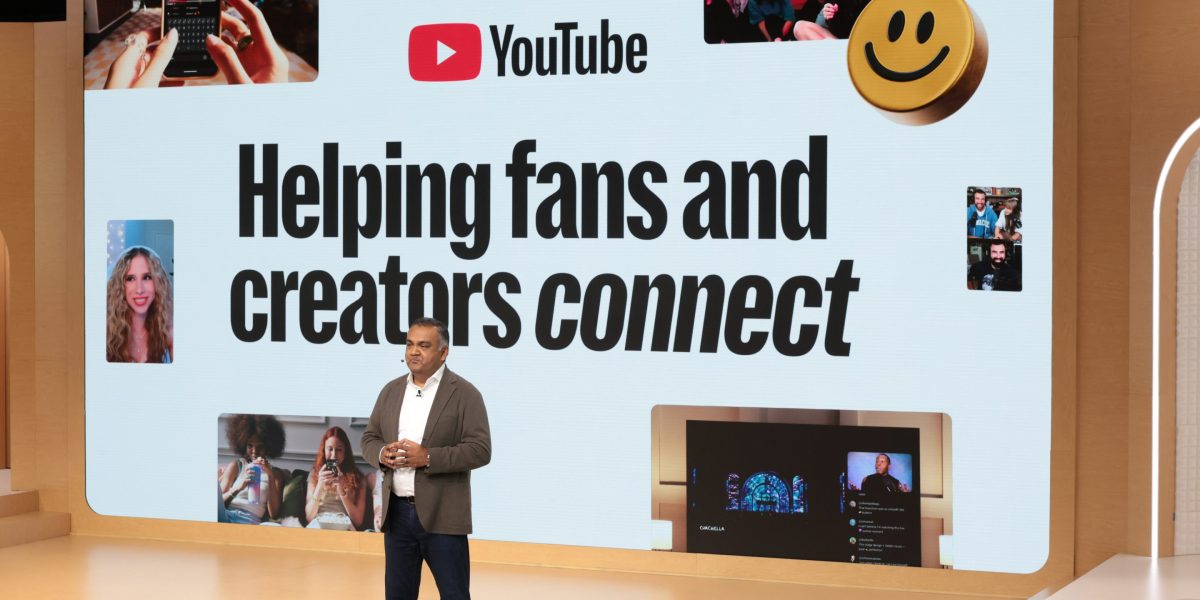
YouTube launches option for U.S. creators to receive stablecoin payouts through PayPal

Published

on


Big Tech continues to tiptoe into crypto. The latest example is a move by YouTube to let creators on the video platform choose to receive payouts in PayPal’s stablecoin. The head of crypto at PayPal, May Zabaneh, confirmed the arrangement to Fortune, adding that the feature is live and, as of now, only applies to users in the U.S. 

A spokesperson for Google, which owns YouTube, confirmed the video site has added payouts for creators in PayPal’s stablecoin but declined to comment further.

YouTube is already an existing customer of PayPal’s and uses the fintech giant’s payouts service, which helps large enterprises pay gig workers and contractors. 

Early in the third quarter, PayPal added the capability for payment recipients to receive their checks in PayPal’s stablecoin, PYUSD. Afterwards, YouTube decided to give that option to creators, who receive a share of earnings from the content they post on the platform, said Zabaneh.

“The beauty of what we’ve built is that YouTube doesn’t have to touch crypto and so we can help take away that complexity,” she added.

Big Tech eyes stablecoins

YouTube’s interest in stablecoins comes as Google and other Big Tech companies have shown interest in the cryptocurrencies amid a wave of hype in Silicon Valley and beyond. 

The tokens, which are pegged to underlying assets like the U.S. dollar, are longtime features of the crypto industry. But over the past year, they’ve exploded into the mainstream, especially after President Donald Trump signed into law a new bill regulating the crypto assets. Proponents say they are an upgrade over existing financial infrastructure, and big fintechs have taken notice, including Stripe. In February, the payments giant closed a blockbuster $1.1 billion purchase of the stablecoin startup Bridge.

PayPal has long been an earlier mover in crypto among large tech firms. In 2020, it let users buy and sell Bitcoin, Ethereum, and a handful of other cryptocurrencies. And, in 2023, it launched the PYSUD stablecoin, which now has a market capitalization of nearly $4 billion, according to CoinGecko.

PayPal has slowly integrated PYUSD throughout its stable of products. Users can hold it in its digital wallet as well as Venmo, another financial app that PayPal also owns. They can use it to pay merchants. And, in February, a PayPal executive said small-to-medium sized merchants will be able to use it to pay vendors.

YouTube’s addition of payouts in PYUSD isn’t the first time Google has experimented with PayPal’s stablecoin. An executive at Google Cloud, the tech giant’s cloud computing arm, previously toldFortune that it had received payments from two of its customers in PYUSD. 


Source link

Continue Reading

Business

Oracle slides by most since January on mounting AI spending

Published

on


Oracle Corp. shares plunged the most in almost 11 months after the company escalated its spending on AI data centers and other equipment, rising outlays that are taking longer to translate into cloud revenue than investors want.

Capital expenditures, a metric of data center spending, were about $12 billion in the quarter, an increase from $8.5 billion in the preceding period, the company said Wednesday in a statement. Analysts anticipated $8.25 billion in capital spending in the quarter, according to data compiled by Bloomberg. 

Oracle now expects capital expenditures will reach about $50 billion in the fiscal year ending in May 2026 — a $15 billion increase from its September forecast — executives said on a conference call after the results were released.

The shares fell 11% to $198.85 at the close Thursday in New York, the biggest single-day decline since Jan. 27. Oracle’s stock had already lost about a third of its value through Wednesday’s close since a record high on Sept. 10. Meanwhile, a measure of Oracle’s credit risk reached a fresh 16-year high.

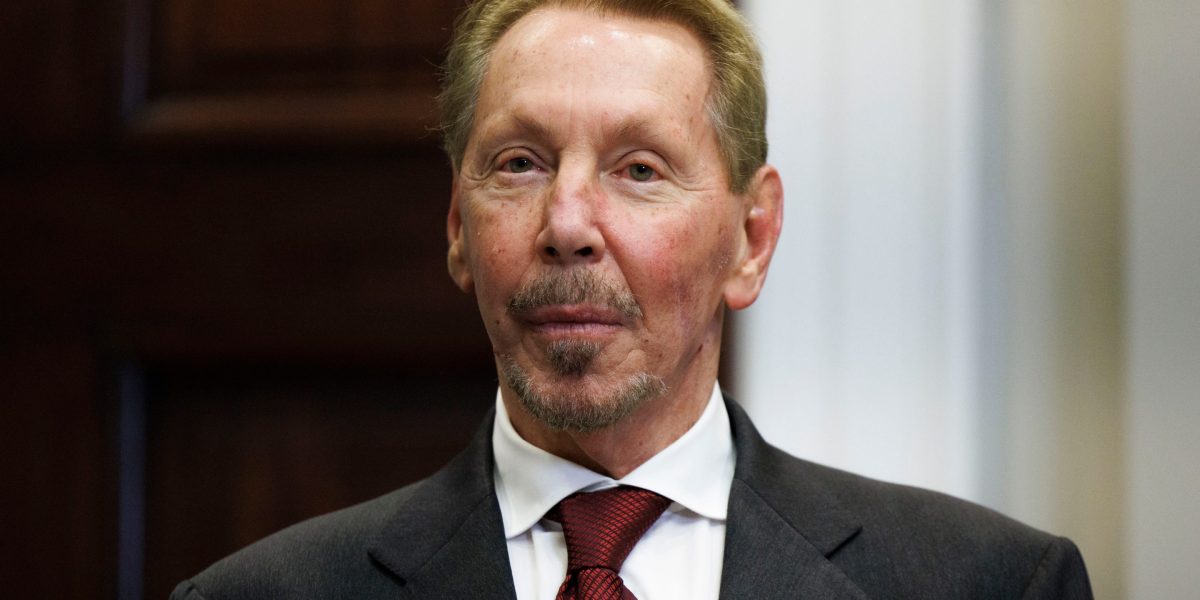
The latest earning report and share slide marks a reversal of fortunes for a company that just a few months ago was enjoying a blistering rally and clinching multibillion-dollar data center deals with the likes of OpenAI. The gains temporarily turned co-founder Larry Ellison into the world’s richest person, with the tech magnate passing Elon Musk for a few hours.

Known for its database software, Oracle has recently found success in the competitive cloud computing market. It’s engaging in a massive data center build-out to power AI work for OpenAI and also counts companies such as ByteDance Ltd.’s TikTok and Meta Platforms Inc. as major cloud customers. 

Fiscal second-quarter cloud sales increased 34% to $7.98 billion, while revenue in the company’s closely watched infrastructure business gained 68% to $4.08 billion. Both numbers fell just short of analysts’ estimates.Play Video

Still, Wall Street has raised doubts about the costs and time required to develop AI infrastructure at such a massive scale. Oracle has taken out significant sums of debt and committed to leasing multiple data center sites. 

The cost of protecting the company’s debt against default for five years rose as much as 0.17 percentage point to around 1.41 percentage point a year, the highest intraday level since April 2009, according to ICE Data Services. The gauge rises as investor confidence in the company’s credit quality falls. Oracle credit derivatives have become a credit market barometer for AI risk.

“Oracle faces its own mounting scrutiny over a debt-fueled data center build-out and concentration risk amid questions over the outcome of AI spending uncertainty,” said Jacob Bourne, an analyst at Emarketer. “This revenue miss will likely exacerbate concerns among already cautious investors about its OpenAI deal and its aggressive AI spending.”

Remaining performance obligation, a measure of bookings, jumped more than fivefold to $523 billion in the quarter, which ended Nov. 30. Analysts, on average, estimated $519 billion.

Investors want to see Oracle turn its higher spending on infrastructure into revenue as quickly as it has promised. 

“The vast majority of our cap ex investments are for revenue generating equipment that is going into our data centers and not for land, buildings or power that collectively are covered via leases,” Principal Financial Officer Doug Kehring said on the call. “Oracle does not pay for these leases until the completed data centers and accompanying utilities are delivered to us.”

“As a foundational principle, we expect and are committed to maintaining our investment grade debt rating,” Kehring added.

Oracle’s cash burn increased in the quarter and its free cash flow reached a negative $10 billion. Overall, the company has about $106 billion in debt, according to data compiled by Bloomberg. “Investors continually seem to expect incremental cap ex to drive incremental revenue faster than the current reality,” wrote Mark Murphy, an analyst at JP Morgan.Play Video

“Oracle is very good at building and running high-performance and cost-efficient cloud data centers,” Clay Magouyrk, one of Oracle’s two chief executive officers, said in the statement. “Because our data centers are highly automated, we can build and run more of them.”

This is Oracle’s first earnings report since longtime Chief Executive Officer Safra Catz was succeeded by Magouyrk and Mike Sicilia, who are sharing the CEO post.

Part of the negative sentiment from investors in recent weeks is tied to increased skepticism about the business prospects of OpenAI, which is seeing more competition from companies like Alphabet Inc.’s Google, wrote Kirk Materne, an analyst at Evercore ISI, in a note ahead of earnings. Investors would like to see Oracle management explain how they could adjust spending plans if demand from OpenAI changes, he added.

In the quarter, total revenue expanded 14% to $16.1 billion. The company’s cloud software application business rose 11% to $3.9 billion. This is the first quarter that Oracle’s cloud infrastructure unit generated more sales than the applications business.

Earnings, excluding some items, were $2.26 a share. The profit was helped by the sale of Oracle’s holdings in chipmaker Ampere Computing, the company said. That generated a pretax gain of $2.7 billion in the period. Ampere, which was backed early in its life by Oracle, was bought by Japan’s SoftBank Group Corp. in a transaction that closed last month.

In the current period, which ends in February, total revenue will increase 19% to 22%, while cloud sales will increase 40% to 44%, Kehring said on the call. Both forecasts were in line with analysts’ estimates.

Annual revenue will be $67 billion, affirming an outlook the company gave in October.


Source link

Continue Reading

Trending

Copyright © Miami Select.