Giorgio Armani has always valued executives who truly ’embrace’ a company’s vision and do not depart after just two or three years to chase the next highest bidder- each time with a lavish severance. The appointment, announced a short while ago, of Giuseppe Marsocci as CEO of the Armani Group with immediate effect (together with his simultaneous entry to its Board of Directors) reflects this philosophy. As confirmed in a statement by the Board of Directors of Giorgio Armani SpA, Marsocci brings more than 35 years of international experience in the fashion and luxury sector, 23 of them within the Armani Group, in roles of increasing responsibility in Milan and abroad; most notably in New York, where he served as CEO of the Americas.
Giuseppe Marsocci, CEO of the Armani Group
Over the past six years, from 2019 to the present, the Piedmontese executive has reported directly to Giorgio Armani, serving as the group’s deputy general manager and global chief commercial officer. He has sat on numerous corporate boards and served as chairman of Giorgio Armani Retail Srl, as well as CEO and/or president of various overseas subsidiaries of the group.
Proposed unanimously by the Armani Foundation, Marsocci will report to the board chaired by Leo Dell’Orco, on which Silvana Armani will serve as vice-chair. In the coming weeks, the company notes, the Board of Directors of Giorgio Armani SpA “will take its final shape upon completion of probate procedures and execution of the will, but it was decided to move ahead now by appointing the CEO in advance, to inaugurate the new course without any interruption in the management of the company,” the fashion group’s statement reads.
Leo Dell’Orco, chairman of the company’s board, highlighted Marsocci’s key qualities in the statement: “His international professional experience, deep knowledge of the sector and of the company, discretion, loyalty, and team spirit, together with his closeness in recent years to Mr Armani, make Giuseppe the most natural choice to ensure continuity along the path mapped out, built and perpetuated for 50 years by the founder,” in keeping with the company’s founding principles and the enduring direction set by the Piacenza-born designer, who passed away earlier this month.
Giuseppe Marsocci expressed his gratitude “for the trust placed in me. This is a project of extraordinary importance, focused on continuity and on enhancing one of the world’s most prestigious Made in Italy brands which, for clients and the market, has transcended the status of a simple label to rightfully become a lifestyle brand.”
‘The objective is demanding,” continued the new CEO, “all the more so in a luxury market engaged in deep self-reflection, but it is achievable thanks to the fundamental contribution of an outstanding network of clients, suppliers, partners, and passionate colleagues around the world, particularly in Milan, many of whom have been close to Mr Armani for many years. Together we will do everything to perpetuate his model of enterprise and his idea of beauty, and we will carry it forward with consistency and sensitivity, taking into account the values and expectations of a changing world.”
Giuseppe Marsocci, a 61-year-old from Turin with a degree in Economics and Business from the University of Turin, has prior experience in sales, marketing and brand management at the Turin-based GFT Group, a licensee of Valentino, Dior, Ungaro, Stone Island and Armani. Other notable roles include five years at Fila Sport (HDP Group) as head of international business development.
Marsocci joined the Armani Group in 2003, taking on roles of increasing responsibility both at the Milan headquarters and in the group’s overseas subsidiaries. These included: commercial director of Armani Collezioni; CEO of the Swiss subsidiary (formerly the logistics and customer service hub for all overseas markets); global director for diffusion/wholesale lines; and, for more than ten years in the New York office, first as president of Trimil US, the Zegna/Armani joint venture, before serving as CEO of the Americas from 2014 to 2019.
This article is an automatic translation. Click here to read the original article.
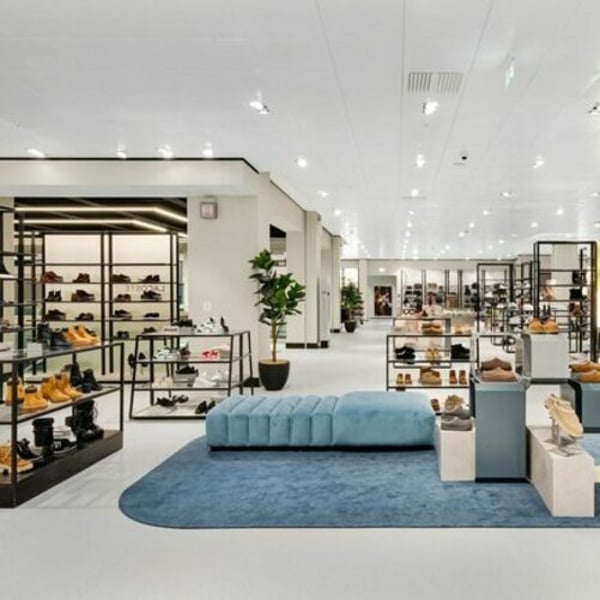
The newest ‘next-generation’ Frasers department store has opened at Queensgate Peterborough in the heart of the city.
Frasers Group
Spanning 60,000 sq ft across two floors, it brings together Frasers Group brands including Flannels, Sports Direct, USC, and Jack Wills under one roof.
The new destination “offers an elevated retail experience, providing access to the world’s most aspirational premium, lifestyle and sports brands”, across women’s, men’s, and kidswear, Frasers Group said.
It includes a dedicated 5,000 sq ft Flannels store, providing the Queensgate catchment “with the best in luxury and contemporary fashion, footwear, and accessories”.
This includes an extensive range of globally-recognised labels including Boss, Coach, Levi’s, Biba, Tommy Hilifger, Barbour, alongside sports brands under its Sports Direct banner, including Adidas, Nike, The North Face, Under Armour, New Balance, Everlast, Slazenger, Karrimor and USA Pro.
Ed Ginn, director of Investment Management for Queensgate operator Invesco Real Estate, said: “Frasers Group’s opening is the start of an exciting new chapter, and marks significant progress in our efforts to maintain Queensgate as a leading retail and leisure destination in the region and in the UK more widely.
“[The Frasers] addition… to the centre raises the bar for potential investment from brands to further enhance the shopping experience, as we continue to evolve Queensgate in a way that provides our catchment with everything they could need or want, in one place.”
Businessman Gerald Ratner has launched a surprise bid to buy the UK arm of the jewellery empire he famously trashed more than three decades ago after calling some products of his signature brand Ratners ‘total crap’.
Image: Ernest Jones
The businessman is seeking to acquire the British H Samuel and Ernest Jones chains from US-listed Signet Jewellers and install himself as chairman after he lost control of the businesses in the early 1990s, reported The Daily Telegraph.
Ratner has appealed to shareholders of the company as part of a bid to purchase the loss-making UK arm, which he said he has been “pursuing since the summer”.
The brands were once part of Ratners Group, the firm that he was forced to exit after he jokingly declared a few of its cheaper products were “total crap” in a speech at the Institute of Directors 30 years ago.
Ratner also remarked that some of the firm’s earrings were “cheaper than a prawn sandwich at Marks & Spencer – but I have to say, the sandwich will probably last longer than the earrings”.
The ensuing negative reaction from consumers and the wider business community gave rise to the phrase ‘to do a Ratner’ or destroy a valid business.
Ratner said he was attempting to acquire the UK division of Signet – which was formerly Ratners Group before it was rebranded – because he claimed its American owners were “doing everything wrong”.
The newspaper said that to launch his bid, Ratner has been in touch with Signet’s CEO. He’s understood to be backed by a consortium of primarily-British investors and has said they have the funds lined up.
He’s now launching an appeal directly to the company’s shareholders, who Ratner hopes should question why the US owners do not sell the loss-making division.
He told The Telegraph: “The reason we’re putting pressure on the shareholders is simply because of the fact that they’re doing so badly in the UK, they’re closing shops all the time and last year they sold their best shops.
“So we took the view that they’re not really interested in the UK. We approached them thinking that it’s in the interests of shareholders to just get rid of it.”
Signet is worth more than $3.7 billion (£2.8 billion) with a successful US operation but a loss-making UK division.
Frasers Group is reportedly considering a bid for failed business SilkFred as it continues to focus on acquiring brands that it sees as having growth potential or some unique properties in their business model that it can use in its wider operations.
SilkFred
SilkFred entered administration in October (although it was only officially announced last month) with Quantuma handling the process. The 15-year-old fashion company specialised in connecting womenswear designers and labels with consumers. Its particularly focus was occasionwear and unique pieces from indie brands.
News of Frasers’ (as-yet-unconfirmed) interest is hardly surprising. It continues to be one of the most acquisitive businesses in UK fashion. Only recently it has acquired both Braehead and Swindon Designer Outlet shopping destinations, a majority stake in luxury LA store The Webster, as well as adding to its already large ASOS stake (its 26% holding makes that company’s second-biggest shareholder).
The company hasn’t commented about SilkFred, although it would fit into its strategy of targeting younger consumers at a variety of price levels.
As mentioned, SilkFred went into administration this autumn, although here had been rumours of it struggling or a while.
Its most recent results covered 2023 and showed losses widening as sales fell as much as 46% to just £11.18 million.
Frasers, by contrast, is a giant of the retail sector with its half-year results up to the end of October showing revenue of £2.58 billion and retail trading profit of £411.4 million.






 Politics8 years ago