Connect with us

Business

Ghislaine Maxwell went to a minimum-security prison because of ‘numerous threats against her life’

Published

on


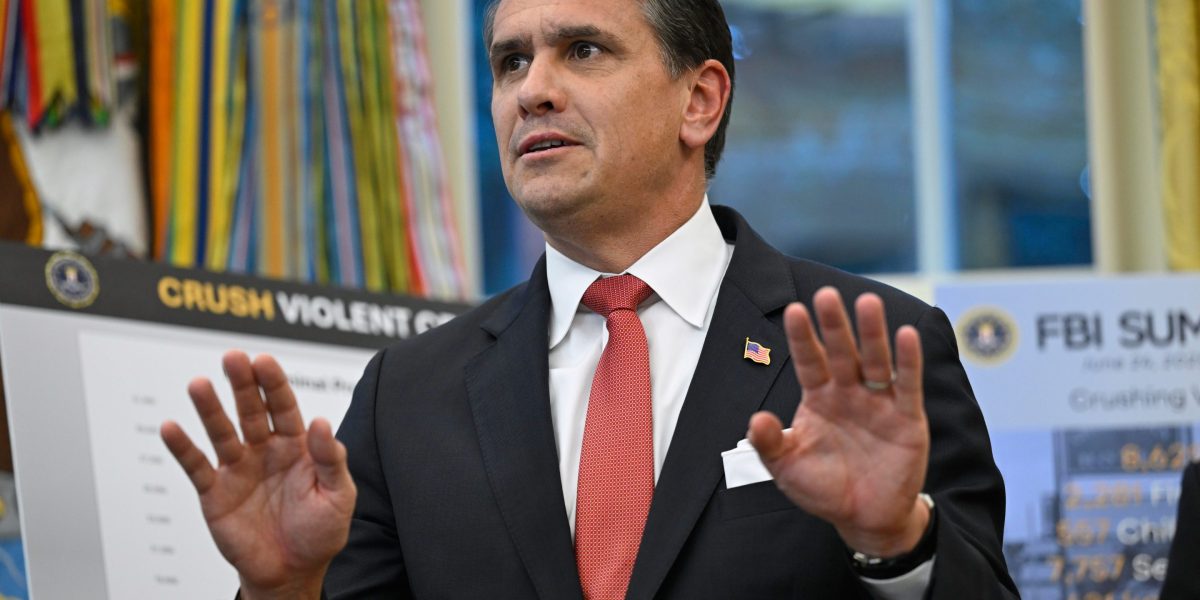
Deputy Attorney General Todd Blanche on Sunday defended the Justice Department’s decision to release just a fraction of the Jeffrey Epstein files by the congressionally mandated deadline as necessary to protect survivors of sexual abuse by the disgraced financier.

Blanche pledged that the Trump administration eventually would meet its obligation required by law. But he stressed that the department was obligated to act with caution as it goes about making public thousands of documents that can include sensitive information.

Friday’s partial release of the Epstein files has led to a new crush of criticism from Democrats who have accused the Republican administration of trying to hide information.

Blanche called that pushback disingenuous as President Donald Trump’sadministration continues to struggle with calls for greater transparency, including from members of his political base, about the government’s investigations into Epstein, who once counted Trump as well as several political leaders and business titans among his peers.

“The reason why we are still reviewing documents and still continuing our process is simply that to protect victims,” Blanche told NBC’s “Meet the Press.” “So the same individuals that are out there complaining about the lack of documents that were produced on Friday are the same individuals who apparently don’t want us to protect victims.”

Blanche’s comments were the most extensive by the administration since the file dump, which included photographs, interview transcripts, call logs, court records and other documents. But some of the most consequential records expected about Epstein were nowhere to be found, such as FBI interviews with survivors and internal Justice Department memos examining charging decisions. Those records could help explain how investigators viewed the case and why Epstein was allowed in 2008 to plead guilty to a relatively minor state-level prostitution charge.

Trump, who was friends with Epstein for years before the two had a falling-out, tried for months to keep the records sealed. Though Trump has not been accused of wrongdoing in connection with Epstein, he has argued there is nothing to see in the files and that the public should focus on other issues.

Federal prosecutors in New York brought sex trafficking charges against Epstein in 2019, but he killed himself in jail after his arrest.

Democrat see a cover-up, not an effort to protect victims

But Democratic lawmakers on Sunday hammered Trump and the Justice Department for a partial release.

Rep. Jamie Raskin, D-Md., argued that the Justice Department is obstructing the implementation of the law mandating the release of the documents not because it wants to protect the Epstein victims.

“It’s all about covering up things that, for whatever reason, Donald Trump doesn’t want to go public, either about himself, other members of his family, friends, Jeffrey Epstein, or just the social, business, cultural network that he was involved in for at least a decade, if not longer,” he said on CNN’s “State of the Union.”

Blanche also defended the department’s decision to remove several files related to the case from its public webpage, including a photograph showing Trump, less than a day after they were posted.

The missing files, which were available Friday but no longer accessible by Saturday, included images of paintings depicting nude women, and one showed a series of photographs along a credenza and in drawers. In that image, inside a drawer among other photos, was a photograph of Trump, alongside Epstein, Melania Trump and Epstein’s longtime associate, Ghislaine Maxwell.

Blanche said the documents were removed because they also showed victims of Epstein. Blanche said that Trump photo and the other documents will be reposted once redactions are made to protect survivors.

“It has nothing to do with President Trump,” Blanche said. “There are dozens of photos of President Trump already released to the public seeing him with Mr. Epstein.”

The thousands of Epstein-related records posted publicly offer the most detailed look yet at nearly two decades worth of government scrutiny of Epstein’s sexual abuse of young women and underage girls. Yet Friday’s release, replete with redactions, has not dulled the clamor for information given how many records had yet to be released and because some of the materials had already been made public.

Justice Department has just learned the names of more potential victims, Blanche says

Blanche said that the department continues to review the trove of documents and has learned the names of additional potential victims in recent days.

The deputy attorney general also defended the decision by the federal Bureau of Prisons, which Blanche oversees, to transfer Maxwell to a less restrictive, minimum-security federal prison earlier this year soon after he interviewed her about Epstein. Blanche said that the transfer was made because of concerns about her safety.

Maxwell, Epstein’s onetime girlfriend, is serving a 20-year federal prison sentence for her 2021 conviction for sex trafficking crimes.

“She was suffering numerous and numerous threats against her life,” Blanche said. “So the BOP is not only responsible for putting people in jail and making sure they stay in jail, but also for their safety.”

Meanwhile, Rep. Ro Khanna, D-Calif., and Thomas Massie, R-Ky., have indicated they could draft articles of impeachment against Attorney General Pam Bondi for what they see as the gross failure of the department to comply with the Epstein Files Transparency Act.

“It’s not about the timeline, it’s about the selective concealment,” Khanna said on CBS’ “Face the Nation,” adding that the redactions in the released files are excessive. He said he believes there will be “bipartisan support in holding her accountable, and a committee of Congress should determine whether these redactions are justified or not.”

House Democratic leader Hakeem Jeffries of New York said on ABC’s “This Week” that there needs “to be a full and complete explanation and then a full and complete investigation as to why the document production has fallen short of what the law clearly required,” but he stopped short of backing impeachment.

Blanche dismissed the impeachment talk.

“Bring it on,” Blanche said. “We are doing everything we’re supposed to be doing to comply with this statute.”


Source link

Continue Reading

Business

Solar power and battery storage are booming despite Trump policy whiplash as clean energy meets soaring data center demand

Published

on


There were some highs amid a lot of lows in a roller coaster year for clean energy as President Donald Trump worked to boost polluting fuelswhile blocking wind and solar, according to dozens of energy developers, experts and politicians.

Surveyed by The Associated Press, many described 2025 as turbulent and challenging for clean energy, though there was progress as projects connected to the electric grid. They said clean energy must continue to grow to meet skyrocketing demand for electricity to power data centers and to lower Americans’ utility bills.

Solar builder and operator Jorge Vargas said it has been “a very tough year for clean energy” as Trump often made headlines criticizing renewable energy and Republicans muscled a tax and spending cut bill through Congress in July that dramatically rolled back tax breaks for clean energy.

“There was a cooldown effect this year,” said Vargas, cofounder and CEO of Aspen Power. “Having said that, we are a resilient industry.”

Plug Power president Jose Luis Crespo said the developments — both policy recalibration and technological progress — will shape clean energy’s trajectory for years to come.

Energy policy whiplash in 2025

Much of clean energy’s fate in 2025 was driven by booster Joe Biden’s exit from the White House.

The year began with ample federal subsidies for clean energy technologies, a growing number of U.S.-based companies making parts and materials for projects and a lot of demand from states and corporations, said Tom Harper, partner at global consultant Baringa.

It ends with subsidies stripped back, a weakened supply chain, higher costs from tariffs and some customers questioning their commitment to clean energy, Harper said. He described the year as “paradigm shifting.”

Trump called wind and solar power “the scam of the century” and vowed not to approve new projects. The federal government canceled grantsfor hundreds of projects.

The Republicans’ tax bill reversed or steeply curtailed clean energy programs established through the Democrats’ flagship climate and health care bill in 2022. Wayne Winegarden, at the Pacific Research Institute think tank, said the time has come for alternative energy to demonstrate viability without subsidies. ( Fossil fuels also receive subsidies.)

Many energy executives said this was the most consequential policy shift. The bill reshaped the economics of clean energy projects, drove a rush to start construction before incentives expire and forced developers to reassess their strategies for acquiring parts and materials, Lennart Hinrichs said. He leads the expansion of TWAICE in the Americas, providing analytics software for battery energy storage systems.

Companies can’t make billion-dollar investments with so much policy uncertainty, said American Clean Power Association CEO Jason Grumet.

Consequently, greenhouse gas emissions will fall at a much lower rate than previously projected in the U.S., said Brian Murray, director of the Nicholas Institute for Energy, Environment and Sustainability at Duke University.

Still, solar and battery storage are booming

Solar and storage accounted for 85% of the new power added to the grid in the first nine months of the Trump administration, according to Wood Mackenzie research.

That’s because the economics remain strong, demand is high and the technologies can be deployed quickly, said Mike Hall, CEO of Anza Renewables.

Solar energy company Sol Systems said it had a record year as it brought its largest utility-scale project online and grew its business. The energy storage systems company CMBlu Energy said storage clearly stands out as a winner this year too, moving from optional to essential.

“Trump’s effort to manipulate government regulation to harm clean energy just isn’t enough to offset the natural advantages that clean energy has,” Democratic U.S. Sen. Sheldon Whitehouse said. “The direction is still all good.”

The Solar Energy Industries Association said that no matter the policies in Washington, solar and storage will grow as the backbone of the nation’s energy future.

Nuclear and geothermal had a good year, too

Democrats and Republicans have supported investing to keep nuclear reactors online, restart previously closed reactors and deploy new, advanced reactor designs. Nuclear power is a carbon-free source of electricity, though not typically labeled as green energy like other renewables.

“Who had ‘restart Three Mile Island’ on their 2025 Bingo card?” questioned Baringa partner David Shepheard. The Pennsylvania plant was the site of the nation’s worst commercial nuclear power accident, in 1979. The Energy Department is loaning $1 billion to help finance a restart.

Everyone loves nuclear, said Darrin Kayser, executive vice president at Edelman. It helps that the technology for small, modular reactors is starting to come to fruition, Kayser added.

Benton Arnett, a senior director at the Nuclear Energy Institute, said that as the need for clean, reliable power intensifies, “we will look back on the actions being taken now as laying the foundation.”

The Trump administration also supports geothermal energy, and the tax bill largely preserved geothermal tax credits. The Geothermal Rising association said technologies continue to mature and produce, making 2025 a breakthrough year.

Offshore wind had a terrible year

Momentum for offshore wind in the United States came to a grinding halt just as the industry was starting to gain traction, said Joey Lange, a senior managing director at Trio, a global sustainability and energy advisory company.

The Trump administration stopped construction on major offshore wind farms, revoked wind energy permits and paused permittingcanceled plans to use large areas of federal waters for new offshore wind development and stopped federal funding for offshore wind projects.

That has decimated the projects, developers and tech innovators, and no one in wind is raising or spending capital, said Eric Fischgrund, founder and CEO at FischTank PR. Still, Fischgrund said he remains optimistic because the world is transitioning to cleaner energy.

More clean energy needed in 2026

An energy strategy with a diverse mix of sources is the only way forward as demand grows from data centers and other sources, and as people demand affordable, reliable electricity, said former Democratic Sen. Mary Landrieu. Landrieu, now with Natural Allies for a Clean Energy Future, said promoting or punishing specific energy technologies on ideological grounds is unsustainable.

Experts expect solar and battery storage to continue growing in 2026 to add a lot of power to the grid quickly and cheaply. The market will continue to ensure that most new electricity is renewable, said Amanda Levin, policy analysis director at the Natural Resources Defense Council.

Hillary Bright, executive director of Turn Forward, thinks offshore wind will still play an important role too. It is both ready and needed to help address the demand for electricity in the new year, which will become increasingly clear “to all audiences,” she said. Turn Forward advocates for offshore wind.

That skyrocketing demand “is shaking up the political calculus that drove the administration’s early policy decisions around renewables,” she said.

BlueWave CEO Sean Finnerty thinks that states, feeling the pressure to deliver affordable, reliable electricity, will increasingly drive clean energy momentum in 2026 by streamlining permitting and the process of connecting to the grid, and by reducing costs for things like permits and fees.

Ed Gunn, Lunar Energy’s vice president for revenue, said the industry has weathered tough years before.

“The fundamentals are unchanged,” Gunn said, “there is massive value in clean energy.”

This story was originally featured on Fortune.com


Source link

Continue Reading

Business

U.S. pursues another tanker skirting Venezuela sanctions as GOP senator calls seizures a ‘provocation and a prelude to war’

Published

on


The U.S. Coast Guard on Sunday was pursuing another sanctioned oil tanker in the Caribbean Sea as the Trump administration appeared to be intensifying its targeting of such vessels connected to the Venezuelan government.

The pursuit of the tanker, which was confirmed by a U.S. official briefed on the operation, comes after the U.S. administration announced Saturday it had seized a tanker for the second time in less than two weeks.

The official, who was not authorized to comment publicly about the ongoing operation and spoke on the condition of anonymity, said Sunday’s pursuit involved “a sanctioned dark fleet vessel that is part of Venezuela’s illegal sanctions evasion.”

The official said the vessel was flying a false flag and under a judicial seizure order.

The Pentagon and Department of Homeland Security, which oversees the U.S. Coast Guard, deferred questions about the operation to the White House, which did not offer comment on the operation.

Saturday’s predawn seizure of a Panama-flagged vessel called Centuries targeted what the White House described as a “falsely flagged vessel operating as part of the Venezuelan shadow fleet to traffic stolen oil.”

The Coast Guard, with assistance from the Navy, seized a sanctioned tanker called Skipper on Dec. 10, another part of the shadow fleet of tankers that the U.S. says operates on the fringes of the law to move sanctioned cargo. It was not even flying a nation’s flag when it was seized by the Coast Guard.

President Donald Trump, after that first seizure, said that the U.S. would carry out a “blockade” of Venezuela. It all comes as Trump has ratcheted up his rhetoric toward Venezuelan President Nicolás Maduro.

This past week Trump demanded that Venezuela return assets that it seized from U.S. oil companies years ago, justifying anew his announcement of a “blockade” against oil tankers traveling to or from the South American country that face American sanctions.

Trump cited the lost U.S. investments in Venezuela when asked about his newest tactic in a pressure campaign against Maduro, suggesting the Republican administration’s moves are at least somewhat motivated by disputes over oil investments, along with accusations of drug trafficking. Some sanctioned tankers already are diverting away from Venezuela.

U.S. oil companies dominated Venezuela’s petroleum industry until the country’s leaders moved to nationalize the sector, first in the 1970s and again in the 21st century under Maduro and his predecessor, Hugo Chávez. Compensation offered by Venezuela was deemed insufficient, and in 2014, an international arbitration panel ordered the country’s socialist government to pay $1.6 billion to ExxonMobil.

Maduro said in a message Sunday on Telegram that Venezuela has spent months “denouncing, challenging and defeating a campaign of aggression that goes from psychological terrorism to corsairs attacking oil tankers.”

He added: “We are ready to accelerate the pace of our deep revolution!”

Sen. Rand Paul, R-Ky., who has been critical of Trump’s Venezuela policy, called the tanker seizures a “provocation and a prelude to war.”

“Look, at any point in time, there are 20, 30 governments around the world that we don’t like that are either socialist or communist or have human rights violations,” Paul said on ABC’s’ “This Week.” ”But it isn’t the job of the American soldier to be the policeman of the world.”

The targeting of tankers comes as Trump has ordered the Defense Department to carry out a series of attacks on vessels in the Caribbean and eastern Pacific Ocean that his administration alleges are smuggling fentanyl and other illegal drugs into the United States and beyond.

At least 104 people have been killed in 28 known strikes since early September. The strikes have faced scrutiny from U.S. lawmakers and human rights activists, who say the administration has offered scant evidence that its targets are indeed drug smugglers and that the fatal strikes amount to extrajudicial killings.

Trump has repeatedly said Maduro’s days in power are numbered. White House chief of staff Susie Wiles said in an interview with Vanity Fairpublished last week that Trump “wants to keep on blowing boats up until Maduro cries uncle.”

Sen. Tim Kaine, D-Va., told NBC’s “Meet the Press” on Sunday that Trump’s use of military to mount pressure on Maduro runs contrary to Trump’s pledge to keep the United States out of unnecessary wars.

Democrats have been pressing Trump to seek congressional authorization for the military action in the Caribbean.

“We should be using sanctions and other tools at our disposal to punish this dictator who is violating the human rights of his civilians and has run the Venezuelan economy into the ground,” Kaine said. “But I’ll tell you, we should not be waging war against Venezuela. We definitely should not be waging war without a vote of Congress.

This story was originally featured on Fortune.com


Source link

Continue Reading

Business

Turning Point USA gathering reveals more peril than promise for any Trump successor after Erika Kirk backs JD Vance for president in 2028

Published

on


The next presidential election is three years away, but Turning Point USA already knows it wants Vice President JD Vance as the Republican nominee.

Erika Kirk, leader of the powerful conservative youth organization, endorsed him on opening night of its annual AmericaFest convention, drawing cheers from the crowd.

But the four-day gathering revealed more peril than promise for Vance or any other potential successor to President Donald Trump, and the tensions on display foreshadow the treacherous waters that they will need to navigate in the coming years. The “Make America Great Again” movement is fracturing as Republicans begin considering a future without Trump, and there is no clear path to holding his coalition together as different factions jockey for influence.

“Who gets to run it after?” asked commentator Tucker Carlson in his speech at the conference. “Who gets the machinery when the president exits the scene?”

Vance, who has not said whether he will run for president, is Turning Point’s closing speaker Sunday, appearing at the end of a lineup that includes U.S. House Speaker Mike Johnson, R-La., and Donald Trump Jr.

Turning Point backs Vance for president

Erika Kirk, who took over as Turning Point’s leader when her husband, Charlie Kirk, was assassinated, said Thursday that the group wanted Vance “elected for 48 in the most resounding way possible.” The next president will be the 48th in U.S. history.

Turning Point is a major force on the right, with a nationwide volunteer network that can be especially helpful in early primary states, when candidates rely on grassroots energy to build momentum.

The endorsement carried “at least a little bit of weight” for 20 year-old Kiara Wagner, who traveled from Toms River, New Jersey, for the conference.

“If someone like Erika can support JD Vance, then I can too,” Wagner said.

Vance was close with Charlie Kirk. After Kirk’s assassination on a college campus in Utah, the vice president flew out on Air Force Two to collect Kirk’s remains and bring them home to Arizona. The vice president helped uniformed service members carry the casket to the plane.

A post-Trump Republican Party?

The Republican Party’s identity has been intertwined with Trump for a decade. Now that he is constitutionally ineligible to run for reelection, the party is starting to ponder a future without him at the helm.

So far, it looks like settling that question will require a lot of fighting among conservatives. Turning Point featured arguments about antisemitism, Israel and environmental regulations, not to mention rivalries between leading commentators.

Carlson said the idea of a Republican “civil war” was “totally fake.”

“There are people who are mad at JD Vance, and they’re stirring up a lot of this in order to make sure he doesn’t get the nomination,” he said. Carlson describe Vance as “the one person” who subscribes to the “core idea of the Trump coalition,” which Carlson said was “America first.”

Turning Point spokesperson Andrew Kolvet framed the discord as a healthy debate about the future of the movement, an uncomfortable but necessary process of finding consensus.

“We’re not hive-minded commies,” he wrote on X. “Let it play out.”

Vance appeared to have the edge as far as Turning Point attendees are concerned.

“It has to be JD Vance because he has been so awesome when it comes to literally any question,” said Tomas Morales, a videographer from Los Angeles. He said “there’s no other choice.”

Trump has not chosen a successor, though he has spoken highly of both Vance and Secretary of State Marco Rubio, even suggesting they could form a future Republican ticket. Rubio has said he would support Vance.

Asked in August whether Vance was the “heir apparent,” Trump said “most likely.”

“It’s too early, obviously, to talk about it, but certainly he’s doing a great job, and he would be probably favorite at this point,” he said.

Any talk of future campaigns is complicated by Trump’s occasional musings about seeking a third term.

“I’m not allowed to run,” he told reporters during a trip to Asia in October. “It’s too bad.”

This story was originally featured on Fortune.com


Source link

Continue Reading

Trending

Copyright © Miami Select.