Connect with us

Business

Gen Z spends hundreds a month on ‘treat culture,’ justifying it with the challenges of daily life

Published

on


Getting out of bed to go to work or lugging yourself to the grocery store can feel tough. And for that, you deserve a little treat. 

At least that’s the way many Gen Zers see it. Despite a lack of income, Gen Z finds ways to reward themselves frequently: 57% buy themselves a small treat at least once a week, according to a Bank of America report from late July. This could be good news for retailers like Starbucks and Dunkin’, since coffee and other beverages are popular and relatively low-cost treats. Trader Joe’s could also benefit from this trend since they’re known for unique food and beverages, as well as Sephora and Ulta as self-care and cosmetics become increasingly popular among younger generations.

But for nearly 60% of Gen Zers, this leads to overspending, “making little treats a slippery slope,” according to the report. Yet, the generation has shared in droves on social media about the little ways they’re treating themselves, whether it’s buying a simple ice cream cone or splurging on a new clothing haul. 

Gen Zers reward themselves for small wins, but also use little treats as pick-me-ups after a bad day. And some don’t even really have a reason.

“Buying myself a little treat because today would’ve been my birthday if I was born today,” one TikTok user posted.

Terran Fielder, a 23-year-old media specialist, told Fortune she treats herself to lunch during the day and that many of her small indulgences have to do with making her life easier or more time to rest when the day is over.

“When I treat myself, it’s usually in ways that give me more shut eye,” she said. “So, if I am not making lunch, that’s another 20 minutes in bed in the morning. It feels like I’m not just spending money: I’m investing in my well-being.” She said she estimates she spends about $200 to $250 per month on treating herself.

To be sure, Gen Z isn’t the first generation—and likely isn’t the last—to participate in treat culture. Most recently, older generations scorned millennials for their proclivity toward treating themselves with avocado toast and a daily Starbucks coffee, arguing they could’ve saved or invested that money instead. 

While treat culture isn’t new, Gen Z is taking it to a “new level,” Daniel Levine, director of consumer trends consulting firm Avant Guide Institute, told Fortune.

“While members of the Silent Generation treated themselves to a new dress for a special occasion, and baby boomers splurged on a new car or a vacation after reaching a career milestone, Gen X indulges in late-night runs for their favorite junk food to de-stress,” Levine said. “The low barrier to entry makes it a daily habit.”

Meanwhile, online shopping as well as food delivery have made it easier to indulge in treats. Indeed, Gen Z uses grocery subscriptions 133% more often than Gen X, according to a 2024 PYMNTS survey of more than 67,000 consumers across 11 countries accounting for nearly half the world’s GDP.

Why treat culture exists

Part of treat culture goes back to the basic psychological concept of positive reinforcement. When you do something positive or are trying to reinforce habits, earning a treat or reward can help cement that behavior. 

Treat culture, for younger generations, also serves as a coping mechanism or a form of resistance to societal pressures and stressors, Jillian Amodio, a licensed master social worker at Waypoint Wellness Center, told Fortune. That’s because Gen Z has come of age during a time of economic instability, a global pandemic, climate anxiety and widespread social upheaval, she said. Meanwhile, some younger generations have experienced career whiplash from working in an office, then working remotely during the pandemic, then being forced back to in-person during the past few years.  

“Small, intentional joys become a way of reclaiming agency and grounding oneself in the present,” Amodio said. “Pair that with the influence of social media, where trends, aesthetics, and ‘little luxuries’ are celebrated and shared widely, and we have the perfect conditions for treat culture to thrive in the spotlight.”

Another study by Intuit Credit Karma also showed Gen Z justifies certain non-essential purchases like streaming services, skincare, meals out, fitness classes, and more as “necessities” rather than discretionary purchases. Indeed, more than half of Gen Z views spending on hobbies and interests as a necessity, not a luxury, and they’re putting them above other financial goals.

“If I’m working away from home, buying lunch instead of packing it feels like a small luxury that makes my day easier,” Fielder said. “When things get really busy, I’ll skip the store altogether and order things online, just to avoid another errand.”

A version of this story was published on Fortune.com on August 19, 2025.

More on Gen Z spending:

Join us at the Fortune Workplace Innovation Summit May 19–20, 2026, in Atlanta. The next era of workplace innovation is here—and the old playbook is being rewritten. At this exclusive, high-energy event, the world’s most innovative leaders will convene to explore how AI, humanity, and strategy converge to redefine, again, the future of work. Register now.


Source link

Continue Reading

Business

Anduril founder Palmer Luckey is among the U.S. defense execs and companies sanctioned by China over arms sales to Taiwan

Published

on


Beijing imposed sanctions on Friday against 20 U.S. defense-related companies and 10 executives, a week after Washington annoucned large-scale arms sales to Taiwan.

The sanctions entail freezing the companies’ assets in China and banning individuals and organizations from dealing with them, according to the Chinese foreign ministry.

The companies include Northrop Grumman Systems Corporation, L3Harris Maritime Services and Boeing in St. Louis, while defense firm Anduril Industries founder Palmer Luckey is one of the executives sanctioned, who can no longer do business in China and are barred from entering the country. Their assets in the East Asian country have also been frozen.

The announcement of the U.S. arms-sale package, valued at more than $10 billion, has drawn an angry response from China, which claims Taiwan as its own and says it must come under its control.

If approved by the American Congress, it would be the largest-ever U.S. weapons package to the self-ruled territory.

“We stress once again that the Taiwan question is at the very core of China’s core interests and the first red line that must not be crossed in China-U.S. relations,” the Chinese foreign ministry said in a statement on Friday. “Any company or individual who engages in arms sales to Taiwan will pay the price for the wrongdoing.”

The ministry also urged the U.S. to stop what it called “the dangerous moves of arming Taiwan.”

Taiwan is a major flashpoint in U.S.-China relations that analysts worry could explode into military conflict between the two powers. China says that the U.S. arms sales to Taiwan would violate diplomatic agreements between China and the U.S.

China’s military has increased its presence in Taiwan’s skies and waters in the past few years, holding joint drills with its warships and fighter jets on a near-daily basis near the island.

Under the American federal law, the U.S. is obligated to assist Taiwan with its self-defense, a point that has become increasingly contentious with China. Beijing already has strained ties with Washington over trade, technology and other human rights issues.

This story was originally featured on Fortune.com


Source link

Continue Reading

Business

U.S. launches strikes against Islamic State group in Nigeria after attacks target Christians

Published

on


President Donald Trump said the United States launched a “powerful and deadly” strike against forces of the Islamic State group in Nigeria, after spending weeks accusing the West African country’s government of failing to rein in the targeting of Christians.

In a Christmas evening post on his social media site Thursday, Trump did not provide details or mention the extent of the damage caused by the strikes in the northwestern state of Sokoto.

A Defense Department official, who insisted on anonymity to discuss details not made public, said the U.S. worked with Nigeria to carry out the strikes and that they’d been approved by Abuja.

Nigeria’s Ministry of Foreign Affairs said the cooperation included exchange of intelligence and strategic coordination in ways “consistent with international law, mutual respect for sovereignty and shared commitments to regional and global security.”

The Associated Press could not confirm the extent of the strikes’ impact.

Nigeria fights several armed groups

Nigeria is battling multiple armed groups, including at least two affiliated with IS, an offshoot of the Boko Haram extremist group known as the Islamic State West Africa Province in the northeast, and the less-known Lakurawa group prominent in the northwestern states, where the gangs use large swathes of forests as hideouts.

Security analysts said the target of the U.S. strikes could be the Lakurawa group, which in the last year has increasingly become lethal in the region, often targeting remote communities and security forces.

“Lakurawa is a group that is actually controlling territories in Nigeria, in Sokoto state and in other states like Kebbi,” said Malik Samuel, a Nigerian security researcher at Good Governance Africa. “In the northwest, there has been the incursion of violent extremist groups that are ideologically driven,” he said, blaming the incursion on the near absence of the state and security forces in hot spots.

Violence affecting Nigerians

Trump said the airstrikes were launched against IS militants “who have been targeting and viciously killing, primarily, innocent Christians.” Residents and security analysts have said Nigeria’s security crisis affects both Christians, predominant in the south, and Muslims, who are the majority in the north.

“Terrorist violence in any form, whether directed at Christians, Muslims or other communities, remains an affront to Nigeria’s values and to international peace and security,” the Nigerian Ministry of Foreign Affairs said.

Nigeria’s government has previously said in response to Trump’s criticisms that people of many faiths, not just Christians, have suffered attacks at the hands of extremist groups.

US measures affecting Nigeria

Trump ordered the Pentagon last month to begin planning for potential military action in Nigeria to try and curb what he called Christian persecution. The State Department recently announced it would restrict visas for Nigerians and their family members involved in killing Christians there.

And the U.S. recently designated Nigeria a “country of particular concern” under the International Religious Freedom Act.

Trump said U.S. defense officials had “executed numerous perfect strikes, as only the United States is capable of doing” and added that “our Country will not allow Radical Islamic Terrorism to prosper.”

Nigeria’s population of 220 million is split almost equally between Christians and Muslims. The country has long faced insecurity from various fronts, including Boko Haram, which seeks to establish its radical interpretation of Islamic law and has also targeted Muslims it deems not Muslim enough.

But attacks in Nigeria often have varying motives. There are religiously motivated ones targeting both Christians and Muslims, clashes between farmers and herders over dwindling resources, communal rivalries, secessionist groups and ethnic clashes.

The U.S. security footprint has diminished in Africa, where military partnerships have either been scaled down or canceled. U.S. forces likely would have to be drawn from other parts of the world for any larger-scale military intervention in Nigeria.

Trump has nonetheless kept up the pressure as Nigeria faced a series of attacks on schools and churches in violence that experts and residents say targets both Christians and Muslims.

Defense Secretary Pete Hegseth posted Thursday night on X: “The President was clear last month: the killing of innocent Christians in Nigeria (and elsewhere) must end.”

Hegseth said that U.S. military forces are “always ready, so ISIS found out tonight — on Christmas” and added, “More to come…Grateful for Nigerian government support & cooperation” before signing off, “Merry Christmas!”

This story was originally featured on Fortune.com


Source link

Continue Reading

Business

Seniors relive their days of wanderlust and thrill-seeking with virtual reality

Published

on


Like many retirement communities, The Terraces serves as a tranquil refuge for a nucleus of older people who no longer can travel to faraway places or engage in bold adventures.

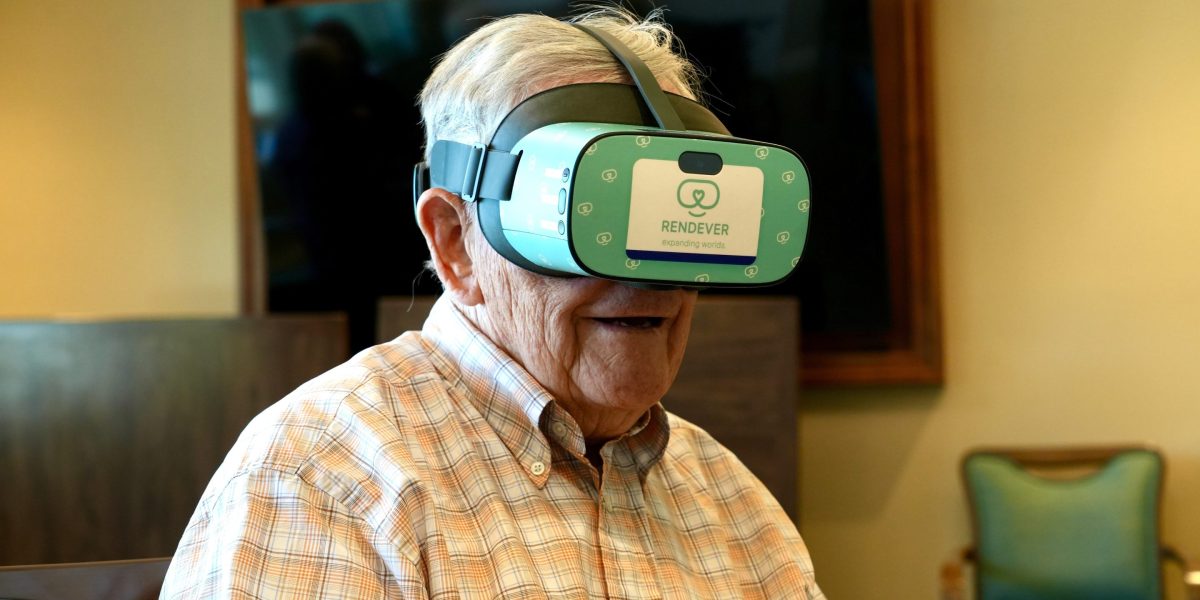
But they can still be thrust back to their days of wanderlust and thrill-seeking whenever caretakers at the community in Los Gatos, California, schedule a date for residents — many of whom are in their 80s and 90s — to take turns donning virtual reality headsets.

Within a matter of minutes, the headsets can transport them to Europe, immerse them in the ocean depths or send them soaring on breathtaking hang-gliding expeditions while they sit by each other. The selection of VR programming was curated by Rendever, a company that has turned a sometimes isolating form of technology into a catalyst for better cognition and social connections in 800 retirement communities in the United States and Canada.

A group of The Terraces residents who participated in a VR session earlier this year found themselves paddling their arms alongside their chairs as they swam with a pod of dolphins while watching one of Rendever’s 3D programs. “We got to go underwater and didn’t even have to hold our breath!” exclaimed 81-year-old Ginny Baird following the virtual submersion.

During a session featuring a virtual ride in a hot-air balloon, one resident gasped, “Oh my God!” Another shuddered, “It’s hard to watch!”

The Rendever technology can also be used to virtually take older adults back to the places where they grew up as children. For some, it will be the first time they’ve seen their hometowns in decades.

A virtual trip to her childhood neighborhood in New York City’s Queens borough helped sell Sue Livingstone, 84, on the merits of the VR technology even though she still is able to get out more often than many residents of The Terraces, which is located in Silicon Valley about 55 miles south of San Francisco.

“It isn’t just about being able to see it again, it’s about all the memories that it brings back,” Livingstone said. “There are a few people living here who never really leave their comfort zones. But if you could entice them to come down to try out a headset, they might find that they really enjoy it.”

Adrian Marshall, The Terraces’ community life director, said that once word about a VR experience spreads from one resident to another, more of the uninitiated typically become curious enough to try it out — even if it means missing out on playing Mexican Train, a dominoes-like board game that’s popular in the community.

“It turns into a conversation starter for them. It really does connect people,” Marshall said of Rendever’s VR programming. “It helps create a human bridge that makes them realize they share certain similarities and interests. It turns the artificial world into reality.”

Rendever, a privately owned company based in Somerville, Massachusetts, hopes to build upon its senior living platform with a recent grant from the National Institutes of Health that will provide nearly $4.5 million to study ways to reduce social isolation among seniors living at home and their caregivers.

Some studies have found VR programming presented in a limited viewing format can help older people maintain and improve cognitive functions, burnish memories and foster social connections with their families and fellow residents of care facilities. Experts say the technology may be useful as an addition to and not a replacement for other activities.

“There is always a risk of too much screen time,” Katherine “Kate” Dupuis, a neuropsychologist and professor who studies aging issues at Sheridan College in Canada, said. “But if you use it cautiously, with meaning and purpose, it can be very helpful. It can be an opportunity for the elderly to engage with someone and share a sense of wonder.”

VR headsets may be an easier way for older people to interact with technology instead of fumbling around with a smartphone or another device that requires navigating buttons or other mechanisms, said Pallabi Bhowmick, a researcher at the University of Illinois Urbana-Champaign who is examining the use of VR with older adults.

“The stereotypes that older adults aren’t willing to try new technology needs to change because they are willing and want to adapt to technologies that are meaningful to them,” Bhowmick said. “Besides helping them to relieve stress, be entertained and connect with other people, there is an intergenerational aspect that might help them build their relationships with younger people who find out they use VR and say, ‘Grandpa is cool!’”

Rendever CEO Kyle Rand’s interest in helping his own grandmother deal with the emotional and mental challenges of aging pushed him down a path that led him to cofound the company in 2016 after studying neuroengineering at Duke University.

“What really fascinates me about humans is just how much our brain depends on social connection and how much we learn from others,” Rand said. “A group of elderly residents who don’t really know each other that well can come together, spend 30 minutes in a VR experience together and then find themselves sitting down to have lunch together while continuing a conversation about the experience.”

It’s a large enough market that another VR specialist, Dallas-based Mynd Immersive, competes against Rendever with services tailored for senior living communities.

Besides helping create social connections, the VR programming from both Rendever and Mynd has been employed as a possible tool for potentially slowing down the deleterious effects of dementia. That’s how another Silicon Valley retirement village, the Forum, sometimes uses the technology.

Bob Rogallo, a Forum resident with dementia that has rendered him speechless, seemed to be enjoying taking a virtual hike through Glacier National Park in Montana as he nodded and smiled while celebrating his 83rd birthday with his wife of 61 years.

Sallie Rogallo, who doesn’t have dementia, said the experience brought back fond memories of the couple’s visits to the same park during the more than 30 years they spent cruising around the U.S. in their recreational vehicle.

“It made me wish I was 30 years younger so I could do it again,” she said of the virtual visit to Glacier. “This lets you get out of the same environment and either go to a new place or visit places where you have been.”

In another session at the Forum, 93-year-old Almut Schultz laughed with delight while viewing a virtual classical music performance at the Red Rocks Amphitheatre in Colorado and later seemed to want to play with a puppy frolicking around in her VR headset.

“That was quite a session we had there,” Schultz said with a big grin after she took off her headset and returned to reality.



Source link

Continue Reading

Trending

Copyright © Miami Select.