
Politics
Frustrated Ron DeSantis waits for Donald Trump to address college sports NIL issues
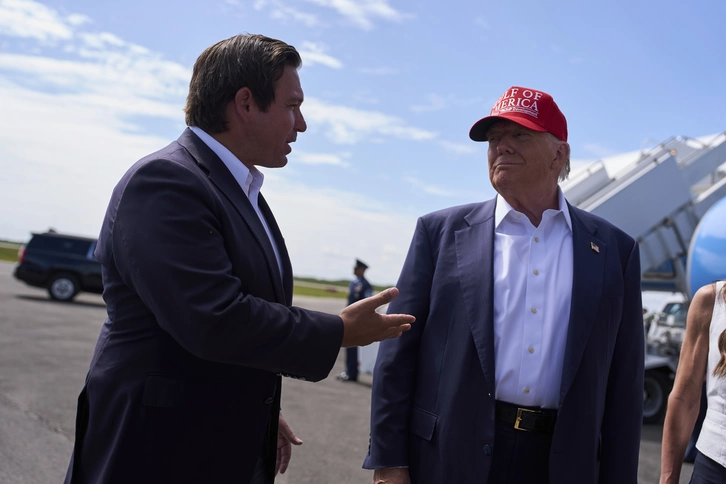
Gov. Ron DeSantis says college football is a “total mess” in light of athletes shopping around for better deals from programs, and that his efforts to reform it have been paused by Donald Trump’s White House.
Speaking in Sebring, DeSantis said he spoke to a bipartisan group of Governors “about a year ago” and said Governors on both sides of the aisle wanted to “come up with a framework.”
“Honestly, you really only need 10, 12 states, right? Because, you know, if you get Florida, Texas, Georgia, Alabama, Michigan, now you need Indiana, California,” DeSantis said, explaining that once states with “big-time programs” act, that would be enough to set up a workable framework.
But DeSantis said comments by Trump that the federal government planned to step in halted the state-led effort.
“So we’re like, all right, we’ll let the feds do it,” DeSantis added.
DeSantis said as early as last year that he wanted Governors to join him in some reform effort.
“I know they’re working on something, but I think it’s hit rock bottom just in terms of all the static that’s in the system,” DeSantis said.
He noted that “general managers” in college football make it “like a professional thing,” adding that many of the athletes recruited “haven’t even really produced that well.”
He also suggested that athletes are currently holding up programs for more money when they are performing.
“Now it’s like they have more rights than pro athletes,” he said.

“A quarterback will, you know, throw for four touchdowns. The third game of the season (he will) go, ‘Hey, coach, any more NIL money? Oh, I’m going to hit the transfer portal.’ And then you just go hop around schools. So you can play for four or five schools the way it goes now. And you can even play a few games, do very well, sit out and still get eligibility for the next year.”
Players’ mobility hurts programs, he argued.
“It’s hard to even know whether your teams are going to be good year after year because you don’t know who you’re going to lose. And then to do the transfer portal, right as we’re getting into the playoff, how does that make sense where these teams are going to have to make the decision?”
While the Governor stopped short of saying he regrets signing the name, image and likeness legislation that helped start the current cycle of professionalization of college sports, he does want a “happy medium” between athletes not being compensated and the current system.
But with time running out, reforms may not be realized before DeSantis leaves Tallahassee.