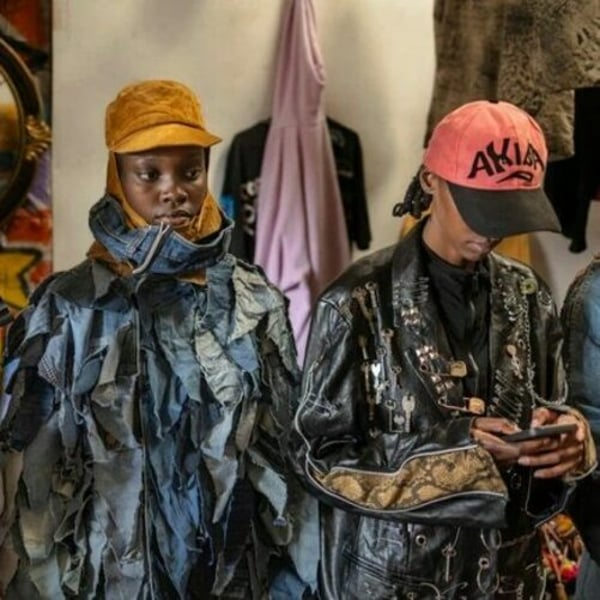
In a dusty alley in the heart of Kenya’s largest open-air market, fashion models strut down a makeshift runway in bold, upcycled outfits made from waste collected at dumpsites and market cast-offs- proof that even trash can dazzle.
Models wearing upcycled creations made from discarded garments – AFP
Every year, thousands of tonnes of used clothes from Europe, the US, and beyond make their way to Kenya. In 2023, Kenya overtook Nigeria to become Africa’s largest importer of second-hand clothing according to a study from the US-based Massachusetts Institute of Technology (MIT).
Thousands of these bales land in Gikomba market near central Nairobi where tin-roofed stalls stretch across a five-acre labyrinth, one of the city’s major economic hubs. On a sunny afternoon last week, a huge crowd gathered to watch models sashay and pivot, showcasing pieces from bales once discarded as unwearable or unsellable.
“What? They’ve upgraded our clothes,” one of the traders said with delight as he watched the show.
Gikomba Runway Edition brought together young, underground Kenyan designers and stylists for the first time, including 25-year-old “upcycling” specialist Morgan Azedy.
“I always see the environment around me dirty… I wanted to control pollution,” he told AFP as he prepared his avant-garde outfits in his single-room home before the show.
His “Kenyan Raw” collection featured streetwear denim and a gothic flair crafted entirely from recycled leather sourced from dumpsites and fashion rejects.
Kenya imported about 197,000 tonnes of second-hand clothes worth $298 million in 2023, according to the MIT study.
The Environment for Development, a global research network, estimates that around a third are unusable items that end up in landfills- mostly made from plastic-based materials like nylon and polyester that does not biodegrade.
Olwande Akoth, a designer showcasing her upcycled kimonos at the fashion show, once traded in second-hand bales but often felt disheartened by their poor quality.
“It’s just garbage… the clothes you can’t even wear, you wouldn’t even give to a beggar,” Akoth said.
The influx of second-hand clothes has employed hundreds of thousands of people across East Africa, from port handlers to traders, and provided a lot of affordable clothing. But it has also made it hard for domestic textile firms to get off the ground.
The East African Community of eight regional countries tried to impose a ban in 2016 in the hope of boosting local textile production.
But it was opposed by recycling lobbyists in the US, and Washington threatened to kick the East African nations out of a lucrative trade deal called the African Growth and Opportunity Act (AGOA) that allowed them to sell products duty-free into the US.
Kenya, Tanzania, Uganda, and others backed down. Only Rwanda held firm and was punished with a suspension from selling clothes under AGOA’s preferential rates. President Donald Trump‘s administration allowed AGOA to expire last month for the whole continent, although talks are under way to revive it.
For Azedy, the downside of the trade deals- mountains of discarded clothes piling up in dumpsites- is a treasure trove for his creative eye. Buying new fabric, he said, is simply “too expensive”.
On the runway, what was once an oversized pair of denim trousers has been transformed into a tiered, layered jacket paired with flared trousers and platform shoes. His drive for “uniqueness” in repurposed pieces earned him a place at Berlin Fashion Week last year.
Having styled several regional musicians with his collection, Azedy now dreams of taking what others consider trash to the grand stages of New York and Paris.
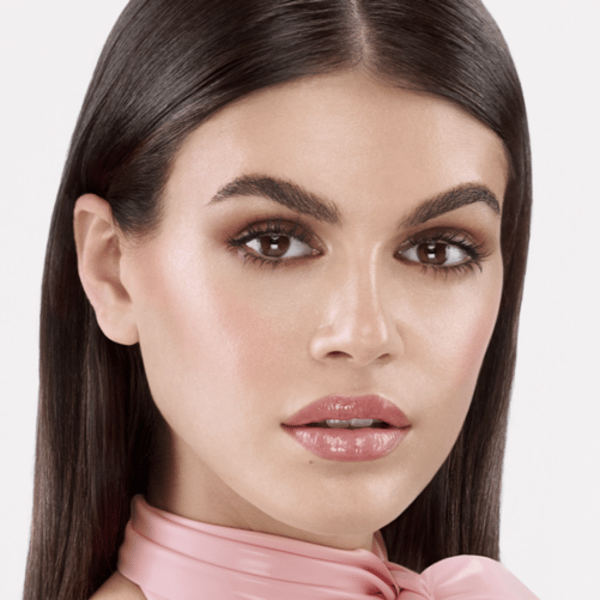
NARS Cosmetics has revealed Kaia Gerber as its newest global brand ambassador, saying she’s a “beauty and fashion icon [and] a longtime collaborator” of founder and creative director, François Nars.
Kaia Gerber by François Nars
She certainly adds a newsworthy element to any brand she fronts having walked the runways for the biggest global designer labels as well as appearing on the covers of the world’s top glossy magazines.
She’s been in demand by high end and mass-market labels this year and in May was announced as Mango’s latest face in a deal that the retailer called a “collaboration” set to run throughout the year. Two months earlier she’d appeared with her mother Cindy Crawford for Mango’s rival Zara with the duo headlining a new session of its ‘Zara Streaming’ initiative.
She makes her debut for NARS with the launch of a campaign shot by François Nars for the new Afterglow Lip Balm. That product launches in January and continues the trend for high-end brands diving deep into a once-humble category and backing their launches with major campaigns.
Shiseido-owned NARS has been expanding in recent periods and only in October announced a strategic partnership with Indian giant Reliance Retail’s omnichannel business Tira to boost accessibility in the country. Gerber’s presence is likely to be a boost for its growth plans.
François Nars said of her: “Kaia is a true beauty, a supermodel of today who carries with her the spirit of another era. Working with her on this campaign felt like stepping back into the age of the original icons. Those supermodels were more than faces; what I always loved about them was their joy. They loved the camera, the artistry of makeup and hair, and fashion itself. Most importantly, they gave everything in front of the camera, pouring their energy into creating the most beautiful images possible. Kaia has that same spirit and photographing her was like reliving the magic—one of the very things that made me fall in love with this industry in the first place.”
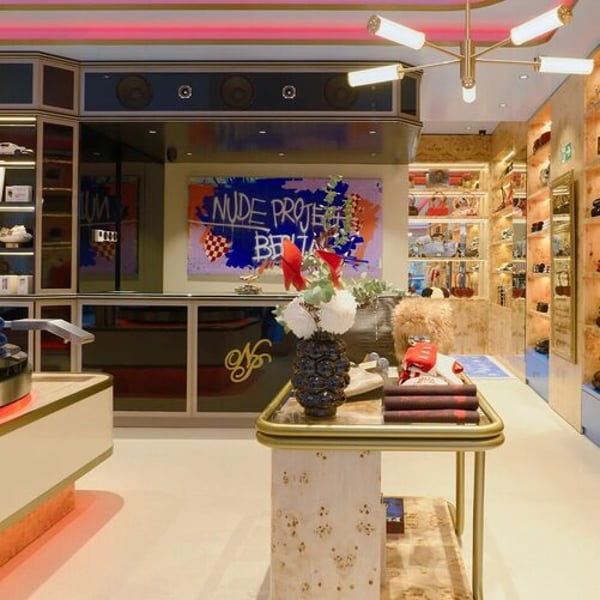
NudeProject is advancing its European expansion. The Spanish urban fashion brand has added Germany to the list of markets in which it has a retail presence: on Friday December 12, it opened a store on Alte Schönhauser Straße in Berlin.
New Nude Project store in Berlin – Nude Project
The store is the brand’s first permanent location in the German capital, although it tested the market in the city last spring with a pop-up. With this opening, Nude Project now operates four international brick-and-mortar stores, alongside existing locations in Milan, Lisbon, and Amsterdam. In October, the brand crossed the Atlantic to make its first foray into US retail with a temporary pop-up in Miami.
Founded in 2019 by Bruno Casanovas and Alex Benlloch, the firm has become a phenomenon among younger consumers and has progressively expanded its catalogue in recent years, spanning both womenswear and menswear, as well as accessories.
Collaborations are a key part of the brand’s identity; in fact, it has just unveiled a new capsule with Playboy, its third joint launch. In financial terms, it reported revenue of €26 million in the 2023 financial year (the most recent figures available).
This article is an automatic translation. Click here to read the original article.
Retail giant Next has been a major acquirer of brands in recent years and a report claims that premium footwear chain Russell & Bromley is now on its shopping list.
Billie Piper for Russell & Bromley
Next either owns or has majority stakes in Reiss, FatFace, Joules, Cath Kidston, Made, Laura Ashley’s homewares and more. But while it has a big war chest for acquisitions, it’s not the only company targeting Russell & Bromley.
Sky News reported that the 145-year-old family-owned footwear and accessories is courting investors and Next is one of several parties in talks with Russell & Bromley’s advisers about a deal. None of the other potential buyers have been identified.
Russell & Bromley confirmed this autumn that it had appointed advisory specialist Interpath to look at funding options for the business.
In October, CEO Andrew Bromley said: “We are currently exploring opportunities to help take Russell & Bromley into the next phase of our ‘Re Boot’ vision. Since the announcement of the ‘Re Boot’ earlier this year we have made significant progress, positioning us well to build on our momentum and continue along our journey. We are looking forward to working with our advisory team to secure the necessary investment to accelerate our expansion plans.”
The company has stores and concessions in the UK and Ireland and is led by Bromley, who’s from the fifth generation of his family to run the chain.
Earlier this year, he oversaw the launch of a five-year turnaround plan focused on “refining the brand proposition, elevating the product offering, streamline operations and fuel market expansion at pace”.
In September, the change of approach could be seen when the company launched a quirky campaign fronted by pop star-turned-actress Billie Piper. It was overseen by creative director Daniel Beardsworth-Shaw (who joined as the brand’s first CD in 2024) and was an unusual move for the label that’s not previously been known for its celebrity ambassadors or surreal campaign concepts.
In its last accounts, covering 2023, the company reported turnover down to just under £40 million from almost £45 million. EBITDA was a loss of £3.2 million after a narrower loss of £404,000 the year before. And the loss after tax was £6.9 million, also wider than the loss in the prior year of £4.6 million. The company didn’t share any details about what had gone wrong.
Those accounts were filed in early November 2024 and its next filing (covering 2024) is due before the end of this year.
Whether Next or another business buys it or takes a stake (it’s unclear which option the controlling family favours) will clearly have big impact on its future direction. Next already has a strong track record in the premium sector in which Russell & Bromley operates with its stewardship of Reiss.
Next declined to comment on the Sky News story, and both Russell & Bromley and Interpath couldn’t be reached.






 Politics8 years ago