Connect with us

Business

From Trump walking away to ‘managed instability,’ Princeton expert on Latin-U.S. relations sees 5 scenarios for Venezuela

Published

on


Whether under the banner of counter-narcotics or regime change, the message is unmistakable: The U.S. is prepared to act unilaterally, forcefully and, potentially, illegally. And this will have broad ramifications across Latin America, not least for Venezuela itself.

The reaction to the U.S. intervention from across the region was instantaneous. Colombia rushed troops to its frontier, bracing for potential refugees and denouncing the strikes as an affront to regional sovereignty. Cuba joined Iran, Russia and other foes of Washington in condemning the raid at the United Nations. A handful of governments, notably in Argentina, offered ringing endorsements.

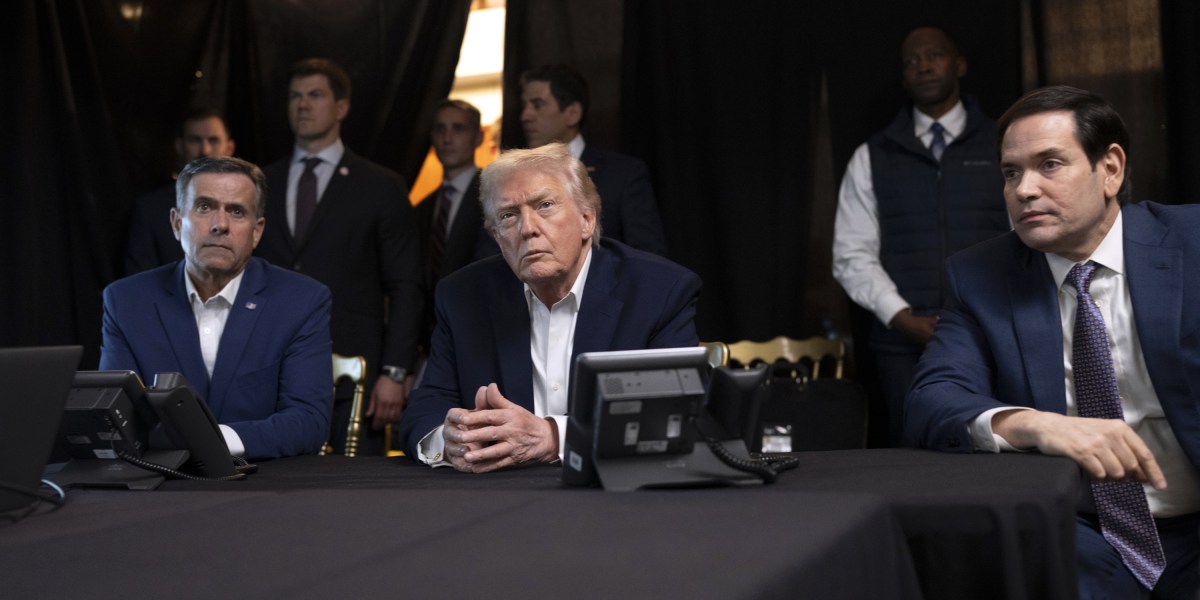
Maduro’s next public appearance will likely be in a New York court. But where do the U.S. and Venezuela go from here? President Donald Trump declared that the U.S. will “run” Venezuela until there is “a safe, proper and judicious transition” of power. He also said his administration is “not afraid of boots on the ground.”

But so far, few concrete details are on offer. Much depends on what Washington does next and how Venezuela’s fractured polity responds. As an expert on U.S.-Latin American relations, I think five broad scenarios seem likely.

1. Trump declares victory and walks away

In the first scenario, Trump will proclaim mission accomplished, parade the capture of Maduro as a triumph of American will and rapidly reduce the U.S. footprint. Venezuelan institutions would be left largely intact. Current Vice President Delcy Rodríguez, Interior Minister Diosdado Cabello and Defense Minister Vladimir Padrino López would preside over a reconstituted government that retains its commitment to the style of left-wing governance developed by the late Hugo Chavez, now minus its latest figurehead in Maduro.

This would suit American generals keen to limit U.S. troop exposure, as well as foreign powers anxious to avoid a power vacuum. But it offers little to the Venezuelan opposition or to regional governments that have borne years of refugee flows.

Above all, it would squander the leverage Washington has just expended effort and money to obtain. Having taken the extraordinary step of abducting a head of state, simply reverting to a slightly reshuffled Chavismo would look, even by the standards of foreign American interventions, oddly anticlimactic.

2. A popular uprising topples ‘Chavismo’

A second possibility is that the shock of Maduro’s removal cracks the government’s aura of inevitability and triggers a mass uprising that sweeps Chavismo from power. With the presidency vacant and the security forces demoralized or divided, a broad coalition of opposition parties, civil-society groups and disaffected Chavistas could push for a transitional council, perhaps under Organization of American States or U.N. auspices.

Yet as neat and tidy as this sounds, such revolutions — especially those supported by outside interference — rarely proceed tidily. Years of political repression, organized crime, economic misery and emigration have hollowed out Venezuela’s middle class and organized labor. Armed colectivos – paramilitary groups with a stake in the old order – would resist fiercely. The result might be not a swift democratic breakthrough but an unstable transition: a fragile caretaker government, sporadic violence and intense infighting over amnesties and control of the oil sector.

3. U.S. escalation to install a friendly opposition

Another scenario has Washington leveraging its new position to push forcefully for complete regime change. That could mean tightening sanctions on remaining power brokers, expanding strikes against security installations and militias, covertly supporting insurgent factions, and using Maduro’s prospective trial as a global stage on which to delegitimize Chavismo once and for all.

In this scenario, a recognized opposition leader would be ushered into office following some form of managed election, transitional council or negotiated handover — potentially someone like the Nobel Prize-winning María Corina Machado. The U.S. and its allies would dangle debt restructuring and reconstruction funding in exchange for market reforms and geopolitical alignment.

The risks are obvious. An overtly U.S.-produced transition would taint the new leadership’s legitimacy at home and abroad. It would deepen polarization, entrench the narrative of imperial imposition that Chavismo has long peddled, and invite proxy meddling by China, Cuba, Iran and Russia. A bruised but not broken Chavista movement could pivot into armed resistance, turning Venezuela into another theater of low-level insurgency.

4. U.S. custodianship and managed transition

A managed transition is the option Trump has now openly floated, with Washington taking an interim custodial role in Venezuela. In practice, it would resemble a trusteeship in all but name. Early priorities would be to impose a basic chain of command and restore administrative capacity, stabilizing the currency and payments system, and sequencing reforms to prevent state collapse during the handover.

The political timetable would be central. Washington would heavily influence interim governance arrangements, electoral rules and the timing of presidential and legislative votes, including reconstituting electoral authorities and setting minimum conditions for campaigning and media access. The U.S. would not necessarily need to occupy the country, but it might require American forces on the ground to deter spoilers.

The economic logic of this way forward would hinge on rapidly restoring oil output and basic services through U.S. technical support, private contractors and selective sanctions relief tied to compliance benchmarks. Companies such as Chevron, the only U.S. major oil company still positioned inside Venezuela, or oilfield service providers like Halliburton would likely be early beneficiaries.

Yet the hazards are profound. Like with the U.S.-friendly opposition above, a U.S. custodianship could inflame nationalist sentiment and validate Chavismo’s anti-imperial narrative. The implicit threat of force might deter spoilers, but it might also deepen resentment and harden resistance among armed groups, Maduro remnants or anyone else opposed to U.S. occupation.

5. Hybrid conflict and managed instability

A final outcome may a messy hybrid of some or all of the above: a protracted struggle in which no actor fully prevails. Maduro’s removal could weaken Chavismo but not erase its networks in the military, bureaucracy and low-income barrios. The opposition could be energized but divided. The U.S. under Trump will be militarily powerful but constrained by domestic fatigue with foreign wars, the upcoming midterm elections and doubts about the legality of its methods.

In this scenario, Venezuela could lurch into years of managed instability. De facto power might be shared among a weakened Chavista elite, opposition figures co-opted into a transitional arrangement, and security actors controlling local fiefdoms. Sporadic U.S. strikes and covert operations could continue, calibrated to punish spoilers and protect preferred partners, but avoiding the scale of occupation.

Monroe Doctrine 2.0?

Whatever the future, what seems clear for now is that the anti-Maduro operation can be seen by supporters and critics alike as a kind of Monroe Doctrine 2.0. This version, a follow-up to the original 19th century doctrine that saw Washington warn European powers off its sphere of influence, is a more muscular assertion that extra-hemispheric U.S. rivals, and their local clients, will not be permitted to have a say on America’s doorstep.

This aggressive signal is not limited to Caracas. Cuba and Nicaragua, already under heavy U.S. sanctions and increasingly reliant on Russian and Chinese support, will read the Venezuelan raid as a warning that even entrenched governments are not safe if their politics don’t sufficiently align with Trump. Colombia, notionally a U.S. ally yet currently led by a left-leaning government that has railed against the U.S. Venezuela policy, finds itself squeezed.

Smaller and midsized states, too, will take note — and not just those in Latin America. Panama, whose canal is critical to global trade and U.S. naval mobility, may feel renewed pressure to move toward Washington and police Chinese inroads in ports and telecommunications. Canada and Denmark, via Greenland, will hear echoes in the Arctic.

In the meantime, for Venezuelans, there seems to be yet another turning of the screw by the U.S., with a bare-minimum guarantee of insecurity and precarious limbo for the foreseeable future.

Robert Muggah, Richard von Weizsäcker Fellow na Bosch Academy e Co-fundador, Instituto Igarapé; Princeton University

This article is republished from The Conversation under a Creative Commons license. Read the original article.


Source link

Continue Reading

Business

Down Arrow Button Icon

Published

on


Lawmakers sounded the alarm on the Justice Department’s criminal inquiry into Federal Reserve Chairman Jerome Powell, putting at risk President Donald Trump’s efforts to name a new central bank leader.

On Sunday, Powell revealed that the DOJ served the Fed with grand jury subpoenas, threatening a criminal indictment over his testimony before the Senate last June related to renovations on the headquarters, which has seen cost overruns.

He called the allegations a pretext and said the investigation was really aimed at the Fed’s ability to set interest rates without political pressure. Trump has attacked Powell for much of the last year over his reluctance to cut rates, though the president said he didn’t know about the DOJ probe.

But Republican Sen. Them Tillis agreed with Powell’s assessment and instead pointed the finger at the DOJ.

“If there were any remaining doubt whether advisers within the Trump Administration are actively pushing to end the independence of the Federal Reserve, there should now be none,” he wrote in a post on X. “It is now the independence and credibility of the Department of Justice that are in question.”

Tillis sits on the Senate Banking Committee, which oversees the Fed and would vote on anyone Trump tries to put on the central bank.

Powell’s term as chair expires in May, and Trump has said he already has someone in mind to replace him who will lower rates further. But the DOJ investigation into Powell could blow up that process.

“I will oppose the confirmation of any nominee for the Fed—including the upcoming Fed Chair vacancy—until this legal matter is fully resolved,” Tillis said.

While Powell’s term as chair expires in May, his term as a member of the Fed board of governors expires in 2028. When prior Fed chairs have stepped down, they typically have resigned from the board as well. Powell could choose to stay to preserve the Fed’s independence.

Sen. Elizabeth Warren, a Democrat who also sits on the Senate Banking Committee, accused Trump of trying to force Powell off the Fed board “to complete his corrupt takeover of our central bank.”

“He is abusing the law like a wannabe dictator so the Fed serves him and his billionaire friends,” she added. “The Senate must not move ANY Trump Fed nominee.”


Source link

Continue Reading

Business

Down Arrow Button Icon

Published

on


U.S. equity futures fell sharply Sunday night after Federal Reserve Chair Jerome Powell confirmed that he is under investigation related to testimony he gave last June concerning the renovation of Federal Reserve buildings. 

The New York Times report breaking news of the investigation and Powell’s subsequent disclosure rattled markets, reviving fears that years of President Donald Trump pressuring the Federal Reserve could now be realized into a direct assault on its independence.

Futures tied to the Nasdaq 100 led the decline, falling about 0.8%, as interest-rate-sensitive technology stocks bore the brunt of the selloff. S&P 500 futures were down roughly 0.5%, while Dow Jones Industrial Average futures fell about 0.4%, according to late-evening pricing.

Investors sought protection in the traditional safe-haven assets. Gold futures rose 1.7% to around $4,578 an ounce, while silver jumped more than 4%, reflecting renewed demand for protection against political and monetary instability. The U.S. dollar weakened modestly against several major currencies, including the Swiss franc and Japanese yen.

After years of largely staying silent while Trump repeatedly mocked and threatened him, Powell appeared to have reached a breaking point, issuing a rare and pointed statement. 

He wrote that while “No one—certainly not the chair of the Federal Reserve—is above the law,” the attack should be seen in the “the broader context of the administration’s threats and ongoing pressure.” 

“This new threat is not about my testimony last June or about the renovation of the Federal Reserve buildings…Those are pretexts. The threat of criminal charges is a consequence of the Federal Reserve setting interest rates based on our best assessment of what will serve the public, rather than following the preferences of the President.”

Economists warn that if the executive branch successfully co-opts the Fed, it could create a “self-fulfilling prophecy” of higher long-term inflation.

As Oxford Economics recently noted, any “cracks in the Fed’s independence” could spread rapidly through markets and ultimately raise borrowing costs for the businesses the administration seeks to protect with low interest rates. 

In a note published last July, when Trump publicly threatened to fire Powell, Deutsche Bank warned that such a move could spark severe market disruption.

“Both the currency and the bond market can collapse,” the bank wrote, citing heightened risks of inflation and financial instability. “The empirical and academic evidence on the impact of a loss of central-bank independence is fairly clear.”

Wall Street executives have echoed those concerns. Brian Moynihan, chief executive of Bank of America, said recently the erosion of Fed independence would carry serious consequences.

“The market will punish people if we don’t have an independent Fed,” Moynihan said.


Source link

Continue Reading

Business

Magnificent 7’s stock market dominance shows signs of cracking

Published

on


To beat the market in recent years, many investors applied a simple strategy: Load up on the biggest US technology stocks. 

It paid handsomely for a long time. But last year, it didn’t. For the first time since 2022, when the Federal Reserve started raising interest rates, the majority of the Magnificent 7 tech giants performed worse than the S&P 500 Index. While the Bloomberg Magnificent 7 Index rose 25% in 2025, compared with 16% for the S&P 500, that was only because of the enormous gains by Alphabet Inc. and Nvidia Corp.

Many Wall Street pros see that dynamic continuing in 2026, as profit growth slows and questions about payoffs from heavy artificial intelligence spending rise. So far they’ve been right, with the Magnificent 7 index up just 0.5% and the S&P 500 climbing 1.8% to start the year. Suddenly stock picking within the group is crucial. 

“This isn’t a one-size-fits-all market,” said Jack Janasiewicz, lead portfolio strategist at Natixis Investment Managers Solutions, which has $1.4 trillion in assets. “If you’re just buying the group, the losers could offset the winners.”

The three-year bull market has been led by the tech giants, with Nvidia, Alphabet, Microsoft Corp. and Apple Inc. alone accounting for more than a third of the S&P 500’s gains since the run began in October 2022. But enthusiasm for them is cooling as interest in the rest of the S&P 500 rises.

With Big Tech’s earnings growth slowing, investors are no longer content with promises of AI riches — they want to start seeing a return. Profits for the Magnificent 7 are expected to climb about 18% in 2026, the slowest pace since 2022 and not much better than the 13% rise projected for the other 493 companies in the S&P 500, according to data compiled by Bloomberg Intelligence.

“We’re already seeing a broadening of earnings growth and we think that’s going to continue,” said David Lefkowitz, head of US equities at UBS Global Wealth Management. “Tech is not the only game in town.”

One source of optimism is the group’s relatively subdued valuations. The Magnificent 7 index is priced at 29 times profits projected over the next 12 months, well below the 40s multiples earlier in the decade. The S&P 500 is trading at 22 times expected earnings, and the Nasdaq 100 Index is at 25 times. 

Here’s a look at expectations for the year ahead.

Nvidia

The dominant AI chipmaker is under pressure from rising competition and concerns about the sustainability of spending by its biggest customers. The stock is up 1,165% since the end of 2022, but it has lost 11% since its Oct. 29 record.

Rival Advanced Micro Devices Inc. has won data center orders from OpenAI and Oracle Corp., and Nvidia customers like Alphabet are increasingly deploying their own custom made processors. Still, its sales continue to race ahead as demand for chips outstrips supply. 

Wall Street is bullish, with 76 of the 82 analysts covering the chipmaker holding buy ratings. The average analyst price target implies a roughly 39% gain over the next 12 months, best among the group, according to data compiled by Bloomberg.

Microsoft

For Microsoft, 2025 was the second consecutive year it underperformed the S&P 500. One of the biggest AI spenders, it’s expected to invest nearly $100 billion in capital expenditures during its current fiscal year, which ends in June. That figure is projected to rise to $116 billion the following year, according to the average of analyst estimates.

The data center buildout is fueling a resurgence in revenue growth in Microsoft’s cloud-computing business, but the company hasn’t had as much success in getting customers to pay for the AI services infused into its software products. Investors want to start seeing returns on those investments, according to Brian Mulberry, client portfolio manager at Zacks Investment Management.

“What you’re seeing is some people looking for a little bit more quality management in terms of that cash flow management and a better idea on what profitability really looks like when it comes to AI,” Mulberry said.

Apple

Apple has been far less aggressive with its AI ambitions than the rest of the Magnificent 7. The stock was punished for it last year, falling almost 20% through the start of August. 

But then it caught on as an “anti-AI” play, soaring 34% through the end of the year as investors rewarded its lack of AI spending risk. At the same time, strong iPhone sales reassured investors that the company’s most important product remains in high demand. 

Accelerating growth will be the key for Apple shares this year. Its momentum has slowed recently, the stock closed higher on Friday, narrowly avoiding matching its longest losing streak since 1991. However, revenue is expected to expand 9% in fiscal 2026, which ends in September, the fastest pace since 2021. With the stock valued at 31 times estimated earnings, the second highest in the Magnificent 7 after Tesla, it will need the push to keep the rally going.

Alphabet

A year ago, OpenAI was seen as leading the AI race and investors feared Alphabet would get left behind. Today, Google’s parent is a consensus favorite, with dominant positions across the AI landscape. 

Alphabet’s latest Gemini AI model received rave reviews, easing concerns about OpenAI. And its tensor processing unit chips are considered a potential significant driver of future revenue growth, which could eat into Nvidia’s commanding share of the AI semiconductor market. 

The stock rose more than 65% last year, the best performance in the Magnificent 7. But how much more can it run? The company is approaching $4 trillion in market value, and the shares trade at around 28 times estimated earnings, well above their five-year average of 20. The average analyst price target projects just a 3.9% gain this year. 

Amazon.com

The e-commerce and cloud-computing giant was the weakest Magnificent 7 stock in 2025, its seventh straight year in that position. But Amazon has charged out of the gate in early 2026 and is leading the pack.

Much of the optimism surrounding the company is based on Amazon Web Services, which posted its fastest growth in years in the company’s most recent results. Concerns that AWS was falling behind its rivals has pressured the stock, as has the company’s aggressive AI spending, which includes efforts to improve efficiency at its warehouses, in part by using robotics. Investors expect the efficiency push to start paying off before long, which could make this the year the stock goes from laggard to leader. 

“Automation in warehouses and more efficient shipping will be huge,” said Clayton Allison, portfolio manager at Prime Capital Financial, which owns Amazon shares. “It hasn’t gotten the love yet, but it reminds me of Alphabet last year, which was sort of left behind amid all the concerns about competition from OpenAI, then really took off.”

Meta Platforms

Perhaps no stock in the group shows how investors have turned skeptical about lavish AI spending more than Meta. Chief Executive Officer Mark Zuckerberg has pushed expensive acquisitions and talent hires in pursuit of his AI ambitions, including a $14 billion investment in Scale AI in which Meta also hired the startup’s CEO Alexandr Wang to be its chief AI officer.

That strategy was fine with shareholders — until it wasn’t. The stock tumbled in late October after Meta raised its 2025 capital expenditures forecast to $72 billion and projected “notably larger”spending in 2026. When the shares hit a record in August they were up 35% for the year, but they’ve since dropped 17%. Demonstrating how that spending is boosting profits will be critical for Meta in 2026.

Tesla

Tesla’s shares were the worst performers in the Magnificent 7 through the first half of 2025, but then soared more than 40% in the second half as Chief Executive Officer Elon Musk shifted focus from slumping electric vehicle sales to self-driving cars and robotics. The rally has Tesla’s valuation at almost 200 times estimated profits, making it the second most expensive stock in the S&P 500 behind takeover target Warner Bros. Discover Inc.

After two years of stagnant revenue, Tesla is expected to start growing again in 2026. Revenue is projected to rise 12% this year and 18% next year, following an estimated 3% contraction in 2025, according to data compiled by Bloomberg.

Still, Wall Street is pessimistic about Tesla shares this year. The average analyst price target projects a 9.1% decline over the next 12 months, data compiled by Bloomberg show. 


Source link

Continue Reading

Trending

Copyright © Miami Select.