Connect with us

Business

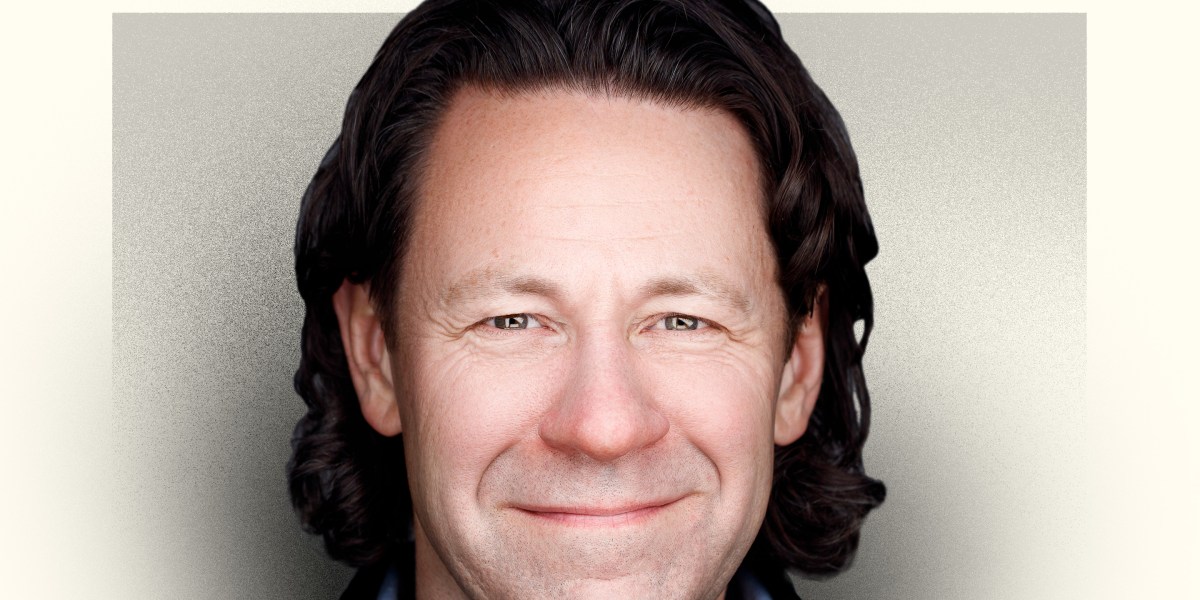
From the Peace Corps to the boardroom: Humana CEO Jim Rechtin on listening and leading
Published

on


It’s been a tough year for Humana (No. 39 on the Fortune 500), the health-insurance giant that primarily serves seniors enrolled in Medicare Advantage plans. Rising medical costs and a drop in the quality ratings that are used to calculate bonus payments have made an impact. On Nov. 5, Humana reported a drop in net income to $1.62 a share, from $3.98 a share the year prior, and lowered its full-year earnings guidance. 

CEO Jim Rechtin, who has been in the role since July 2024, spoke to Fortune prior to the release of earnings, and discussed how he’s navigating a tough climate and trying to transform Humana.

This interview has been edited and condensed for clarity. 


You started your career in the Peace Corps, directing a public health and water sanitation project in what’s today the Republic of Congo. What did you learn from that experience?

Six months in, I was ready to quit and go home. We were doing construction projects to build latrines and cap wells and we expected the communities to fund those things themselves. 

They’re sitting there, saying ‘I have a stream in my backyard that has perfectly clear water in it.’ As we began to ask questions, people would come back to say, ‘Well, we need latrines in the market. We need latrines at the school, the hospital.’ So we were able to target the project in a different way. The fundamental lesson is, go talk to your customers and ask them what they need, because they know.

You’re assigned this project, but the project doesn’t work because nobody’s been on the ground there and you spend your first year realizing it’s not going to work. So you start talking to people and listening to them and you realize that we misunderstood the need. That really is, frankly, no different than my first year and a half here.

Humana is like the Peace Corps?

You come in with an idea of what needs to happen, but the reality is you don’t know.

So you spend a whole bunch of time going out, talking to members, providers, your own associates, and you begin putting ideas together. 

Most of my background has been in the provider space, not the insurance space. We’re both, but we’re predominantly in the insurance space. The challenge there is that it’s a business built around managing a high volume of transactions and pricing risk, but it’s not a business that is inherently attuned to consumers. If you interviewed a bunch of our 65,000 associates, you’d walk away and say, ‘Hey, these are good people. They really care about customers.’ Then you would realize that we have almost no tools to collect feedback from our customers.

A lot of what we’re trying to do now is behave more like a consumer health care company, to the degree that there is such a thing in the U.S. right now, as opposed to a traditional insurance company. That starts with understanding who your customer is and getting feedback and trying to balance that multiyear journey with the near-term pressures.

Once you get all that feedback, are there some inherent constrictions with the business model in terms of incorporating it?

I don’t want to pretend that there aren’t obstacles, but I would say that they’re not structural to the business or the sector. They are obstacles of history, the cultural biases that we bring to every conversation. It’s the way that we have chosen to do things that we have to unwind.

Any examples?

We recently rolled out a new portal for the annual enrollment process. What we have never done before is say: Let’s rapidly prototype one in 30 days, trial it with a bunch of real consumers, get feedback, modify the next 30 days, get feedback again and so on. We would have typically come up with a six-month plan to build something, with no input from the people who are going to use it and then find out that we didn’t build it quite right. There’s no structural reason to do it one way or another.

Your customer base must skew older because the bulk of your revenue comes from Medicare Advantage (private Medicare-approved plans that often offer extra benefits like vision, dental and fitness coverage).

Yes, most of our business is built to serve seniors. We do have other businesses that don’t serve seniors, and those are growing, but we predominantly serve seniors. They’re on Facebook, they use YouTube, they shop on Amazon. They may not be as digitally native as a 25-year-old, but they’re absolutely digitally engaged. Sometimes we get caught up in the bias that they’re not. We need to give them the type of experience that they want to engage with. We sponsor the Senior Games, kind of like the Olympics for seniors, and this year we rolled out an adjacent event called the Cognitive Games.

Cognitive games?

It’s things like Bejeweled and Wordle and those kinds of games. In the first week, we engaged a few hundred thousand people, so we knew we’d built something that they wanted.

How does that help the Humana band?

On the Cognitive Games, I don’t know the answer. For what it’s worth, we didn’t start sponsoring the Senior Games because we were looking for an ROI. We thought it was a good thing to do, as a civic contribution. We almost stumbled into the ROI by accident because we were seeing people enrolling at the Senior Games or after.

The bigger thing is how it changed perceptions of our brand. If you were to interview people at the Senior Games about Humana, they would tell you that it’s about wellness, taking an interest in the whole person’s health. That goes beyond a let-me-pay-your-claim consumer health care company. We’re out where consumers are, building a relationship with them. We’re not managing a payment transaction in the shadows.

Any thoughts on the current administration’s moves to cut health care costs?

Health care is one of the largest expenditures in the federal and state budgets. There’s not much that goes on in the policy world that doesn’t have some second- or third-order implication for us. So, yes, we pay attention. Yes, it matters. I think we should all be concerned about the fiscal pressures that the country is under right now. Those fiscal pressures and the size of health care expenses means there will continue to be pressure on our sector.

There are these opposing forces: One is the fiscal realities of our country and our government; the other is an active voter block that really loves Medicare and Medicare Advantage.  Those two things are pushing on each other, and we sit in between. We can play that role passively and hope that those two pressures resolve themselves, or we have an opportunity to be proactive in trying to diffuse that pressure, taking a more active stance in helping consumers make good health care decisions, which will reduce costs over time. Most consumers want to make good health care decisions. They need information and the tools to be able to do that. And so we can play a more active role. To me, that goes right back to being a consumer health care company.

“Most consumers want to make good health care decisions. They need information and the tools to be able to do that.Jim Rechtin, CEO, Humana

What are we not paying enough attention to, in terms of the opportunities or the challenges?

Most of the conversation is about one annual budget after another. The things that we need to fix are not going to be fixed in an annual budget cycle. How do we get a more holistic solution to the fiscal pressures and the health care components?

What would you do?

How do you take the unnecessary utilization out of the system? And how do we streamline and simplify the system in a way that takes a whole bunch of the bureaucratic cost out of it? That’s not limited to any one sector. A lot of that has to do with how the different sectors of health care interact with each other. Billing and collecting costs too much. Distribution costs too much. The hurdles to access create unnecessary cost. We need more modern pipes to exchange data between the different players in the industry. We need, frankly, more access to data so that we can better inform and guide and educate our members on how to access care. The fragmented nature of how our system works creates friction. It creates cost. And a lot of that is about not being modernized.

Is AI as transformative as we make it out to be in this space?

It will be over the next five years.  You can’t move as fast as you’d like to roll out the capability, the tools. But yes, health care and the industry and the economy more broadly are going to look very different.

How are you using it right now?

Let me give you examples. We are rolling out ambient listening technology that takes the administrative burden of being a doctor off our doctors and allows them to spend more time with the patient. We have a new tool that we just rolled out for our brokers and sales agents that we refer to as Agent Assist that allows them to streamline a very complicated sales process. For Medicare Advantage, they have to comb through dozens and dozens of documents. AI can comb through all of those documents on an automated basis and answer very basic questions much more rapidly, shortening the sales cycle and getting frankly more accurate answers. Eventually, consumers are going to interact with it directly. We can’t do that yet, but that’s coming, probably three years from now.

If we want real-time approvals of requests, then we want AI for prior authorizations. But we want it to say yes, not no, right? Right now, we use AI tools to get to a faster yes. The nos go to a doctor who can get better documentation in front of them faster to make that process more efficient.

What do we do for this next generation of entry-level workers that may not have a lot of job opportunities right now? 

I grew up predominantly in Indianapolis and a little bit in Kentucky. That was my whole life. I spent very little time in any other part of the country. During my sophomore year, I did a service trip to Appalachia. I spent a month mostly living with a family there, and I walked away realizing how different life is only a couple hundred miles away from where I grew up. It got me curious: What’s it like elsewhere? So I did a service trip to Honduras and then the Dominican Republic. I wanted to learn more. And that’s what led me to the Peace Corps.

What I wanted to do is live in a community that was very different from the community I grew up in. Experiencing new things is really what’s valuable from a learning experience. If we are going to find ourselves in a world where entry-level jobs are harder to come by, and the economy is in transition, and we need to find mechanisms to allow a generation of kids to keep growing, to get those new experiences.

What did it teach you about yourself?

I was a political science major. We talked about rule of law and democracy. You don’t really understand what those are until you’re in a place where they aren’t. That was probably the biggest thing that was eye-opening for me, to be in a place where you don’t have a mature judicial system or legal system. But the biggest thing that I realized is the power of asking questions.  

Five years from now, will Humana look different?

It better, because if it doesn’t look different, it won’t survive, right? I think that’s true of everybody. Humana has unique positioning to have a real impact on how improved quality care reduces total cost. We serve seniors, who have a lot of health care needs, and it’s an individual product so you can tailor the product. Third, we are also in the primary care space. We’re in the home health space. We have our own ability to distribute medication in areas that have the greatest ability to impact chronic conditions and the total cost of delivering health care services. I think you can really have an impact on both cost and quality of care.

How do you want people to think about the brand?

If we’re going to stop being viewed as a health insurance company and start being viewed as consumer health care company, we need to engage our members in a way that does two things. One is arm them with what they need to make better health care decisions on the front end to avoid or delay downstream issues. Second, help them navigate the system. We’re not the provider who touches them every day, but we have more data and more knowledge about those providers and about the experience that they are going to have with them than anybody else. We have never stepped back and fully acknowledged that we have agency in that experience.

So you’ve been more of a passive actor in the background in that process?

Way too often. That’s what health insurance has been: They’ve been passive actors.

So what are your priorities right now?

We are not where we want to be, and we’ve been very public. The challenge is that when we realized we had fallen behind, we only had three months to fix it. We feel very good about the trajectory that we’re on for next year. We have to get our star ratings right, which means we need to make sure that we are delivering for our customers, both from an experience standpoint and clinical standpoint. That’s number one.

The second priority for us is what I would describe as tech enablement. How do we use technology to better engage members and run more efficiently? Third, how do we really differentiate the experience we are delivering, which is not all technology driven. We’ve simplified our product. We’ve made it easier to access preventative care and we’re taking away the financial hurdles. To do that, we are streamlining the prior authorization process to make it less cumbersome, both for providers and consumers. We are partnering with companies like EPIC (an electronic health record system) to create more cost transparency for our members. At the end of the day, it’s about building an experience that a consumer wants to be a part of.


Source link

Continue Reading

Business

A Thanksgiving dealmaking sprint helped Netflix win Warner Bros.

Published

on


The Netflix Inc. plans that clinched the deal for Warner Bros. Discovery Inc. started to shape up around Thanksgiving. 

deadline was looming: Warner Bros. had asked bidders, which also included Paramount Skydance Corp. and Comcast Corp., to have their latest proposals and contracts in by the Monday after the holiday, following a round about a week earlier. The suitors were told to put their best foot forward.

While most Americans were watching football and feasting on turkey, Netflix executives and advisers hunkered down to finalize a binding offer and a $59 billion bridge loan from banks, one of the biggest of its kind. That gave the streaming company the ammunition to make a mostly cash-and-stock bid that helped it prevail over Comcast and David Ellison’s Paramount, according to people familiar with the matter.

The resulting $72 billion deal, announced Friday, is set to bring about a seismic shift in the entertainment business — if it can survive intense regulatory scrutiny and a potential fight from Paramount. This account of Netflix’s surprise victory in the biggest M&A auction of the year is based on interviews with half a dozen people involved in negotiations. They asked not to be identified because the details are confidential.

The sales process had kicked off with several unsolicited bids from Paramount Skydance, itself a newly formed company after a merger this year orchestrated by Ellison. He’s now the studio’s chief executive officer and controlling shareholder, with backing from his father, Oracle Corp. billionaire Larry Ellison. 

Paramount’s early move gave it a head start in the bidding process weeks before other would-be buyers got access to information. But the post-Thanksgiving deadline for second-round bids became a turning point by giving Netflix time to catch up and assemble the documents it needed, some of the people said. And since the streaming giant was bred in the fast-paced ethos of Silicon Valley, it could move quickly. 

When the binding bids arrived that Monday, Netflix’s offer emerged as superior, the people said.

One issue was the Warner Bros. camp had doubts about how Paramount would pay for the company, which owns sprawling Hollywood studios, the HBO network and a vast film and TV library. Paramount’s offer included financing from Apollo Global Management Inc. and several Middle Eastern funds, and it had conveyed that its bid was fully backstopped by the Ellisons. Still, Warner Bros. executives were privately concerned about the certainty of the financing, people familiar with the matter said.

Representatives for Netflix and Warner Bros. declined to comment.

‘Noble’ vs ‘Prince’

In the weeks leading up to the finale, Warner Bros. advisers set up war rooms at various hotels in midtown Manhattan. A core group holed up at the Loews Regency, which has long been a convening spot for the city’s movers and shakers.

Inside Warner Bros., the situation was known as “Project Sterling.” The company called itself by the code name “Wonder.” The team referred to Netflix as “Noble,” while Paramount was “Prince” and Comcast was “Charm.”

At Netflix, Chief Financial Officer Spencer Neumann served as the point man while corporate development head Devorah Bertucci organized people day-to-day. Chief Legal Officer David Hyman and Spencer Wang, vice president of finance, investor relations and corporate development, also were key architects, with all of them reporting into co-CEOs Ted Sarandos and Greg Peters.

The contours of the deal were shaped in a way befitting of a tech company: mostly over video chat or phone rather than in person. Virtual war rooms were set up. While strategizing or discussing diligence on Zoom, participants would raise virtual hands or make suggestions over chat rather than unmuting and slowing down the meeting. Google Docs were used to review and edit documents together in real time.

Talks heated up this week, with Warner Bros. advisers in continuous dialogue with the bidders and negotiating contract language and value. Comcast said it would merge its NBCUniversal division with Warner Bros. Paramount offered to more than double its proposed breakup fee to $5 billion to sweeten its deal and outshine rivals. 

In the end, Warner Bros. determined Netflix had the best offer and the company was the most flexible on key terms. On Wednesday, Paramount lobbed an aggressively worded letter to Warner Bros. board saying the sales process was “tainted.” It also identified what it saw as regulatory risks in the Netflix proposal, one sign that a winning outcome was slipping away for Paramount. 

Netflix found out Thursday evening New York time that it had won. Executives and advisers were assembled on a video call when they got the official word, sparking a moment of jubilation before everyone snapped into action. By 10:25 p.m., Bloomberg News broke the news that a deal was imminent. 

Even Sarandos made it sound like the ending was a twist on a conference call with investors. “I know some of you are surprised that we’re making this acquisition, and I certainly understand why,” he said. “Over the years, we have been known to be builders, not buyers.”

Regardless of whether Paramount reemerges to try and top the bid, Netflix will have work ahead of it. It has agreed to pay a $5.8 billion breakup fee to Warner Bros. if the transaction fails on regulatory grounds. The company also has to digest its largest acquisition ever.

“It’s going to be a lot of hard work,” co-CEO Peters said on the conference call. “We’re not experts at doing large-scale M&A, but we’ve done a lot of things historically that we didn’t know how to do.”


Source link

Continue Reading

Business

‘Its own research shows they encourage addiction’: Highest court in Mass. hears case about Instagram, Facebook effect on kids

Published

on


Massachusetts’ highest court heard oral arguments Friday in the state’s lawsuit arguing that Meta designed features on Facebook and Instagram to make them addictive to young users.

The lawsuit, filed in 2024 by Attorney General Andrea Campbell, alleges that Meta did this to make a profit and that its actions affected hundreds of thousands of teenagers in Massachusetts who use the social media platforms.

“We are making claims based only on the tools that Meta has developed because its own research shows they encourage addiction to the platform in a variety of ways,” said State Solicitor David Kravitz, adding that the state’s claim has nothing to do the company’s algorithms or failure to moderate content.

Meta said Friday that it strongly disagrees with the allegations and is “confident the evidence will show our longstanding commitment to supporting young people.” Its attorney, Mark Mosier, argued in court that the lawsuit “would impose liabilities for performing traditional publishing functions” and that its actions are protected by the First Amendment.

“The Commonwealth would have a better chance of getting around the First Amendment if they alleged that the speech was false or fraudulent,” Mosier said. “But when they acknowledge that its truthful that brings it in the heart of the First Amendment.”

Several of the judges, though, seem to more concerned about Meta’s functions such as notifications than the content on its platforms.

“I didn’t understand the claims to be that Meta is relaying false information vis-a-vis the notifications but that it has created an algorithm of incessant notifications … designed so as to feed into the fear of missing out, fomo, that teenagers generally have,” Justice Dalila Wendland said. “That is the basis of the claim.”

Justice Scott Kafker challenged the notion that this was all about a choose to publish certain information by Meta.

“It’s not how to publish but how to attract you to the information,” he said. “It’s about how to attract the eyeballs. It’s indifferent the content, right. It doesn’t care if it’s Thomas Paine’s ‘Common Sense’ or nonsense. It’s totally focused on getting you to look at it.”

Meta is facing federal and state lawsuits claiming it knowingly designed features — such as constant notifications and the ability to scroll endlessly — that addict children.

In 2023, 33 states filed a joint lawsuit against the Menlo Park, California-based tech giant claiming that Meta routinely collects data on children under 13 without their parents’ consent, in violation of federal law. In addition, states including Massachusetts filed their own lawsuits in state courts over addictive features and other harms to children.

Newspaper reports, first by The Wall Street Journal in the fall of 2021, found that the company knew about the harms Instagram can cause teenagers — especially teen girls — when it comes to mental health and body image issues. One internal study cited 13.5% of teen girls saying Instagram makes thoughts of suicide worse and 17% of teen girls saying it makes eating disorders worse.

Critics say Meta hasn’t done enough to address concerns about teen safety and mental health on its platforms. A report from former employee and whistleblower Arturo Bejar and four nonprofit groups this year said Meta has chosen not to take “real steps” to address safety concerns, “opting instead for splashy headlines about new tools for parents and Instagram Teen Accounts for underage users.”

Meta said the report misrepresented its efforts on teen safety.

___

Associated Press reporter Barbara Ortutay in Oakland, California, contributed to this report.


Source link

Continue Reading

Business

Quant who said passive era is ‘worse than Marxism’ doubles down

Published

on


Inigo Fraser Jenkins once warned that passive investing was worse for society than Marxism. Now he says even that provocative framing may prove too generous.

In his latest note, the AllianceBernstein strategist argues that the trillions of dollars pouring into index funds aren’t just tracking markets — they are distorting them. Big Tech’s dominance, he says, has been amplified by passive flows that reward size over substance. Investors are funding incumbents by default, steering more capital to the biggest names simply because they already dominate benchmarks.

He calls it a “dystopian symbiosis”: a feedback loop between index funds and platform giants like Apple Inc., Microsoft Corp. and Nvidia Corp. that concentrates power, stifles competition, and gives the illusion of safety. Unlike earlier market cycles driven by fundamentals or active conviction, today’s flows are automatic, often indifferent to risk.

Fraser Jenkins is hardly alone in sounding the alarm. But his latest critique has reignited a debate that’s grown harder to ignore. Just 10 companies now account for more than a third of the S&P 500’s value, with tech names driving an outsize share of 2025’s gains.

“Platform companies and a lack of active capital allocation both imply a less effective form of capitalism with diminished competition,” he wrote in a Friday note. “A concentrated market and high proportion of flows into cap weighted ‘passive’ indices leads to greater risks should recent trends reverse.” 

While the emergence of behemoth companies might be reflective of more effective uses of technology, it could also be the result of failures of anti-trust policies, among other things, he argues. Artificial intelligence might intensify these issues and could lead to even greater concentrations of power among firms. 

His note, titled “The Dystopian Symbiosis: Passive Investing and Platform Capitalism,” is formatted as a fictional dialog between three people who debate the topic. One of the characters goes as far as to argue that the present situation requires an active policy intervention — drawing comparisons to the breakup of Standard Oil at the start of the 20th century — to restore competition.

data-srcyload

In a provocative note titled “The Silent Road to Serfdom: Why Passive Investing is Worse Than Marxism” and written nearly a decade ago, Fraser Jenkins argued that the rise of index-tracking investing would lead to greater stock correlations, which would impede “the efficient allocation of capital.” His employer, AllianceBernstein, has continued to launch ETFs since the famous research was published, though its launches have been actively managed. 

Other active managers have presented similar viewpoints — managers at Apollo Global Management last year said the hidden costs of the passive-investing juggernaut included higher volatility and lower liquidity. 

There have been strong rebuttals to the critique: a Goldman Sachs Group Inc. study showed the role of fundamentals remains an all-powerful driver for stock valuations; Citigroup Inc. found that active managers themselves exert a far bigger influence than their passive rivals on a stock’s performance relative to its industry.

“ETFs don’t ruin capitalism, they exemplify it,” said Eric Balchunas, Bloomberg Intelligence’s senior ETF analyst. “The competition and innovation are through the roof. That is capitalism in its finest form and the winner in that is the investor.”

Since Fraser Jenkins’s “Marxism” note, the passive juggernaut has only grown. Index-tracking ETFs, which have grown in popularity thanks to their ease of trading and relatively cheaper management fees, are often cited as one of the primary culprits in this debate. The segment has raked in $842 billion so far this year, compared with the $438 billion hauled in by actively managed funds, even as there are more active products than there are passive ones, data compiled by Bloomberg show. Of the more than $13 trillion that’s in ETFs overall, $11.8 trillion is parked in passive vehicles. The majority of ETF ownership is concentrated in low-cost index funds that have significantly reduced the cost for investors to access financial markets. 

In Fraser Jenkins’s new note, one of his fictitious characters ask another what the “dystopian symbiosis” implies for investors. 

“The passive index is riskier than it has been in the past,” the character answers. “The scale of the flows that have been disproportionately into passive cap-weighted funds with a high exposure to the mega cap companies implies the risk of a significant negative wealth effect if there is an upset to expectations for those large companies.”


Source link

Continue Reading

Trending

Copyright © Miami Select.