Business
From college dropout to Ironman CEO in 7 years, this Gen Z founder found ‘no pain, no gain’ from a trip to China and the Shaolin monks
Published
1 week agoon
By
Jace Porter
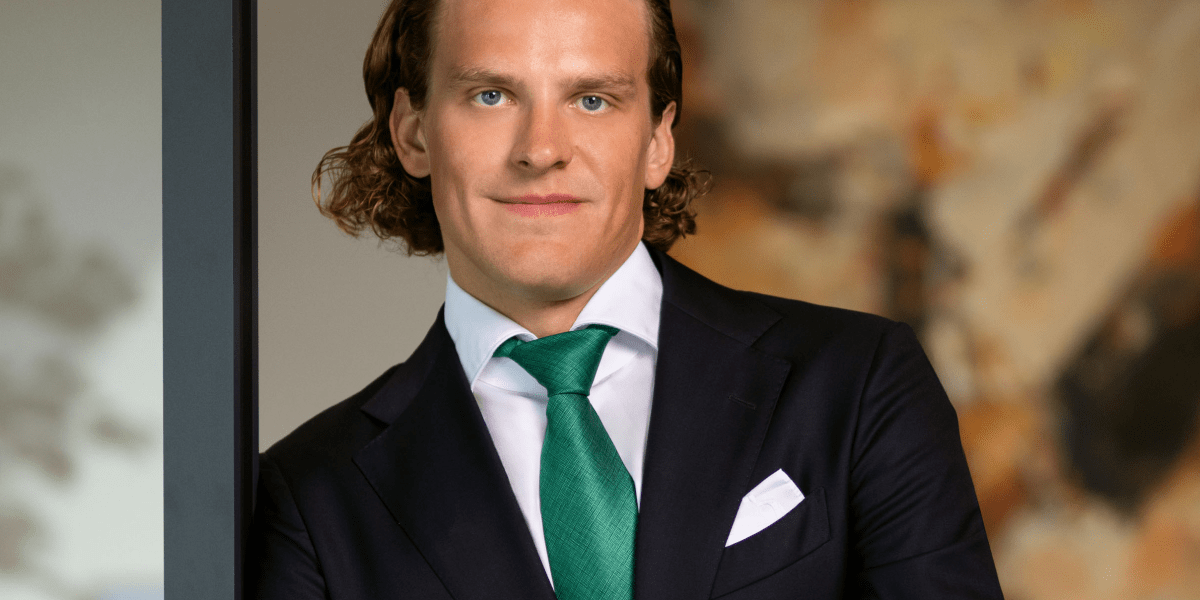
Gustas Germanavicius has only been competing in Ironman events for 15 months, but he’s already become the top-ranked athlete in his home country of Lithuania (a title he lost in the time between his interview and publication; he’s in the top 7% globally). The two-time founder told Fortune that he approaches it the way he approaches his business: always on. “It’s just like in business, you have to, consistently, every day, show up and don’t have any excuses for poor performance.” He said that not all his Ironman training days are great, but he has to make sure he follows his plan. It aligns with how he works.
“Basically I work in marathons and sprints,” Germanavicius said, describing something far beyond the typical “996” workload of 9am to 9pm, six days a week. For Germanavicius, it’s more like two months on and two weeks off. “Two months I work, 24-7, seven days a week, then two weeks off. This two weeks off doesn’t mean that I’m fully offline, but I try to relax and put a lower gear.”
The 27-year-old is proud that his current business, InRento, is on course for its third profitable year. And even though his first business, an artificial intelligence (AI) startup named WellParko, did not work out, he’s proud that one of his investors made a profitable exit, and that they both backed his current venture. “Actually, last month, I bought out two of their funds, so they made a serious profit, because we are at this stage that we are growing profitably.” But Germanavicius was quick to add that he doesn’t exactly enjoy being his own boss.
“I think it’s much more stressful, to be honest,” the strong-jawed, long-haired Lithuanian tells Fortune, “because you have all this pressure, you know? Like, what if I’m wrong? What if my assumptions are wrong? What if my decisions are wrong?” Germanavicius said he doesn’t like “this whole concept of like having no boss is easier.” When he started WellParko at 18 years old, he added, “I wasn’t ready. So I had to go through all the pains, go through all this pressure.” Now that he’s managing a €50 million portfolio, “this pressure is insane,” and he’s learned the hard way how to manage. “It’s not about being free to be your own boss. It’s about serving the customer to get a good business off the ground. Like, it’s not stress-free to be your own boss.”
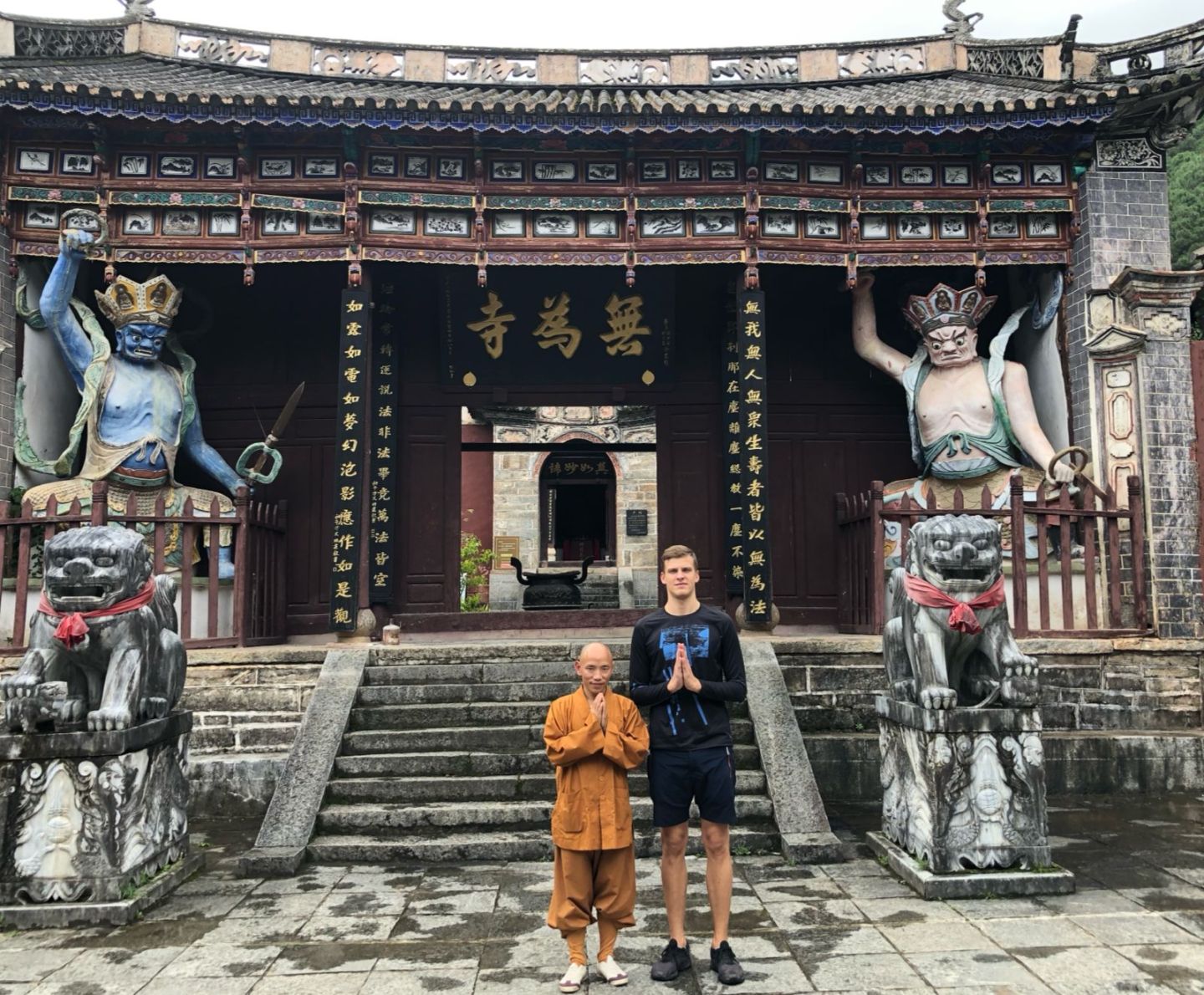
When Fortune offered that his work sounds like the old expression “no pain, no gain,” Germanavicius grinned and offered an anecdote from deep in Shaolin, China. After WellParko exited, he said, “the first thing I did, I booked the ticket to China and I went to train with the Shaolin monks.”
Germanavicius waved away suggestions that this was some kind of homage to Wu-Tang Clan, the Staten Island rap group obsessed with the concept of Shaolin from old 1970s kung fu movies. “No, no, no, no,” he said, “for me, mastery is one of the key values in life.” He said that despite the monks speaking no English and communication being limited, he learned two mantras from his Shaolin master: “He always said two things: ‘No pain, no gain,’ and ‘practice makes tired.’ Not perfect, but practice makes tired, no pain, no gain.”
The Profitable Contrarian
Germanavicius called himself a “contrarian” who was always entrepreneurial, recalling that he launched a bicycle buying-and-trading business as a middle schooler. (He loves Ironman because of his lifetime love of cycling, he added.) He was an entrepreneur before he was a college student, and he only went to university (the prestigious ESADE) for a few months before deciding that it was a waste of time, “delaying” the start of more meaningful things. “The opportunity cost was too high and I was feeling like I’m underperforming in life.”
The founder told Fortune that he had a pivotal conversation with his mother when he decided to drop out. “I wasn’t confident at first, because at first, of course, it was like a great university and great opportunity, and I had a scholarship.” He said he always remembers what she told him: “Listen, it’s your life. You live it how you want, because you will have to live it. Not me, not not anybody else, just do what you want.’” Germanavicius said this was the “trigger” for his decision. He also disclosed that his father died when Germanavicius was young (almost precisely the time he started selling bicycles). “It was hard, but at the same time, I think it got me to this understanding that no one’s going to take care of you, you know, and you have to take your own actions, and you have to take the responsibility for them.”
A crowdfunding platform that allocates capital to real-estate projects, InRento is active in markets beyond Eastern Europe. They are active in six markets including Poland, Italy, Spain, and Ireland. “We take all the edges of Europe,” he told Fortune jokingly. “I feel like we go to the markets where financing is inefficient,” full of bankable projects and clients, who can’t get traditional bank financing. This doesn’t mean they are sketchy, he said, explaining there are many family owned companies, often in hospitality, which need to raise a few million euros, but most banks in the market uninterested in loans smaller than €10 million. For example, he showed Fortune plans for a former Harry Potter-themed tourist attraction in Poland that needed renovation.
Germanavicius added that InRento is fully regulated and supervised by the Central Bank of Lithuania, with a license issued by the European Central Bank. He said they are fully audited, do annual reporting, and comply with all the applicable laws and regulations of financial institutions in the countries where they operate. “We also publish audited accounts and audits publicly to our clients,” he said, “transparency helps to support reputation and our reputation is our biggest asset.”
What he’s like to work for
Fortune spoke to Bernardas Preikšaitis, InRento’s Chief Operating Officer, to get a feel for what it’s like to work for this beyond-996 founder. Preikšaitis credited Germanavicius with giving him instant trust and the space to grow, training him beyond legal counsel into a business-oriented leader, and offering swift upward mobility rather than locking him into a narrow role. According to Preikšaitis, Germanavicius asserts high expectations with a direct, almost intimidating manner but balances this intensity with tremendous trust in his team.
Despite perceptions that employees may be afraid of Germanavicius due to his high standards, Preikšaitis affirmed that those who stay are deeply motivated by this environment of trust and responsibility. In practice, the leadership style avoids micromanagement, largely reducing communications to updates and priorities. Preikšaitis noted, “Everyone knows what to do. There is no box-checking, no need to report back constantly. It’s about prioritization and getting things done—deals and investor safety above all.”
He described this as an odd tension between trust and distrust. “From day one, he basically gave a lot of trust to me,” but at the same time, Germanavicius always stresses an edgy kind of work persona, almost a paranoia. “He always tells me, ‘You know, never trust no one.’” Thinking it over, Preikšaitis described the approach as: “I trust no one, but I give 100% trust in you and what you are doing, and I believe in you, and I will enable you at any cost.”
A shift into microshifting
Germanavicius told Fortune he was “still learning,” and after all, he has never had a boss himself. “I still think I’m not very a good manager, to be honest.” He said when he first began working, he assumed others would be wired like himself, but he encountered a more standard mentality. “What I realized was that people from these very deep corporate backgrounds, when you give them all this freedom … for a lot of people, it was weird.” He said his workers “couldn’t comprehend” an environment without traditional hours where key performance indicators (KPIs) were the only thing that mattered.
At InRento, he said he tends to hire “self-starting” people. “They don’t really care about hours. The whole company culture that we build is that we don’t limit holidays. Like, if someone wants to take holidays, they can take as much as we as they want. And basically there are no work hours.” He said he trusts his team to set their own schedules, be responsible for their own work. “It’s very KPI-driven. We are a financial institution where everything can be measured, and all the performance can can be driven to numbers.”
The description of going beyond 996 is familiar to startup founders across the world. Day One Ventures founder Masha Bucher, an early backer of 11 unicorns and over 30 exits, told Fortune that the Silicon Valley culture is nonstop. “People I know, close to me, work seven days a week, from 6:00 or 7:00 am with a break for sports until like midnight or 1:00 or 2:00 am.” She said 996 is a catchy phrase, but isn’t representative of what she sees at all because it far undersells the situation. Like Germanavicius, Bucher said she’s always had that work ethic herself, since age 14. She said it’s “flexible,” but “I don’t remember when I was on vacation and what vacation is. I think when you do something you love, you don’t feel like you need vacation.”
Bucher also said that she views hard work “like a talent” and that not all smart people have it. “One of the saddest things in life is that some of the most intelligent people in the world that I know of, they just don’t work hard, right?” She also insisted that the Silicon Valley community is taking care of itself and working sustainably, despite the long hours. The founders she sees “are not unhealthy,” she said. “In fact, they’re healthier than many more people that don’t live like this.” She said people need enough sleep, some kind of exercise of sports routine, but not necessarily vacation.
There is another word for what Germanavicius and Bucher are describing: “microshifting.” A permanent shift to the workday created by remote work—workers dividing their days into many small, flexible blocks—is becoming the norm for younger generations in the workplace, often befuddling people from more traditional corporate backgrounds. Priya Rathod, Indeed Workplace Trends Editor, told Fortune that the biggest risk with microshifting is “blurred boundaries,” and “if you don’t create a structure around this, some workers feel like they’re always on.”
Rathod said there was a special need to “protect personal time” with this shift in the workday. “In the work world we’re living in, we’re working across time zones, which means you may be taking calls and not just in that 9 to 5 time period. So if you’re doing that, you need to protect other time.” She described microshifting as “kind of a partnership between the employee and their team and their manager to make sure that they aren’t doing this to the point of burnout.”
Germanavicius is one of the managers adopting an entirely new kind of management style for the world of microshifting/always on/996-adjacent schedules. He told Fortune that he encourages people to take vacation and “don’t experience the burnout, because it’s very hard to recover.” He also said he takes care to set up people who can support him, because “the company must not be dependent on me. If it’s dependent on me, then it means I’m doing a craftsmanship, not a business. The business needs to work for you, you shouldn’t work for the business.” There is a price to pay for the microshifting world, though: availability and adaptability.
No pain, no gain
“Just to be perfectly clear,” Germanavicius added, his eyes narrowing, when he takes his two weeks off after sprinting for two months, “it doesn’t mean I’m not working. It’s just that, you know, I sleep in, maybe I have out-of-office on my email,” but he’s still monitoring. He said the business is cyclical, with “peak” and “low” seasons. “So what I always ask from my team: Don’t pretend that you’re working. If you don’t have, let’s say, nothing meaningful to do. Go spend time with your family, but when we have a big fish, then we need all hands on deck, we need to be sprinting.” He said that it’s just like his Ironman training: “If I work, I work. If I do sports, I do sports … I would rather push myself to the maximum and then take some time off, and then push again.”
“No work-life balance” is the reality Preikšaitis sees at InRento—not out of negative pressure, but from a shared sense of mission. Preikšaitis credits Germanavicius as the model: “You either live with your work or there is just no balance.” He said the results are in the KPIs: zero defaults and millions of dollars in deals. Preikšaitis said he is inspired to work so hard from his parents’ stories of living under Communism. “My father, he was a director at one of the tax authorities in Lithuania. He was earning basically 20% of what I’m earning right now. And he was 45, 46 years old.”
At the same time, Preikšaitis said the distribution of wealth is getting “ridiculous” in Lithuania: “there’s a huge separation between the middle class, upper class, and the lower class” and it is very hard to live in Vilnius unless you’re a member of the professional class. yeah. “I think this is the tendency for the whole of Eastern Europe … if you want to make out a living, and you want to have at least a decent apartment, and I don’t know, let yourself travel at least two times a year, you need to work your ass off.”
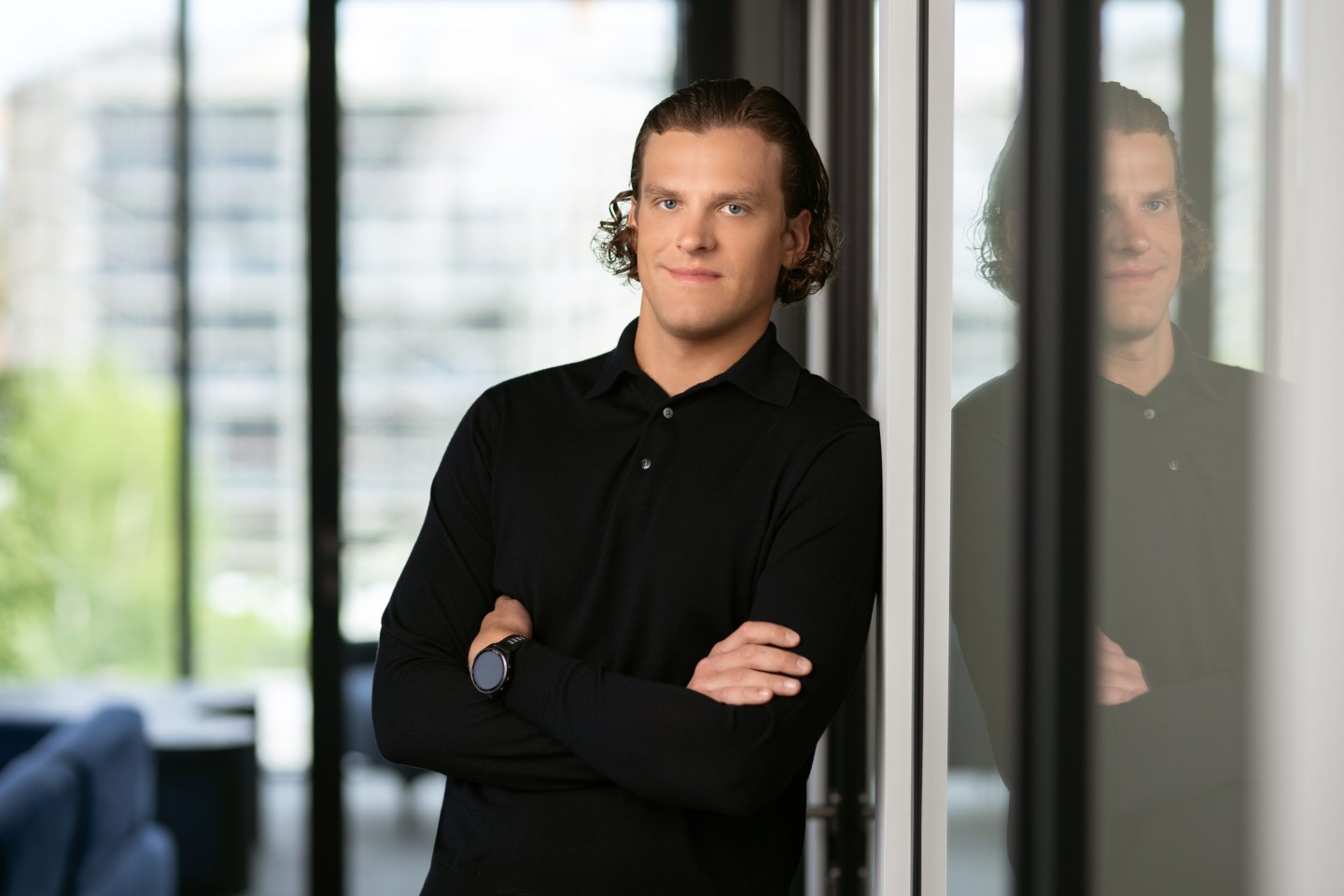
Germanavicius claimed that he has gained some self-knowledge in his short but profitable, and intense-sounding career. “I am not this kind of person that takes the easy choice, and in general in life I notice that the more pressure I have, it’s easier for me to move forward.”
You may like
Business
Apple is experiencing its biggest leadership shakeup since Steve Jobs died, with over half a dozen key executives headed for the exits
Published
3 minutes agoon
December 5, 2025By
Jace Porter
Apple is currently undergoing the most extensive executive overhaul in recent history, with a wave of senior leadership departures that marks the company’s most significant management realignment since its visionary co-founder and CEO Steve Jobs died in 2011. The leadership exodus spans critical divisions from artificial intelligence to design, legal affairs, environmental policy, and operations, which will have major repercussions for Apple’s direction for the foreseeable future.
On Thursday, Apple announced Lisa Jackson, its VP of environment, policy, and social initiatives, as well as Kate Adams, the company’s general counsel, will both retire in 2026. Adams has been Apple’s chief legal officer since 2017, and Jackson joined Apple in 2013. Adams will step down late next year, while Jackson will leave next month.
Jackson and Adams join a growing list of top executives who have either left or announced their exits this year. AI chief John Giannandrea announced his retirement earlier this month, and its design lead Alan Dye, who took charge of Apple’s all-important user interface design after Jony Ive left the company in 2019, was just poached by Mark Zuckerberg’s Meta this week.
The scope of the turnover is unprecedented in the Tim Cook era. In July, Jeff Williams, Apple’s COO who was long thought to succeed Cook as CEO, decided to retire after 27 years with the company. One month later, Apple’s CFO Luca Maestri also decided to step back from his role. And the design division, which just lost Dye, also lost Billy Sorrentino, a senior design director, who left for Meta with Dye. Things have been particularly turbulent for Apple’s AI team, though: Ruoming Pang, who headed its AI Foundation Models Team, left for Meta in July and took about 100 engineers with him. Ke Yang, who led AI-driven web search for Siri, and Jian Zhang, Apple’s AI robotics lead, also both left for Meta.
Succession talks heat up
While all of these departures are a big deal for Apple, the timing may not be a coincidence. Both Bloomberg and the Financial Times have reported on Apple ramping up its succession plan efforts in preparation for Cook, who has led the company since 2011, to retire in 2026. Cook turned 65 in November and has grown Apple’s market cap from about $350 billion to a whopping $4 trillion under his tenure. Bloomberg reports John Ternus has emerged as the leading internal candidate to replace him.
Apple choosing Ternus would be a pretty major departure from what’s worked for Apple during the past decade, which has been letting someone with an operational background and a strong grasp of the global supply chain lead the company. Ternus, meanwhile, is focused on hardware development, specifically for the iPhone, iPad, Mac, and Apple Watch. But it’s that technical expertise that’s made him an attractive candidate, especially as much of the recent criticism about Apple has revolved around the company entering new product categories (Vision Pro, but also the ill-fated Apple Car), as well as its struggling AI efforts.
Now, of course, with so many executives leaving Apple, succession plans extend beyond the CEO role. Apple this week announced it’s bringing in Jennifer Newstead, who currently works as Meta’s chief legal officer, to replace Adams as the company’s general counsel starting March 1, 2026. Newstead is expected to handle both legal and government affairs, which is essentially a consolidation of responsibilities among Apple’s leadership team, merging Adams’ and Jacksons’ roles into one.
Alan Dye, meanwhile, will be replaced by Stephen Lemay, a move that’s reportedly being celebrated within Apple and its design team in particular. John Gruber, who’s reported on Apple for decades and has deep ties within the company, wrote a pretty scathing critique about Dye, but in that same breath said employees are borderline “giddy” about Lemay—who has worked on every major Apple interface design since 1999, including the very first iPhone—taking over.
Meanwhile, on the AI team, John Giannandrea will be replaced by Amar Subramanya, who led AI strategy and development efforts at Google for about 16 years before a brief stint at Microsoft.
Hitting the reset button
All of the above departures cover critical functions for Apple: AI competitiveness, design innovation, regulatory navigation, and operational efficiency. Each replacement brings specialized expertise that aligns with the challenges Cook’s successor will inherit.
The real test will be execution across multiple fronts simultaneously. Can Subramanya accelerate Apple’s AI development to match competitive threats? Will Lemay’s design leadership maintain Apple’s interface advantages as AI reshapes user interaction? Can Newstead navigate regulatory challenges while preserving Apple’s privacy-first approach?
What’s certain is the company will look fundamentally different in 2026—and the executive team that grew Apple into a $4 trillion behemoth is departing. The transformation could be as profound as any since Jobs handed the reins to his COO at the time, Tim Cook, 14 years ago.
Business
Elon Musk says Tesla owners will soon be able to text while driving
Published
35 minutes agoon
December 5, 2025By
Jace Porter
Elon Musk has given the thumbs up to some Tesla drivers texting behind the wheel.
The EV maker recently introduced a 30-day free trial of its Full Self-Driving (Supervised) (FSD) features on its North American cars, which has traffic-aware cruise control, autosteer, and autopark. To the Tesla CEO, the automated features in place are enough to condone texting while driving. According to safety experts, Musk’s suggestion is actually plain illegal.
In response to an X user’s question on Thursday about being able to text and drive while a Tesla is operating FSD v14.2.1, its latest full self-driving capabilities, Musk responded: “Depending on context of surrounding traffic, yes.”
Musk’s response mirrors his comments at Tesla’s annual shareholder meeting last month, where he said the company would soon feel comfortable with a multitasking driver.
“We’re actually getting to the point where we almost feel comfortable allowing people to text and drive, which is kind of the killer [application] because that’s really what people want to do,” Musk said. “Actually right now, the car is a little strict about keeping eyes on the road, but I’m confident that in the next month or two—we’re going to look closely at the safety statistics—but we will allow you to text and drive essentially.”
With a $1 trillion pay package on the line, Musk has worked to jumpstart Tesla after continued lagging sales. His lofty automation goals tied to the compensation plan include delivering 20 million vehicles and having 10 million active FSD subscriptions, as well as 1 million robotaxis on the commercially operational.
FSD roadbumps
Tesla’s FSD rollout, much like its other automated technologies, has hit snags. In October, the U.S. Department of Transportation-run National Highway Traffic Safety Administration (NHTSA) opened an investigation into the EV maker, alleging its FSD software violated traffic laws and led to six crashes, four of which resulted in injuries. It cited data from 18 complaints from Tesla users claiming the FSD-equipped cars ran red lights or swerved into other lanes, including into oncoming traffic.
There is another complication for Musk’s vision of a Tesla owner typing away behind the wheel: Texting and driving is illegal in nearly the entire country, barring Montana, according to the U.S. Bureau of Transportation Statistics. According to the NHTSA, distracted driving resulted in 3,275 deaths in 2023.
Even Tesla has warned owners against texting while driving, even with some automated features in place: Tesla’s Model Y Owner’s Manual asks drivers not to use their phones while driving with Autopilot software enabled. (Autopilot refers to Tesla’s basic driver assistance features requiring hands on the steering wheel, while FSD is a paid subscription package with enhanced automated features and does not require a driver to have hands on the steering wheel.)
“Do not use handheld devices while using Autopilot features,” the manual said. “If the cabin camera detects a handheld device while Autopilot is engaged, the touchscreen displays a message reminding you to pay attention.”
Tesla did not respond to Fortune’s request for comment.
What experts are saying
Alexandra Mueller, senior research scientist for Insurance Institute for Highway Safety, told Fortune condoning texting while behind the wheel completely undermines the purpose of Tesla’s current automated features Tesla, which are a level 2 on the five-point automation scale, meaning the models require the driver to still be fully in control of the vehicle.
“Having partial automation support doesn’t mean that you suddenly can kick back and text and not worry about driving,” Mueller said, “because that’s just not how these systems are designed to be used—and that’s also not the responsibility that the driver has when using these systems, and that’s by design.”
She said automated systems like Tesla’s are not designed to replace the driver and work because they are “human-in-the-loop” and were designed to support the driver’s discretion behind the wheel. Beeps and notifications from the vehicle if a driver changes lanes without signalling can help shape good behaviors, Mueller noted. Encouraging multitasking behind the wheel turns these features into convenience factors, rather than the safety precautions they were intended to be.
“Suddenly all your safety assessments on the technology don’t apply anymore, because you’ve changed the very nature of how the technology is supporting human-in-the-loop behavior,” Mueller concluded.
Business
Analyst says Netflix’s $72B bet on Warner Bros. isn’t about ‘Death of Hollywood.’ It’s about Google
Published
1 hour agoon
December 5, 2025By
Jace Porter
Netflix’s $72 billion play for Warner Bros. is as much a bet on the future of artificial intelligence (AI) and chips as it is on movies and shows, according to a top Wall Street analyst, who said in an interview with Fortune the deal cannot be understood without looking at Google’s technology ambitions.
Amid cries from the jilted Ellison family about a “tainted” sale process and indie producers and theater owners of the “death of Hollywood,” Melissa Otto, Head of Research at S&P Global Visible Alpha, sees a different game being played. Otto said she thinks the tech angle of the industry is being overlooked.
“I think there’s this much bigger conversation that is being missed,” she said: Google and its TPU chips.
A key question for the future of entertainment, Otto told Fortune, is control over premium video at massive scale in an era when generative AI will increasingly create, remix, and personalize moving images. (Otto called it the “video corpus” that will train and power the next generation of AI models.) Over the long term, Otto added, that is a key part of the mystery behind why Netflix, long a builder rather than a buyer, would make Hollywood history by taking out one of its biggest rivals and one of the town’s prestige legacy studios.
Co-CEO Greg Peters was asked a blunt question about that same thing this morning on the call with analysts about the historic merger. Rich Greenfield of LightShed Partners cited Peters’ own previous statement at a Bloomberg conference about how there’s a long history of failed media mega-mergers, so he questioned: “Why is this going to end differently than every other media transaction essentially of this scale and history?”
Peters, while clarifying his remarks at the conference were a bit more nuanced, acknowledged “historically, many of these mergers haven’t worked, some have, but you really got to take a look at this on a case by case basis.” Still, Peters argued most previous big deals showed a lack of understanding about the underlying business, and Netflix understands these assets and has a “clear thesis about how the critical parts of Warner Brothers accelerate our progress.” He also acknowledged Netflix isn’t expert at doing large-scale M&A.
After all, this is expensive. “We are surprised that Netflix felt the need to spend $80bn+ and pay a premium for something Netflix disrupted,” Barclays analysts wrote in reaction to the deal, “and it is not clear what problem or opportunity Netflix is solving for that couldn’t have been achieved organically.”
In a statement emailed to Fortune, Dave Novosel, a Gimme Credit senior bond analyst, said the deal looks expensive to him as well, with Netflix assuming nearly $11 billion of debt.
“While the WBD assets bring an amazing amount of attractive content, NFLX is paying a steep EBITDA multiple of more than 25x, which seems extravagant,” Novosel wrote. Once it reaches the advertised synergies, he added, the resulting multiple of closer to 15x seems more reasonable. While those are pending, “the huge amount of debt that Netflix will need to raise to fund the deal will take leverage to well more than 4x initially.” Novosel wrote investors may need to be patient. Bloomberg’s credit team, meanwhile, reported the $59 billion bridge loan being taken out to finance this deal is among the biggest in corporate history.
Here’s what Otto sees happening in Northern California, far from Tinseltown, where the Warner deal is all anybody can talk about, and why Netflix took such a big swing.
Is the future of entertainment Northern or Southern California?
Part of Netflix’s thesis, according to Otto, is that it’s a tech company at heart and it recognizes Google’s rapid advancements in AI, particularly its advancements in TPU chips.
“What TPU chips do really, really well is in the modality of video in generative AI,” Otto said, as they essentially turn mathematical representations into moving pictures in much the same way GPUs revolutionized natural language AI by tokenizing and modeling text. Instead of ChatGPT and text, think Gemini 3 and YouTube videos.
Netflix already trails YouTube in total share of streaming time, with Bank of America Research recently citing Nielsen data showing YouTube held 28% of U.S. streaming, versus Netflix’s 18%. Otto said this threatens to go up another notch when and if Google’s TPU chips turbocharge content made with generative AI.
“I’m sure that it’s feeding into the strategy,” Otto said. “If I were Netflix and I knew that Google, one of their formidable competitors, had this chip technology and was essentially plowing billions and billions of dollars into developing the infrastructure so that they could carve out the corpus of the video modality in generative AI, I would want to build a moat around my business.”
On the surface, Netflix is buying a legacy studio with a deep library, beloved franchises, and a global brand—and paying up to do it. The combined streaming and studio business generates about $25 billion in revenue and roughly $4 billion to $5 billion in EBITDA, but margins on streaming remain thin, making the economics of the deal look tough in the near term. Executives have emphasized overlapping subscribers, obvious cost cuts and an expected $5.5 billion in efficiencies, the kind of “low‑hanging fruit” that can occupy management for the next 12 to 24 months, Otto said.
But in a world where TPUs can make high‑quality video “basically for free,” any player lacking both the chips and the content could find itself outgunned as AI reshapes how entertainment is produced and consumed. That makes Netflix’s big splash for Batman, Harry Potter, and the like a different kind of moat, and a different kind of game than the classic Hollywood rivalries of yore. Otto said it was plausible generative AI entertainment could be seen as an extension of the recent IP wars that saw Hollywood deluged by floods of superhero movies and sequels, with Disney’s Marvel Studios ushering in a computer generated revolution in the 21st century. “I think that’s not an outrageous assumption.”
By absorbing Warner Bros., Netflix increases the volume and diversity of content it can feed into recommendation systems, experimentation and, eventually, its own AI‑driven video tools. Otto also noted the deal potentially gives Netflix more exposure to advertising, an area in which Alphabet has dominated and where Warner Bros. still generates $6 billion–$7 billion in ad revenue. While the ultimate destination of that ad talent remains unclear, as they may go to the spinco that includes WBD’s cable assets such as CNN and TNT. (Netflix has only been active in ads since 2022, having been a premium subscription service since it pivoted from DVD rentals to streaming in the late 2000s.)
Imagine a world, Otto said, where you could create your own versions of the crime classic Columbo starring an AI-generated version of legendary actor Peter Falk, who died in 2011. (Columbo had several homes on TV on neither Warner Bros. nor Netflix, as it was first an NBC property in the 1970s, and then an ABC property from the late ’80s onward.) “In this day and age, boy, wouldn’t it be interesting?” Otto asked rhetorically.
In many ways, she added, this moment is remarkable because Netflix may end up neither a subscription nor an advertising business, but an AI-based one that doesn’t quite exist yet. “It’s kind of exciting because it means that it’s anybody’s game,” Otto said.
Otto also raised the spectre of TikTok, the social media giant partially under the control of Larry Ellison.
“They’re a formidable competitor as well,” she said. What’s likely, she added, is the future will be unpredictable. The rise of AI “could provide some really amazing innovation over the next couple of years.” She agreed it could create a bonanza for show business lawyers who wrangle over the rights of things like the likeness of Falk, which was a major issue in the recent Hollywood strikes.
“That may be the real story,” she said.
[Disclosure: The author worked internally at Netflix from June 2024 through July 2025.]
Apple is experiencing its biggest leadership shakeup since Steve Jobs died, with over half a dozen key executives headed for the exits
Famed Architect Frank Gehry Dead At 96
Celine unveils flagship boutique in Vienna
Trending
-
Politics8 years agoCongress rolls out ‘Better Deal,’ new economic agenda
-
Entertainment8 years agoNew Season 8 Walking Dead trailer flashes forward in time
-
Politics8 years agoPoll: Virginia governor’s race in dead heat
-
Entertainment8 years agoThe final 6 ‘Game of Thrones’ episodes might feel like a full season
-
Entertainment8 years agoMeet Superman’s grandfather in new trailer for Krypton
-
Politics8 years agoIllinois’ financial crisis could bring the state to a halt
-
Business8 years ago6 Stunning new co-working spaces around the globe
-
Tech8 years agoHulu hires Google marketing veteran Kelly Campbell as CMO
