Connect with us

Fashion

French down jacket brand JOTT is looking for a buyer

Published

on


Translated by

Nicola Mira

Published


January 5, 2026

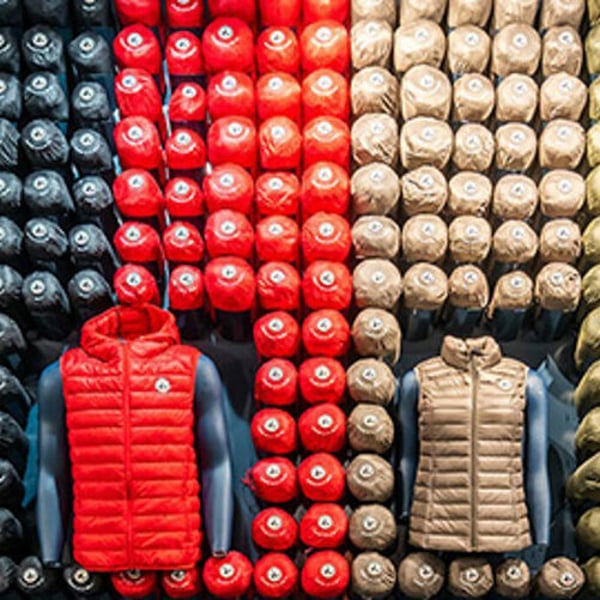
The receivers, senior management and owners of Marseilles-based down jacket specialist Just Over the Top (JOTT) are actively looking for a buyer for the brand. Last December, following months of financial and operational difficulties, JOTT’s two companies, JOTT Opération, with 97 employees and a revenue of €55 million in 2024, and JOTT France, with 183 employees and a revenue of €24 million in 2024, were placed in receivership.

Down jacket specialist JOTT is looking for a buyer – JOTT

In January 2021, the L Catterton Europe investment fund bought a majority stake in JOTT via a leveraged buyout, leaving founding family Gourdikian with a minority stake. However, a heavy debt burden combined with operating losses, despite various senior management changes, have made the company’s financial situation untenable. After two successive injections of capital, the owners, being also creditors of the company, carried out a debt-to-equity swap in spring 2025, in an attempt to reduce indebtedness and ease the financial burden.

Placing the company in receivership suggested that L Catterton Europe, which is linked to the LVMH group and the Arnault family’s investment firms, was no longer keen to invest in JOTT. According to a source close to the matter, all of JOTT’s shareholders intend to sell their stakes through the receivership procedure. The future buyer will have to relaunch the company once its debts will have been reimbursed, a bittersweet outcome for other JOTT creditors (like Eurazeo, which acquired one of the company’s creditors, Idinvest Partners, in 2020) which had financed the buyout via the Jaguar Bidco holding company.

It remains to be seen which type of players, whether investors or producers, will be interested in JOTT’s tangible and intangible assets. Interested parties have until January 30 to file their bids, which will be closely watched by the company’s over 200 employees, as well as its franchisees. The Marseilles trade court is set to rule on the bids by the end of March.

Copyright © 2026 FashionNetwork.com All rights reserved.


Source link

Continue Reading

Fashion

L.L. Bean promotes Greg Elder to CEO

Published

on


Published


January 12, 2026

L.L. Bean announced on Friday the promotion of company veteran Greg Elder to the role of president and chief executive officer.

Greg Elder – Courtesy

Elder succeeds Stephen Smith, who will depart the American heritage apparel company after ten years as CEO.

​Elder will transition into his new role as CEO during the first quarter, with Smith continuing to serve on the board as an adviser until March.

Joining L.L. Bean in 2007, Elder has held several leadership positions at the company, including chief retail officer, his most recent post.

Prior to that, he held leadership roles at Eddie Bauer and Dayton Hudson Corporation, now known as Target. Elder is also a member of the Retail Industry Leaders Association.

“We were deliberate in finding a leader who will continue to honor our brand heritage while positioning us for the next era of growth,” Shawn Gorman, chairman of the board of L.L. Bean said in a statement. “Greg rose to the top because of his deep respect for our history, incredible knowledge of our business, strong track record of results and clear vision for the future.” 

Elder will be the Freeport, Maine-based company’s fifth CEO in its 114-year history.

“What makes L.L.Bean truly special is its people and purpose. I’m proud to take on this responsibility alongside such a committed and talented team, and I’m grateful for the trust of the Bean family and our board as we begin this next chapter together,” said Elder.

“I’m also thankful for the past 10 years of leadership and friendship from Stephen Smith, who has led the company with heart and conviction through some particularly challenging seasons.

“This brand has been part of my life for many years, and it has deep personal meaning for me to accept this role. Our heritage, our connection to the outdoors and our culture of service and craftsmanship are powerful foundations. At the same time, we have an opportunity and a responsibility to keep evolving: to sharpen our product focus, deepen our connection with customers and ensure L.L.Bean remains relevant and inspiring for the next generation.”

Copyright © 2026 FashionNetwork.com All rights reserved.


Source link

Continue Reading

Fashion

SFDA unveils finalists for inaugural New Wave Fashion Awards

Published

on


Published


January 12, 2026

The SFDA Creative Talent Program announced on Friday the finalists of the inaugural New Wave Fashion Awards.

SFDA unveils finalists for inaugural New Wave Fashion Awards. – SFDA

After three months of open submissions and professional review, six finalists were selected: Chen Sifan by Sifan Chen, Angus Chiang by Angus Chiang, Moto Guo by Moto Guo and Kinder Huang, 8ON8 by Li Gong, Mayali by Maya Li, and Feng Chen Wang by Feng Chen Wang.

Conceived as a long-term talent incubation initiative rather than a one-off competition, the New Wave Fashion Awards positions itself as a platform for identifying and cultivating designers with multi-dimensional capabilities spanning product, aesthetics, narrative, and brand structure.

The framework is designed to mirror the responsibilities of a modern creative director, offering an alternative to traditional fashion awards that focus primarily on runway collections.

“We launched this creative talent support program to build a long-term, systematic, and future-oriented training mechanism to help China’s new generation of creative talents achieve leaps in continuous practice and move towards a clearer and more internationally-oriented development direction,” said Madame LV, EVP of SFDA and secretary-general of Shanghai Fashion Week Organizing Committee. 

The New Wave Fashion Awards will culminate during AW26 Shanghai Fashion Week in late March. The six shortlisted designers will present comprehensive brand expressions on site, translating their concepts into immersive spatial experiences.

These presentations will be evaluated by a jury with international perspective and industry authority, drawing from global fashion media, retail and brand operations, as well as the public. 

Copyright © 2026 FashionNetwork.com All rights reserved.


Source link

Continue Reading

Fashion

The sneaker boom had a long run. Now some analysts say it’s over

Published

on


By

Bloomberg

Published


January 11, 2026

For nearly two decades, sports brands benefited as people swapped out dress shoes for sneakers when heading everywhere from the airport to fancy restaurants and even the office.

Nike

That’s been a boon for Adidas AG, Nike Inc. and Puma SE, which capitalized on consumers’ changing tastes by serving up snazzy, comfy kicks that people wanted to wear on and off the playing field. The rising demand for sports shoes also underpinned the rapid growth of challengers like Hoka and On Holding AG, which emerged in the wake of the financial crisis and quickly became popular brands.

Now the future of that longstanding sneaker boom is being called into question, most notably by Bank of America analysts led by Thierry Cota. They rocked the footwear world last week with a 61-page analysis concluding that the growth prospects for these sports brands are rapidly dimming.

They argue that the sporting goods sector had enjoyed a 20-year “upcycle” that lifted sneakers from less than a quarter of world footwear sales to at least a half — a trend that culminated during the Covid pandemic, when millions of people were suddenly working from home. “With this structural shift largely complete, prospects for future revenue growth are now significantly reduced,” the analysts said.

They accompanied that view with a rare “double downgrade” of Adidas, abandoning their “buy” rating and declaring the stock one of the least attractive in the industry. 

Their contention that the sneaker boom has passed its peak prompted a backlash from skeptics who say the casual footwear trend has room to run. Longtime industry analyst Matt Powell, an adviser at consulting firm Spurwink River, conveyed that sentiment on LinkedIn, where he posted a Barron’s article about the research and commented: “C’mon, man! No evidence of this.”

Adidas shares plunged as much as 7.6% in response to the downgrade on Tuesday, before recovering part of those losses by the end of the week.

Sneakers now make up about 60% of footwear sales in the US, according to Beth Goldstein, an analyst at Circana in New York. Sport shoes have won over the population as part of a wider societal push toward comfort, health and wellness, priorities that probably aren’t going to disappear anytime soon, she said. The US sneaker category grew 4% last year through November, while the fashion category dropped 3%, she added.

“The sneaker business is larger than ever,” she said. “I wouldn’t even call casualization a trend — it’s just a key consumer preference.”

Yet the sneaker makers have run into headwinds since the pandemic as they sometimes failed to keep up with shoppers’ fickle tastes, saw sales cool particularly in China, and faced the threat of US tariffs. Shares of Adidas are down by almost a third in the past year, and even On Holding’s stock is down by more than 10% in the period, despite strong revenue growth.

“We don’t believe the casualization trend is over — rather, it has stabilized, with wardrobes now more balanced,” said Poonam Goyal, an analyst at Bloomberg Intelligence.

“The category has moved beyond the pandemic-driven demand spike and is now operating in a more normalized environment.”

There are signs that sneakers are bleeding into the dress shoe category. In 2025, the top-traded loafer on Stockx, an online resale platform, was the New Balance 1906L, which looks like the offspring of a preppy boat shoe and a marathon trainer. It’s also common these days to see movie stars and fashion influencers donning spiffed-up, expensive versions of trainers, often in collaboration with luxury brands like Gucci and Moncler.

The analysts at Bank of America didn’t suggest that people are going to ditch their sneakers for patent leather oxfords anytime soon. Rather, they indicated that sporting goods — after booming during the pandemic — have since mid-2023 been growing at a slower-than-average pace compared with the past couple of decades.

While that typically could mean the industry is poised to take off again, no big rebound is apparent, the analysts argued. They cited data ranging from recent credit card purchases to sluggish sales figures from Asian footwear and apparel suppliers to less-than-bullish commentary from industry leaders regarding the outlook for 2026.

If the sporting goods industry grew by an average of about 9% a year since 2007, as millions of people traded in dress shoes for sneakers, the future annual expansion may only be about 4% or 5%, they suggested.

Their optimistic take is that the industry is in a prolonged slump because of consumers fearing economic conditions and recent stumbles at Nike. That could mean that the sneaker boom still has legs and will resurge as early as 2027. 

“The alternative is much worse and more likely, in our view,” the Bank of America analysts added. “The emergence of a new, less favorable long-term industry paradigm.”


Source link

Continue Reading

Trending

Copyright © Miami Select.