
Fashion
French brand Damart plans to expand via mass-market retail, international e-tailers


Translated by
Nicola Mira
Published
October 17, 2025
French apparel brand Damart, while developing recycling solutions and new ways to use its Thermolactyl and Evolutyl fabrics, is keen to enter mass-market retail in 2026, and is approaching international e-tailers with a view to expand its footprint in Europe.
Damart is currently distributed via nine marketplaces in France, where it wants to offer an assortment consistent with that of its own retail channels. It is also looking to attract new consumers, beyond the ‘silver economy’ segment which constitutes its core target. “[Event sales site] Veepee said that Damart is one of the three best-selling fashion brands on its platform,” said Damart’s Managing Director Filiep Blontrock.
And Damart, whose main markets are France, Belgium and the UK, is keen to rely on fashion e-tailers to expand internationally. Damart has recently started selling on German e-tailer Zalando, a move that required an upgrade in the brand’s delivery organisation. “We had to be able to offer four-day deliveries, and the improvements we have introduced will also benefit all our online customers,” said Loïc Bouquet, Damart’s head of marketplace and B2B operations.
“We’re chiefly aiming for countries neighbouring [with France],” said Blontrock. “We’ll enter Austria early next year, delivering there from our warehouse. Experimenting with e-tailers in this way enables us to identify the countries where we can perform best, and where deploying our own e-shop will become a priority,” he added.

After deploying an international expansion strategy a year and a half ago, Damart is now generating one third of its e-tail sales outside France, and is expecting this share to reach 50% next year. Such growth will bolster Damart’s online business, currently accounting for 21% of revenue, while the mail-order business accounts for 34% and in-store sales for 45%. Damart is currently available at 150 retailers, 94 of them in Europe, and in 2025, for the first time ever, store sales have exceeded catalogue sales.
A symbolic milestone which, according to Blontrock, underlines the in-store experience’s importance. “We’re able to generate traffic independently because we’re a destination brand,” said Blontrock. According to him, the in-store experience must distinctly embody Damart’s signature ‘heat generator’ features. Blontrock is concerned by the fact that central retail locations in many cities are losing commercial appeal, and mentioned that several stores have relocated. This happened also in Damart’s own backyard, the city of Roubaix, where the brand’s long-established store was replaced by another on its headquarters’ ground floor.
Mass-market retail and recycling
Damart is preparing to enter mass-market retail in Fall/Winter 2026. The brand’s signature t-shirts, ordinarily retailing at €24.90, will be priced €19.90, following tweaks to the product’s value chain. Damart said they will be available in long and short sleeves, for men and women, in black and white. It will be a significant milestone for Damart, distribution-wise. The name of the mass-market chain hasn’t yet been disclosed.

Damart is also working on fabric recycling. For winter 2026, it will sell comforters 70% made using fabric offcuts collected and recycled at the brand’s Tunisian factory. It is also producing shoes 20% made using frayed fibres that have been re-spun and knitted in Portugal. The brand also intends to set up an in-store system to collect garments at the end of their useful life.
New uses
After introducing the Thermolactyl thermal fabric and cool-feeling Climatyl, Damart is putting new emphasis on its Evolutyl fabric technology, launched two years ago. This “phase-change material,” which protects against low temperatures and minor bursts of heat, will be used in the lining of sleeved garments, giving an extra outlet to Damart’s expertise in this mid-layer material, which is harder to sell. It is another project the brand will focus on for winter 2026.
RainProtect, the brand’s range of waterproof fabrics, was quite successful in the spring, encouraging Damart to expand this range and combine it with Thermolactyl, in order to utilise it in the colder seasons.
Winter campaign
Damart’s busiest season begins when temperatures start to drop. The brand is therefore ready to deploy an extensive multi-media campaign, scheduled from October 17 to November 30. It will feature on the France TV and TF1 television channels, as well as on streaming platforms like Netflix, Prime Video, Disney+, Apple TV+ and others. The campaign will also be released on Spotify and on about 1,000 digital advertising screens.

The Damartex group, Damart’s parent company, generated a revenue of €521 million in the fiscal year that ended in June. The result was 0.6% below the previous year, a more stable performance after the 9.9% drop in 2023-24. Damartex has 2,000 employees, and is active in apparel with the Damart and Xandrès brands, in home textiles with 3 Pagen, Vitrine Magique and Coopers of Stortford, and in healthcare with Almadia, Santéol and MSanté.
Copyright © 2025 FashionNetwork.com All rights reserved.


Fashion
Italian trade fairs Micam and Mipel reinvent themselves with Lombardini22, guided by synergy
Published
December 11, 2025
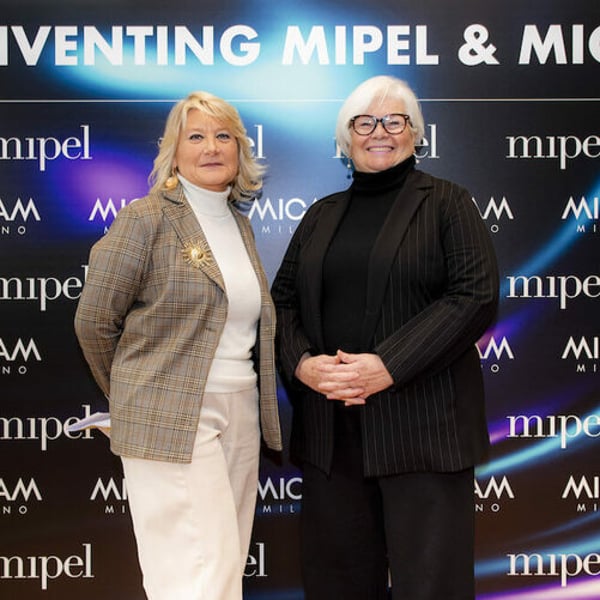
For several years now, Milan’s fashion trade fairs have been joining forces, fostering synergies to counter the challenges the sector has faced since Covid. But for the February 2026 edition, two shows will go even further, thanks to the strategic project ‘Reinventing Mipel & Micam,’ developed in collaboration with Lombardini22, a leading name in architecture and engineering.
“We like to describe Lombardini22 as a ‘collective-thinking company’ that brings together around 500 professionals and develops projects collaboratively, often starting by listening,” explained Cristian Catania, Reinventing Fairs project director at Lombardini22, during the press conference presenting the project. “We did the same for Micam and Mipel, analysing the status quo of previous editions and holding consultations with major exhibitors. What we realised is that the paradigm shift lies in continuing to give exhibitors the visibility they deserve while, at the same time, putting the visitor and their needs at the centre, so that their time at the fair can be more productive, less tiring and more seamless. The guidance we received was to build on the heritage and longevity of the events, expand the services on offer, and think not only about product but also about the sector’s cultural growth, through social connections, networking, new opportunities and new stimuli. We need to move beyond the concept of mere exhibition and create an experience for visitors.”
As part of the project, for the February edition (February 22–24, 2026), which will coincide with the Milan–Cortina Winter Olympic Games, the Mipel experience will be completely reimagined: the event will move to the front section of Hall 5 at Fiera Milano Rho, gaining greater visibility and a more central position within the exhibition centre. The layout will be redesigned by Lombardini22 to make visits clearer, more immersive and instantly legible, with optimised routes and new areas dedicated to product, innovation, and creativity, while the pre-built exhibition stands will also be reinterpreted in a contemporary, functional way to meet the needs of exhibiting companies.

Above all, at the centre of Hall 5, ‘M&M- The Hub’ will take shape: a new space conceived to host initiatives and projects developed in full synergy between Mipel and Micam, with the aim of offering visitors to both fairs an integrated experience. The Hub will be home to Micam Academy and Mipel Factory, in an environment designed to foster a continuous journey of learning and relationship-building, bringing together education, research, technical experimentation, and professional development. The Italian Startup project, created in collaboration with ICE-Agenzia and the Ministry of Foreign Affairs and International Cooperation (MAECI), has also been confirmed; it will shine a spotlight on a selection of emerging Italian companies that are highly innovative and technology-driven. There will also be a dedicated product area, offering a concise, curated overview of the key trends for the Autumn/Winter 2026–2027 season.
“The partnership with Lombardini22 is strategic because it can help us better communicate our fairs. Our goal is to support companies on their path to growth and greater international exposure, because trade fairs are a key driver of internationalisation. The events must enrich our companies, promote Made in Italy and help strengthen the recognition that Italian leather goods companies enjoy worldwide in terms of innovation, creativity, expertise, and excellence,” added Claudia Sequi, president of Mipel and Assopellettieri. “Moving Mipel to Hall 5 is not just a relocation, but the desire to rethink our fair in a strategic, contemporary way, with a layout designed to create usable, useful spaces for exhibitors and visitors- an immediate, intuitive, and engaging experience for buyers.”

“We are convinced that joining forces is essential for those who come to our fairs, who enter an ecosystem where products are certainly important, but where different visions are even more so,” stressed Giovanna Ceolini, president of Micam and Assocalzaturifici. “Let us remember that, in addition to Micam and Mipel, the February edition will also bring together Sì Sposa Italia Collezioni, Milano Fashion&Jewels, and The One Milano, providing buyers with a comprehensive overview of the different segments of Made in Italy fashion; Lineapelle and Simac will not be present because of the Olympics, but will return in September. This synergy between fairs works to everyone’s advantage; at the last edition we welcomed around 40,000 visitors from 38 countries- an incredible figure. With the ‘Reinventing Mipel & Micam’ project, we hope to strengthen further; we know that together we are stronger and can represent Made in Italy at its best.”
For the February edition, Micam will also introduce a new configuration for Halls 1 and 3 which, together with Halls 2 and 4, will make the visitor journey more coherent, intuitive, and functional.
This article is an automatic translation.
Click here to read the original article.
Copyright © 2025 FashionNetwork.com All rights reserved.


‘Selling Sunset’ Star Alanna Gold Says She Sees Wedding Bells in Jason’s Future

Italy plans levy on extra-EU parcels, higher taxes on financial transactions

WSRE Foundation pushes back on Pensacola State College power, money grab
-

 Politics8 years ago
Congress rolls out ‘Better Deal,’ new economic agenda
-
Entertainment8 years ago
New Season 8 Walking Dead trailer flashes forward in time
-
Politics8 years ago
Poll: Virginia governor’s race in dead heat
-
Entertainment8 years ago
The final 6 ‘Game of Thrones’ episodes might feel like a full season
-
Entertainment8 years ago
Meet Superman’s grandfather in new trailer for Krypton
-
Politics8 years ago
Illinois’ financial crisis could bring the state to a halt
-
Business8 years ago
6 Stunning new co-working spaces around the globe
-
Tech8 years ago
Hulu hires Google marketing veteran Kelly Campbell as CMO