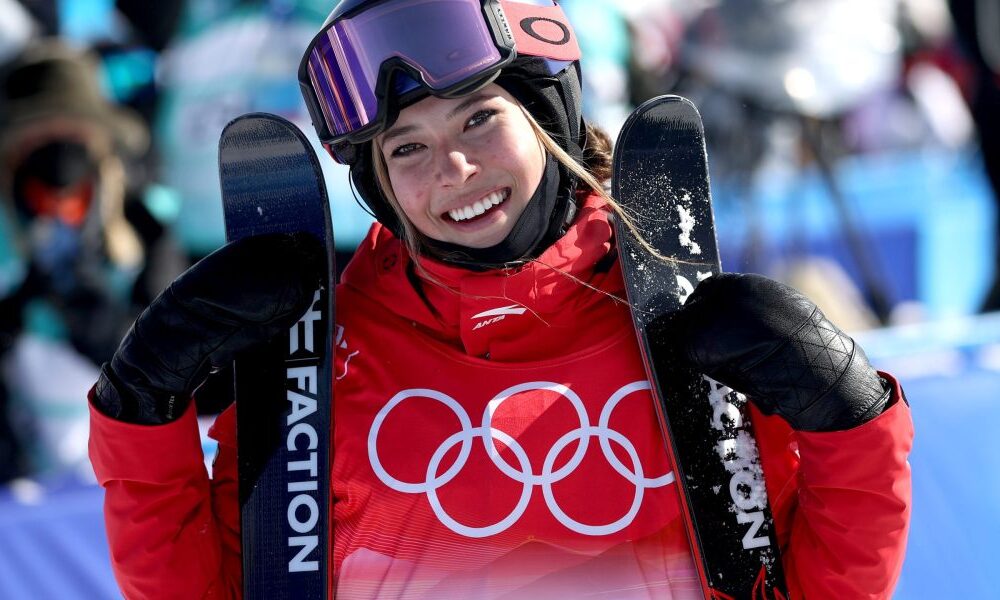
Even the world’s record-breaking athletes are not immune to the lows of grappling with burnout and mental health challenges.
Freestyle skier and Olympic champion Eileen Gu said following the 2022 Winter Olympics in Beijing—where she won two gold medals and one silver for China at age 18—she was hit with a wave of burnout and anxiety, a feeling shared by many other elite athletes.
“There’s this thing called post-Olympic depression, and it’s like, very common among athletes, a pretty well-known phenomenon. But the interesting thing is, it’s not at all correlated to results,” Gu said in a June 2025 episode of The Burnouts podcast hosted by Phoebe Gates and Sophia Kianni. “That’s what’s kind of surprising to people, is like, you can win the Olympics and still just enter the deepest rut of your life and just really be questioning everything, your purpose.”
“[You] feel so burnt out, but at the same time just have all this anxiety and pent up energy, not sure where to direct it,” she continued. “And I was no exception.”
At 22-years-old, Gu’s accomplishments have already mounted. Aside from being the youngest Olympic champion in freestyle skiing, Gu also attends Stanford University, having scored a 1580 on her SAT. Her modeling has led her to become a founding member of Victoria’s Secret’s VS Collective helping to reshape the brand’s image, and she was recently featured on the cover of Time magazine. The Chinese-American athlete earns $23 million per year, but only a fraction of it comes from her illustrious skiing career. She has had endorsement deals with Porsche, Red Bull, and IWC Schaffhausen, as well as Chinese brands like Anta Sports and Luckin Coffee.
Born in San Francisco and raised by her mother, a first-generation Chinese immigrant, Gu competes under the Chinese flag. At the Winter Olympics in Milan, she is set to compete in the women’s slopestyle, big air, and halfpipe. The game began on Wednesday, with the gold medal events starting on Feb. 7.
Gu said she reached her lowest point six months after the 2022 Olympics, when, despite her success, she became overwhelmed by how she was supposed to take her next steps.
“You’re working your entire life towards this one massive goal,” she said. “You’re 18, you feel like you’re on top of the world, and then you hit this hole.”
How athletes navigate post-Olympic depression
It’s not just Gu who has experienced the come-down from victory at the global games. A 2023 study of 49 Danish Olympic athletes found more than a quarter of competitors reported below average wellbeing or moderate to severe depression, with 16% of participants reporting both. Female athletes had higher depression scores than their male counterparts.
Among the athletes who have grappled with the “post-Olympic blues” is American swimmer Michael Phelps, who has 28 total Olympics medals, including a record 23 gold medals from five Olympic games. He told NBC News’ “Meet the Press” in 2024 he struggled with the post-game blues as early as his second Olympics in 2004, when he won six gold medals and two bronze medals.
“2004 was my first taste of post-Olympic depression, you know, coming off such a high,” he told NBC. “It’s basically… you get to like the edge of a cliff, like ‘Cool now what? Oh, I guess I’ve got to wait four more years to have the chance to do it again.’”
Karen Howells, a sports psychologist, said these athletes may be experiencing the blues after a very specific experience and the years of training leading up to it, but many can relate to the period of reorientation following a big event, even a successful one.
“It’s normal that when we build up to something, and then it’s over, we are going to feel lost and upset,” Howells told The Athletic. “There may be anger, frustration, irritation.”
Gu said she navigated burnout by seeking counsel in her support system of her mother and friends, who offer advice, despite Gu treading unfamiliar—and unprecedented—territory in her record-breaking career.
“Seeking mentorship in a holistic sense is sometimes challenging, because a lot of the things I do kind of are the first time someone’s doing it in the way that I’m doing it,” Gu said. “But there are people who’ve gone through really incredible experiences, and everyone’s unique.”
Gu recently took time off following injuries, something her mother has encouraged her to do.
“My mom—I think people think that she’s like, crazy tiger mom, but she’s actually the opposite—she’s like, reverse tiger-momming me and being like, ‘When are you going to drop out? When are you going to take time off?’” Gu said.