France has denounced the new trade agreement between the European Union and the United States as a “submission,” even as most EU members acknowledged the deal was unequal but necessary to avoid an economically damaging trade war with Washington.
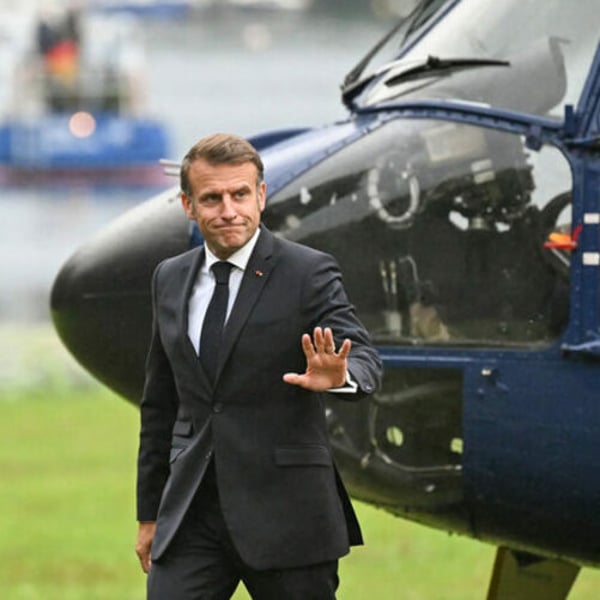
French President Emmanuel Macron has remained silent on the EU–U.S. trade deal criticized by France’s own leadership. – AFP – Getty Images
The framework agreement, announced Sunday between two economies representing nearly a third of global trade, allows the U.S. to impose a 15% import tariff on most EU goods starting next month. The deal offers limited protection for key sectors, including the automotive and pharmaceutical industries.
While the 15% rate is half of what Washington initially threatened, it still exceeds European expectations significantly.
U.S. President Donald Trump, who has sought to reshape global trade using tariff leverage since returning to the White House earlier this year, praised the accord during a visit to Scotland, calling it “the biggest deal ever made.”
But France, the EU’s second-largest economy, was outspoken in its disapproval.
“It is a dark day when an alliance of free peoples, brought together to affirm their common values and to defend their common interests, resigns itself to submission,” French Prime Minister Francois Bayrou wrote on X (formerly Twitter).
French President Emmanuel Macron has made no public statement on the matter.
While the mood across Europe was subdued, most governments agreed that failing to reach an agreement would have triggered a far worse scenario.
“This agreement has succeeded in averting a trade conflict that would have hit the export-oriented German economy hard,” said German Chancellor Friedrich Merz, whose country leads the EU bloc’s economic rankings.
EU Trade Commissioner Maros Sefcovic said during a press conference that allowing 30% tariffs to be imposed would have been “much, much worse.”
“This is clearly the best deal we could get under very difficult circumstances,” he added.
Some member states acknowledged the deal provides stability following months of trade tensions with the U.S. Sweden described it as the “least bad alternative,” while Spain supported it “without enthusiasm.”
A final deal will likely require ratification from EU capitals.
Still work to do
Because trade policy falls under the European Commission’s authority, French objections are unlikely to derail the framework agreement. However, the deal has not yet been finalised.
Many of the agreement’s specifics remain unknown. EU officials said they expect clarification in a joint statement to be released by August 1. Additional negotiations will follow to turn the agreement into a full-fledged deal.
Germany also called for further negotiations, particularly regarding the steel sector.
President Trump said the deal—alongside an investment package that exceeds the Japan agreement signed last week—would strengthen trans-Atlantic relations after years of what he described as unfair treatment of U.S. exporters.
Japan’s package will include up to $550 billion in equity, loans and guarantees from state-run agencies, to be invested at Trump’s discretion, according to Tokyo. In contrast, EU officials stated that the EU’s $600 billion investment figure is based on non-binding intentions from the private sector.
The agreement is expected to bring regulatory clarity to European industries, including those in the automotive, aerospace, and chemical sectors. However, EU negotiators had originally pushed for a zero-for-zero tariff deal. A 15% tariff remains significantly higher than the U.S.’s average import tariff rate of 2.5% before Trump’s return.
More clarity, but a challenge
European stocks opened higher on Monday, with the STOXX 600 reaching a four-month high. Tech and healthcare sectors led the gains.
“The 15% rate is better than the market was fearing,” said Jefferies economist Mohit Kumar.
Still, many European businesses remain conflicted about the outcome.
“Those who expect a hurricane are grateful for a storm,” said Wolfgang Große Entrup, head of the German Chemical Industry Association (VCI). “Further escalation has been avoided. Nevertheless, the price is high for both sides. European exports are losing competitiveness. U.S. customers are paying the tariffs.”
A major concern remains how the EU’s promise to invest hundreds of billions of dollars in the U.S. and sharply increase energy imports can be realized.
It remains unclear whether specific investment pledges have been made, or if the details are still being finalized.
While the EU has committed to $750 billion in strategic purchases over the next three years—including oil, liquefied natural gas (LNG), and nuclear fuel—the U.S. may struggle to meet the demand.
Though U.S. LNG production capacity is expected to nearly double over the next four years, analysts say it still won’t be enough to meet Europe’s needs. Oil production forecasts have also been revised downward.
Despite the uncertainties, analysts say the deal has reduced market instability. Oil prices edged up on Monday.