Connect with us

Politics

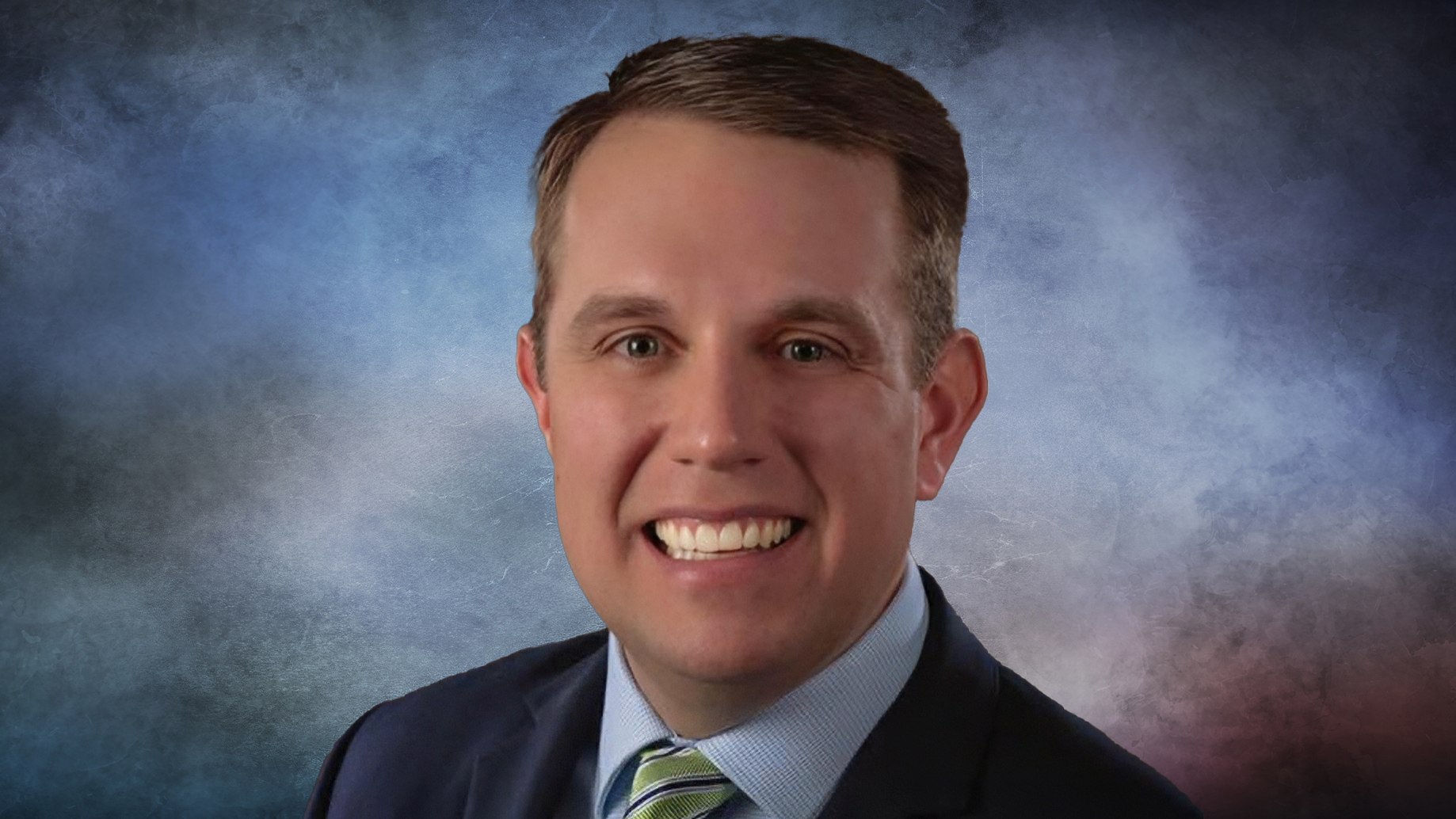
FPMA announces Pierce Schuessler as CEO

Published

on


‘We are confident that his vision and commitment will strengthen our association and elevate the voice of our members statewide.’

Pierce Schuessler has been named CEO of the Florida Petroleum Marketers Association, effective immediately.

Schuessler joins the Tallahassee-based trade group from Buchanan Ingersoll & Rooney PC, where he worked in government relations and advised clients on legislative and regulatory matters in Florida.

FPMA Board Chair Greg Threadgill said Schuessler’s background working with policymakers and industry stakeholders made him a strong fit to lead the organization.

“Pierce’s leadership experience and strong relationships throughout Florida’s legislative and regulatory landscape make him an exceptional choice to guide FPMA forward,” he said. “We are confident that his vision and commitment will strengthen our association and elevate the voice of our members statewide.”

Schuessler will oversee FPMA’s strategic direction, member programs, advocacy initiatives, and industry partnerships. He will also lead the association’s efforts to support Florida’s fuel marketers, convenience retailers, and supply chain partners as they navigate evolving regulatory, economic, and technological challenges.

“I am honored to join FPMA and serve an industry that plays such a vital role in Florida’s economy and daily life,” Schuessler said. “I look forward to working with our members, partners, and policymakers to advance FPMA’s mission and champion the interests of this essential sector.”

Schuessler will be formally introduced to FPMA members during the association’s Legislative Days on the Hill, scheduled for Tuesday and Wednesday. He will also play a leadership role in planning and executing the Sunshine EXPO, FPMA’s annual industry conference and trade show, in July.


Source link

Continue Reading

Politics

Gershom Faulkner returns to Charlie Crist orbit, as new Vice Chair of St. Pete Shines PC

Published

on


St. Pete Shines, the political committee established to support candidates committed to a brighter future for St. Petersburg, is adding new talent to lead operations, with Gershom Faulkner joining as Vice Chair.

While St. Pete Shines has not directly listed an individual or individuals it will support, it’s expected to be used to help former Gov. Charlie Crist, who is also a former U.S. Representative, if he chooses to run for St. Pete Mayor.

Crist has openly said he is seriously considering.

Faulkner previously served as an outreach director for Crist when he served in Florida’s 13th Congressional District. Before that, Faulkner volunteered for Crist’s 2016 Congressional campaign. He also served in various roles under Frank Peterman Jr., both when he was a St. Pete City Council member and later as a state Representative. He’s also worked on campaigns for U.S. Rep. Kathy Castor, for whom he later served as her outreach director, as well as Betty Castor’s 2004 senatorial campaign.

“As evidenced by our successful fundraising, it is clear there is abundant support for the St. Pete Shines mission. As we continue exploring how best to plan for our city’s future, I’m thrilled to announce Gershom Faulkner as the Vice Chair of St. Pete Shines,” said Michelle Todd Schorsch, the chairperson for St. Pete Shines. “His long history of community involvement makes him a great addition to our team, and I’m confident that with his breadth of experience, we are well-positioned to move St. Pete in the best direction for its residents, stakeholders and visitors.”

Faulkner echoed that sentiment, noting the committee’s success shows community “trust and enthusiasm.”

“Stepping into the role of Vice Chair is both an honor and a responsibility I take seriously. Together, we have an opportunity to guide thoughtful growth that strengthens St. Petersburg for today and for generations to come,” he said.

Faulkner joined the Marines after graduating from high school and served during the Gulf War. He has a long history of civic service to St. Pete, including stints on the Civil Service Board, the Southside St. Petersburg Community Redevelopment Area, the city’s ad hoc Planning Committee, the St. Petersburg Midtown Rotary Club and the Neighborly Care Network.

The St. Pete Shines committee brought in more than $725,000 in its first 49-days, according to fourth quarter reports. That includes more than 336,000 transferred from the Friends of Charlie Crist committee, funds remaining from his unsuccessful 2022 bid for Governor.

Even though Crist has not yet announced a decision to run, the large amount of money banked puts him at an immediate and major fundraising advantage. Incumbent Mayor Ken Welch’s committee, The Pelican Political Action Committee, raised just over $48,000 in the fourth quarter, and it retains about $32,000 after the committee’s previous treasurer, Yolanda Brown, allegedly stole more than $207,000 from the committee.

Even if those funds were returned, Welch would still be at a major funding disadvantage.


Source link

Continue Reading

Politics

Florida insurance reforms deliver relief as litigation drops and rates ease

Published

on


Florida has long been a national leader in many areas — and today it stands out for its remarkable progress in repairing a property insurance market that had been spiraling under the weight of excessive litigation and legal system abuse.

By taking decisive action to curb unnecessary lawsuits and restore fairness to its legal system, Florida stabilized its property insurance market and delivered real benefits to consumers.

The 2022–2023 reforms enacted by Gov. Ron DeSantis and the Legislature are driving down rates, providing premium relief, and expanding coverage options while preserving consumer protections.

This is a far cry from where Florida was just a few short years ago at the height of the state’s insurance crisis. More than a dozen companies had gone insolvent or stopped writing new policies, insurance rates were skyrocketing, and the state-run insurer of last resort, Citizens, had ballooned to more than 1.4 million policies.

Today, the Florida insurance market is experiencing strong growth and stability, and Floridians are benefiting from improved affordability. Seventeen new companies have entered the market to offer coverage since the reforms were passed. More competition in the marketplace means consumers have more options to shop around for the best policy at the best price.

Those market improvements are now translating directly into lower rates. Since November 2025, the Florida Office of Insurance Regulation (FLOIR) reports 73 rate-decrease filings and 94 filings requesting no increase. Three major homeowners’ insurers in Florida have recently decreased rates between five and eight percent. According to the FLOIR, the 30-day average homeowners insurance rate request is -2.3%, compared to -0.5% a year ago.

The Governor also recently announced that most Citizens policyholders statewide will receive a premium decrease, with an average statewide reduction of 8.7%. Policyholders in South Florida, which was once a hotbed of claims-related litigation, will see the largest reductions between 11% and 14%.

Auto insurance customers are experiencing similar benefits. In 2025, Florida’s top five auto insurers, which represent 78% of the state’s auto insurance market, decreased rates by an average of 6.5%.

Florida taxpayers also benefit from a reduced risk of statewide assessments now that Citizens’ policy count has dropped from a high of 1.42 million in October 2023 to 395,144 in January 2025 – a nearly 73% reduction and now its lowest level in 14 years.

Litigation trends are also dramatically improving as a direct result of the reforms. In 2019, Florida accounted for more than 76% of all homeowners’ insurance claims litigation nationwide, despite representing just 7% of all homeowners’ insurance claims filed. In the post-reform environment, personal insurance litigation filings fell for a second straight year, dropping 23% from 2023 to 2024 and another 25% in 2025.

Florida’s progress has not gone unnoticed. Other states, such as Georgia and Louisiana, have taken a page from Florida’s playbook and passed their own legal system abuse reforms in the last year.

To maintain Florida’s positive momentum, it is critical for lawmakers to remain committed to legal system abuse reforms, resist any rollback attempts, and allow the reforms to continue working.

If the legal system abuse reforms stand strong year after year, Florida will continue attracting insurers, strengthening competition, and delivering stability and improved affordability for policyholders across the state.

___

David Sampson is president and CEO of the American Property Casualty Insurance Association. APCIA is the leading national trade association for home, auto, and business insurers.


Source link

Continue Reading

Politics

The ball is in the House’s court to solve school voucher funding problems

Published

on


It’s the House’s turn to address school voucher accounting shortfalls. The Senate has unanimously approved its package to fix problems uncovered by a state audit that created major consternation among lawmakers.

The package SB 318, amending the laws governing the state voucher system, received support in the upper chamber, but its fate is now in the hands of the House, which hasn’t proposed a fix.

“The money is supposed to follow the student, but the students are on the move, before, during, and after the school year by the tens of thousands,” Sen. Don Gaetz, a Republican from Crestview, the sponsor, said during the first floor sitting of the Session.

In October, lawmakers in the House spent hours questioning Florida Department of Education officials and administrators with scholarship funding organizations about how state funding navigates its way to schools, private and public. The universal vouchers are available for all families, regardless of income.

Not long after, a state audit found that the money was not moving the way it was supposed to. The audit concluded that “funding did not follow the child,” counter to the rallying cry of school-choice proponents that tax dollars should be allocated to students, not schools.

“Fraudsters, unfortunately, have discovered our school choice program and they scammed millions of dollars by creating fictitious students. Not Minnesota, but not a good look,” Gaetz said, insisting that lawmakers must not let the budgeting problems persist, and pointing to alleged fraud in Minnesota’s day care system.

“North of a million” dollars are associated with fraudulent activity, Gaetz estimated during a news conference following the vote. Last year, the Phoenix reported about a private school receiving vouchers to educate students more than 100 miles away.

The Senate bill, more than 4,000 lines long, looks to establish clearer application and scholarship acceptance deadlines and to boost competition among scholarship-funding organizations, which manage the flow from the state to the schools, while providing more oversight to the state.

“A lot of times in government, we roll out things and the implementation part of it is a disaster, and what I appreciate today is not only did you keep us from committing legislative malfeasance, but you brought it publicly that we identified that we implemented a program, we couldn’t find students. We still have questions about money, but we were open, transparent about it, and we are addressing it through this bill,” Democratic Sen. Rosalind Osgood of Fort Lauderdale said.

The Governor, Senate and House all have recognized a need to make changes. The path to get there is not clear, however. The House has yet to propose a fix.

A key provision from the Senate, differing from House leadership’s philosophy, is separating line items in the budget, creating an appropriation specifically for funding school choice vouchers, separate from overall school spending.

The Senate bill would expand the education stabilization fund to $250 million, something Gaetz said he believes could help the House agree to terms. The fund is supposed to help supplement funding for schools that enroll fewer students than the budget projected.

In the past four years, the voucher program has grown rapidly, serving about 500,000 students during the past school year. In 2021-2022, the program had served about 200,000 students. In 2024-2025, the program dished out $3.17 billion in Family Empowerment Scholarship vouchers and recorded another $804.5 million in scholarship programs funded through corporate tax credits, totaling nearly $4 billion dollars.

The Senate approved an amendment eliminating a declining-enrollment supplement from the original conversation. Gaetz indicated he has “hope” that, in the budget-making process, that provision will resurface.

___

Reporting by Jay Waagmeester. Florida Phoenix is part of States Newsroom, a nonprofit news network supported by grants and a coalition of donors as a 501c(3) public charity. Florida Phoenix maintains editorial independence. Contact Editor Michael Moline for questions: [email protected].


Source link

Continue Reading

Trending

Copyright © Miami Select.