Connect with us

Business

Founder of $100 million company never unplugs from work, but encourages her team to have work-life balance: ‘They didn’t sign up to be entrepreneurs’

Published

on


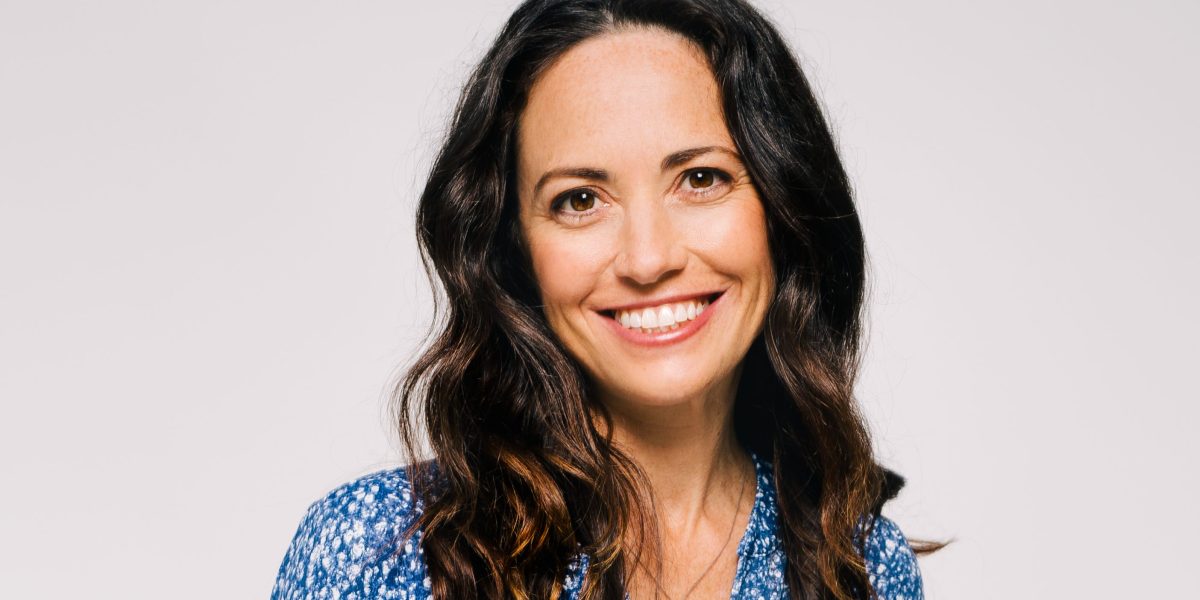
Founders can find it hard to step away from work when their company rests on their shoulders. The concept of having “work-life balance” has sparked fierce debate among entrepreneurs, who question if it’s even possible to have the best of both worlds: scaling a multimillion-dollar business, with enough downtime to recharge. Two-time founder Nicole Bernard Dawes is a strong advocate of unplugging from the job—but only for her employees. 

“I think I probably am a little bit of a hypocrite, because I don’t unplug. I never do,” Dawes tells Fortune. “I never want to be the person that’s holding up a member of our team.”

The serial entrepreneur encourages her staffers to totally disconnect from work once they’re off the clock, but doesn’t give herself the same breathing room. Having scaled two companies to success, she’s assumed the responsibility of always being on for decades. Dawes first founded organic, non-GMO tortilla chip brand Late July in 2003, which currently lines the aisles of Targets, Whole Foods, Krogers, and Walmarts across the country. Campbell’s acquired a majority stake of the business in 2014, eventually buying the rest of the $100 million company in 2017. In 2018, Dawes broke into another consumer packaged goods (CPG) market again, this time with zero-sugar, sustainably packaged soda line Nixie. The brand raised $27 million in new funding earlier this year, with its products being sold in over 11,000 major grocery stores. 

With more than two decades of entrepreneurship under her belt at Late July, Dawes had pushed through economic downturns and many sleepless nights. But the hardships didn’t stop her from returning to the startup scene as Nixie’s founder—having grown up in the business world, Dawes is not so easily deterred. However, she doesn’t want work to overtake her staffers’ lives.

“I signed up for this. I am the entrepreneur, I did this to myself—a self-inflicted situation. [My employees] didn’t sign up to be entrepreneurs,” Dawes says. “I am very comfortable taking downtime, but also making sure I’m available.”

Dawes says never unplugging is “my life”—and she grew up in it

Many leaders out there, like Google cofounder Sergey Brin, expect their staffers to clock in more than the typical nine-to-five job. But Dawes doesn’t hold her her employees to have the relentless work-ethic of entrepreneurs who pride themselves on having no personal lives. 

“I think that where a lot of [leaders] differ, is extending that to their team. I feel very strongly that it should not extend to the team,” Dawes explains. “But I also feel like that is how I grew up. My father missed a lot of stuff because he felt like that was what you had to do. So I was determined I wasn’t gonna do that. I wanted to be present at things for my kids, and I wanted [it] to be okay for our team to be that way, too.”

Dawes witnessed the pitfalls of entrepreneurship as a kid growing up in her parents’ food businesses. She spent her childhood years working the front counter of her mother’s health-food store, and roaming the floors of her late father’s $4.87 billion snack empire: Cape Cod Chips. As a kid in a family running two businesses, Dawes says it could be difficult for her parents to step away from the job. So when she decided to follow in their footsteps as a two-time founder of successful CPG brands, she knew exactly what to expect. 

“When you decide to become an entrepreneur, there’s a lot of people [saying], ‘It’s stressful, it’s lonely, it’s all these things.’ And that’s true, but this is where I was really fortunate: I grew up in this business, so I entered eyes wide open,” Dawes says. “That’s why it’s really important to be passionate about your mission, passionate about your products. Because you do have to sacrifice a lot on the other side.”

Dawes still makes time for the important things

While Dawes admits she has difficulty stepping away from the grind, she still makes time for the things that keep her sane. 

“You have to choose what’s the most important thing in that moment. I don’t think as an entrepreneur—at least for me—I’ve never really, truly, been able to shut off completely,” Dawes says. “But I also make time to have family dinner almost every night. There were things that were priorities to me, and I still make them priorities, like going out for a walk every day or exercising.”

The entrepreneur also loves hitting the beach, reading, and cooking—and despite it feeling like a chore to many, Dawes really enjoys going to the grocery store. She calls it her “hobby”: observing what new products are stocked on shelves, and what items shoppers are gravitating towards. It’s gratifying to witness people pick up a bag of Late July or a case of Nixie drinks to bring home to their families, something she feels immensely grateful for. While getting her brands into those grocery aisles has been no easy feat, it’s all been worth it in the end. Dawes says passion is what eases the weight of her work-life balance. 

“Sometimes when I wake up in the morning like, ‘I can’t even believe I’m this lucky that I get to do this job,’” Dawes says. “And because I feel that way, it doesn’t feel like working. I’m getting to do something fun all the time.”


Source link

Continue Reading

Business

SpaceX to offer insider shares at record-setting valuation

Published

on


SpaceX is preparing to sell insider shares in a transaction that would value Elon Musk’s rocket and satellite maker at a valuation higher than OpenAI’s record-setting $500 billion, people familiar with the matter said.

One of the people briefed on the deal said that the share price under discussion is higher than $400 apiece, which would value SpaceX at between $750 billion and $800 billion, though the details could change. 

The company’s latest tender offer was discussed by its board of directors on Thursday at SpaceX’s Starbase hub in Texas. If confirmed, it would make SpaceX once again the world’s most valuable closely held company, vaulting past the previous record of $500 billion that ChatGPT owner OpenAI set in October. Play Video

Preliminary scenarios included per-share prices that would have pushed SpaceX’s value at roughly $560 billion or higher, the people said. The details of the deal could change before it closes, a third person said. 

A representative for SpaceX didn’t immediately respond to a request for comment. 

The latest figure would be a substantial increase from the $212 a share set in July, when the company raised money and sold shares at a valuation of $400 billion.

The Wall Street Journal and Financial Times, citing unnamed people familiar with the matter, earlier reported that a deal would value SpaceX at $800 billion.

News of SpaceX’s valuation sent shares of EchoStar Corp., a satellite TV and wireless company, up as much as 18%. Last month, Echostar had agreed to sell spectrum licenses to SpaceX for $2.6 billion, adding to an earlier agreement to sell about $17 billion in wireless spectrum to Musk’s company.

Subscribe Now: The Business of Space newsletter covers NASA, key industry events and trends.

The world’s most prolific rocket launcher, SpaceX dominates the space industry with its Falcon 9 rocket that launches satellites and people to orbit.

SpaceX is also the industry leader in providing internet services from low-Earth orbit through Starlink, a system of more than 9,000 satellites that is far ahead of competitors including Amazon.com Inc.’s Amazon Leo.

SpaceX executives have repeatedly floated the idea of spinning off SpaceX’s Starlink business into a separate, publicly traded company — a concept President Gwynne Shotwell first suggested in 2020. 

However, Musk cast doubt on the prospect publicly over the years and Chief Financial Officer Bret Johnsen said in 2024 that a Starlink IPO would be something that would take place more likely “in the years to come.”

The Information, citing people familiar with the discussions, separately reported on Friday that SpaceX has told investors and financial institution representatives that it is aiming for an initial public offering for the entire company in the second half of next year.

A so-called tender or secondary offering, through which employees and some early shareholders can sell shares, provides investors in closely held companies such as SpaceX a way to generate liquidity.

SpaceX is working to develop its new Starship vehicle, advertised as the most powerful rocket ever developed to loft huge numbers of Starlink satellites as well as carry cargo and people to moon and, eventually, Mars.


Source link

Continue Reading

Business

U.S. consumers are so strained they put more than $1B on BNPL during Black Friday and Cyber Monday

Published

on


Financially strained and cautious customers leaned heavily on buy now, pay later (BNPL) services over the holiday weekend.

Cyber Monday alone generated $1.03 billion (a 4.2% increase YoY) in online BNPL sales with most transactions happening on mobile devices, per Adobe Analytics. Overall, consumers spent $14.25 billion online on Cyber Monday. To put that into perspective, BNPL made up for more than 7.2% of total online sales on that day.

As for Black Friday, eMarketer reported $747.5 million in online sales using BNPL services with platforms like PayPal finding a 23% uptick in BNPL transactions.

Likewise, digital financial services company Zip reported 1.6 million transactions throughout 280,000 of its locations over the Black Friday and Cyber Monday weekend. Millennials (51%) accounted for a chunk of the sizable BNPL purchases, followed by Gen Z, Gen X, and baby boomers, per Zip.

The Adobe data showed that people using BNPL were most likely to spend on categories such as electronics, apparel, toys, and furniture, which is consistent with previous years. This trend also tracks with Zip’s findings that shoppers were primarily investing in tech, electronics, and fashion when using its services.

And while some may be surprised that shoppers are taking on more debt via BNPL (in this economy?!), analysts had already projected a strong shopping weekend. A Deloitte survey forecast that consumers would spend about $650 million over the Black Friday–Cyber Monday stretch—a 15% jump from 2023.

“US retailers leaned heavily on discounts this holiday season to drive online demand,” Vivek Pandya, lead analyst at Adobe Digital Insights, said in a statement. “Competitive and persistent deals throughout Cyber Week pushed consumers to shop earlier, creating an environment where Black Friday now challenges the dominance of Cyber Monday.”

This report was originally published by Retail Brew.


Source link

Continue Reading

Business

AI labs like Meta, Deepseek, and Xai earned worst grades possible on an existential safety index

Published

on


A recent report card from an AI safety watchdog isn’t one that tech companies will want to stick on the fridge.

The Future of Life Institute’s latest AI safety index found that major AI labs fell short on most measures of AI responsibility, with few letter grades rising above a C. The org graded eight companies across categories like safety frameworks, risk assessment, and current harms.

Perhaps most glaring was the “existential safety” line, where companies scored Ds and Fs across the board. While many of these companies are explicitly chasing superintelligence, they lack a plan for safely managing it, according to Max Tegmark, MIT professor and president of the Future of Life Institute.

“Reviewers found this kind of jarring,” Tegmark told us.

The reviewers in question were a panel of AI academics and governance experts who examined publicly available material as well as survey responses submitted by five of the eight companies.

Anthropic, OpenAI, and GoogleDeepMind took the top three spots with an overall grade of C+ or C. Then came, in order, Elon Musk’s Xai, Z.ai, Meta, DeepSeek, and Alibaba, all of which got Ds or a D-.

Tegmark blames a lack of regulation that has meant the cutthroat competition of the AI race trumps safety precautions. California recently passed the first law that requires frontier AI companies to disclose safety information around catastrophic risks, and New York is currently within spitting distance as well. Hopes for federal legislation are dim, however.

“Companies have an incentive, even if they have the best intentions, to always rush out new products before the competitor does, as opposed to necessarily putting in a lot of time to make it safe,” Tegmark said.

In lieu of government-mandated standards, Tegmark said the industry has begun to take the group’s regularly released safety indexes more seriously; four of the five American companies now respond to its survey (Meta is the only holdout.) And companies have made some improvements over time, Tegmark said, mentioning Google’s transparency around its whistleblower policy as an example.

But real-life harms reported around issues like teen suicides that chatbots allegedly encouraged, inappropriate interactions with minors, and major cyberattacks have also raised the stakes of the discussion, he said.

“[They] have really made a lot of people realize that this isn’t the future we’re talking about—it’s now,” Tegmark said.

The Future of Life Institute recently enlisted public figures as diverse as Prince Harry and Meghan Markle, former Trump aide Steve Bannon, Apple co-founder Steve Wozniak, and rapper Will.i.am to sign a statement opposing work that could lead to superintelligence.

Tegmark said he would like to see something like “an FDA for AI where companies first have to convince experts that their models are safe before they can sell them.

“The AI industry is quite unique in that it’s the only industry in the US making powerful technology that’s less regulated than sandwiches—basically not regulated at all,” Tegmark said. “If someone says, ‘I want to open a new sandwich shop near Times Square,’ before you can sell the first sandwich, you need a health inspector to check your kitchen and make sure it’s not full of rats…If you instead say, ‘Oh no, I’m not going to sell any sandwiches. I’m just going to release superintelligence.’ OK! No need for any inspectors, no need to get any approvals for anything.”

“So the solution to this is very obvious,” Tegmark added. “You just stop this corporate welfare of giving AI companies exemptions that no other companies get.”

This report was originally published by Tech Brew.


Source link

Continue Reading

Trending

Copyright © Miami Select.