
Politics
Florida’s voucher program at a crossroads


What if a state program were bleeding billions of taxpayer dollars, providing funds to nearly anyone who applied, with minimal oversight?
Fiscal conservatives would demand immediate intervention. They would call for rooting out waste, fraud, and abuse, insist on accountability from those in power, and demand swift action to protect public money.
While much public attention has focused on charter school expansion, including Schools of Hope, this discussion concerns a different program altogether: Florida’s rapidly expanding, taxpayer-funded voucher program.
That program, particularly the unchecked growth of the Family Empowerment Scholarship (FES), now allows public dollars to fund private school and homeschool education on an unprecedented scale.
State officials tout a budget surplus, but independent analysts project that an additional $4–5 billion in annual voucher spending will lead to an imminent budget deficit.

The findings of a recent independent audit of FES are alarming. It examined what happens to these public funds and whether they truly “follow the child,” as Floridians were repeatedly promised.
They did not.
The auditor general was blunt: “Whatever can go wrong with this system has gone wrong.”
The audit raises more questions than answers:
— Why would state legislators steer a previously healthy state budget toward a projected deficit?

— Why is the state unable to account for roughly 30,000 students — representing approximately $270 million in taxpayer dollars — on any given day?
— And why is voucher spending deliberately obscured from public scrutiny by burying it in the public-school funding formula?
According to auditors, Florida’s voucher program has grown faster than the state’s ability to manage it. They identified gaps in real-time tracking, limited verification of eligibility and enrollment, and financial controls that have failed to keep pace with explosive growth.
These are not minor administrative errors; they are flashing warning lights.
Waste, fraud, and abuse are not partisan concerns; they are fiscal ones. Any government program that cannot clearly show where public dollars are or whether they are used appropriately represents a failure of the Legislature’s duty to safeguard taxpayer funds.
It is also important to be honest about what voucher growth truly represents. Despite frequent claims of a mass exodus from public schools, data show that roughly 70%of voucher recipients in recent years were not previously enrolled in public schools.
This is not a story of families fleeing public education. It is a story of public dollars being quietly redirected away from it.
That distinction matters because Florida’s public School Districts remain subject to strict accountability standards that do not apply to private or homeschool programs that receive voucher funds. Public schools must administer state assessments, publish performance data, comply with open-records laws, and undergo regular financial audits.
Public education across Florida is not stagnant. School Districts are actively innovating while serving as responsible stewards of public dollars by expanding career pathways, strengthening partnerships with local employers and higher education, and adapting to an increasingly complex choice landscape. When Districts are supported by stable policy and predictable funding, they lead.
But choice only works when transparency and quality accompany it. If state dollars support a student’s education, those dollars should be accompanied by state-level accountability, including meaningful oversight and participation in statewide assessments.
State dollars should meet state standards.
The audit also makes clear that technical fixes alone are insufficient. As long as voucher funding remains intertwined with public school funding formulas, billions of dollars in voucher spending will remain obscured from public scrutiny. The program must stand on its own.
Florida’s fiscally conservative Senators recognized this reality when they introduced SB318, a bipartisan bill to implement the auditor general’s recommendations and bring transparency and fiscal responsibility to school choice. The House must now follow suit.
Families like mine value school choice. But without meaningful reform, the current system is not financially sustainable.
Fiscal responsibility and educational opportunity are not competing values. Floridians must insist on both.
___
Liz Barker is a Sarasota County School Board member.
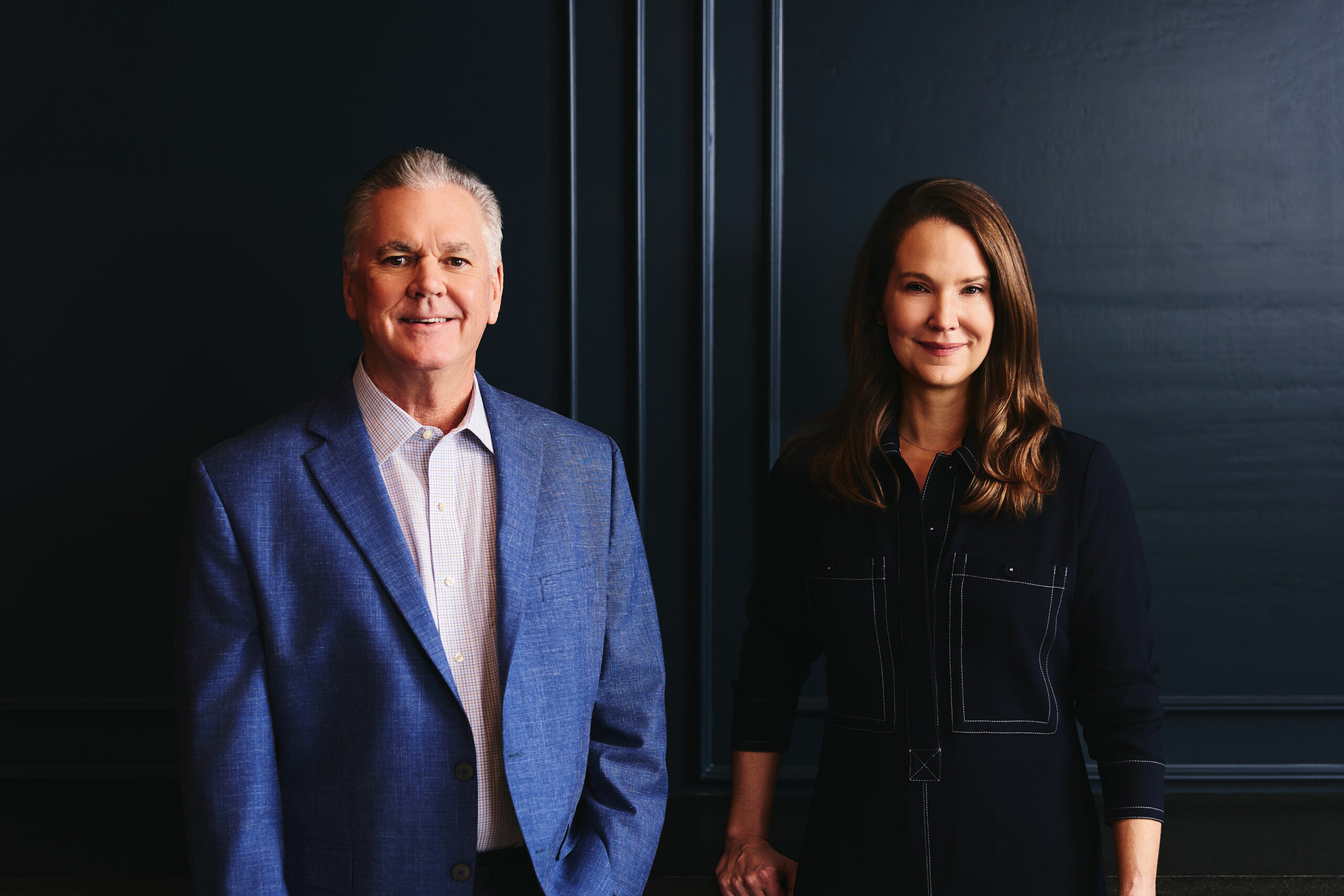
As transportation agencies and private-sector suppliers confront rapid technological change, evolving regulations, and workforce pressures, TSG Advisors is expanding its advisory services with a new transportation-focused vertical.
The firm announced the launch of TSG Transportation Advisors, a consulting and professional services practice supporting clients in innovation, emerging technologies, workforce development, and program execution across the transportation sector. The new practice joins TSG Advisors’ existing Education and Public Safety verticals.
TSG Transportation Advisors will be led by Managing Principal Joe Moye and Senior Principal Alix Miller, both of whom bring decades of experience in transportation operations, technology, policy, and organizational leadership.
“The transportation sector is undergoing a fundamental transformation driven by automation, connectivity, and emerging technologies,” Moye said. “Organizations need partners who can move innovation from concept to execution while navigating regulatory, workforce, and funding realities.”
Moye brings more than 35 years of experience across transportation and technology. Most recently, he served as the founding CEO of Beep Inc., where he led the testing and deployment of shared autonomous vehicle platforms in partnership with transit agencies, state departments of transportation, and federal regulators. His background also includes executive leadership roles at Capgemini, Blackbaud, and Virtustream.
Miller previously served as president and CEO of the Florida Trucking Association, guiding the organization through landmark legal reforms, expanded political engagement, and an increased emphasis on freight mobility as a statewide priority.
“Transportation organizations face growing pressure to modernize while maintaining safety and reliability,” Miller said. “Our goal is to help organizations not only adapt to change but lead through it.”
Founded in 2023 in partnership with The Southern Group, TSG Advisors is an independent advisory and professional services firm designed to complement traditional advocacy efforts. While The Southern Group is nationally recognized for government relations, TSG Advisors focuses on strategic advisory and execution support.
According to the firm, TSG Transportation Advisors will assist clients with program governance, funding strategy, workforce development, regulatory compliance, commercialization, and the responsible deployment of emerging and connected transportation technologies.
More information is available on the firm’s website.



Down Arrow Button Icon

Gucci explores luxury health and wellness market

TSG Advisors launches transportation-focused advisory practice
-

 Politics8 years ago
Congress rolls out ‘Better Deal,’ new economic agenda
-
Entertainment8 years ago
New Season 8 Walking Dead trailer flashes forward in time
-
Politics8 years ago
Poll: Virginia governor’s race in dead heat
-
Entertainment8 years ago
The final 6 ‘Game of Thrones’ episodes might feel like a full season
-
Politics8 years ago
Illinois’ financial crisis could bring the state to a halt
-
Entertainment8 years ago
Meet Superman’s grandfather in new trailer for Krypton
-
Business8 years ago
6 Stunning new co-working spaces around the globe
-
Tech8 years ago
Hulu hires Google marketing veteran Kelly Campbell as CMO