
Politics
Florida’s new ‘Deportation Depot’ immigrant detention center stirs fears among neighbors
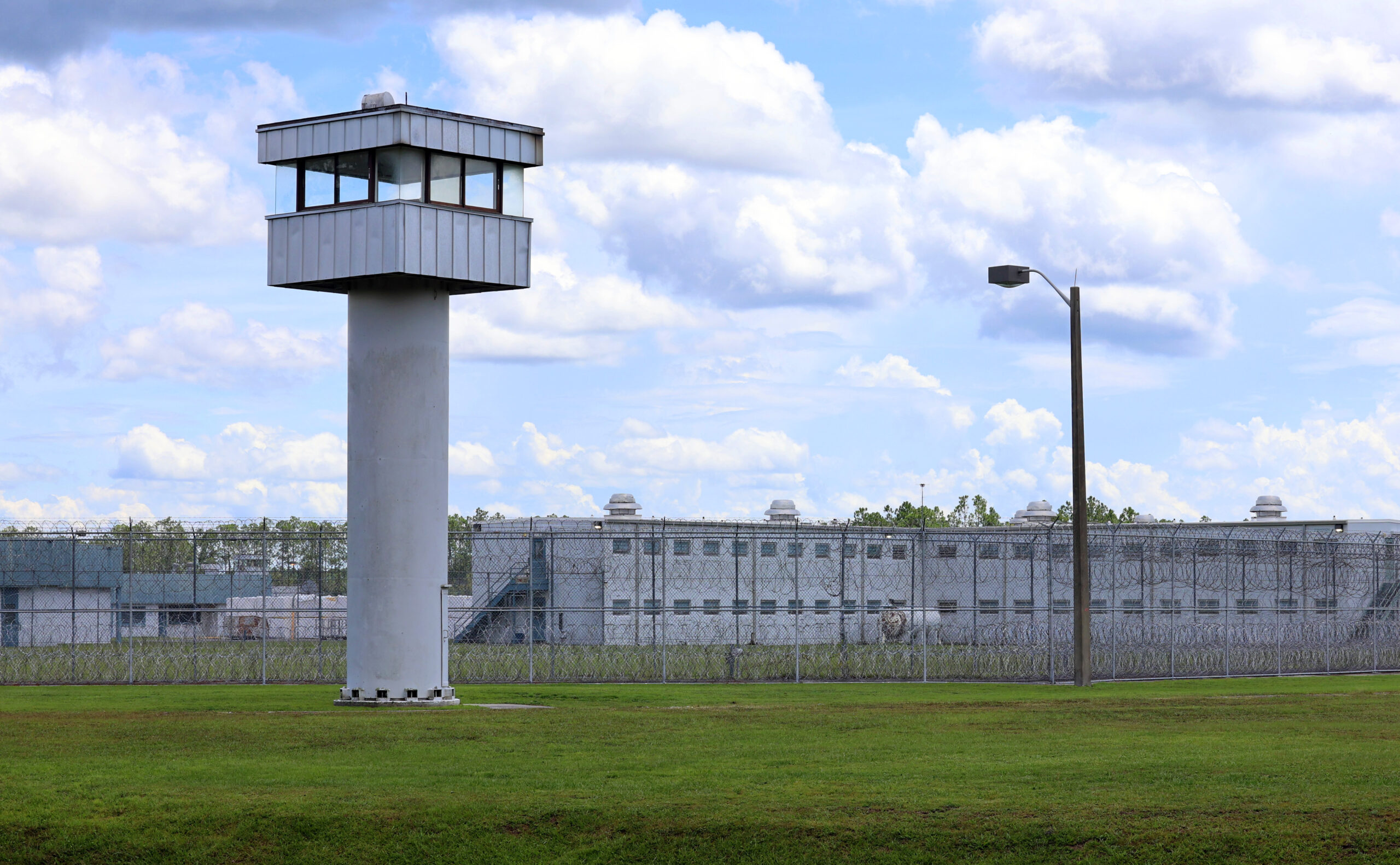
Lucy Johnson didn’t know a shuttered prison down the road would soon hold as many as 2,000 immigrant detainees until a reporter told her. Standing under her carport as ribs sizzled on the grill and her four children played in the yard, she said her concern wasn’t politics — it was safety.
“I know I live right by these prisons already, and it’s been scary from the start, but that’s a whole different level to me,” Johnson said.
Johnson’s is among families living nearest to the Baker Correctional Institution’s barbed-wire fences — a defunct men’s state prison set to become the state’s newest immigration detention center.
Dubbed the “Deportation Depot,” Gov. Ron DeSantis at a news conference last week called the vacant Baker prison “ready-made infrastructure.” It once held 1,165 inmates. The Governor’s Office said the site would hold 1,300 but could be expanded to accommodate as many as 2,000 immigrants.
“Why here?” asked Sharon Cason, 76, who has lived in Sanderson since 1996. She saw the news on Facebook and was “shocked,” she said, sitting in a lawn chair on her porch.
“I’m not thrilled. If some of them want to break out or run, what are we going to do? There’s no telling what they’re going to do to stay free.”
In one of Florida’s most conservative counties, the plan has drawn a tangle of reactions to those living within walking distance. Neighbors worry about safety, reflecting fears over rhetoric by the DeSantis administration and the White House that detained immigrants are violent criminals — even though researchers and court records say that isn’t true for most of them.
“We’ve heard all these bad things and watched all these bad things about these immigrants,” Johnson said.
Others nearby said they are concerned about fairness or trust in the government. Others welcome the idea.
“I really don’t like it,” said mechanic Trey Spradley, 31, seated in a lawn chair, holding a cup of ice water between stained fingers. “Them breaking out of there, and us being out here.” He described himself as a fan of DeSantis and President Donald Trump.

Nearby, Rufus Smith, 58, called the idea “stupid.” A Democrat, he said he objects to putting immigrants behind bars who committed no crimes other than immigration violations. “If you can prove they did something, get them,” he said. “If you can’t, leave them people alone. People are going and making a life for their family. I think Trump’s crazy as hell.”
Smith said he does not believe the DeSantis administration will operate the facility humanely. Smith served time in state prison between the late 1980s and 2011 for robbery, theft and burglary, according to Department of Corrections records. He said the daily labor he performed inside — drywall, agricultural and asphalt work — reminded him of what he imagines immigrants may face in detention centers.
This reporting is part of a new collaboration organized by Carnegie-Knight schools of journalism to produce intensive, public service news coverage of immigration issues, including the U.S. immigration courts. Fresh Take Florida, a news service of the University of Florida College of Journalism and Communications, interviewed neighbors last week.
The sense of opposition is remarkable because rural Baker County — with a population just under 30,000 — is among the most conservative places in Florida: Voters here elected DeSantis in 2022 with 89% of the vote, and re-elected Trump last year with 88% of the vote.
Johnson, 29, said she didn’t vote in last year’s election but would have voted for DeSantis for President. She said she agrees with Trump’s immigration policies but is most concerned about her children’s safety. She called the site a “dangerous situation.”
Cason, a Democrat who voted for Trump and DeSantis, said, “I just hate that it’s coming too close to home. I never dreamed something like that would be in Baker County.”
Daniel Dinkens, 43, said the announcement was unexpected as he sat beneath a pavilion at Olustee Community Park, sheltering from the rain. Dinkens is registered with no party affiliation but said he voted for Kamala Harris and other Democrats in last year’s elections.
Dinkens said he wasn’t fearful. He noted Baker County has few Hispanic residents. Census figures show about 78% of the people here are white and only 4% Hispanic, far below Florida’s statewide rate of 27%.
“There’s nothing to fear,” he said. “They want us to fear Hispanic people. It’s about wanting the country to be a White, nationalist country.”
Figures from August showed there were about 60,000 people in immigration detention nationwide. Just over 70% of current detainees have no criminal convictions, according to data compiled by Syracuse University.
Spradley, the mechanic, said he would use his own firearms and hunter’s attitude to keep himself safe. He said law enforcement wasn’t a regular presence in the neighborhoods near the old prison.
“You don’t ever see a cop around here ever,” Spradley said. “Patrolling? Nothing. Not one single cop. No state troops.”
Cason said when the prison and a nearby work camp were operating, officials dealt quietly with occasional escapes, undermining confidence from neighbors.
“They’d have the white trucks with the hounds in them that track them,” she said. “But nobody would ever say anything. You just knew one had escaped.”
Not far away, Stephen Sooter, 58, drank a beer on his front porch. He supports using the prison for immigration detention and said he voted for Trump and DeSantis. He believes immigrants are taking away benefits from American citizens.
“The government’s going to do what they’re going to do,” he said. “It doesn’t matter to me. I just want to be protected.”
The Governor said it will cost about $6 million to get operations running at the new facility, and DeSantis said the Trump administration will reimburse Florida for operating costs. The Department of Emergency Management will be operating it.
Jim Bowers, 48, lives about 4 miles away. A Republican, Bowers said he supports detaining and deporting immigrants with criminal backgrounds but not those seeking to build a life. He said he trusts Florida to prevent any escapes.
Bowers said loose immigration enforcement at the border drove his support for Trump and DeSantis.
“The way it was before the election, like last year, it being wide open and everything, it’s ridiculous,” Bowers said.
DeSantis said he planned to use the National Guard to run the Deportation Depot. Dinkens, an Army veteran who served three tours in Iraq, said that was a mistake.
“Soldiers are war fighters,” he said. “People are going to get mistreated.”
At the site, there was no obvious hustle and bustle of new construction or preparations last week, at least yet. Along the two lanes of a state highway running beside the shuttered prison, log trucks surged past. Watchtowers sat vacant. The late-Summer heat settled over swaying pine trees.
“This will be operational soon,” the Governor said. “It’s not going to take forever, but we’re also not rushing to do it.”
Immigrants caught in the U.S. illegally are held by federal agents at five Florida sites — including the Federal Detention Center in Miami and Krome Detention Center in South Florida. Another is the Baker County Detention Center, where the Sheriff’s Office is paid by the U.S. to use excess jail capacity. That jail is about 17 miles from the shuttered prison.
The controversial site that DeSantis named Alligator Alcatraz — expected to cost $450 million per year — was an additional facility run by state officials.
The Baker Correctional Institution — about nine miles west of Interstate 10 between Jacksonville and Tallahassee — has been closed since 2021 amid staffing shortages during COVID.
Unlike South Florida’s Alligator Alcatraz detention center — which opened in June — the empty prison in Baker County isn’t surrounded by pythons or the Everglades.
Instead, it’s surrounded by the Osceola National Forest, a sprawling pine and cypress forest home to cougars and black bears. The nearest airport, Lake City Gateway Airport, is about 12 miles west.
Johnson said the heavily wooded land surrounding her rural home would give potential escapees “plenty of places to hide.”
More than 70 miles inland between both of Florida’s coasts, and further north, the new detention center may also be more resilient to hurricanes than the reinforced tents in the Everglades.
A federal judge in Miami, U.S. District Judge Kathleen Williams, ordered a temporary halt to further construction at Alligator Alcatraz and is considering a request to shut it down over possible environmental threats. Her decision was expected before the end of the month.
___
This story was produced by Fresh Take Florida, a news service of the University of Florida College of Journalism and Communications. The reporter can be reached at [email protected]. You can donate to support our students here.
Post Views: 0