
Politics
Florida’s fumble on full practice authority for nurse practitioners


When the Centers for Medicare and Medicaid Services (CMS) announced its Rural Health Transformation Program (RHTP), a $50 billion, five-year federal investment to improve rural health care, it marked a pivotal shift in how states will be rewarded for removing barriers to care (Centers for Medicare & Medicaid Services [CMS], 2024).
The program’s Notice of Funding Opportunity (NOFO) opened on Sept. 15 and will close on Nov. 5, 2025, with awards announced by December 31. Part of each state’s technical score will depend on its scope-of-practice environment, specifically whether it allows nurse practitioners (NPs) to practice independently with full practice authority (FPA).
This metric recognizes what decades of research have proven: nurse practitioners provide high-quality, cost-effective, and accessible care across every setting. States that grant FPA empower NPs to evaluate, diagnose, order and interpret tests, and prescribe treatments without mandated physician oversight. Evidence shows these states experience better primary care access, especially in rural and underserved communities (Xue et al., 2021).
Florida, however, remains a reduced-practice state. Despite progress with HB 607 in 2020, allowing some autonomous primary care practice, psychiatric and many specialty NPs remain restricted by supervisory requirements. These outdated barriers do more than limit professional autonomy; they limit access for Floridians.
Studies consistently demonstrate that FPA states have stronger rural health outcomes. After states expanded NP practice authority, the number of NPs practicing in Health Professional Shortage Areas increased significantly (Xue et al., 2021). Patient outcomes remain equivalent or superior to those under physician-led care, with comparable control of blood pressure, hemoglobin A1c, and cholesterol levels.
Research also shows no increase in adverse outcomes when NPs practice independently (Grant & Ball, 2023).
The CMS RHTP uses these findings to justify rewarding states that modernize practice laws. The agency will allocate scoring points based on whether states have eliminated unnecessary physician oversight for NPs (CMS, 2024). In other words, states that empower NPs could capture millions in new federal dollars for rural infrastructure, care coordination, and workforce expansion.
If Florida does not act, it will forfeit this opportunity. The state already ranks among the lowest for primary care access, with more than seven million residents living in federally designated shortage areas (Health Resources and Services Administration [HRSA], 2023). By continuing restrictive practice laws, Florida effectively disqualifies itself from receiving higher funding scores under CMS’s criteria, sending tax dollars to states like Arizona, New Mexico, and Colorado that recognize full NP authority.
The evidence is clear: Full practice authority does not harm patients; it helps them. The Cato Institute’s 2023 analysis found no measurable increase in patient harm when NPs practiced independently (Grant & Ball, 2023). Similarly, states with FPA report shorter wait times, lower emergency-room utilization, and higher patient satisfaction (Yang et al., 2021).
Modernizing Florida’s nurse practitioner laws is not a partisan issue; it is a public health and fiscal necessity. Updating the Nurse Practice Act to grant full practice authority would immediately strengthen the state’s RHTP eligibility, improve provider distribution, and bring much-needed health care access to rural communities.

Florida has an opportunity to lead. If policymakers fail to act, they risk losing federal dollars that could transform rural care delivery and support the very communities that need it most.
The path forward is clear: empower nurse practitioners, expand access, and ensure that no Floridian is left behind in the nation’s push toward equitable rural health transformation.
___
Monica Barfield, DNP, APRN, AGACNP-BC, FNP-BC, owns New Horizon Primary Care and serves as Region One director for the Florida Nurse Practitioner Network and secretary of the Florida Coalition for Advanced Practice Nurses.
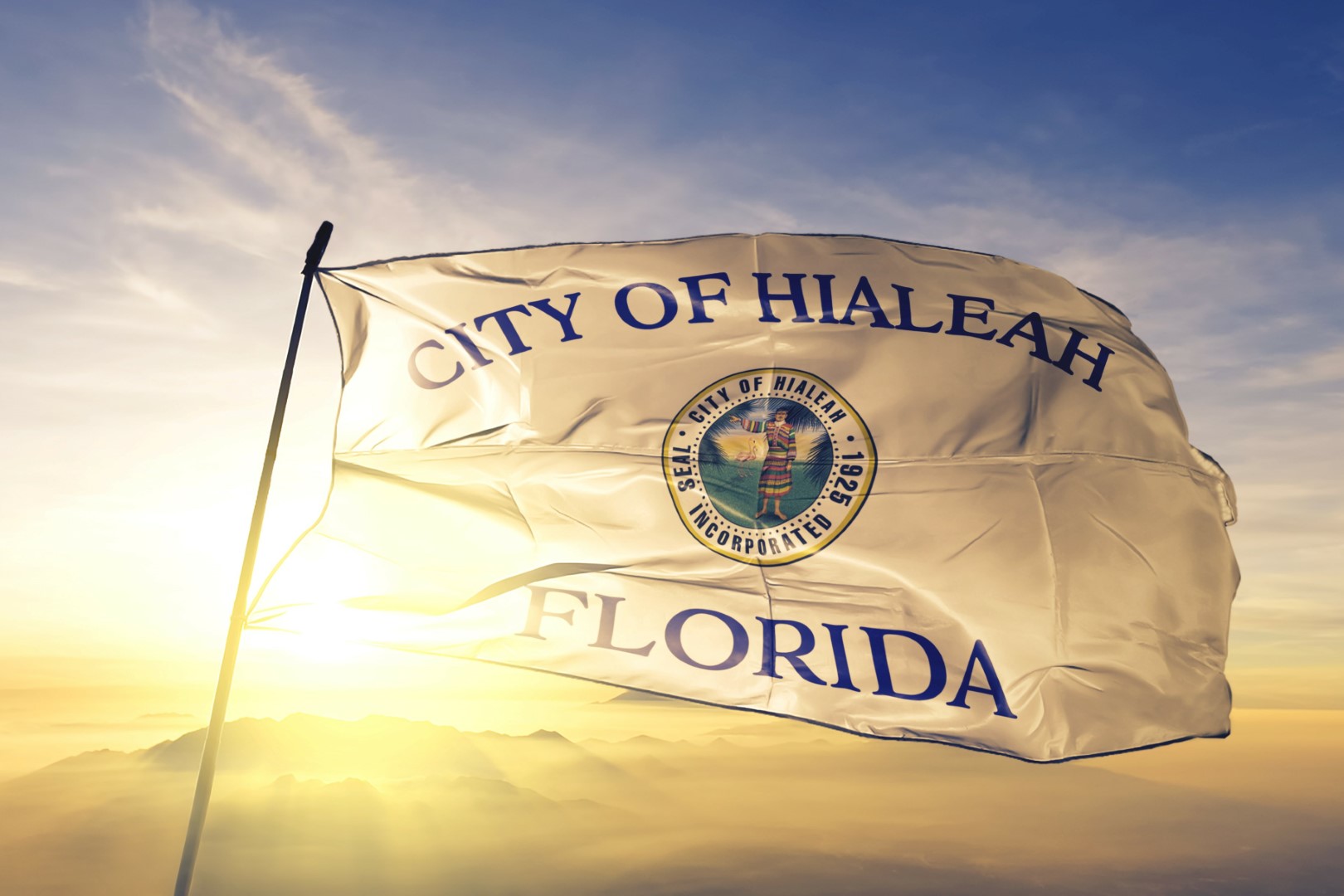
Early voting is underway in Hialeah as two Council runoff contests will decide who rounds out a markedly different dais at City Hall.
The Group 3 and Group 4 races — featuring Jessica Castillo versus Gelien Perez and William “Willy” Marrero versus Javier Morejon, respectively — also stand to determine whether new Mayor Bryan Calvo gains early influence over the Council.
Perez and Castillo advanced to the Group 3 runoff in last month’s General Election with 40.5% and 36% of the vote, respectively, leaving one third-place candidate behind.
In Group 4, Marrero narrowly led the field with 24.8%, followed by Morejon at 23.3%. They outpaced three others in the contest.
To win outright, a candidate had to capture more than half the vote in their respective races.
The runoffs present one of the first real tests of how much sway Calvo, who made history last month as the youngest person ever elected Hialeah Mayor, will have as he prepares to take office.
He has endorsed Perez and Marrero — a strategic pairing that blends rival factions from the mayoral contest into his new governing coalition. Both ran with political slates opposing him. He told the Miami Herald last month that he’s aiming to create “a coalition to approve the agenda,” without an expectation that Perez and Matteo “will vote with (him) 100% of the time.”
If both candidates win, Calvo could enter January with a working majority on the seven-member Council and greater control over the upcoming appointment to fill Jesus Tundidor’s soon-to-be-vacant seat. Tundidor ran unsuccessfully for Mayor.
In Group 3, Perez, 35, a former city Human Resources Director and one-time mayoral aide, has campaigned on supporting first responders and small businesses, improving infrastructure and parks, expanding senior services and rejecting millage rate increases.
But her tenure as HR director drew scrutiny: a two-year Miami-Dade ethics investigation found employees under her influence received sizable raises while she acted as their real estate agent. She has not publicly responded to inquiries about the probe.
Castillo, 37, has run as an independent voice focused on transparency, accountability, traffic relief, infrastructure upgrades and lower taxes. She has kept her campaign largely offline, with no website and minimal social media activity.
In Group 4, Marrero, 23, a Florida International University public administration student and former Council aide, has emphasized affordability, issues facing working families and seniors, and support for first responders.
Earlier this year, three Council members attempted to appoint him to the same seat he now seeks, but opposition from others blocked the move.

Morejon, 34, a land-use specialist with an extensive volunteer résumé, is running on infrastructure repairs, government transparency, beautification and reducing the cost of city services.
Election Day is Monday, Dec. 9. Because Hialeah elects Council members at-large, all voters can cast ballots in both races.
Politics
Soon no Pearl Harbor survivors will be alive. People turn to other ways to learn about the bombing




Hialeah voters head to polls as City Commission runoffs test new Mayor’s political clout

So much of crypto is not even real—but that’s starting to change

Mass Shooting At South Africa Bar Leaves 12 Dead, Including 3 Kids
-

 Politics8 years ago
Congress rolls out ‘Better Deal,’ new economic agenda
-
Entertainment8 years ago
New Season 8 Walking Dead trailer flashes forward in time
-
Politics8 years ago
Poll: Virginia governor’s race in dead heat
-
Entertainment8 years ago
The final 6 ‘Game of Thrones’ episodes might feel like a full season
-
Entertainment8 years ago
Meet Superman’s grandfather in new trailer for Krypton
-
Politics8 years ago
Illinois’ financial crisis could bring the state to a halt
-
Business8 years ago
6 Stunning new co-working spaces around the globe
-
Tech8 years ago
Hulu hires Google marketing veteran Kelly Campbell as CMO