Connect with us

Politics

Florida TaxWatch applauds $56M in budget vetoes, notes other cuts Gov. DeSantis missed
Published

on


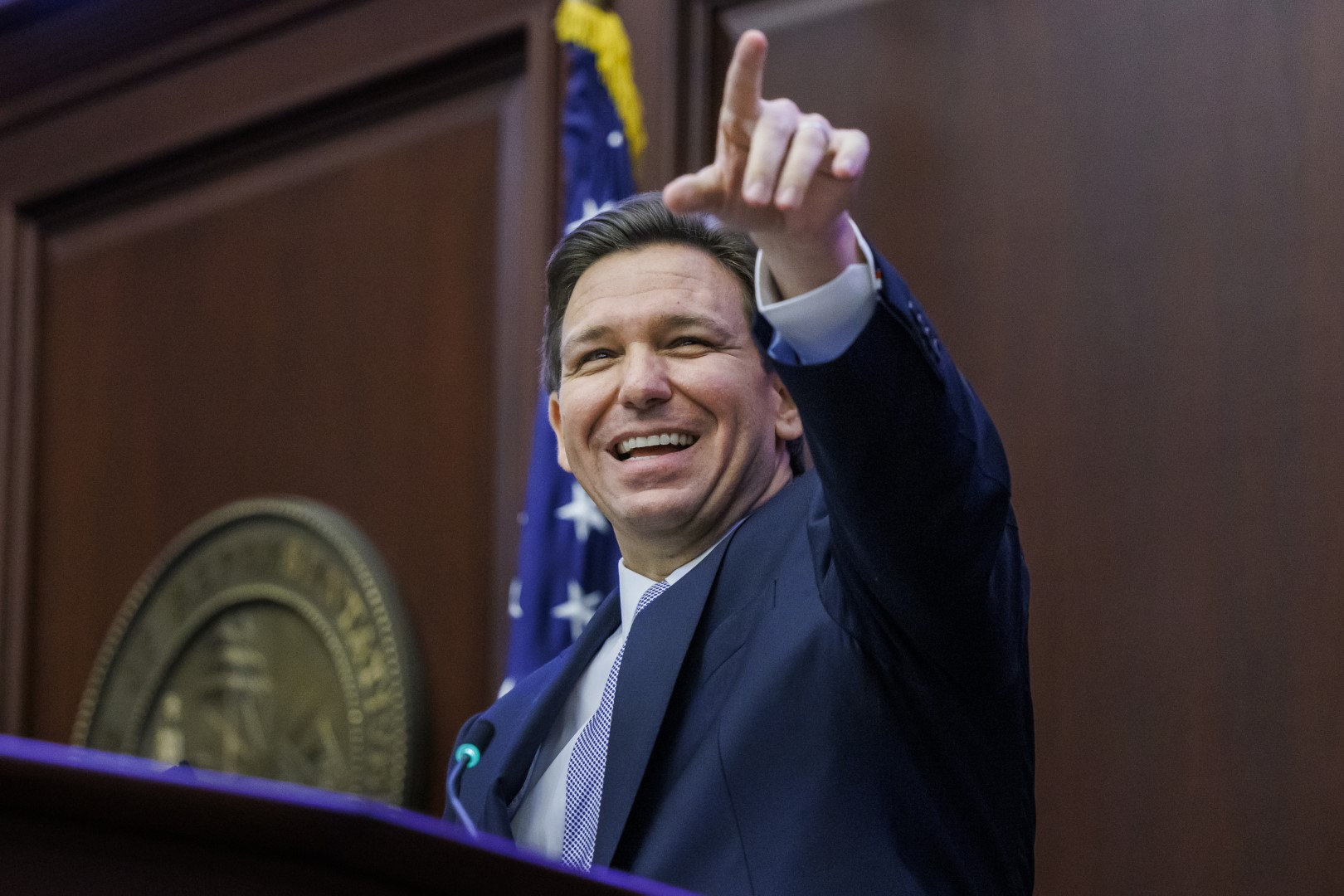
Florida TaxWatch is applauding Gov. Ron DeSantis’ vetoes of more than $56 million in what it considers wasteful spending from the state’s newly signed $115.1 billion budget.

However, while that’s a decent sum, the nonprofit watchdog group stated that ample cuts were missed, and there still needs to be far more accountability in the future for how local projects are selected and funded through the appropriations process.

DeSantis nixed 65 of 238 projects Florida TaxWatch flagged as “Budget Turkeys” in the group’s annual watchdog report. Those projects, Florida TaxWatch President and CEO Dominic Calabro said, “bypass or violate established budget procedures or legislative and public scrutiny.”

The Governor also struck 194 items totaling $126.1 million that Calabro’s group said should be given “especially close scrutiny.”

In total, more than half the individual appropriations DeSantis vetoed were included in the “Budget Turkey” report.

Calabro said Florida TaxWatch commends DeSantis, Senate President Ben Albritton, House Speaker Daniel Perez and the Legislature for slashing spending, securing recurring funding to continue paying down the state’s debt, establishing a permanent back-to-school tax holiday in August and permanently exempting disaster preparedness items.

He also highlighted the elimination of business rent tax — taxes on office space, retail storefronts, warehouses and industrial facilities, among other fees — as a major win for “meaningful tax relief” empowering “Florida families and businesses (to) thrive.”

“As a trusted government watchdog for over 45 years, Florida TaxWatch will never stop advocating for the hardworking taxpayers of our state, ensuring that taxpayer dollars be allocated through a transparent, accountable, and deliberative process,” Calabro said in a statement.

In its “Budget Turkey” report published last month, Florida TaxWatch flagged $416.1 million in questionable spending items and another $799.5 million in spending that, while not designated as turkeys, should receive more examination before winning final approval.

Among the most scrutinized categories: higher education construction, where 18 university projects totaling $134.3 million were funded despite lacking priority rankings from the Board of Governors.

The report also criticized agriculture and park projects that bypassed oversight, including $6.5 million allocated to a Hardee County fair facility that had already received funding last year and $1.7 million to a South Florida Fairgrounds shelter. The Florida Department of Agriculture did not prioritize either project.

TaxWatch also objected to the funding of 18 local park projects worth $13.2 million, arguing that a state grant system, such as the Department of Environmental Protection’s competitive Recreational Development Assistance Program, should have been used.

Boating, water and transportation projects also drew fire. The Legislature used general revenue and the State Transportation Trust Fund to support local infrastructure projects that sidestepped existing review protocols.

That included $461.5 million allocated to the state’s Water Quality Improvement Grant Program that was almost entirely earmarked for 314 member projects and $210.9 million for 114 member projects funded by the State Transportation Trust Fund, which is supposed to support initiatives vetted through the Florida Department of Transportation’s Work Program.

Florida TaxWatch noted late-Session rule violations, including $8.5 million added for a University of South Florida veterans facility and $5 million for a University of Central Florida innovation hub during the budget conference process, despite the prohibition of such moves under joint rules.

In total, lawmakers approved 1,700 local member projects worth more than $2 billion, many of which were exempt from formal ranking, review or eligibility checks.

Florida TaxWatch officials have called for the Legislature to establish competitive, statutory review processes for project types such as law enforcement grants, fire stations, educational enhancements, and cultural institutions — all of which have seen substantial funding despite bypassing merit-based evaluation.

“Funding them through the state budget has now become standard,” said Kurt Wenner, TaxWatch Senior Vice President of Research. “If the Legislature is going to fund such projects, it must create a competitive review and selection process in statute for each of these areas.”


Post Views: 0


Source link

Continue Reading

Politics

Florida Poly tops state in computer science, with data science program in top 20 nationally

Published

on


Florida Polytechnic University is the best in the state when it comes to undergraduate computer science education, and it’s among the best in the nation in data science.

That’s according to new rankings from Research.com, an online higher education resource. The university’s computer science program ranked No. 1 in Florida among public universities, while its data science program ranked among the nation’s Top 20 for all public and private universities.

“These rankings underscore the high quality of our programs, as well as the talent and commitment of our faculty and students,” university President Devin Stephenson said. “At Florida Poly, we’re building one of the nation’s strongest STEM-focused universities, and recognitions like this show the growing impact of our work.”

The school’s data science program ranked No. 18 overall and No. 11 among public universities nationwide. It was also recognized as the No. 4 most affordable data science undergraduate program nationwide.

“We continually refine our academic programs to ensure students are acquiring knowledge in the most relevant, forward-looking technologies,” Florida Poly Provost Brad Thiessen said. “Being among the nation’s best and most affordable programs strengthens our ability to attract ambitious students who want to innovate and lead.”

The rankings were based on factors including overall university quality, student program views, cost, post-graduation earning potential and research strength.

The school’s computer science program, while tops in the state among all public universities, also ranked No. 2 when including private schools.

“These awards are a testament to the institution’s dedication to academic excellence and student satisfaction with their programs,” Research.com said on its webpage for the ranking.

The new Research.com rankings follow other accolades for Florida’s youngest state university. The most recent U.S. News & World Report Best Colleges Rankings put Florida Poly as the No. 1 public college in the South for the fifth consecutive year and No. 3 best value public school in the region.

The university also remains among the nation’s Top 30 public engineering programs without a Ph.D. for the fifth year in a row. In WalletHub’s 2026 College & University Rankings, Florida Poly ranked in the Top 10 nationally for overall career outcomes, No. 2 among public institutions and No. 5 among public universities for best cost and financing.


Source link

Continue Reading

Politics

Democratic lawmakers push to close gun enforcement gap in domestic violence injunctions

Published

on


A triple homicide in South Florida this year is driving a renewed push by Democratic lawmakers to strengthen state protections against domestic violence.

Boca Raton Sen. Tina Scott Polsky and Rep. Robin Bartleman of Weston have filed twin bills (SB 858, HB 729) that would require law enforcement to seize firearms when domestic violence injunctions are issued and impose tougher penalties on repeat violators.

The proposal follows the February killings of Mary Gingles, her father, David Ponzer, and her neighbor Andrew Ferrin in Tamarac.

Gingles had sought domestic violence injunctions against her husband twice in 2024, and a Judge ordered him to surrender his firearms.

Under existing Florida statute, however, deputies are not required to collect those weapons when serving the injunction, nor are agencies required to document whether the surrender occurred.

The gun used in the killings could have been seized, but wasn’t.

Polsky and Bartleman’s proposal would change that. It would establish a mandatory process requiring law enforcement agencies to take possession of a respondent’s firearms and ammunition once a court orders their surrender under a domestic violence injunction.

It would also require documentation confirming whether weapons were collected and where they are stored. Further, the measure would raise the penalty for a second violation of a domestic violence injunction from a first-degree misdemeanor to a third-degree felony, punishable by up to five years in prison and a $5,000 fine.

“Deaths resulting from domestic violence, especially those involving the use of firearms, are not isolated incidents in our state. In fact, 217 Floridians lost their lives from domestic violence homicide in 2020, representing 20% of all homicides in our state, according to the Florida Department of Children and Families,” Polsky said in a statement.

“This bill is one way we can effectively cut the number of deaths caused by domestic violence down significantly. Domestic violence doesn’t just affect individuals; it affects entire families and our communities. This is a moment for the Legislature to say we see you, we hear you, and we will take action to stop this violence from shattering communities further.”

Bartleman said in a statement that too many families in Florida “know the tragic reality of losing someone to domestic violence.”

“We hear their stories every day. Victims murdered in their homes, children caught in the crossfire of violence they should never have to experience,” she said. “Each one reported the violence, each one tried to get help, and each one was left waiting for action that never came. We cannot keep asking survivors to risk everything while the system continues to fall short.”

Advocates argue the absence of an enforcement mechanism undermines judicial authority and leaves survivors vulnerable even after Judges recognize the danger. Kelley Joseph, Gingles’ lawyer, said in a statement that Polsky and Bartleman’s proposal would provide verification and accountability so law enforcement and courts can intervene effectively before violence escalates.

“Had the firearm at issue been properly seized when the domestic violence injunction was served, Mary might still be alive today, instead of leaving behind a four-year-old child who witnessed unspeakable violence,” Joseph said.

“By incorporating red-flag procedures into the domestic violence statute, this reform would ensure judicial oversight and reliable verification so law enforcement and the courts would have the tools needed to help keep more victims safe and alive.”

Both sponsors have worked for years on domestic violence and public safety policies. Polsky has supported legislation to expand gun control strictures and strengthen survivor protections, while Bartleman has backed reforms to improve police response to domestic violence and add privacy protections for sexual assault survivors.


Source link

Continue Reading

Politics

Wilton Simpson offers personalized certificates recognizing Santa’s imminent entry into Florida

Published

on


Agriculture Commissioner Wilton Simpson is renewing his annual partnership with Santa Claus, rolling out personalized “Certificates of Clearance” that officially authorize the big man in red and his reindeer to enter Florida and deliver presents across the Sunshine State.

The holiday tradition allows the certificates, customized with each child’s name and signed by the Commissioner himself, to serve as a keepsake confirming that Santa’s operation has met all Florida requirements.

“From our beaches to our farmlands, Florida families know how to make Christmas special. I’m proud to partner with my pal Santa again this year to ensure he and his reindeer have everything they need to make their travels as safe and smooth as possible,” Simpson said.

“Children across Florida can celebrate Santa’s official clearance with a fun keepsake certificate — a reminder that Florida always cherishes its families and traditions.”

Santa, for his part, sounded pleased with the arrangement.

“Florida has always been one of my favorite stops on Christmas Eve, and my reindeer look forward to it every year. I’m grateful to Commissioner Simpson for helping us to make sure we have a safe and joyful trip across the state — fueled, of course, by Fresh From Florida treats!” Santa said.

Parents and guardians can generate personal certificates online. After setting up an account, families receive a digital certificate they can print and display ahead of Santa’s arrival — a preemptive stamp of approval designed to add a little extra magic to Christmas Eve.

But the paperwork doesn’t stop there.

As part of the annual agreement between the Florida Department of Agriculture and Consumer Services (FDACS) and the North Pole, Simpson is expected to issue an emergency order later this month. The order will waive any Department rules or requirements that could otherwise interfere with Santa’s overnight travel across Florida, ensuring a smooth sleigh ride uninterrupted by red tape.

The emergency order has become a recurring feature of the season, underscoring FDACS’ wide-ranging authority over everything from fuel standards to animal health — including, apparently, flying reindeer.

The certificates and waiver have become a reliable holiday outreach effort for the Agriculture Commissioner’s Office. Additional details about the emergency order will be released once it’s issued.

Until then, Florida families can rest easy knowing Santa’s route is being reviewed, approved and officially stamped by the Commissioner.


Source link

Continue Reading

Trending

Copyright © Miami Select.