The Florida Sheriffs Association (FSA) has unveiled its leadership team for the 2025-26 term and bestowed awards recognizing extraordinary law enforcement and civilian achievements across the state.
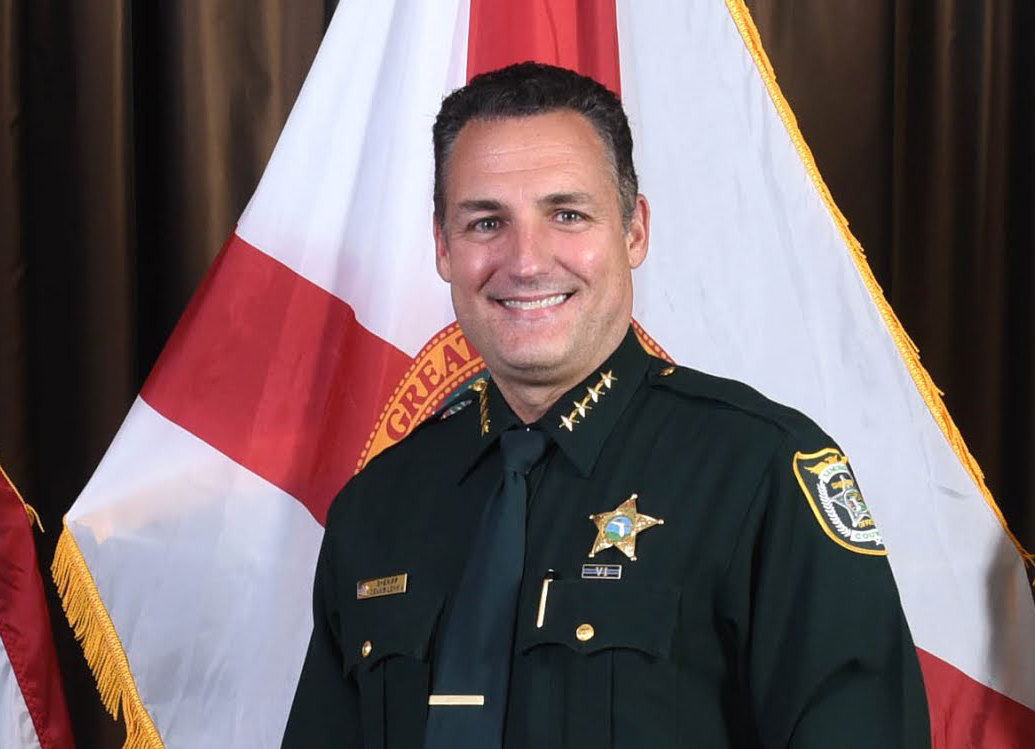
Dennis Lemma, Seminole County’s Sheriff since 2017, won election as FSA President and will guide the organization’s work among Florida’s 67 elected Sheriffs.
A U.S. Marine Corps veteran and graduate of the Federal Bureau of Investigation’s National Academy, Lemma has been a statewide leader in combating substance abuse, chairing former Attorney General Ashley Moody’s Opioid Abuse Working Group and First Lady Casey DeSantis’ Drug Abuse Prevention Panel.
“Leadership, at its core, is rooted in service, and I remain fully committed to supporting my fellow Sheriffs and the citizens of Florida with integrity and purpose,” he said.
“I look forward to working collaboratively with our board of directors and the professional staff at FSA to guide the Association’s initiatives and to ensure that the Office of Sheriff remains the bedrock of public safety for generations to come.”
Other key FSA Board of Directors appointments include Marion County Sheriff Billy Woods as Vice President, Flagler County Sheriff Rick Staly as Secretary, and Putnam County Sheriff Gator Deloach as Treasurer.
Charlotte County Sheriff Bill Prummell will continue to serve on the Board as the FSA’s immediate past President, while Franklin County Sheriff A.J. Smith and Indian River County Sheriff Eric Flowers will serve as Chair and Vice Chair, respectively.
“Our mission is to support and strengthen the Office of Sheriff through education, training, and legislative advocacy,” FSA Executive Director Matt Dunagan said in a statement. “With Sheriff Dennis Lemma serving as President, the Association is well positioned to advance our vision of a safer, stronger Florida — driven by innovation, collaboration, and the unwavering commitment of our state’s Sheriffs.”

Awards
In addition to establishing its new leadership, the FSA named Detectives Ryan Ellis and Eva Solis of the Clay County Sheriff’s Office as the 2025 Law Enforcement Officers of the Year. Ellis and Solis led a complex, multi-agency investigation into one of Clay County’s most disturbing child exploitation and human trafficking cases. Their work led to the arrest of a serial predator and his wife, the rescue of a child victim and the identification of multiple survivors.
“Detective Ellis and Detective Solis so much deserve this recognition because of their dogged approach every single day when they come into work,” Clay Sheriff Michelle Cook said in a video about the investigation and award. “Their passion about saving children deserves this recognition, but specifically this case that we’re talking about, they definitely went above and beyond.”
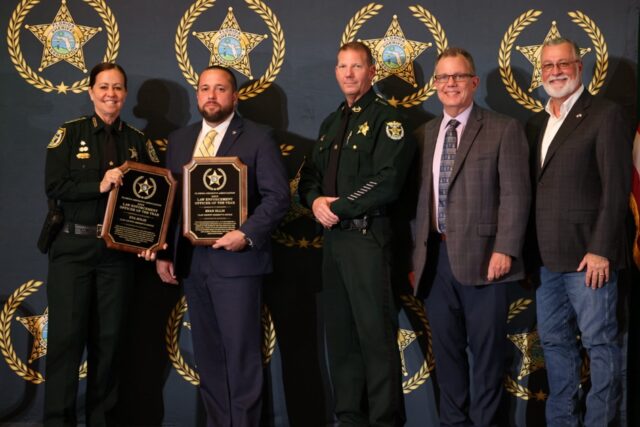
(L-R) Clay County Sheriff Michelle Cook (accepting on behalf of Detective Eva Solis), Detective Ryan Ellis, Charlotte County Sheriff Bill Prummell, Rob LaVielle with FirstNet AT&T and Senate President Ben Albritton. Image via Florida Sheriffs Association.
The investigation began, according to an FSA press note, when a Middleburg resident found a thumb drive in an abandoned storage unit. The digital evidence uncovered more than 2 million images and videos of child exploitation.
Solis and Ellis pursued leads across state lines, culminating in the capture of the suspect in Cocoa. He now faces multiple federal charges carrying minimum sentences of 15 years per count.
“The dedication and persistence shown by Detectives Solis and Ellis led to the takedown of a true predator,” Lemma said. “Their work reflects the highest ideals of law enforcement.”
The FSA also recognized Jennifer Hernandez, a Supervisor at the Seminole County Sheriff’s Office, as the 2025 Civilian of the Year. Known for her leadership at the John E. Polk Correctional Facility, Hernandez launched the iBuild Pre-Apprenticeship Construction Trades Program, which helps inmates gain employment after release.
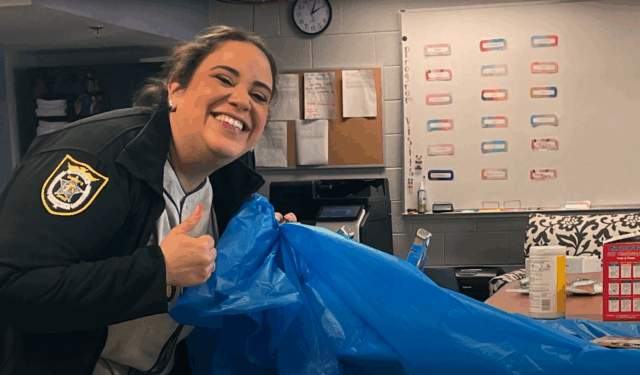
Seminole County Sheriff’s Office Supervisor Jennifer Hernandez. Image via Florida Sheriffs Association/YouTube.
A former preschool teacher and child protective investigator, Hernandez has spent more than a decade enhancing inmate welfare and community safety efforts.
“Jennifer has an extraordinary gift for turning challenges into opportunities for growth,” Lemma said. “Her work is creating safer, stronger communities, and this statewide honor is a fitting tribute.”
In a video about Hernandez’s efforts and honors, Lemma described her as “a wonderful human being” who has “always had a compassion for people, this empathy that really extends a long way.”
Lt. Tekitta Williams of the Seminole Sheriff’s Office said Hernandez “treats everyone like they’re humans,” regardless of who or where they are, while Cpt. Stacy Heath lauded Hernandez’s knack for proactive thinking.
“You can’t do anything to throw her off of track,” she said.
“I love thinking outside the box,” Hernandez said. “We’re a correctional facility, so we have to be security-minded. But also at the same time, how can we help the inmates that are in our custody so that they’re better citizens when they’re released? We’re trying to make a positive ripple effect into the community.”
Florida could soon rewrite how it responds to domestic violence.
Lake Worth Democratic Rep. Debra Tendrich has filed HB 277, a sweeping proposal aimed at modernizing the state’s domestic violence laws with major reforms to prevention, first responder training, court safeguards, diversion programs and victim safety.
It’s a deeply personal issue to Tendrich, who moved to Florida in 2012 to escape what she has described as a “domestic violence situation,” with only her daughter and a suitcase.
“As a survivor myself, HB 277 is more than legislation; it is my way of turning pain into policy,” she said in a statement, adding that months of roundtables with survivors and first responders “shaped this bill from start to finish.”
Tendrich said that, if passed, HB 277 or its upper-chamber analogue (SB 682) by Miami Republican Sen. Alexis Calatayud would become Florida’s most comprehensive domestic violence initiative, covering prevention, early intervention, criminal accountability and survivor support.
It would require mandatory strangulation and domestic violence training for emergency medical technicians and paramedics, modernize the legal definition of domestic violence, expand the courts’ authority to order GPS monitoring and strengthen body camera requirements during investigations.
The bill also creates a treatment-based diversion pathway for first-time offenders who plead guilty and complete a batterers intervention program, mental-health services and weekly court-monitored progress reporting. Upon successful completion, charges could be dismissed, a measure Tendrich says will reduce recidivism while maintaining accountability.
On the victim-safety side, HB 277 would flag addresses for 12 months after a domestic-violence 911 call to give responders real-time risk awareness. It would also expand access to text-to-911, require pamphlets detailing the medical dangers of strangulation, authorize well-check visits tied to lethality assessments, enhance penalties for repeat offenders and include pets and service animals in injunctions to prevent coercive control and harm.
Calatayud called it “a tremendous honor and privilege” to work with Tendrich on advancing policy changes “that both law enforcement and survivors of domestic abuse or relationship violence believe are meaningful to protect families across our communities.”
“I’m deeply committed to championing these essential reforms,” she added, saying they would make “a life-or-death difference for women and children in Florida.”
Organizations supporting HB 277 say the bill reflects long-needed, practical reform. Palm Beach County firefighters union IAFF Local 2928said expanded responder training and improved dispatch information “is exactly the kind of frontline-focused reform that saves lives.”
The Florida Police Benevolent Association called HB 277 a “comprehensive set of measures designed to enhance protections” and pledged to help advance it through the Legislature.
The Animal Legal Defense Fundpraised provisions protecting pets in domestic violence cases, noting research showing that 89% of women with pets in abusive relationships have had partners threaten or harm their animals — a major barrier that keeps victims from fleeing.
Florida continues to see high levels of domestic violence. The National Coalition Against Domestic Violence estimates that 38% of Florida women and 29% of Florida men experience intimate-partner violence in their lifetimes — among the highest rates in the country.
With costs rising statewide, HB 277 also increases relocation assistance through the Crimes Compensation Trust Fund, which advocates say is essential because the current $1,500 cap no longer covers basic expenses for victims fleeing dangerous situations.
Tendrich said survivors who contributed to the bill, which Placida Republican Rep. Danny Nix is co-sponsoring, “finally feel seen.”
“This bill will save lives,” she said. “I am proud that this bill has bipartisan support, and I am even more proud of the survivors whose bravery drives every line of this legislation.”
A Senate district that leans heavily Republican plus a Special Election just weeks before Christmas — Marwah acknowledges it adds up to a likely Tuesday victory for Ralph Massullo.
The Senate District 11 Special Election is Tuesday to fill the void created when Blaise Ingoglia became Chief Financial Officer.
It pits Republican Massullo, a dermatologist and Republican former four-term House member from Lecanto, against Democrat Marwah, a civil engineer from The Villages.
Early voter turnout was light, as would be expected in a low-key standalone Special Election: At 10% or under for Hernando and Pasco counties, 19% in Sumter and 15% in Citrus.
Massullo has eyed this Senate seat since 2022 when he originally planned to leave the House after six years for the SD 11 run. His campaign ended prematurely when Gov. Ron DeSantis backed Ingoglia, leaving Massullo with a final two years in office before term limits ended his House career.
When the SD 11 seat opened up with Ingoglia’s CFO appointment, Massullo jumped in and a host of big-name endorsements followed, including from DeSantis, Ingoglia, Agriculture Commissioner Wilton Simpson, U.S. Sens. Ashley Moody and Rick Scott, four GOP Congressmen, county Sheriffs in the district, and the Florida Chamber of Commerce.
Marwah ran for HD 52 in 2024, garnering just 24% of the vote against Republican John Temple.
Massullo has raised $249,950 to Marwah’s $12,125. Massullo’s $108,000 in spending includes consulting, events and mail pieces. One of those mail pieces reminded voters there’s an election.
The two opponents had few opportunities for head-to-head debate. TheLeague of Women Voters of Citrus County conducted a SD 11 forum on Zoom in late October, when the two candidates clashed over the state’s direction.
Marwah said DeSantis and Republicans are “playing games” in their attempts to redraw congressional district boundaries.
“No need to go through this expense,” he said. “It will really ruin decades of progress in civil rights. We should honor the rule of law that we agreed on that it’ll be done every 10 years. I’m not sure why the game is being played at this point.”
Massullo said congressional districts should reflect population shifts.
“The people of our state deserve to be adequately represented based on population,” he said. “I personally do not believe we should use race as a means to justify particular areas. I’m one that believes we should be blind to race, blind to creed, blind to sex, in everything that we do, particularly looking at population.”
Senate District 11 covers all of Citrus, Hernando and Sumter counties, plus a portion of northern Pasco County. It is safely Republican — Ingoglia won 69% of the vote there in November, and Donald Trump carried the district by the same margin in 2024.
Miles Davis is taking his Florida-focused organizing playbook to the national stage.
Davis, Policy Director at PRISM Florida and Director of Advocacy and Communications at SAVE, has been selected to present a workshop at the 2026 Creating Change Conference, the largest annual LGBTQ advocacy and movement-building convention.
It’s a major nod to his rising role in Florida’s LGBTQ policy landscape.
The National LGBTQ Task Force, which organizes the conference, announced that Davis will present his session, “School Board Organizing 101.” His proposal rose to the top of more than 550 submissions competing for roughly 140 slots, a press note said, making this year’s conference one of the most competitive program cycles in the event’s history.
His workshop will be scheduled during the Jan. 21-24 gathering in Washington, D.C.
Davis said his selection caps a strong year for PRISM Florida, where he helped shepherd the organization’s first-ever bill (HB 331) into the Legislature. The measure, sponsored by Tampa Democratic Rep. Dianne Hart, would restore local oversight over reproductive health and HIV/AIDS instruction, undoing changes enacted under a 2023 expansion to Florida’s “Parental Rights in Education” law, dubbed “Don’t Say Gay” by critics.
Davis’ workshop draws directly from that work and aims to train LGBTQ youth, families and advocates in how local boards operate, how public comment can shape decisions and how communities can mobilize around issues like book access, inclusive classrooms and student safety.
“School boards are where the real battles over student safety, book access, and inclusive classrooms are happening,” Davis said. “I’m honored to bring this training to Creating Change and help our community build the skills to show up, speak out, and win — especially as PRISM advances legislation like HB 331 that returns power to our local communities.”
Davis’ profile has grown in recent years, during which he jumped from working on the campaigns and legislative teams of lawmakers like Hart and Miami Gardens Democratic Sen. Shevrin Jones to working in key roles for organizations like America Votes, PRISM and SAVE.
The National LGBTQ Task Force, founded in 1973, is one of the nation’s oldest LGBTQ advocacy organizations. It focuses on advancing civil rights through federal policy work, grassroots engagement and leadership development.
Its Creating Change Conference draws thousands for four days of training and strategy-building yearly, a press note said.