Connect with us

Politics

Florida ranks seventh in nation for money lost due to online scams

Published

on


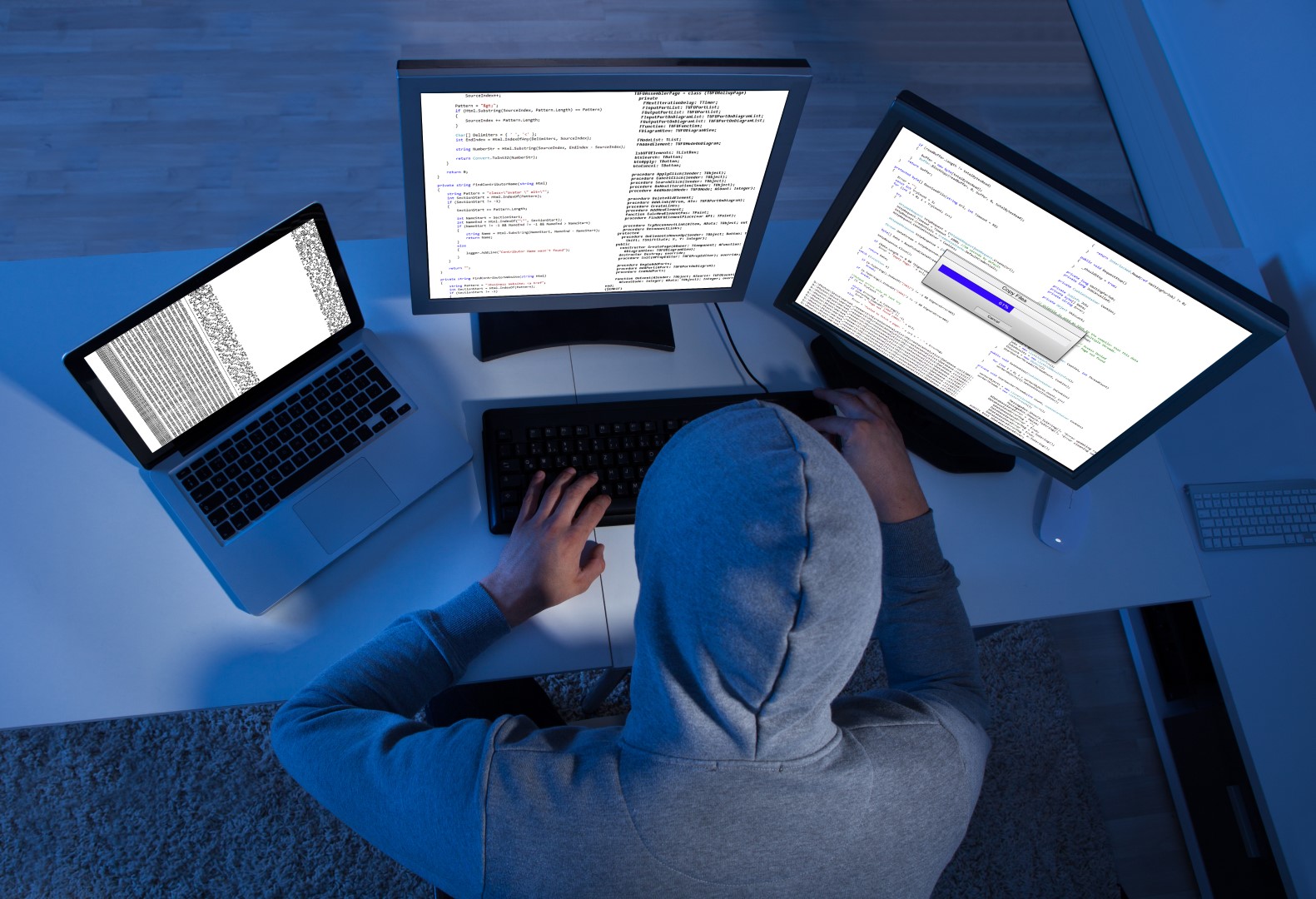
As shoppers are finishing their online gift-buying ahead of Christmas, Floridians in particular should keep a sharp eye out for scams.

A new study published by Mailgo, an online artificial intelligence email campaign and marketing company, found that Florida ranked seventh in the nation for suffering the most due to online scams. The analysis looked at data at the FBI Internet Crime Complaint Center to rank states based on scam impact and the amount of money victims lost.

The study compiled variable factors to come up with a “scam effect score.” Florida amassed a score of 85.37. That’s the seventh-highest in America.

High complaint frequency and significant financial losses contributed most to that ranking. In Florida, scam victims lost about $45.86 on average, ranking seventh-highest in the U.S. There were about 2.23 scam complaints for every 1,000 people in the state. That was the 11th-highest in the country.

“Florida’s unique demographic profile makes it a prime target for sophisticated fraud schemes. Scammers aggressively target retirees through phishing emails impersonating Social Security offices, Medicare providers, and investment firms, exploiting both financial assets and potential digital literacy gaps,” said Lennon Han, an email communications analyst for Mailgo.

“Technical email authentication and threat-detection systems provide essential protection that awareness alone cannot deliver, helping identify and block fraudulent messages before they reach inboxes.”

Florida was the only Southern state in the U.S. to make the top 10, which was focused mainly on Western states. Nevada topped the list, followed by Arizona, California, Wyoming, Washington and Colorado. Maryland placed eighth, with Massachusetts at No. 9 and Alaska at No. 10.

IdentityTheft.org, which analyzes scams, reported that email remains the primary avenue for AI scammers to use. Extortion is the fastest-rising type of crime, followed by crimes against children, investment, government impersonation, and employment scams.


Source link

Continue Reading

Politics

Hidden climate taxes hurt Florida families, small businesses

Published

on


Florida families are already feeling the pinch of higher prices. New carbon-emissions taxes would raise energy costs and the prices of goods and services families need. Florida families do not need a new tax burden.

That is why Gov. Ron DeSantis’ proposed legislation to prohibit new carbon taxes makes sense. The Governor’s proposal would stop government entities from using public funds to support net zero policies, carbon taxes or assessments and cap-and-trade style programs that drive up costs throughout the economy.

The proposal draws a line between actual environmental progress and government-imposed schemes that function like hidden taxes. The Governor’s budget proposal rightly describes these carbon pricing programs as detrimental to Florida’s energy security and economic interests. When the government drives up the cost of energy, families pay more in utilities, at the gas pump and at the grocery store.

Some advocates argue that carbon taxes and net-zero mandates will change behavior without real downsides. But we all know the impact of new taxes. They show up in higher costs that get passed along through the economy.

The Congressional Budget Office has warned that the costs of a carbon tax would not fall evenly across households. Higher prices would consume a larger share of income for lower-income households than for higher-income households.

In other words, these policies hit the people with the least flexibility the hardest.

Municipal carbon tax policies would also create a confusing patchwork of local climate rules that change from city to city. Businesses don’t invest and hire when they cannot predict what regulations will look like across city limits. A consistent statewide approach creates clearer expectations, protects accountability and helps innovation move faster. When local governments make their own sets of net-zero mandates, fees and enforcement regimes, they invite uncertainty and higher compliance costs that small businesses cannot absorb.

Supporters of local net-zero mandates often frame the issue as a choice between the environment and the economy. Florida doesn’t have to accept that false choice. We can support cleaner technologies and better efficiency without forcing families to subsidize government-driven programs that pick winners and losers. Innovation has delivered cleaner power generation and more efficient engines because entrepreneurs solved problems, not because lawmakers added another layer of mandates.

Florida has thrived on market-driven approaches. Let’s not change course now.

If local governments want to encourage conservation, they can focus on permitting reform, streamlined project approvals, and removing barriers that slow private sector solutions. What they shouldn’t do is impose expensive targets backed by penalties and fees that amount to a backdoor tax.

A carbon tax doesn’t always arrive with the label “tax.” It can appear as a fee, an assessment, an offset requirement, or a purchasing mandate that forces higher-cost options even when cheaper alternatives exist. Ratepayers and consumers bear those costs. Floridians deserve transparency and restraint, not a growing menu of climate-related charges tucked into local rules.

Florida’s strength comes from opportunity, affordability and steady growth. Policymakers should protect those principles. As families struggle with rising costs, the government shouldn’t implement new policies that raise electricity and transportation costs. When small businesses try to expand, the government shouldn’t add compliance burdens that favor large corporations with teams of lawyers and consultants.

Gov. DeSantis’ proposal protects Florida. It limits government overreach. It prevents hidden taxes. It protects jobs and growth. It also creates space for the kind of innovation that delivers real environmental progress without punishing those who can least afford it.

Floridians deserve affordable energy, economic opportunity and freedom from costly mandates. Gov. DeSantis’ proposed ban on local carbon taxes delivers on these promises. The Legislature should support the Governor’s proposal.

___

Skylar Zander is the State Director of Americans for Prosperity-Florida.


Source link

Continue Reading

Politics

Joe Gruters files kratom bill amid growing government scrutiny

Published

on


The bill would require that establishments that sell kratom restrict entry to customers 21 and older.

Republican Sen. Joe Gruters is pushing to significantly tighten Florida’s regulations on kratom products with a new bill that would impose new testing, labeling and manufacturing requirements and restrict where and how it can be sold.

The proposal comes as kratom is drawing increased scrutiny from policymakers. Attorney General James Uthmeier issued an emergency rule in August banning a concentrated kratom derivative known as 7-hydroxymitragynine, or 7-OH. Sen. Clay Yarborough of Jacksonville and Rep. Doug Bankson of Apopka, both Republicans, also filed legislation (SB 432, HB 309) in November to identify 7-OH as a schedule 1 drug

With his bill (SB 994), Gruters aims to update the Florida Kratom Consumer Protection Act to require kratom products to be manufactured by permitted processors, registered with the Florida Department of Agriculture and Consumer Services, and accompanied by a certificate of analysis from an accredited independent laboratory. 

Processors would also be required to carry at least $3 million in product liability insurance and register with the U.S. Food and Drug Administration.

The bill would require that establishments that sell kratom restrict entry to customers 21 and older and require age verification. It would also prohibit kratom packaging that is attractive to children and bans the mixing of kratom with alcohol, caffeine, cannabinoids, nicotine or other psychoactive substances.

Approval would also establish detailed labeling requirements, including dosage limits, alkaloid content disclosures, health warnings and expiration dates. Products found out of compliance could be subject to immediate stop-sale orders, and violations could carry misdemeanor penalties.

The bill would also appropriate $1.92 million in recurring funds and $1.79 million in nonrecurring funds to the Department of Agriculture and Consumer Services for 24 new positions and the purpose of implementing the act. 

If approved, the measure would take effect Oct. 1.


Source link

Continue Reading

Politics

Marco Rubio, Ron DeSantis far behind JD Vance in Turning Point USA straw poll

Published

on


Secretary of State Marco Rubio and Gov. Ron DeSantis have ground to make up with young Republicans should they run for President in 2028.

In the latest Turning Point USA straw poll, virtually all respondents are turning away from these two Florida men and favoring Vice President JD Vance as the heir apparent to President Donald Trump’s legacy.

Vance has 84% support, with Rubio at 5% and DeSantis at just 3%.

A TPUSA spokesman said “the movement is all-in for JD Vance in 2028, winning the most support in the history of our poll.”

Both Rubio and DeSantis have sidestepped any talk of future presidential ambitions. Rubio has said Vance would be a “great nominee,” with President Donald Trump suggesting Rubio as “somebody that maybe would get together with JD in some form.”

DeSantis, who recently established a debate prize in honor of the late TPUSA Founder Charlie Kirk, currently says he’s “not thinking about anything” regarding a 2028 run, and criticized “jockeying” among those who look to succeed Trump. However, he also left the door open to running again after he withdrew from the presidential race last year.


Source link

Continue Reading

Trending

Copyright © Miami Select.