
Politics
Florida leads 15 states in asking Pam Bondi to support executing child rapists

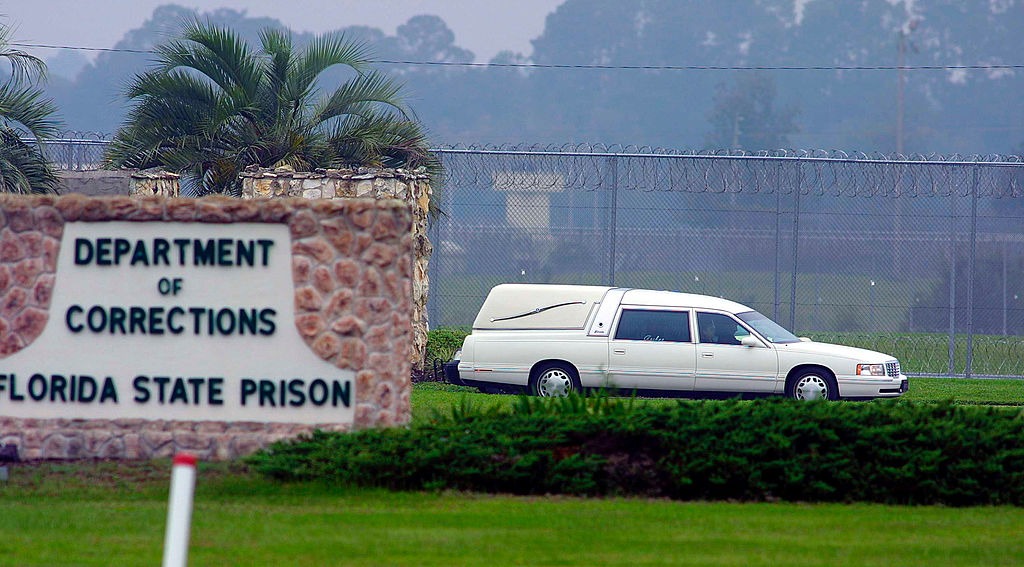
Led by Florida, 15 state Attorneys General have signed a letter asking U.S. Attorney General Pam Bondi to support execution of child rapists and to challenge a decades-old ruling preventing the death penalty for pedophiles.
The newest signature on Florida Attorney General James Uthmeier’s September letter came Wednesday from Liz Murrill, Louisiana’s chief legal officer, asking Bondi to co-sign various state efforts to execute child rapists. They hope Bondi will take on the U.S. Supreme Court’s 2008 Kennedy v. Louisiana decision holding the death penalty for child rapists unconstitutional.
“We have every confidence that, with President Trump’s strong leadership and with principled, rule-of-law Justices on the Supreme Court, Kennedy’s days are numbered, and child rapists can be appropriately punished for their unspeakable crimes,” Uthmeier wrote in his Sep. 2 letter.
“The U.S. Supreme Court needs to reverse this egregiously wrong ruling,” Murrill echoed in a Wednesday social media post, announcing that her name would be slotted alongside the 14 other sitting and former Republican Attorneys General. Andrew Bailey, former Missouri Attorney General and now co-deputy director of the FBI, was one of the signatories.
Weeks after Uthmeier emailed his letter to Bondi, she joined President Donald Trump on Sep. 25 to announce planned expansions of the death penalty. Trump signed a presidential memorandum seeking to reinstate the death penalty in Washington, D.C., as Bondi announced the DOJ would pursue capital punishment nationwide, CNN reported.
This followed Trump’s Jan. 20 executive order demanding protection of the death penalty and asking Bondi to override Supreme Court precedents that “limit the authority of State and Federal governments to impose capital punishment.”
Her office declined to comment on whether she would try to overturn the Kennedy ruling.
Florida and the death penalty
Uthmeier’s letter was only the latest step Florida has taken in the death penalty sphere. Under Gov. Ron DeSantis’ leadership, the GOP-dominated Legislature passed a first-in-the-nation law allowing the state to kill pedophiles who rape children younger than 12. It was the first death penalty law passed for non-murders since the Kennedy decision.
That same year, DeSantis signed a law lowering the threshold for death penalty sentencing from a unanimous jury decision to an 8-4 supermajority. That law came after Nikolas Cruz, the Parkland shooter who murdered 17 at Marjory Stoneman Douglas High School, received life in prison after a jury voted 9-3 for death.
Since then, Florida has expanded the aggravated factors needed to recommend a death sentence, added human trafficking as another non-murder crime that could be subject to the death penalty, and allowed for the creation of new death penalty methods. DeSantis has shattered Florida’s long-standing one-year record of eight executions set in 1984: In 2025 so far, he’s already scheduled 15 executions, 13 of which have been carried out.

This aggressive stance has drawn the ire of anti-death penalty groups, including the statewide organization Floridians for Alternatives to the Death Penalty, which argue that Florida’s slew of new laws are both unconstitutional and go against judicial precedent.
“While Florida lawmakers have made their intent clear — that they knowingly and purposely passed an unconstitutional law — they still have to wait to be able to even bring it to the U.S. Supreme Court (who also would have to agree to hear it) to try to overturn that long established precedent,” Maria DeLiberato, FADP’s Executive Director, told the Florida Phoenix in a written statement.
What is the Kennedy v. Louisiana case?
In 2003, Patrick O’Neal Kennedy was sentenced to death in Louisiana for the 1998 rape of his 8-year-old stepdaughter. This aligned with the state’s 1995 law allowing pedophiles to be executed if they raped a victim younger than 13.
Kennedy appealed, pointing out that the U.S. Supreme Court had ruled the death penalty for rapists with adult victims unconstitutional, but the Louisiana Supreme Court upheld his sentence. That court noted that five other states at the time had death penalty laws for child rape.
Kennedy turned to the U.S. Supreme Court, arguing that five states was not enough to establish a “national consensus” that executing child rapists should be legal. In a 5-4 decision, SCOTUS took his side. Kennedy has since been sentenced to life in prison.
Now 60, he is being held at the Elayn Hunt Correctional Center in St. Gabriel, Louisiana.
___
Livia Caputo reporting. Florida Phoenix is part of States Newsroom, a nonprofit news network supported by grants and a coalition of donors as a 501c(3) public charity. Florida Phoenix maintains editorial independence. Contact Editor Michael Moline for questions: [email protected].
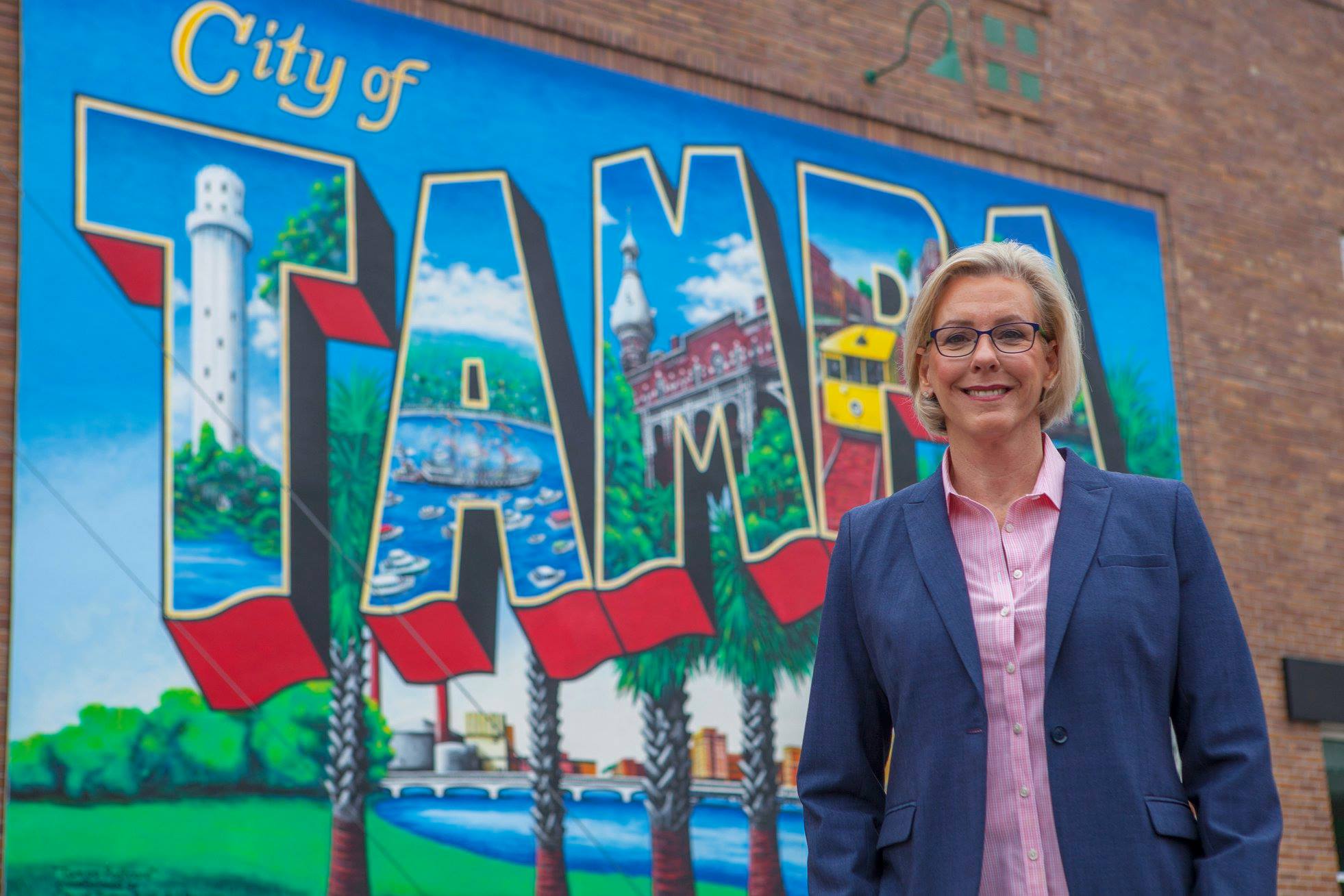
With just over a year remaining in her second and final term, Tampa Mayor Jane Castor’s administration is shifting into a “finish strong” phase to wrap up major redevelopment projects while positioning the city for continued growth under its next Mayor.
Castor told Florida Politics that she is focused on completing long-planned initiatives in the coming year, and creating what she called “project launch pads” for the next administration after nearly seven years of rapid development and population growth.
“We’ve accomplished a great deal in just a bit less than seven years,” Castor said. “Our city’s grown dramatically. We’re focused on finishing up some of those projects and getting other projects ready for the next administration.”
Castor said recent city budgets have emphasized investment in transportation, affordable housing and workforce development.
Transportation remains Tampa’s biggest challenge, she said, calling it the city’s “Achilles heel.” Castor pointed to the defeat of Hillsborough County’s voter-approved transportation surtax as a major setback for the region, though she emphasized that local governments have continued pursuing alternatives.
“We mourned the loss of that, but we didn’t stop,” Castor said.
Instead, Tampa and regional partners turned to grants and federal funding, securing nearly $4 million through a U.S. Department of Transportation program known as the Regional Infrastructure Accelerator. The grant supports planning for large-scale, multicounty transportation projects across Hillsborough, Pinellas and Pasco counties, including both local and regional transit options.
One proposal under consideration would expand Tampa’s streetcar system beyond its current footprint in Ybor City, Channel District and downtown, extending north into Tampa Heights. Castor said the city is also examining longer-term regional transit connections, including potential airport links and public-private partnerships to help finance future projects.
Meanwhile, construction across Tampa continues at a rapid pace, particularly along the riverfront and in historically underserved neighborhoods.
Castor highlighted projects nearing key milestones, such as the West River redevelopment in West Tampa — where a new Riverwalk extension is under construction. Castor also noted the Rome Yard project near Rome Avenue and Columbus Drive, a 16-acre mixed-use development now rising out of the ground.

In East Tampa, the city recently held a ribbon-cutting for the new East Tampa Recreation Center, a sprawling, multiblock complex that Castor said will be among the best facilities in Tampa’s parks system once completed later this year.
Downtown and surrounding neighborhoods are also seeing a wave of new residential construction. Castor cited multiple high-rise developments near downtown, additional riverfront condominiums along Kennedy Boulevard, student housing tied to the University of Tampa, and the long-anticipated opening of the five-star Pendry Hotel near the river this year.
Ybor City and the Channel District remain hot spots for redevelopment as well, with Water Street Tampa entering its second phase and developer Darryl Shaw advancing residential, office and retail projects, including a food hall, near the Gas Worx site.
“The city is just on fire,” Castor said. “I keep saying I’m going to change our city bird to the crane, there’s cranes all over the city.”
As lawmakers convene in Tallahassee for the ongoing Legislative Session, Castor said her top request is simple: leave property taxes alone.
Property taxes remain the primary revenue source for cities and counties, she said, and are already constrained by Florida’s Save Our Homes cap, which limits annual increases regardless of rising property values.
“Any cuts to property tax would be cuts to police and fire, to our parks and recreation, and to all the other city departments that rely on property tax funding,” Castor said.
Castor also addressed ongoing discussions surrounding professional sports facilities, noting that planned improvements to Raymond James Stadium and Benchmark International Arena are already accounted for through Hillsborough County’s voter-approved Community Investment Tax extension. She said city and county officials are meeting with the Tampa Bay Rays as discussions continue around a potential baseball stadium site near Hillsborough Community College.
Looking beyond her tenure, Castor said she does not plan to seek another political office, but intends to remain active in civic life after leaving City Hall.
“I don’t have any plans politically, but I definitely will stay involved in the community,” Castor said. “I was born and raised here in Tampa, so I’ll always be involved — participate on boards, volunteering, whatever way I can — to help continue to grow this great city.”


Dale Mabry campus emerges as leading Rays stadium site

Down Arrow Button Icon

Lizzo Shows Off Weight Loss in Tiny Dress at Paris Hilton’s Documentary Premiere
-

 Politics8 years ago
Congress rolls out ‘Better Deal,’ new economic agenda
-
Entertainment9 years ago
New Season 8 Walking Dead trailer flashes forward in time
-
Politics9 years ago
Poll: Virginia governor’s race in dead heat
-
Politics9 years ago
Illinois’ financial crisis could bring the state to a halt
-
Entertainment9 years ago
The final 6 ‘Game of Thrones’ episodes might feel like a full season
-
Entertainment9 years ago
Meet Superman’s grandfather in new trailer for Krypton
-
Business9 years ago
6 Stunning new co-working spaces around the globe
-
Tech8 years ago
Hulu hires Google marketing veteran Kelly Campbell as CMO