Connect with us

Politics

Florida leads 15 states in asking Pam Bondi to support executing child rapists
Published

on


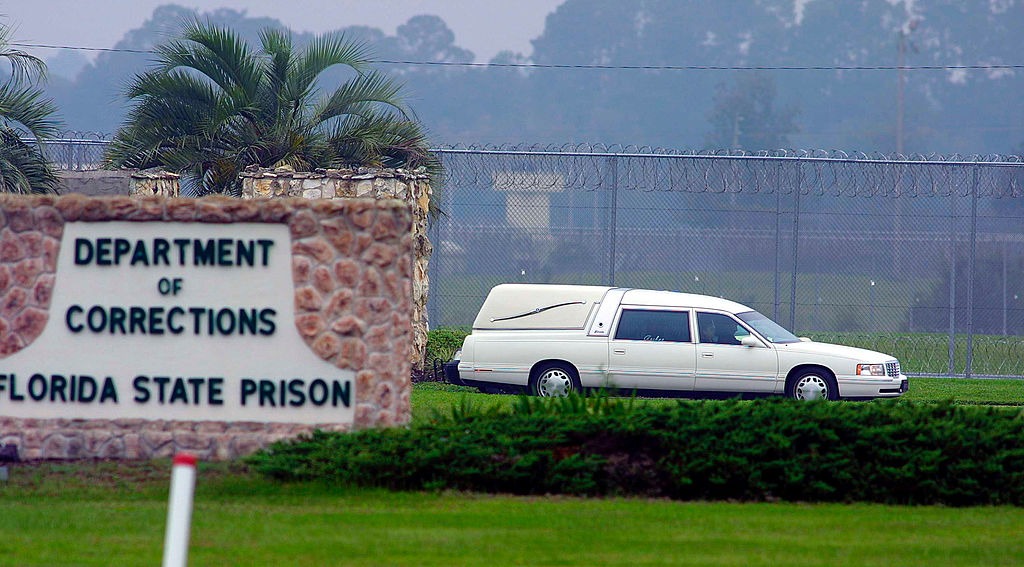
Led by Florida, 15 state Attorneys General have signed a letter asking U.S. Attorney General Pam Bondi to support execution of child rapists and to challenge a decades-old ruling preventing the death penalty for pedophiles.

The newest signature on Florida Attorney General James Uthmeier’s September letter came Wednesday from Liz Murrill, Louisiana’s chief legal officer, asking Bondi to co-sign various state efforts to execute child rapists. They hope Bondi will take on the U.S. Supreme Court’s 2008 Kennedy v. Louisiana decision holding the death penalty for child rapists unconstitutional.

“We have every confidence that, with President Trump’s strong leadership and with principled, rule-of-law Justices on the Supreme Court, Kennedy’s days are numbered, and child rapists can be appropriately punished for their unspeakable crimes,” Uthmeier wrote in his Sep. 2 letter.

“The U.S. Supreme Court needs to reverse this egregiously wrong ruling,” Murrill echoed in a Wednesday social media post, announcing that her name would be slotted alongside the 14 other sitting and former Republican Attorneys General. Andrew Bailey, former Missouri Attorney General and now co-deputy director of the FBI, was one of the signatories.

Weeks after Uthmeier emailed his letter to Bondi, she joined President Donald Trump on Sep. 25 to announce planned expansions of the death penalty. Trump signed a presidential memorandum seeking to reinstate the death penalty in Washington, D.C., as Bondi announced the DOJ would pursue capital punishment nationwide, CNN reported.

This followed Trump’s Jan. 20 executive order demanding protection of the death penalty and asking Bondi to override Supreme Court precedents that “limit the authority of State and Federal governments to impose capital punishment.”

Her office declined to comment on whether she would try to overturn the Kennedy ruling.

Florida and the death penalty

Uthmeier’s letter was only the latest step Florida has taken in the death penalty sphere. Under Gov. Ron DeSantis’ leadership, the GOP-dominated Legislature passed a first-in-the-nation law allowing the state to kill pedophiles who rape children younger than 12. It was the first death penalty law passed for non-murders since the Kennedy decision.

That same year, DeSantis signed a law lowering the threshold for death penalty sentencing from a unanimous jury decision to an 8-4 supermajority. That law came after Nikolas Cruz, the Parkland shooter who murdered 17 at Marjory Stoneman Douglas High School, received life in prison after a jury voted 9-3 for death.

Since then, Florida has expanded the aggravated factors needed to recommend a death sentence, added human trafficking as another non-murder crime that could be subject to the death penalty, and allowed for the creation of new death penalty methods. DeSantis has shattered Florida’s long-standing one-year record of eight executions set in 1984: In 2025 so far, he’s already scheduled 15 executions, 13 of which have been carried out.

This aggressive stance has drawn the ire of anti-death penalty groups, including the statewide organization Floridians for Alternatives to the Death Penalty, which argue that Florida’s slew of new laws are both unconstitutional and go against judicial precedent.

“While Florida lawmakers have made their intent clear — that they knowingly and purposely passed an unconstitutional law — they still have to wait to be able to even bring it to the U.S. Supreme Court (who also would have to agree to hear it) to try to overturn that long established precedent,” Maria DeLiberato, FADP’s Executive Director, told the Florida Phoenix in a written statement.

What is the Kennedy v. Louisiana case?

In 2003, Patrick O’Neal Kennedy was sentenced to death in Louisiana for the 1998 rape of his 8-year-old stepdaughter. This aligned with the state’s 1995 law allowing pedophiles to be executed if they raped a victim younger than 13.

Kennedy appealed, pointing out that the U.S. Supreme Court had ruled the death penalty for rapists with adult victims unconstitutional, but the Louisiana Supreme Court upheld his sentence. That court noted that five other states at the time had death penalty laws for child rape.

Kennedy turned to the U.S. Supreme Court, arguing that five states was not enough to establish a “national consensus” that executing child rapists should be legal. In a 5-4 decision, SCOTUS took his side. Kennedy has since been sentenced to life in prison.

Now 60, he is being held at the Elayn Hunt Correctional Center in St. Gabriel, Louisiana.

___

Livia Caputo reporting. Florida Phoenix is part of States Newsroom, a nonprofit news network supported by grants and a coalition of donors as a 501c(3) public charity. Florida Phoenix maintains editorial independence. Contact Editor Michael Moline for questions: [email protected].


Source link

Continue Reading

Politics

Debra Tendrich turns ‘pain into policy’ with sweeping anti-domestic violence proposal

Published

on


Florida could soon rewrite how it responds to domestic violence.

Lake Worth Democratic Rep. Debra Tendrich has filed HB 277, a sweeping proposal aimed at modernizing the state’s domestic violence laws with major reforms to prevention, first responder training, court safeguards, diversion programs and victim safety.

It’s a deeply personal issue to Tendrich, who moved to Florida in 2012 to escape what she has described as a “domestic violence situation,” with only her daughter and a suitcase.

“As a survivor myself, HB 277 is more than legislation; it is my way of turning pain into policy,” she said in a statement, adding that months of roundtables with survivors and first responders “shaped this bill from start to finish.”

Tendrich said that, if passed, HB 277 or its upper-chamber analogue (SB 682) by Miami Republican Sen. Alexis Calatayud would become Florida’s most comprehensive domestic violence initiative, covering prevention, early intervention, criminal accountability and survivor support.

It would require mandatory strangulation and domestic violence training for emergency medical technicians and paramedics, modernize the legal definition of domestic violence, expand the courts’ authority to order GPS monitoring and strengthen body camera requirements during investigations.

The bill also creates a treatment-based diversion pathway for first-time offenders who plead guilty and complete a batterers intervention program, mental-health services and weekly court-monitored progress reporting. Upon successful completion, charges could be dismissed, a measure Tendrich says will reduce recidivism while maintaining accountability.

On the victim-safety side, HB 277 would flag addresses for 12 months after a domestic-violence 911 call to give responders real-time risk awareness. It would also expand access to text-to-911, require pamphlets detailing the medical dangers of strangulation, authorize well-check visits tied to lethality assessments, enhance penalties for repeat offenders and include pets and service animals in injunctions to prevent coercive control and harm.

Calatayud called it “a tremendous honor and privilege” to work with Tendrich on advancing policy changes “that both law enforcement and survivors of domestic abuse or relationship violence believe are meaningful to protect families across our communities.”

“I’m deeply committed to championing these essential reforms,” she added, saying they would make “a life-or-death difference for women and children in Florida.”

Organizations supporting HB 277 say the bill reflects long-needed, practical reform. Palm Beach County firefighters union IAFF Local 2928 said expanded responder training and improved dispatch information “is exactly the kind of frontline-focused reform that saves lives.”

The Florida Police Benevolent Association called HB 277 a “comprehensive set of measures designed to enhance protections” and pledged to help advance it through the Legislature.

The Animal Legal Defense Fund praised provisions protecting pets in domestic violence cases, noting research showing that 89% of women with pets in abusive relationships have had partners threaten or harm their animals — a major barrier that keeps victims from fleeing.

Florida continues to see high levels of domestic violence. The National Coalition Against Domestic Violence estimates that 38% of Florida women and 29% of Florida men experience intimate-partner violence in their lifetimes — among the highest rates in the country.

With costs rising statewide, HB 277 also increases relocation assistance through the Crimes Compensation Trust Fund, which advocates say is essential because the current $1,500 cap no longer covers basic expenses for victims fleeing dangerous situations.

Tendrich said survivors who contributed to the bill, which Placida Republican Rep. Danny Nix is co-sponsoring, “finally feel seen.”

“This bill will save lives,” she said. “I am proud that this bill has bipartisan support, and I am even more proud of the survivors whose bravery drives every line of this legislation.”


Source link

Continue Reading

Politics

Ash Marwah, Ralph Massullo battle for SD 11 Special Election

Published

on


Even Ash Marwah knows the odds do him no favors.

A Senate district that leans heavily Republican plus a Special Election just weeks before Christmas — Marwah acknowledges it adds up to a likely Tuesday victory for Ralph Massullo.

The Senate District 11 Special Election is Tuesday to fill the void created when Blaise Ingoglia became Chief Financial Officer.

It pits Republican Massullo, a dermatologist and Republican former four-term House member from Lecanto, against Democrat Marwah, a civil engineer from The Villages.

Early voter turnout was light, as would be expected in a low-key standalone Special Election: At 10% or under for Hernando and Pasco counties, 19% in Sumter and 15% in Citrus.

Massullo has eyed this Senate seat since 2022 when he originally planned to leave the House after six years for the SD 11 run. His campaign ended prematurely when Gov. Ron DeSantis backed Ingoglia, leaving Massullo with a final two years in office before term limits ended his House career.

When the SD 11 seat opened up with Ingoglia’s CFO appointment, Massullo jumped in and a host of big-name endorsements followed, including from DeSantis, Ingoglia, Agriculture Commissioner Wilton Simpson, U.S. Sens. Ashley Moody and Rick Scott, four GOP Congressmen, county Sheriffs in the district, and the Florida Chamber of Commerce.

The Florida LGBTQ+ Democratic Caucus is endorsing Marwah.

Marwah ran for HD 52 in 2024, garnering just 24% of the vote against Republican John Temple

Massullo has raised $249,950 to Marwah’s $12,125. Massullo’s $108,000 in spending includes consulting, events and mail pieces. One of those mail pieces reminded voters there’s an election.

The two opponents had few opportunities for head-to-head debate. The League of Women Voters of Citrus County conducted a SD 11 forum on Zoom in late October, when the two candidates clashed over the state’s direction.

Marwah said DeSantis and Republicans are “playing games” in their attempts to redraw congressional district boundaries.

“No need to go through this expense,” he said. “It will really ruin decades of progress in civil rights. We should honor the rule of law that we agreed on that it’ll be done every 10 years. I’m not sure why the game is being played at this point.”

Massullo said congressional districts should reflect population shifts.

“The people of our state deserve to be adequately represented based on population,” he said. “I personally do not believe we should use race as a means to justify particular areas. I’m one that believes we should be blind to race, blind to creed, blind to sex, in everything that we do, particularly looking at population.”

Senate District 11 covers all of Citrus, Hernando and Sumter counties, plus a portion of northern Pasco County. It is safely Republican — Ingoglia won 69% of the vote there in November, and Donald Trump carried the district by the same margin in 2024.


Source link

Continue Reading

Politics

Miles Davis tapped to lead School Board organizing workshop at national LGBTQ conference

Published

on


Miles Davis is taking his Florida-focused organizing playbook to the national stage.

Davis, Policy Director at PRISM Florida and Director of Advocacy and Communications at SAVE, has been selected to present a workshop at the 2026 Creating Change Conference, the largest annual LGBTQ advocacy and movement-building convention.

It’s a major nod to his rising role in Florida’s LGBTQ policy landscape.

The National LGBTQ Task Force, which organizes the conference, announced that Davis will present his session, “School Board Organizing 101.” His proposal rose to the top of more than 550 submissions competing for roughly 140 slots, a press note said, making this year’s conference one of the most competitive program cycles in the event’s history.

His workshop will be scheduled during the Jan. 21-24 gathering in Washington, D.C.

Davis said his selection caps a strong year for PRISM Florida, where he helped shepherd the organization’s first-ever bill (HB 331) into the Legislature. The measure, sponsored by Tampa Democratic Rep. Dianne Hart, would restore local oversight over reproductive health and HIV/AIDS instruction, undoing changes enacted under a 2023 expansion to Florida’s “Parental Rights in Education” law, dubbed “Don’t Say Gay” by critics.

Davis’ workshop draws directly from that work and aims to train LGBTQ youth, families and advocates in how local boards operate, how public comment can shape decisions and how communities can mobilize around issues like book access, inclusive classrooms and student safety.

“School boards are where the real battles over student safety, book access, and inclusive classrooms are happening,” Davis said. “I’m honored to bring this training to Creating Change and help our community build the skills to show up, speak out, and win — especially as PRISM advances legislation like HB 331 that returns power to our local communities.”

Davis’ profile has grown in recent years, during which he jumped from working on the campaigns and legislative teams of lawmakers like Hart and Miami Gardens Democratic Sen. Shevrin Jones to working in key roles for organizations like America Votes, PRISM and SAVE.

The National LGBTQ Task Force, founded in 1973, is one of the nation’s oldest LGBTQ advocacy organizations. It focuses on advancing civil rights through federal policy work, grassroots engagement and leadership development.

Its Creating Change Conference draws thousands for four days of training and strategy-building yearly, a press note said.


Source link

Continue Reading

Trending

Copyright © Miami Select.