
Politics
Florida is not ready for Hurricane Season. Washington is making it worse
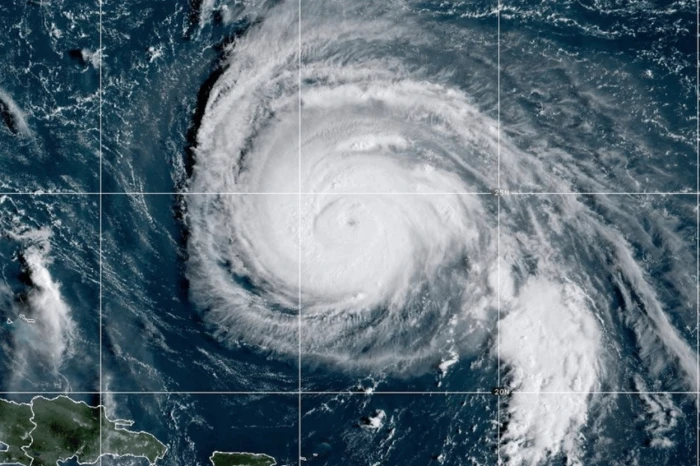
Hurricane Season begins in a matter of weeks. For Florida, that timeframe has never carried more danger.
While our coastlines brace for another season of storms, the Trump administration is systematically dismantling the federal agency that has served as Florida’s lifeline through every major disaster in recent memory. The Federal Emergency Management Agency (FEMA) is being gutted in real time — and the consequences for Floridians could not be more severe.
No state in America relies more heavily on federal disaster assistance than Florida. Since 2022 alone, our state has received more than $20 billion in federal aid. Hurricane Ian generated $8.7 billion in federal support — including $1.13 billion in direct grants to 386,000 households. Hurricanes Milton and Helene, along with Tropical Storm Debby, brought another $11 billion. Florida holds 1.8 million National Flood Insurance Program policies — 18% of all such policies nationwide, more than any other state.
Critically, FEMA has failed to renew the contract for NFIP’s Community Rating System, threatening unnecessary increases in flood policy premiums across the state. If the negligence continues, Floridians could pay more for flood insurance.
And yet, at the moment Florida needs it most, FEMA is collapsing from within.

With only $3.6 billion remaining in its Disaster Relief Fund, FEMA lacks the resources needed to mount an adequate response to a major disaster, leaving vulnerable communities at serious risk. That risk is escalated because the Trump administration has spent the past year delaying aid, canceling critical investments, and cutting funding. While they treat FEMA like a political tool, Floridian’s livelihoods hang in the balance.
FEMA has cycled through five administrators in eleven months. Trump-driven cuts have slashed the workforce from 29,000 to 23,000 employees, compounding a pre-existing shortfall of 6,000 positions documented by the Government Accountability Office. Internal documents reveal plans to cut another 50%.
The official now overseeing FEMA’s entire response and recovery operation — the person responsible for search-and-rescue, emergency aid, and the distribution of billions in disaster assistance — is a far-right election denier who has publicly claimed, on multiple podcasts, that he has been involuntarily teleported, including 50 miles to a Waffle House in Georgia.
This is who is supposed to show up when the next storm hits Florida.
As of April, a critical evacuation modeling tool used by Florida emergency managers to determine when to order evacuations was expiring due to federal approval delays. The BRIC mitigation grant program — which funds pre-disaster protection projects like St. Petersburg’s flood infrastructure, improvements to Jacksonville’s Buckman waste treatment plant, and plans to build a hurricane-safe room for first responders in Key West — was canceled last year, clawing back nearly $300 million designated for Florida. It took two court orders to force the administration to reverse course. FEMA reopened applications last week, but with new restrictions that shift more costs onto states.

Florida’s emergency managers are being asked to prepare for the worst with less money, fewer tools, and no certainty that help will arrive when it’s needed.
Gov. Ron DeSantis has cheered the dismantling. “Cut the bureaucracy of FEMA out entirely,” he said, claiming block grants to states would do the job better. But his rhetoric collapses under scrutiny.
The Governor’s own budget includes just $344 million in state disaster matching funds for 2025–2026. After Hurricane Ian alone, the federal government delivered $8.7 billion to Florida. No “block grant” — and no state surplus — replaces that. When pressed on the math, even DeSantis admitted the state “would have to make adjustments.”
Florida is constitutionally required to balance its budget. When a major storm hits and there is no federal backstop, those costs don’t disappear — they come out of education, Medicaid, and infrastructure. They come from Floridians.
Experts are unambiguous. Josh Morton, President of the International Association of Emergency Managers, has warned that replicating FEMA’s functions at the state level would multiply costs fifty-fold. Harvard’s Juliette Kayyem has said the consequences of dissolving FEMA would be “life-threatening.” The Urban Institute found that under the changes President Donald Trump is proposing, 71% of federally declared disasters from 2008 to 2024 would have been ineligible for federal aid — shifting $41 billion in costs to states that couldn’t cover them.
Florida cannot cover them either.
A matter of weeks. That is how long we have before the first storm might form. The federal system that has protected this state for decades is being dismantled for political reasons — and our leaders in Tallahassee and Washington are either cheering or staying silent.
Florida deserves better. Our families deserve better. The time to say so is now — before the first storm forms, before the next evacuation is ordered, before we learn the hard way what it means to face a hurricane without a functioning federal partner.
_______
Shevrin Jones is a state Senator in line to lead Democrats in the Legislature’s upper chamber in the 2028-2030 term.