
Politics
Florida graduation rates are improving; policymakers should follow the data


Florida’s high school graduation rates continue to show real progress.
According to the Florida Department of Education’s most recent cohort data released on January 13, 2026, the statewide four-year graduation rate, including both charter schools and traditional district public schools, stands at approximately 92%. That is a meaningful achievement and one worth acknowledging, particularly as schools confront staffing shortages, rising student needs, and sustained budget pressures.
But headline averages can obscure important differences policymakers should examine closely as the Florida Legislature debates education funding, accountability, and continued charter expansion.
When the data is disaggregated, the contrast is clear.
In the 2024–25 cohort, traditional district public high schools graduated 93.8% of students within four years, while charter high schools graduated 78.4%, a gap of more than 15 percentage points.
Both figures are derived from the same state accountability system and employ the same graduation definition. The difference is not technical. It is systemic.
Florida’s strong statewide graduation rate is driven primarily by traditional district public schools, which educate the vast majority of students. When charter and traditional schools are combined, the average remains high, but it is lower than the graduation rate achieved by traditional district schools alone.
Supporters of charter expansion often cite statewide graduation rates as evidence that Florida’s parallel education systems perform equally well or that charter schools drive overall success. Florida’s own data does not support that conclusion.
While nearly 94% of students in traditional district public schools graduate on time, more than one in five charter students do not. Graduation rate alone understates the disparity.
In 2024–25, 13% of charter students remained enrolled beyond four years, compared with 2.6% of students in traditional district public schools. Charter dropout rates were nearly three times higher, 4.4% versus 1.5%. These outcomes reflect thousands of students whose path to graduation is delayed or disrupted.

Florida’s graduation gains are real, but they are being driven overwhelmingly by traditional district public schools.
This distinction matters because Florida policy continues to emphasize expansion — approving new charter schools, providing facility access, and creating parallel funding streams often without applying the same level of scrutiny to outcomes. Expansion is frequently treated as a proxy for success, even when performance data tells a more nuanced story.
None of this diminishes the commitment of charter educators or students. But sound policymaking requires more than good intentions. It requires an honest evaluation of results.
Florida’s traditional district public schools deliver the strongest and most consistent graduation outcomes on time, with fewer dropouts and far fewer students pushed beyond the four-year window while serving diverse populations and absorbing enrollment volatility.
That is not an argument against innovation or parental choice. It is an argument for aligning public investment with evidence.
As lawmakers consider education priorities this Session, the central question is not whether Florida’s graduation rates are improving. They are.
The question is whether state policy will follow the data and invest accordingly in the schools that are producing the strongest outcomes for Florida’s students.
Progress should be celebrated. But progress should also be understood. Florida doesn’t need competing narratives; it needs education policy grounded in facts.
___
Crystal Etienne serves as president of the EDUVOTER Action Network.
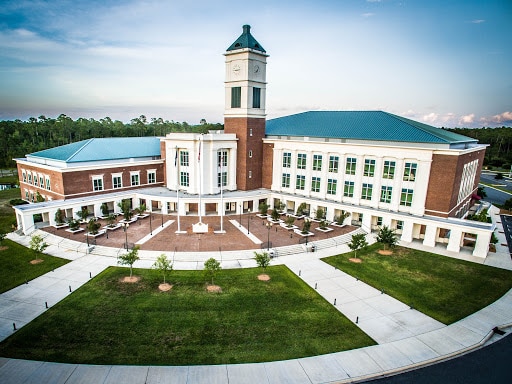
Attorney General James Uthmeier has issued a critical opinion saying Nassau County can’t jack up the rate of impact fee increases beyond Florida limits just because its population has increased substantially in the past half-decade.
Uthmeier said in a news release that he received a request to examine potential additional impact fees amid growth in the First Coast county. Rep. Richard Gentry, a DeBary Republican, asked for the Attorney General’s opinion.
The county has about 103,000 people residing there, according to U.S. Census Bureau estimates. That’s about a 17% jump from 2020.
Nassau County Commissioners approved impact-fee increases in December, citing the rapid growth of the municipality as “extraordinary circumstances.” In some cases, that amounted to a hike in impact fees of at least 50% over a four-year period in multiple phases, according to a report in the Fernandina Observer.
Florida law states that counties can increase impact fees beyond 50% if there are “extraordinary circumstances.” The fees are assessed to developers by local governments to cover the impact that buildings and developments have on local services, such as infrastructure, schools and public services.
Uthmeier said in his three-page opinion sent to Gentry that Nassau County doesn’t meet the threshold for raising impact fees at the rate approved in December.
Gentry’s Dec. 17 letter to Uthmeier said Nassau County’s interpretation of impact fee increases was off base.
“The interpretation is deeply flawed,” Gentry said bluntly.
Gentry added that his motivation for seeking the opinion from Uthmeier was rooted in his worry that counties could begin usurping the authority of the Legislature, which crafts state law.
“Nassau County’s interpretation of this statute would undermine the Legislature’s intent and open the door to arbitrary fee hikes statewide,” Gentry wrote. “I urge your office to confirm that Nassau County cannot lawfully exceed the statutory cap.”

Uthmeier agreed with Gentry in his opinion.
“The steady, albeit heightened, increase in population of 17% over the previous five years does not qualify as ‘extraordinary circumstances,’” Uthmeier said.
The state’s top lawyer said impact fees by nature are designed to handle population increases.
“The same growth that justifies limited, regimented impact fee increases in the statute can’t also justify extraordinary increases that jettison those strictures associated with those limited, regimented impact fee increases,” Uthmeier said.
“We caution that the implementation of the increases by Nassau County of almost 100% of the current rate … without the requisite justification appears to be a tax disguised as an impact fee.”
Uthmeier’s letter is strictly an opinion and is not binding. But coming from the state’s top lawyer and law enforcement officer, it could be used to develop a case and mount pressure if litigation were filed over the issue.
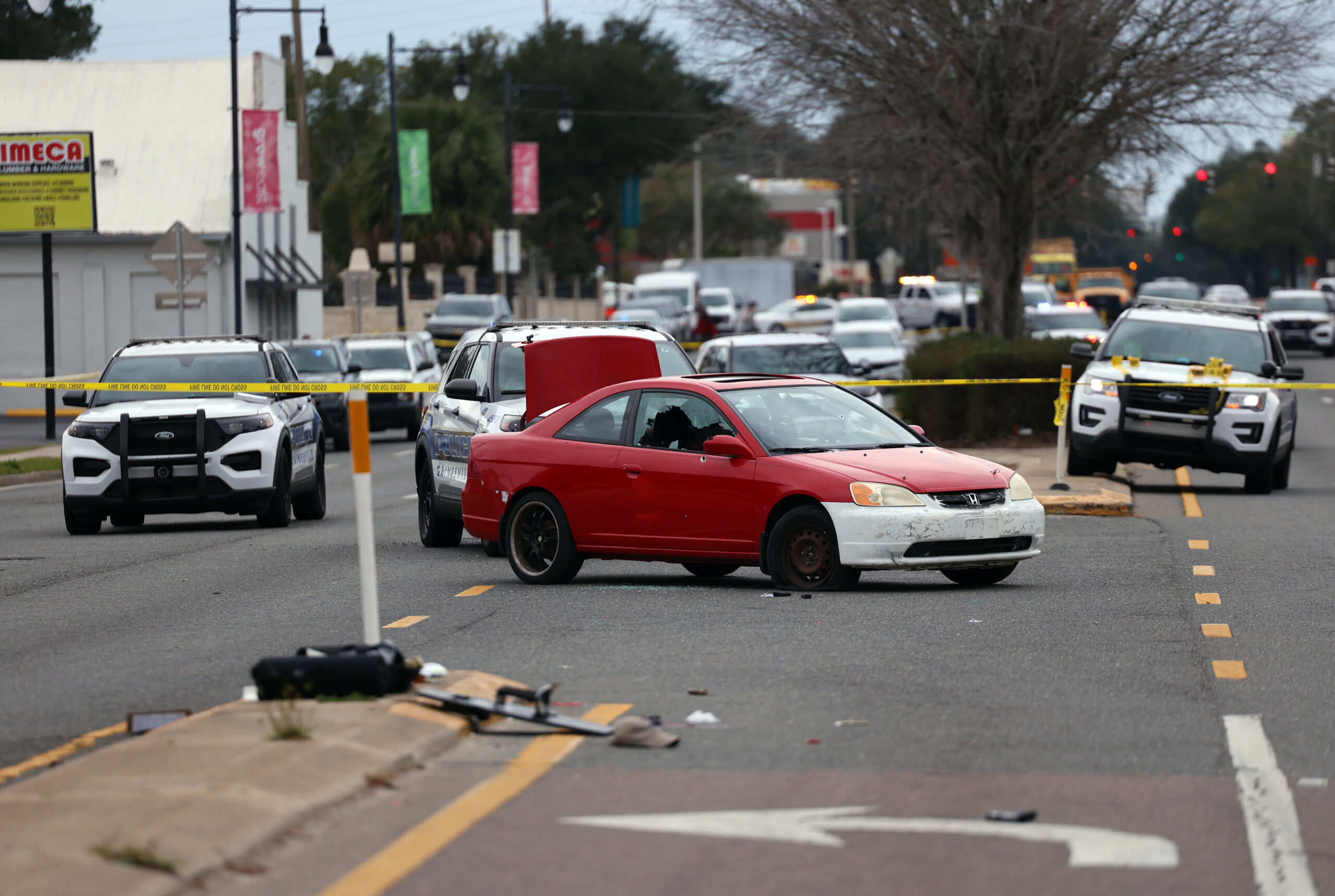
A fierce gun battle between a suspected killer and police unfolded during Wednesday morning’s rush hour near one of the city’s busiest intersections. The gunman and a man believed to be his victim died, and two officers were wounded in the shootout.
The shooting began just before 8 a.m. after the gunman killed a man in a retail business, police said. The gunman fled as police arrived in response to reports of a shooting, then stopped his car in the middle of the street and opened fire toward officers, Police Chief Nelson Moya said.
Moya described it as a “hellacious gun battle” that lasted about two minutes as officers and the gunman maneuvered for better firing positions.
Spent ammunition casings littered the road surrounding the gunman’s sedan as investigators worked at the scene.
Police found a body inside the business, Moya said. The names of the victim and the gunman were not immediately made public.
One officer was shot in the arm, and a second was shot in the leg, the chief said. Both officers were hospitalized and expected to recover.
Bullets pierced the area businesses during the shootout, which happened in East Gainesville about two miles east of the University of Florida campus. The area of the city has suffered in recent years from violent gun crime and is a focus of heavy police patrols. The nearby intersection of University Avenue and Waldo Road is heavily traveled during rush hour.
The owner of an auto repair store, Lorne Lattamier Green, 55, said bullets hit six cars parked out front, chipped the store’s glass and hit a door.
“ I start hearing a popping sound and [it] did not sound like gunfire,” said Green. He said the noises “got a little more frequent, more shots. It started hitting the glass here, and that’s when we realized, OK, it’s bullets, it’s shots. So, we all got down on the ground.”
Surveillance cameras at the auto repair store caught the suspected killer parking behind the restaurant and walking into a nearby hardware store, where the dead body was found. Green showed the video to a reporter before the Florida Department of Law Enforcement objected and ordered the reporter away from the scene.

Teejay Cole, a manager at a nearby KFC chicken fast-food restaurant, also had access to surveillance video from the KFC’s cameras and confirmed the shooter parked the car behind the restaurant.
“He was coming back out, the police followed him,” Cole said. “That’s how they end up being in the middle of the road. He jumped into his car, driving. He has his gun. You could see him with his gun and everything.”
Police taped off three blocks during their investigation. An elementary school was only blocks away.
“This is a busy, busy road,” said Tina Days, whose child goes to school nearby. “He could have killed anybody, could have got hurt and no sense of compassion about these babies at their school.”
Days said she received a call that the school her daughter attends was on lockdown, and she started trying to figure out what was happening.
Gainesville City Commissioners declared a gun violence crisis in 2023. The magazine Men’s Journal last year named Gainesville the No. 1 most dangerous college town in the United States.
The city allocated federal grant funds and worked with the Justice Department to address the issue. The police chief said the city has made progress and called Wednesday’s shooting “an anomaly.”
___
Gabriel Velasquez Neira reports via Fresh Take Florida, a news service of the University of Florida College of Journalism and Communications. The reporters can be reached at [email protected]. You can donate to support our students here.

Energy affordability and rising electricity costs dominated discussions this week as Republican leaders, consultants and policy advocates gathered in Orlando for the Republican Party of Florida’s Annual Meeting, with participants signaling the issue will be a defining theme of the 2026 Legislative Session.
Speakers at a panel hosted by Conservatives for Clean Energy Florida argued that high power bills are increasingly a kitchen-table concern for voters and warned lawmakers that affordability, reliability and grid security are converging into a single political test. The discussion came as lawmakers returned to Tallahassee and utilities continue to face scrutiny over fuel costs and long-term infrastructure planning.
“Floridians recognize that a multitude of energy generation resources will allow Florida to continue to lead the United States in economic development, innovation, and financial growth,” said Rep. Toby Overdorf, who emceed the panel. He said voters want practical solutions that keep electricity affordable without sacrificing reliability.
Polling data presented during the discussion underscored that message. According to Cygnal Polling, 63% of Republican voters surveyed support alternative energy sources, while 77% link energy independence directly to national security. Panelists said those numbers challenge the notion that clean or alternative energy is a partisan liability within GOP Primaries.
“Voters want an all-of-the-above approach to energy as a solution to rising costs and as a way for Florida to secure grid security and independence,” said Cygnal pollster John Rogers. “Republican voters will reward campaigns that lay out a clear vision for unleashing all of Florida’s incredible energy potential to spur job growth and make energy more affordable.”
The panel featured Conservatives for Clean Energy Florida Executive Director Zach Colletti, Rogers, R Street Institute energy analyst Josiah Neeley and ace political consultant Chris Hudson. Speakers repeatedly returned to the idea that diversification — including solar, nuclear and traditional generation — is the best hedge against fuel price spikes that ultimately hit consumers.
Neeley said regulatory delays and uncertainty can add unnecessary costs that are passed on to ratepayers, while Hudson emphasized that energy messaging is evolving as affordability overtakes ideology as the dominant concern among voters.
Polling also showed strong support for strengthening energy infrastructure and reducing regulatory burdens, which are viewed as driving up costs. Panelists framed those priorities as consistent with conservative principles, arguing that predictability and competition help protect families from sudden rate increases.
Energy policy debates are expected to intensify as the Session unfolds, with lawmakers weighing grid hardening, generation expansion and long-term planning against pressure to keep rates in check. Speakers said the political takeaway from the Orlando meeting was clear: Republican voters are focused less on labels and more on whether policies deliver reliable, affordable power.
As Overdorf put it, “Affordability matters. Reliability matters. And voters expect us to get both right.”



New Sexual Abuse Claim Against Timothy Busfield Is 25 Years in the Making

L’Oréal Professional Products opens new L’Oréal Academy in Hudson Yards

Trump is sorry for deporting college student who flew home to surprise her family for Thanksgiving, but is still deporting her
-

 Politics8 years ago
Congress rolls out ‘Better Deal,’ new economic agenda
-
Entertainment8 years ago
New Season 8 Walking Dead trailer flashes forward in time
-
Politics9 years ago
Poll: Virginia governor’s race in dead heat
-
Politics8 years ago
Illinois’ financial crisis could bring the state to a halt
-
Entertainment8 years ago
The final 6 ‘Game of Thrones’ episodes might feel like a full season
-
Entertainment8 years ago
Meet Superman’s grandfather in new trailer for Krypton
-
Business8 years ago
6 Stunning new co-working spaces around the globe
-
Tech8 years ago
Hulu hires Google marketing veteran Kelly Campbell as CMO