Connect with us

Politics

Florida Democrats fault Gov. DeSantis for misplaced priorities in final State of the State
Published

on


Florida Democrats criticized Gov. Ron DeSantis’ State of the State address, saying he carries a legacy of misplaced priorities into his final year in office.

Democratic leaders argued that DeSantis’ portrayal of Florida’s condition does not align with the financial pressures facing residents — particularly rising housing and insurance costs — and amounted to a retread of his “greatest hits” without outlining a clear vision for the year ahead.

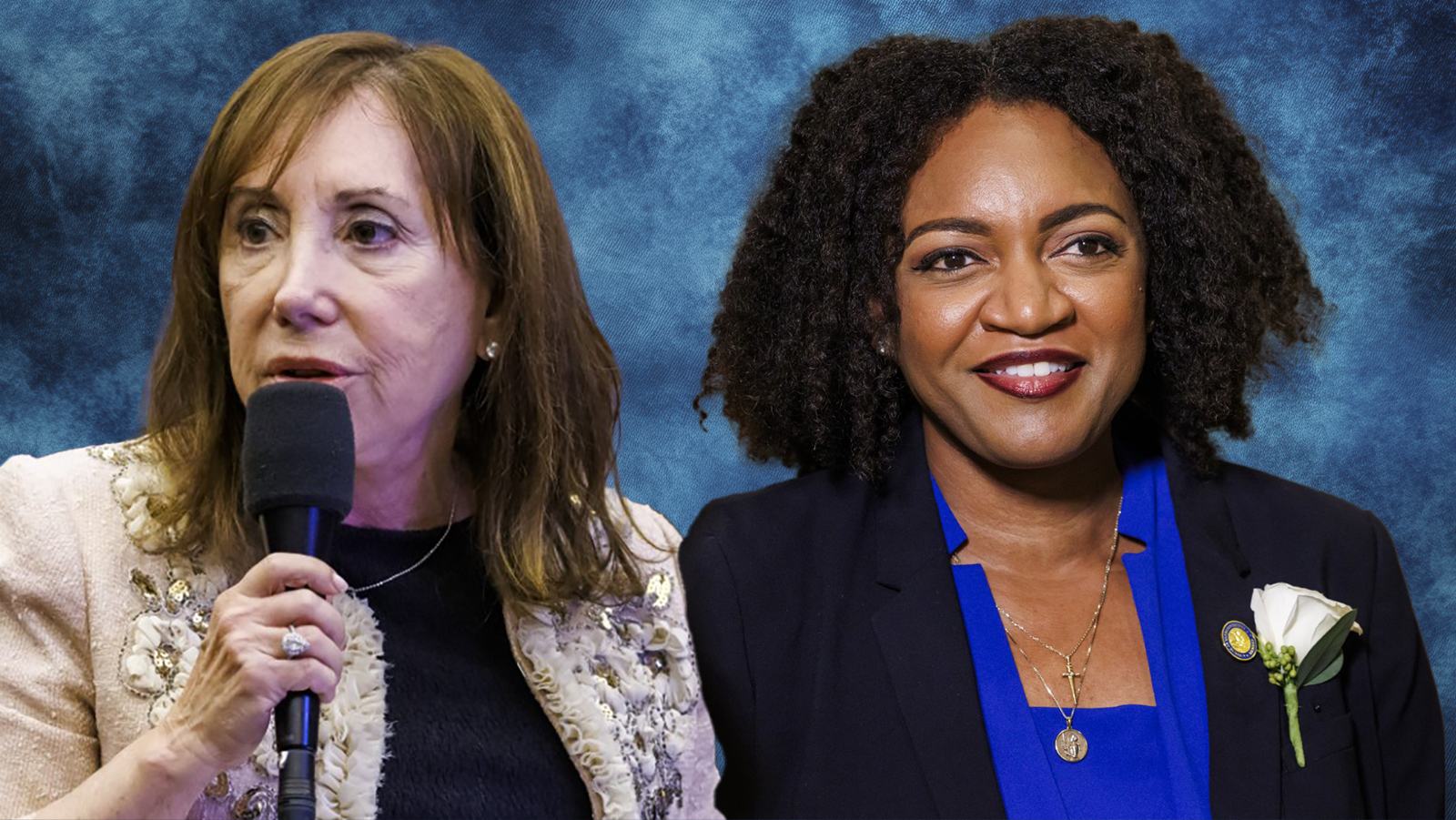
In an official video response, Senate Democratic Leader Lori Berman said DeSantis remains “completely out of touch with reality,” arguing that Floridians have seen costs rise across the board while the administration has focused on politics and patronage. She accused the Governor of prioritizing political ambition over governing, saying his leadership has left Florida “less affordable and more corrupt.”

In his State of the State address, DeSantis painted Florida as a national model for economic growth, fiscal restraint and conservative governance, arguing the state has delivered results where other states have faltered.

He acknowledged rising property taxes and housing pressures, but argued those challenges stem largely from local government decisions and called for property tax relief.

DeSantis said recent legislative actions have helped stabilize insurance markets, while also emphasizing his administration’s record on immigration enforcement, public safety and cultural issues. He defended policies targeting diversity, equity and inclusion programs and pandemic-era restrictions and warned against the unchecked influence of artificial intelligence.

House Democratic Leader Fentrice Driskell said the address was overwhelmingly retrospective, focused more on defending and celebrating past actions than laying out a governing agenda for the coming Session.

“I didn’t hear too many new ideas; it sounded like he was dredging up some of his greatest hits,” she said.

“I never expected to hear about the time of COVID; there were so many quotes and weird historical references. It was kind of hard to keep track. I just expected more from the Governor’s last State of the State address.”

She pointed to what she described as a disconnect between the Governor’s rhetoric and everyday realities, arguing that Floridians continue to face underfunded schools, rising grocery and utility bills, congested roads and expensive health care.

Driskell also criticized DeSantis for attacking local government spending while proposing a 2026 budget that is roughly $24 billion larger than his first budget, calling it further evidence that the administration’s priorities are misaligned.

Berman echoed that criticism, arguing that the Governor’s focus on property tax cuts misses the core affordability problem facing homeowners and renters alike. She said lowering insurance costs would deliver more direct relief without hollowing out local services.

“We heard in his press conference this week that he said insurance is solved and that rates are going down, but we know Florida is twice the national average and rates going down, even 8% or 10%, are not solving the issue,” Berman said.

“We don’t think the Legislature has done enough on insurance and we’re going to continue to push. When you lower insurance rates you put money in people’s pockets directly, and that’s what we think should be the answer, not this property tax issue.”

Both Berman and Driskell highlighted Democratic proposals aimed at affordability that may not see the light of day during a Session likely to be dominated by Republican calls for property tax cuts — a move they argue will not provide meaningful relief.

Those proposals include a national insurance compact to spread hurricane risk, the Housing Options Made For Everyone (HOME) Act to preserve affordable housing and reduce costs for first-time homebuyers, and efforts to rein in wasteful or politically connected state spending.

“For eight years, he’s been focused on culture wars, grabbing headlines and an ever-growing list of grievances meant to keep people distracted and angry so that we don’t notice that Florida is becoming too expensive for too many Floridians,” Driskell said. “That’s his legacy: division, meanness and a growing affordability crisis.”

The two Democratic leaders also criticized DeSantis for pursuing a mid-decade redistricting effort, calling it a partisan gerrymander that violates Florida’s Fair Districts Amendments and undermines voters’ ability to choose their representatives.

Driskell criticized the Governor’s rhetoric on immigration and said the public lacks transparency to evaluate enforcement claims. She pointed to heightened national tensions and referenced a recent incident where an Immigration and Customs Enforcement agent shot and killed an American in Minneapolis, arguing that political escalation has gone too far and underscoring the need for accountability and restraint.

Driskell also challenged DeSantis’ portrayal of progress on education and public safety, arguing that many Floridians are still grappling with underfunded schools and other realities like rising utility and grocery bills, congested roads and costly health care that were largely absent from the Governor’s address.

Both leaders said the speech reinforced their view that DeSantis’ final year agenda is more focused on defending his political record and positioning himself nationally than on outlining solutions for Florida’s affordability crisis. With Republicans controlling the governor’s office and both chambers of the Legislature, they said the responsibility for delivering relief — or failing to do so — rests squarely on their shoulders.

“There is absolutely no excuse,” Driskell said. “Any failures in this Legislative Session, it’s on them.”


Source link

Continue Reading

Politics

Student polling place volunteer bills advance in House, Senate

Published

on


Bills from Jacksonville Republicans that would relax rules for students who volunteer at polling places cleared their first committee hurdles by unanimous votes.

The legislation (SB 564, HB 461), sponsored by Sen. Clay Yarborough and Rep. Kiyan Michael, says the ban on privately-funded election-related expenses would not bar high school students who are registered or preregistered to vote from voluntarily helping poll workers in exchange for community service hours that apply to Bright Futures scholarships.

Students can preregister to vote beginning when they turn 16.

The bill would take effect July 1, meaning that eligible students could begin participating in the process during the August Primaries this year if it becomes law.

Yarborough told the Senate Ethics and Elections Committee that this bill, if passed, “will be one of the greatest firsthand civics lessons, which they can experience as they go along, of one of our greatest rights and what it takes to conduct elections.”

Michael told the House Government Operations Subcommittee the bill allowed students to volunteer on weekends, addressing a potential shortage of volunteers, driving engagement and teaching a “civic lesson.”

“We’re always talking about, ‘We need to have our kids doing something positive,’ and this gives them the ability to volunteer at our polling locations,” she said.

Asked about potential dangers to the young volunteers from violence by Republican Rep. Paula Stark, Michael expressed confidence that the lead poll worker and the Supervisor of Elections could handle any issues.

Duval County Supervisor of Elections Jerry Holland spoke on behalf of the bill in both committees.

He said his grandson was looking for community service opportunities, and said volunteering would help students understand the process and get “exposed” to the role and “maybe come back and be part of our team in the future.”

“Maybe in the future, I’ll have a future poll worker,” he said in the House committee.

He also said that in the case of liability issues, the Supervisor of Elections would be responsible, just as with anyone else in a polling location.

The bills, which are identical, each have two committee stops ahead.

The League of Women Voters and the Southern Poverty Law Center support the legislation.


Source link

Continue Reading

Politics

Aaron Bean, Laurel Lee, Anna Paulina Luna advance insider trading ban with support of Mike Johnson

Published

on


Three Florida lawmakers helped craft a ban on insider trading for members for Congress. And this one has the support of Speaker Mike Johnson.

U.S. Reps. Aaron Bean, Laurel Lee and Anna Paulina Luna, all Republicans, co-introduced the Stop Insider Trading Act with U.S. Rep. Bryan Steil, a Wisconsin Republican who chairs the House Administration Committee.

“Too many in Congress seem more focused on playing the markets than serving the American people,” said Bean, a Fernandina Beach Republican. “We can’t allow Crazy Town to prioritize its stock portfolios over the future of our nation. Our job is to represent the people — not to act like day‑traders with privileged information.”

Luna’s support could prove especially important. The St. Petersburg Republican last year led a discharge petition gaining bipartisan support to force a full ban on owning stocks to the floor, over the opposition of Democratic and Republican leadership. But Luna also maintained communications with Johnson on the issue hoping to reach a compromise.

At a Florida event alongside Gov. Ron DeSantis, Luna signaled a deal was near.

“We actually have met with the Speaker of the House and that we are going to be putting something on the floor coming up this quarter that will permanently stop the insider trading,” Luna said.

Johnson voiced his support for the new proposal, which would prohibit members of Congress, along with spouses and children, from directly purchasing stocks, and require seven-day public notice before they, or those close family members, can sell stock.

“No member of Congress should be allowed to profit from insider information, and this legislation represents an important step in our efforts to restore the people’s faith and trust in Congress,” Johnson said. “Both Republicans and Democrats will have an opportunity to make their voices heard and affirm their support.”

Only Republican members were listed as introducing co-sponsors. But the list of supporters included House Freedom Caucus members like U.S. Rep. Chip Roy of Texas, moderates like U.S. Rep. Mike Lawler of New York, and members of leadership including Majority Leader Steve Scalise of Louisiana.


Source link

Continue Reading

Politics

Nick DiCeglie bill that aims to fix unintended consequences of hurricane recovery law flies through committee

Published

on


A bill proposed by Republican Sen. Nick DiCeglie meant to right the wrongs brought by 2025 legislation (SB 180) has cleared its first committee stop. 

SB 840, sponsored by DiCeglie of Pinellas County, would scale back the unintended consequences of SB 180, which was designed to prevent local governments from slowing rebuilding efforts after hurricanes.

But broad language in that law has instead been used to block unrelated comprehensive plan changes and development decisions well beyond storm-damaged areas. The matter pushed a group of cities and counties across the state to file a joint lawsuit against the state.

The Senate Committee on Community Affairs voted Tuesday to report SB 840 favorably after limited discussion. 

“As we were going through the legislative process there were provisions, 18 and 28, of Senate Bill 180 that had the term ‘burdensome and restrictive,’ and it was such a broad term that unfortunately we’ve seen across the state in many cases a paralyzation of local governments just trying to execute and advance some changes through their comprehensive plan,” DiCeglie said.

SB 840 would reduce the affected area from 100 miles to 50 miles from a hurricane’s track. DiCeglie said overlapping storms during the 2024 hurricane season effectively placed nearly the entire state under post-storm land use restrictions, prompting the change.

“That 100-mile radius ultimately impacted almost every inch of the state,” DiCeglie said.

The bill would also shorten the duration of SB 180 restrictions tied to Hurricanes Debby, Helene and Milton. Under SB 840, those provisions would expire on June 30, instead of remaining in effect through late 2027, as currently scheduled.

SB 840 would maintain a one-year prohibition on local governments imposing moratoriums or adopting more restrictive land use regulations that would delay rebuilding, but limits those restrictions to property that was actually damaged by a hurricane and requires documentation of storm-related damage.

The bill would allow local governments to continue certain actions after a storm, including planning decisions required by state or federal law, work in areas of critical state concern, and projects related to drinking water, sewer, stormwater and flood protection.

Committee members asked limited questions, focusing on the reduced geographic scope and the bill’s changes to SB 180’s expiration dates. Several Senators praised the bill as a necessary response to concerns raised by local governments since. No speakers appeared in opposition, and the Florida Association of Counties signaled support for the measure.

DiCeglie emphasized that SB 840 is intended to preserve the original intent of SB 180 while addressing its unintended consequences. The committee unanimously approved SB 840, advancing the bill to the Senate Judiciary Committee as lawmakers have officially reconvened for the 2026 Legislative Session.

This will ensure that regardless if a storm hits, communities within areas of critical state concern will be able to move forward with comprehensive planning decisions,” DiCeglie said.


Source link

Continue Reading

Trending

Copyright © Miami Select.