
Politics
Florida court clerks — running a 2026 office with 2008 prices


Could you imagine running a business in 2026 while charging 2008 prices?
While that might be a dream for consumers, the reality is that the business would quickly fail, as labor and operating costs have risen dramatically since 2008.
For example, the state minimum wage was $6.79 per hour in 2008; on September 30, 2025, it increased to $14.00 and will rise to $15.00 on September 30, 2026. These labor cost increases have rippled across Florida’s economy as employers have grappled with higher pay for all employees.
While businesses can pass these costs on to consumers through higher prices, Florida’s Clerks of Court cannot.
Court fines and fees have been fixed in statute since 2008. As a result, a court filing costs the same today as it did then, even though the labor required to manage a case has nearly tripled. As President of our statewide association, Florida Court Clerks & Comptrollers, I see firsthand how Clerks struggle to meet the demands of increasingly complex offices with a shrinking proportional budget.

One way Clerks have addressed this gap is by leveraging technology to improve efficiency. Over the years, Clerks have implemented enhanced in-person and jury management services through digital check-in systems, launched online self-help centers to help users navigate the courts, and expanded online access to records and application processes. Clerks also developed the nationally recognized E-Filing Portal, which has become a model for court systems across the United States.
In addition, Clerk offices provide access to data that supports critical electronic notification systems, including E-Notify for upcoming court events, domestic violence injunction text updates for court rulings, and property fraud alert notifications. These enhancements have modernized operations and delivered cutting-edge support to Floridians from Key West to Pensacola.
While these improvements have helped Clerks do more with less, the work still requires teams of dedicated, highly trained public service professionals. Make no mistake, this work is mission-critical 100% of the time. Clerks help administer justice, resolve disputes, finalize adoptions, and ensure vulnerable individuals receive protective orders.
Most Clerks also serve as county comptrollers and official recorders, ensuring county bills are paid, road projects are funded, annual audits are completed, and marriage licenses, deeds, and other important documents are properly recorded and secured. It is a significant responsibility, and we are humbled and honored to serve our residents and stakeholders.
In reviewing this year’s operational needs, the Florida Clerks of Court Operations Corporation (CCOC) identified a $75 million funding gap between the cost of operating Clerks’ offices and the revenue available to support them. This Legislative Session, Clerks across the state are asking lawmakers for support to address this shortfall by:

— Adjusting outdated fees and service charges to reflect today’s dollars through application of the Consumer Price Index;
— Allowing Clerks to retain more of the revenues they already collect; and
— Approving other sustainable revenue enhancements.
We are grateful for the continued support of the Legislature and the Governor’s Office as we work to fulfill our mission. This year, that partnership is reflected in our legislative priorities, beginning with Senate Bill 532, Court Fees, filed by Sen. Corey Simon and House Bill 759 by Rep. David Smith, and further supported by Senate Bill 1322 filed by Sen. Jonathan Martin and House Bill 925 by Rep. Dana Trabulsy. Together, these measures would go a long way toward addressing the funding shortfall and enabling Clerks to better serve their constituents.
___
Doug Chorvat Jr., CGCIO, CPM, serves as President of the Florida Court Clerks & Comptrollers, and is Hernando Clerk of the Circuit Court & Comptroller.
Aspiring lawyers may soon have more paths to a legal career.
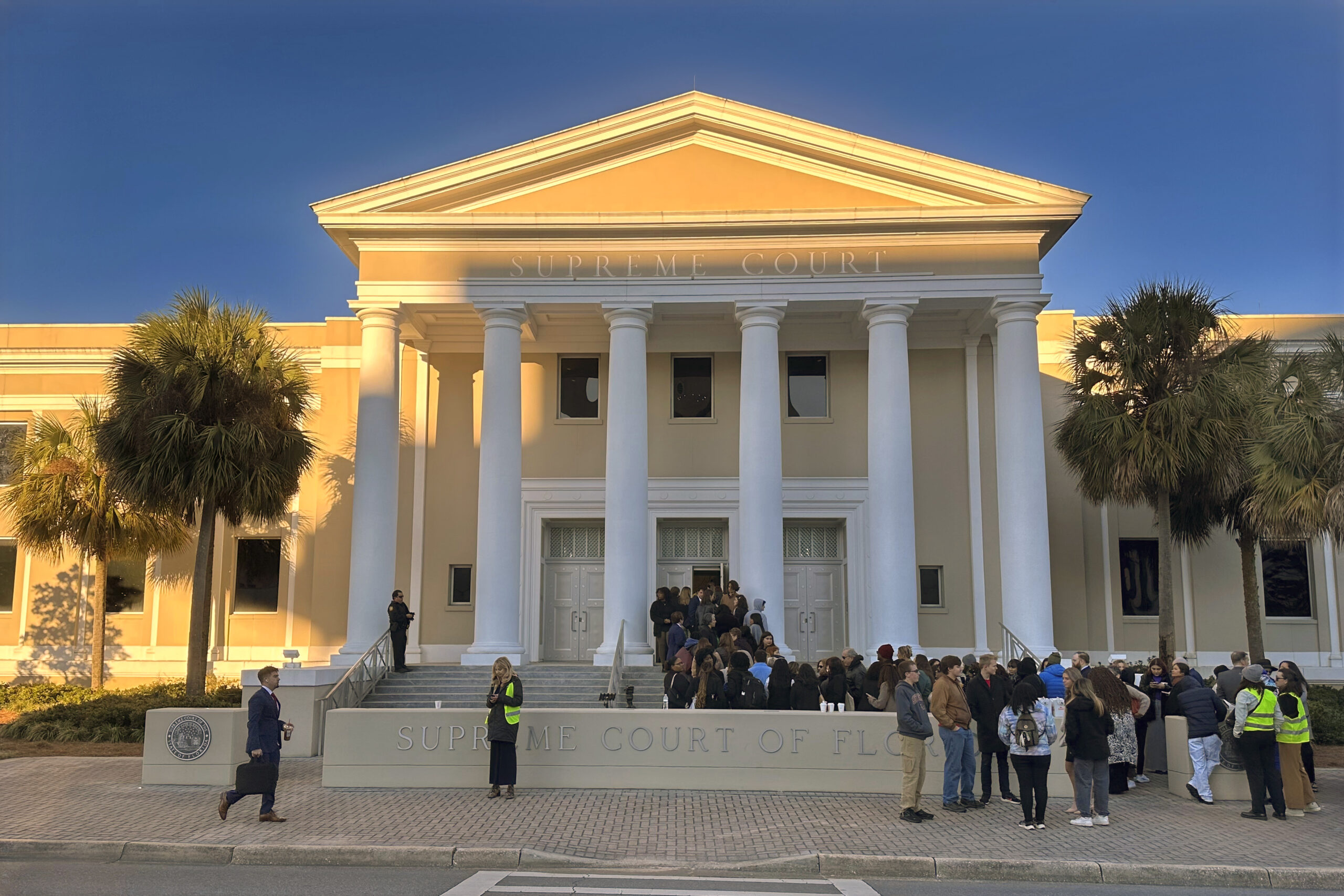
In a 5-1 decision, the Florida Supreme Court amended its rule making the American Bar Association (ABA) “the sole accrediting agency for law schools whose graduates are eligible to sit for this state’s General Bar Examination.”
The revision will “expand the accrediting agencies by which a law school may be approved or provisionally approved” to allow law school graduates to take the Bar.
The opinion, which follows the lead of Texas, was issued after Gov. Ron DeSantis and Attorney General James Uthmeier called for alternative accreditors, with the former taking issue with the ABA’s “progressive agenda” and the latter criticizing the organization as “woke” and accusing it of discriminating against Catholics.
“Mission accomplished,” exulted Jason Weida, Chief of Staff for the Governor.
The high court started a workgroup last year to explore alternatives to the ABA given its perceived political stances and “accreditation standards on racial and ethnic diversity in law schools,” with an eye toward trying to “reduce Florida’s near-exclusive reliance on the ABA while promoting greater flexibility and innovation in legal education.”
That study provided the framework for the rule revision.
“Based on its independent study and its consideration of the workgroup’s report, the Court is persuaded that it is not in Floridians’ best interest for the ABA to be the sole gatekeeper deciding which law schools’ graduates are eligible to sit for the state’s General Bar Examination and become licensed attorneys in Florida,” reads the opinion, which was led by Chief Justice Carlos Muñiz, with Justices John Couriel, Jamie Grosshans, Renatha Francis and Meredith Sasso concurring.
“Instead, the rule changes create the opportunity for additional entities to carry out an accrediting and gatekeeping function on behalf of the Court.”
The revised rule opens the door “to a programmatic accrediting agency recognized by the United States Department of Education to accredit programs in legal education that lead to the first professional degree in law or an institutional accrediting agency recognized by the United States Department of Education to accredit institutions of higher education, provided the institutional accrediting agency is also approved by the Court.”

In a dissent, Justice Jorge Labarga worried about “detrimental” consequences for “replacing an established entity with an unknown alternative.”
Politics
Ron, Casey DeSantis herald groundbreaking carbon-ion therapy investment at Jacksonville’s Mayo Clinic

Florida’s First Couple continues to demonstrate a commitment to cancer research, helping to bring new technology to the state that can help those with the toughest forms of the disease.
Gov. Ron DeSantis and First Lady Casey DeSantis returned to Jacksonville to highlight new investments at the Duan Family Building at the Mayo Clinic. It’s part of $218 million appropriated last year, marking over a billion dollars since the Governor was elected, with more than $100 million going to Mayo alone.
“We are here today with the backdrop of all the heavy artillery you see for treating cancer to announce the next major step forward,” the Governor said.
“Mayo Clinic is now launching the technology for the first carbon ion therapy program anywhere in the United States of America. And in fact, it’ll be the only carbon ion therapy program in the entire Western Hemisphere. So this is newer technology. Japan has really embraced it. Mayo’s the first one in the United States.”
Roughly $30 million of state money went into this initiative, which the Governor said is the most advanced form of radiation treatment for cancers that don’t respond well to traditional radiation. He also said it’s a way to continue boosting the “upward trajectory of the medical community” in Florida.
DeSantis said proton and carbon-ion treatments would be available in 2027 and 2028, respectively, with the latter pending federal approval by the Food and Drug Administration. He said carbon-ion had been proven successful in Japan, and had benefits beyond the localized cancer itself.
“There’s a school of thought that it basically helps with your natural immunity or some of the other medications for other parts of your body that would potentially be subjected (to cancer risk),” DeSantis said.
Dr. Kent R. Thielen, Vice President of the Mayo Clinic, called this investment a “transformative moment in the future of family care,” with the most technologically advanced treatment modality anywhere. Carbon-ion treatment particularly helps patients and cancers resistant to proton therapy, he said, as the former is 12 times heavier than the latter and therefore can be more medically effective than proton therapy alone.
Adults and children could be treated in the coming years, Thielen added.
Casey DeSantis said this was a “huge deal” for Florida and well beyond. A cancer survivor who has ongoing effects from radiation therapy herself, she expressed hope that the new technology would improve the quality of life of those who beat the dreaded disease.



Down Arrow Button Icon

Caitlyn Jenner Gives Timothée Chalamet Her Seal of Approval

William Costelloe is new creative chief of Paul Costelloe after father’s death
-

 Politics8 years ago
Congress rolls out ‘Better Deal,’ new economic agenda
-
Entertainment8 years ago
New Season 8 Walking Dead trailer flashes forward in time
-
Politics9 years ago
Poll: Virginia governor’s race in dead heat
-
Politics8 years ago
Illinois’ financial crisis could bring the state to a halt
-
Entertainment8 years ago
The final 6 ‘Game of Thrones’ episodes might feel like a full season
-
Entertainment8 years ago
Meet Superman’s grandfather in new trailer for Krypton
-
Business8 years ago
6 Stunning new co-working spaces around the globe
-
Tech8 years ago
Hulu hires Google marketing veteran Kelly Campbell as CMO