
Politics
Florida Chamber outlines Session priorities at annual Fly-in

Politics
Senate Committee approves bill that gets a facelift with amendment on local control for residential development
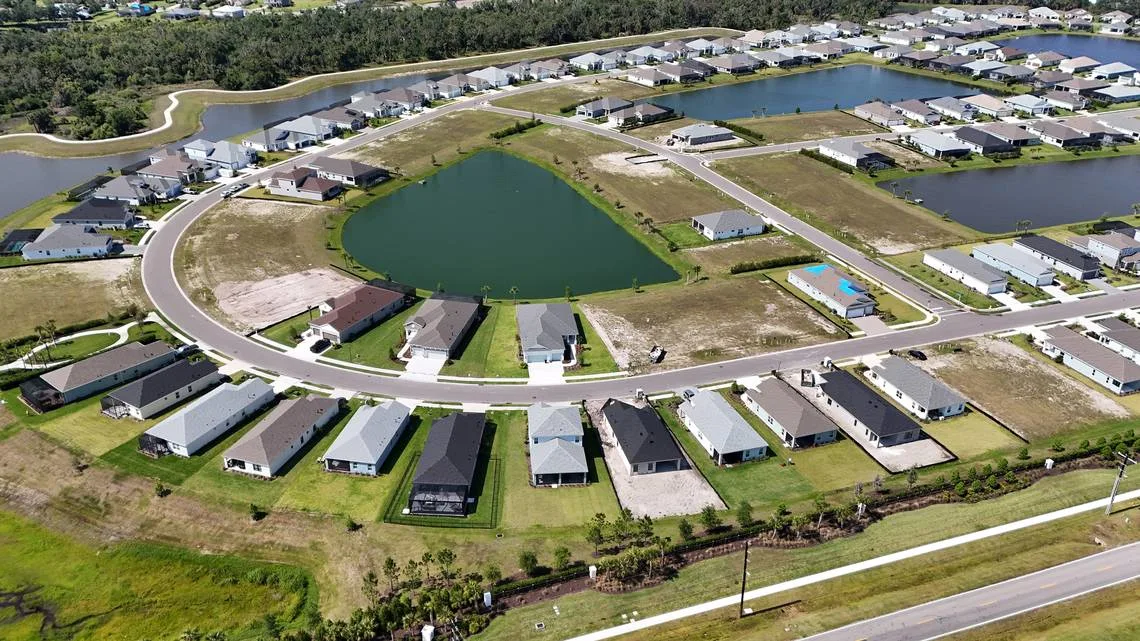
A Senate bill seeking to limit local government control for deciding new residential development was reworked with a strike-all amendment that gutted the original proposal.
With a short discussion Monday, the Senate Judiciary Committee unanimously approved the amended SB 208 during Monday’s hearing.
Bill sponsor Sen. Stan McClain, an Ocala Republican, called the amendment “a negotiated compromise amongst all the key stakeholders.”
Chadwick Leonard, Conservation and Planning Advocacy Coordinator for 1000 Friends of Florida, supported the amendment and said it was about “making sure that local control and the voice of the citizens are being heard.”
Other organizations, including the Florida Chamber of Commerce, the Florida Association of Counties, and the Florida League of Cities, all signaled their support for changes.
The original bill, which contained several provisions, would have overrode any local local rules on the books, so applications to “fill in” more housing in existing residential areas would be required to be approved without having any public hearing, comprehensive plan, amendment, rezoning, variance if the proposed development was similar to existing housing’s density and standards.
The original bill also would have prohibited local governments from banning residential development “on the basis of compatibility” if the proposed development was next to a similar residential development.
But the newly-tooled amended five-page bill will several provisions now says, “Local government comprehensive plans and land development regulations must include factors for assessing the compatibility of allowable residential uses within a residential zoning district and future land use category. Such factors may include intensity, density, scale, building size, mass, bulk, height and orientation, lot coverage, lot size and configuration, architectural style, permeability, screening, buffers, setbacks, stepbacks, transitional areas, signage, traffic and pedestrian circulation and access, and operational impacts, such as noise, odor, and lighting.”
Local government staff must specifically identify how the project isn’t compatible if they are going to deny an application for rezoning, subdivision, or a site plan approval on compatibility grounds, the amended bill said.
And the amended bill added, “References to ‘community character’ or ‘neighborhood feel’ are not sufficient in and of themselves to support a denial of an application on compatibility grounds.”

However, a local government could still set conditions or terms in approving an application to deal with compatibility concerns.
The amended bill had exemptions for rural, agricultural, conservation, open space, mixed-use, industrial, commercial use, master planned communities and historic districts.

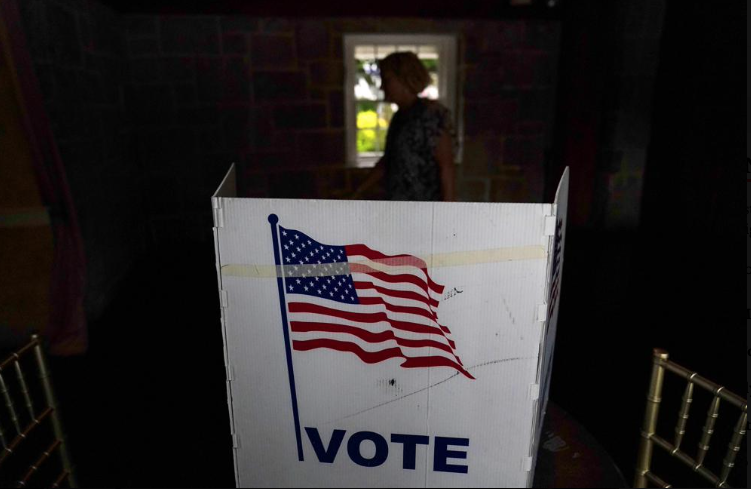
Voters in House District 87 head to the polls on Tuesday to choose Democratic and Republican nominees in a Special Primary Election that has been in the works for many months.
The coastal Palm Beach County district has been without representation since August, when Republican Rep. Mike Caruso resigned to assume the role of Palm Beach County Clerk and Comptroller. The prolonged vacancy — and Gov. Ron DeSantis’ delay in calling a Special Election — became a central issue in the race itself.
DeSantis ultimately set a Jan. 13 Primary and a March 24 Special General Election, meaning the District will not hold a vote in Tallahassee during the 2026 Legislative Session. That reality has loomed over the contest, particularly on the Democratic side, where one candidate sought to force the Governor’s hand through the courts.
Two Democrats and two Republicans are competing Tuesday for their respective party nominations in a district that has leaned Republican in recent cycles but that Democrats view as competitive, particularly under Special Election conditions.
On the Democratic side, the Primary pits Emily Gregory against Laura Levites.
Gregory, a Jupiter-based small-business owner and public health professional, has been the most visible Democrat in the race since the vacancy occurred. She drew attention in October when she filed a lawsuit seeking to compel DeSantis to call a Special Election, arguing that HD 87 voters were being denied representation as lawmakers prepared to convene in Tallahassee.
The lawsuit was ultimately rendered moot by the Governor’s executive order setting election dates.
Gregory has focused on public education funding, health care access and property insurance costs. She entered the final stretch of the Primary with a clear fundraising advantage on the Democratic side. Gregory raised more than $101,000 through Jan. 8 and spent nearly $49,000, both outpacing her opponent.
Levites, a Lake Worth Beach resident and first-time candidate, has pitched herself as a community advocate and political outsider. Her campaign has focused heavily on cost-of-living pressures, such as property insurance premiums and housing affordability. Levites has also leaned into environmental issues and local infrastructure concerns, including flooding and traffic congestion.
Levites has run a lower-dollar campaign, adding no campaign contributions and loaning her campaign just $450.

The Republican Primary has arguably drawn more attention, with Jon Maples facing Gretchen Miller Feng.
Maples, a Palm Beach Gardens financial planner, entered the race early and quickly consolidated support from Republican leadership. He secured backing from the Florida House Republican Campaign Committee and a slate of GOP lawmakers, and later landed an endorsement from former President Donald Trump — a significant asset in a Republican Primary, even in a coastal district with a more moderate reputation.
Maples has run as a reliable conservative aligned with Trump-era priorities, emphasizing fiscal restraint, opposition to tax increases, and a pro-business climate.
With party support behind him, Maples has built the largest war chest in the Republican field, raising more than $278,000 between his campaign account and his political committee, Friends of Jon Maples, plus adding another $14,000 in candidate loans. He has spent nearly $157,00 as of Jan. 8.
Feng, a paralegal and regulatory consultant from West Palm Beach, has cast herself as an outsider running against party insiders. She has focused her campaign on affordability, opposition to unchecked growth and outrage over the district being unrepresented during the 2026 Session. Feng has not matched Maples’ fundraising, raising just over $12,000 in total and spending nearly $11,000.
HD 87 runs up the coast of Palm Beach County, spanning Palm Beach Gardens, Jupiter, Juno Beach and Hypoluxo.


Senate Committee approves bill that gets a facelift with amendment on local control for residential development

Down Arrow Button Icon

Ace Turtle launches Lee and Wrangler stores in Gujarat, India
-

 Politics8 years ago
Congress rolls out ‘Better Deal,’ new economic agenda
-
Entertainment8 years ago
New Season 8 Walking Dead trailer flashes forward in time
-
Politics8 years ago
Poll: Virginia governor’s race in dead heat
-
Politics8 years ago
Illinois’ financial crisis could bring the state to a halt
-
Entertainment8 years ago
The final 6 ‘Game of Thrones’ episodes might feel like a full season
-
Entertainment8 years ago
Meet Superman’s grandfather in new trailer for Krypton
-
Business8 years ago
6 Stunning new co-working spaces around the globe
-
Tech8 years ago
Hulu hires Google marketing veteran Kelly Campbell as CMO