Connect with us

Politics

Florida black bear hunt exposes emotional divisions among animal rights activists, hunters
Published

on


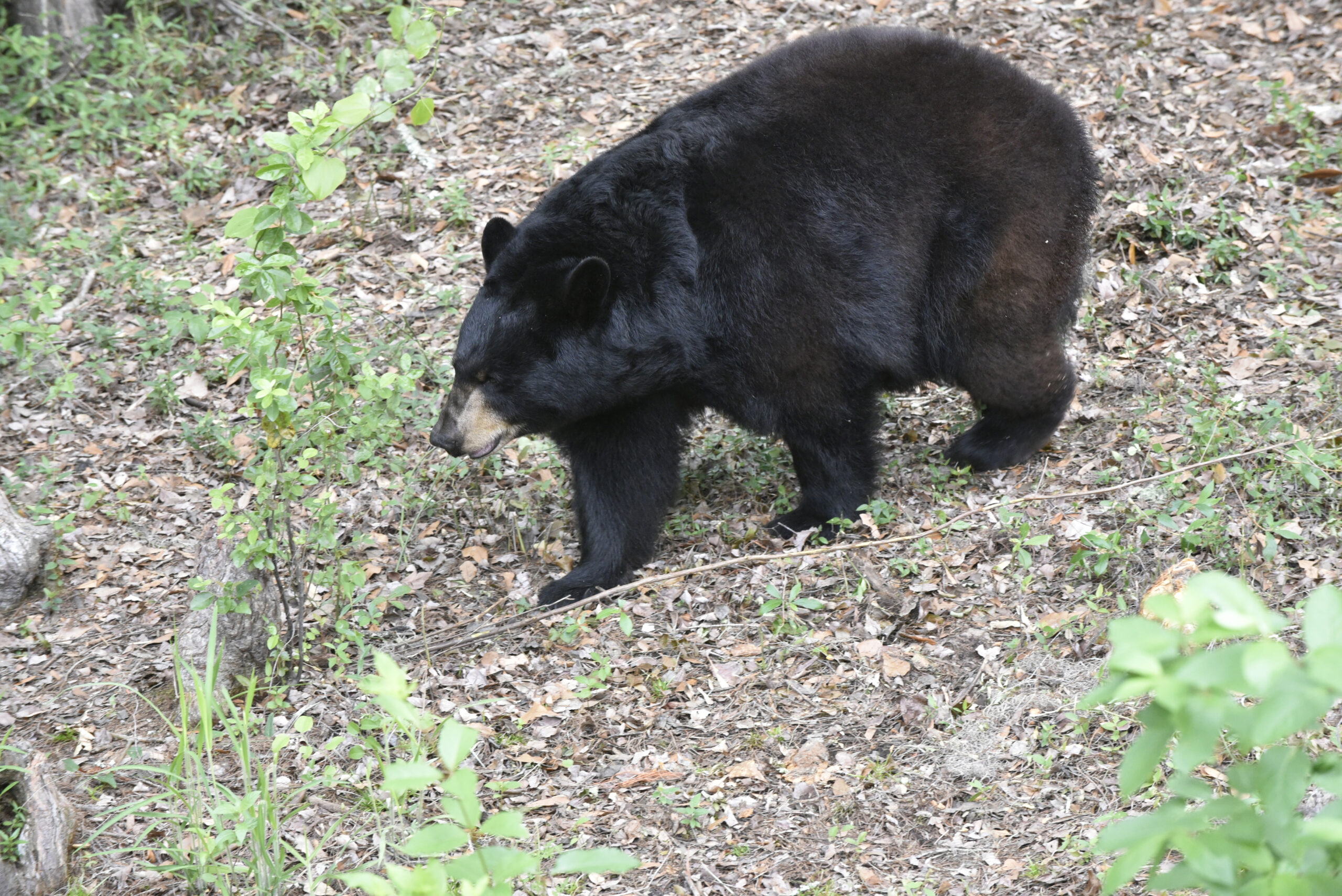
Most people who won permits to participate in the first Florida black bear hunt since 2015 came away empty-handed. Jeff Nemeth wasn’t one of them — he and his son harvested a 503-pound bear on a private plot in the Panhandle last month.

Nemeth, 57, of Inverness estimated he put in 100 hours of research to prepare and spent $4,000 to $5,000 in travel and gear fees. He plans to shell out an additional $5,000 to an Ocala taxidermist for a full-body mount of the 8-foot-3 animal.

“It’s a lifetime hunt,” he said.

Nemeth was one of 52 hunters to kill a Florida black bear out of 172 permits issued during the state’s first hunt in a decade, according to Florida Fish and Wildlife Conservation Commission figures. The controversial hunt — which took place from Dec. 6 to 28 — used a lottery system to grant permits to the limited number of hunters. Each permit holder was allowed to harvest one bear.

The Florida hunt exposed deep emotional divisions among animal rights activists and hunters. In social media forums and in dueling media interviews, the groups fiercely debated the morals and heritage of hunting, the science of bear biology and its ecosystem — arguing even about the Biblical aspects of whether God would approve.

Many animal rights activists entered the lottery to win permits with no plans to use them — only to keep them away from hunters. These activists said data the wildlife commission used to support the hunt, which showed 53% statewide increase in bear populations since 2002, was outdated because it was collected in 2014 to 2015.

For its part, the agency said Florida black bear population counts can’t be taken more frequently than the length of one generation, or 10 years. The Commission said the hunt was intended to slow bear population growth and manage the species’ numbers before they outgrow their habitat.

Florida plans to make the hunt an annual event, although details about next season’s dates have not been released. Hunter success rates and the number of unused permits will be used to evaluate 2025 data and inform future hunts, spokesperson Shannon Knowles said in an email.

“The goal was to put the permits in the hands of those who will use them for hunting,” Knowles said.

The ratio of hunting permits to bears hunted turned out to be similar to other states with similar hunt parameters, the Wildlife Commission said. It has promised a full harvest report to be released in the coming months.

Nemeth, a retiree, said he was impressed with how the Commission managed the hunt. A lifelong hunter, he moved to Florida five years ago from Michigan, where he often went bear hunting — but was never successful.

Nemeth secured a lease to hunt on private land in Eastpoint, southwest of Tallahassee and four hours north of his home. A few large, older bears had been seen on the property, scaring away deer. Nemeth scouted these “nuisance” animals for months, analyzing footage and laying out feed, before traveling with his son to make the kill in early December.

The first two days of the hunt, he said, were rainy and miserable. But the sun emerged on the third day, and he and his son, Rees Nemeth, 27, took their spots at a blind. The camouflaged structure let them observe and shoot undetected. Just before daybreak, they saw a bear come to a nearby corn pile to eat. They waited for a clean shot — and took it.

Nemeth said he plans to enjoy the dark red bear meat in stews and chilis, as well as grilled in teriyaki sauce.

“I’m not a trophy hunter,” he said. “I hunt for meat. My freezer is full of game — my two gators are in there, and I’ve got a couple pigs in there, a turkey, and we eat what we kill. And that’s how it is, you know, I think that’s the right way.”

Chuck Mitchell, 73, of Tallahassee feels differently. After spending $1,000 on lottery tickets, at $5 per entry for 200 chances, he also secured a hunting permit. But he did so to keep a bear from being killed. Each person could buy unlimited entries, although they couldn’t win more than one tag.

Mitchell has lived in Florida for 55 years and remembers the last bear hunt in 2015. No lottery system existed during that hunt; instead, the FWC sold an unlimited number of permits. The season was called off after just two days with 304 bears killed.

Although Mitchell describes himself as a hunter and fisher more than an animal rights activist, he doesn’t support what he described as killing bears for trophies. He kills only animals he can eat, he said, and bear meat can sometimes be unpalatable depending on the bear’s diet and fat content. While growing up in swampy North Carolina, he said, he would sooner kill and eat a raccoon or a possum than a bear.

He lives in Tallahassee adjacent to a nature preserve, where he often sees bears as close as 75 feet from his house. The shy animals never bother anyone, he said.

“You’re shooting something to prove you’re a big hunter,” he said. “Gun down a bear and call themselves a man.”

Not all bear hunters are men. Ashlyn Croff, 33, and her husband both entered the lottery to win a permit. She won; he didn’t. When she called to tell him, he hung up on her.

Croff has been hunting her entire life, heading out solo since she was 22 and “decided I don’t need any man to go with me.”

The Pensacola native hunted every day for 23 days to harvest a bear, occasionally letting her husband accompany her so as not to hurt his feelings. When she finally shot a 142-pound female in Wewahitchka, she was joined only by her 12-year-old son. It was one of the best experiences of her life, she said.

Croff knows the bear hunt had its critics. Like everyone who won a permit, she was offered $2,000 from Bear Warriors United, an Oviedo, Florida-based advocacy group, not to use her tag.

Although she appreciates these activists’ love for animals, she said, hunters love animals, too. Bears frequently attack her feeders and cameras, scaring off other game, like deer. That keeps her from putting sustainably caught food on her family’s table.

“While (activists are) eating their beef at home, a cow was killed for that. While they’re eating their hot dog, a little piggy was killed for that,” she said. “It’s the same exact thing, it’s just not a big, black, fuzzy bear that is so cute on all of the magazines and on TV.”

Activist Janis Ingham, 55, doesn’t eat bear, hamburgers or any other meat. The Casselberry resident has been a vegan for 38 years, a decision she made for ethical reasons. She bought 350 bear tags, winning one, out of concern that Florida’s decade-old bear counts were no longer accurate given recent development in Florida cutting into their habitats.

Ingham lives near the Black Bear Wilderness Area, a popular 7-mile hiking loop where she once spotted a bear herself. She described them as resilient, smart and social — a species to protect, not to hunt.

“This has become an awakening,” she said. “Many people … will pursue various avenues to try to put some guardrails in place so that this type of thing doesn’t have to happen again, where people have to buy lottery tickets to get a permit to try to protect a particular animal.”

Between about 40 and 50 activists won hunting permits. Unlike Mitchell, some didn’t pay the $5 required for an entry into the lottery system. Instead, they gave their names and information to large buyers who bought tickets on their behalf.

Angels in Distress, an anti-hunting nonprofit, partnered with Hurricane Pet Rescue to help people sign up and cover hunting license costs. The nonprofit’s director, Steve Rosen, told the Orlando Sentinel he spent $200,000 of his own money. Rosen declined to comment for this story, writing in all-caps via email, “Stop bothering me. You are only out for yourself, not the bears like most all media hacks.”

Levis Morales, a Broward County resident, heard about the hunt from his boss, who asked if he would be willing to sign up. He gave his information on a website, and a donor bought 300 tickets, the equivalent of $1,500, on his behalf. Morales was surprised to win a permit but proud to save a bear, he said.

Another permit winner, Karen Gray, who lives in Arizona, also gave her information to an animal rights group to buy permits on her behalf. A dog and cat rescue asked her if she would like to obtain a license so it would go unused and less bears would die, she said.

Gray declined to give the name of the rescue for fear of getting them in trouble or publicizing their plans. The rescue bought 350 tickets, costing $1,750, under her name.

“I hope it had some impact and less bears were murdered,” she said.

People from inside and outside Florida bought over 163,000 entries altogether, which would account for $817,000 in application fees alone. Out of the 172 permit winners, six came from outside the state, while the remainder were Florida residents.

The Wildlife Commission called the hunt a success. One hunter received a warning for a minor Wildlife Management Area violation, and no citations were issued, the agency said in a news release after the hunt. No wildlife violations were found.

___

This story was produced by Fresh Take Florida, a news service of the University of Florida College of Journalism and Communications. The reporter can be reached at [email protected]. You can donate to support our students here.


Source link

Continue Reading

Politics

Duke Energy displays new clean hydrogen facility on Florida’s east coast

Published

on


Volusia County facility can store hydrogen engergy for on-demand response.

Duke Energy Florida unveiled a new production storage system in Volusia County this month that is the nation’s first demonstrated project that’s capable of handling 100% green hydrogen.

Duke officials were on hand for the demonstration in DeBary at the company’s solar site for an explanatory showcase of two “electrolyzer units.” Those are devices that separate water molecules into oxygen and hydrogen atoms, according to a company news release.

Officials explained the green hydrogen is directed into reinforced containers for storage while oxygen is released into the atmosphere. That hydrogen is stored and used for energy when demand is highest and the stored hydrogen is directed into existing combustion turbines and technology from General Electric blends natural gas and the hydrogen.

“Diverse generation is strong, reliable generation,” said Melissa Seixas, Duke Energy Florida President. “The DeBary hydrogen project underscores Duke Energy Florida’s deep understanding of that notion and our commitment to making strategic infrastructure investments that will allow us to continue providing value for our customers while meeting their rapidly increasing demand for energy.”

The process allows the natural gas turbines to be more flexible and expands Duke’s fleet of renewable energy because the green hydrogen is on demand. Officials can turn the turbines off and on at any time. The system can also incorporate solar energy and along with the hydrogen, displaces the cost of other fuels for customers while still responding to demand, the news release said.

“The DeBary system allows for safe, reliable generation and storage of clean energy,” said Reggie Anderson, Duke Energy Florida Vice President of Regulated and Renewable Energy. “Duke Energy Florida is proud of this successful innovation and the lasting impact it will have on our industry, our company and, most importantly, our customers.”

Duke Energy has about 2 million residential and commercial customers in Florida in an area that includes about 13,000 square miles.


Source link

Continue Reading

Politics

Lawsuits by Trump allies could shape how the 2030 census is done and who will be counted

Published

on


The next U.S. census is four years away, but two lawsuits playing out this year could affect how it will be done and who will be counted.

Allies of President Donald Trump are behind the federal lawsuits challenging various aspects of the once-a-decade count by the U.S. Census Bureau, which is used to determine congressional representation and how much federal aid flows to the states.

The challenges align with parts of Trump’s agenda even as the Republican administration must defend the agency in court.

A Democratic law firm is representing efforts to intervene in both cases because of concerns over whether the U.S. Justice Department will defend the bureau vigorously. There have been no indications so far that government attorneys are doing otherwise, and department lawyers have asked that one of the cases be dismissed.

As the challenges work their way through the courts, the Census Bureau is pushing ahead with its planning for the 2030 count and intends to conduct practice runs in six locations this year.

America First Legal, co-founded by Stephen Miller, Trump’s deputy chief of staff, is leading one of the lawsuits, filed in Florida. It contests methods the bureau has used to protect participants’ privacy and to ensure that people in group-living facilities such as dorms and nursing homes will be counted.

The lawsuit’s intent is to prevent those methods from being used in the 2030 census and to have 2020 figures revised.

“This case is about stopping illegal methods that undermine equal representation and ensuring the next census complies with the Constitution,” Gene Hamilton, president of America First Legal, said in a statement.

The other lawsuit was filed in federal court in Louisiana by four Republican state attorneys general and the Federation for American Immigration Reform, which opposes illegal immigration and supports reduced legal immigration. The lawsuit seeks to exclude people who are in the United States illegally from being counted in the numbers for redrawing congressional districts.

In both cases, outside groups represented by the Democratic-aligned Elias Law Group have sought to intervene over concerns that the Justice Department would reach friendly settlements with the challengers.

In the Florida case, a judge allowed a retirees’ association and two university students to join the defense as intervenors. Justice Department lawyers have asked that the case be dismissed.

In the Louisiana lawsuit, government lawyers said three League of Women Voters chapters and Santa Clara County in California had not shown any proof that department attorneys would do anything other than robustly defend the Census Bureau. A judge has yet to rule on their request to join the case.

A spokesman for the Elias Law Group, Blake McCarren, referred in an email to its motion to dismiss the Florida case, warning of “a needlessly chaotic and disruptive effect upon the electoral process” if the conservative legal group were to prevail and all 50 states had to redraw their political districts.

The goals of the lawsuits, particularly the Louisiana case, align with core parts of Trump’s agenda, although the 2030 census will be conducted under a different president because his second term will end in January 2029.

During his first term, for the 2020 census, Trump tried to prevent those who are in the U.S. illegally from being used in the apportionment numbers, which determine how many congressional representatives and Electoral College votes each state receives. He also sought to have citizenship data collected through administrative records.

Republican redistricting expert had written that using only the citizen voting-age population, rather than the total population, for the purpose of redrawing congressional and state legislative districts could be advantageous to Republicans and non-Hispanic whites.

Both Trump orders were rescinded when Democratic President Joe Biden arrived at the White House in January 2021, before the 2020 census figures were released by the Census Bureau. The first Trump administration also attempted to add a citizenship question to the 2020 census questionnaire, a move that was blocked by the U.S. Supreme Court.


Source link

Continue Reading

Politics

Orlando wants to foreclose on historic Lake Eola area house following long neighbor fight

Published

on


On a  brick-lined street not far from the iconic Lake Eola, a fight is escalating over a historic house that’s wracked up about half a million dollars in code enforcement fines and is in danger of being foreclosed on in downtown Orlando.

A handful of Lake Eola Heights neighbors have complained  about 611 E. Concord St. regularly for years about the house parties and accused the homeowners of renting out large events instead of living there.

“The music is blaring with bass shaking my house next door. I am a professional who wakes up very early in the morning,” neighbor lawyer Brent Riddle wrote in November to the city, according to city records released following a Florida Politics records request. “There is a long history of this owner’s callous disregard for the applicable laws and zoning regulations.”

“Venue party at residential home. Loud music. Using residential home as event center. Again,” neighbor Mary Maher wrote the city in 2024.

Some reported the house had even been listed for rent by the hour on a website with ties to the adult entertainment business, the records showed.

Homeowner Holly Joffrion countered her neighbors’ and the city’s complaints aren’t true and called the code enforcement violations unfair.

“I guess you would call it like the  Karens of the HOA but it’s not a HOA. It’s the neighbors and the city of Orlando,” she said. “They’ve nit-picked every little thing that there is and there are just as many as many houses in the neighborhood that have literally the exact same make and model of these things hung on their house with no violations, with no interest.”

The city of Orlando took action and filed a complaint Nov. 20 to foreclose on the house’s code enforcement liens. The fines are accruing $75 to $500 per day so the total amount was $483,575, the city confirmed as of Dec. 18 to Florida Politics.

“The Property has become a nuisance and/or a hazardous condition, which presents a serious and continuous danger to the public and/or occupants of the Property,” the city’s complaint said in Orange County Circuit Court.

The city also argued the homeowners improperly filed a homestead exemption on the house and said they are not actually living in the Concord Street home. The city is asking the courts to rule on the issue so Orlando can move forward to foreclose and sell off the house to pay the lien.

But in an interview, Joffrion disputes the narrative raised in court records and city records about her century-old home that her family bought in 2022 for $900,000.

She argued she does in fact live in the house as she described how the couple’s nightmare began.

Holly and her husband Mikhail quickly realized their house was in bad condition from mold to water leaks to a crumbling deck after purchasing it.

Joffrion said her relationship with her neighbors has been fraught early on as the couple undertook emergency repairs and realized they were over their head with the house’s problems.

“Our neighbor is actually the former president of the historic preservation committee, so he has eyes like a hawk. He’s watching everything,” Joffrion said. “He says we’re doing unpermitted builds. … Obviously, you don’t need a permit when you’re doing emergency repairs.”

The couple initially wanted to have the house be an Airbnb but changed their mind as they began dealing with “the headache of code violations,” she said.

The couple expanded on the use of their house in a 2023 message to the city.

“It is my profession to travel globally to design & market luxury properties for AirBNB, VRBO, Marriott Vacation Club, and Hilton Grand Vacations. I own hundreds of listings across the (country) and partner with hosts in other countries to assist in growing their properties SEO. Our listings in Orlando serve as market research that help our investors understand the market potential of the area, as well as the kinds of photography & interior designs that equate to clickable listings,” the message, signed by Mikhail and Holly said. “We have 421 days of 24-hour footage showing that the property has not been used as a short-term rental, as well as the reporting from the above mentioned partners showing no bookings have been accepted or money transacted. This house is our primary residence, and a portfolio piece for my company and partners.”

Joffrion, who comes from a large family, said the Queen Anne-style house is often the site for the family’s weddings and  birthday parties.

“I’m one of seven myself. So we have 52 grandchildren  amongst me and my siblings,” Joffrion said.

When Joffrion threw her own wedding renewal, she said a neighbor who didn’t recognize her, confronted her angrily in her wedding dress.

“Excuse me. Do you know that the owners don’t even live here and it’s illegal what you’re doing?” the neighbor told her, she recounted.

Joffrion argued as she has tried to be a good neighbor and disputes her parties are too loud. She said they keep a decibel reader to make sure they are in compliant with the city’s noise ordinance.

“We encourage any of the neighbors who read (this) article to please come the next time that they hear that we’re having a party. We’ve hosted open parties and invited the neighborhood. We’ve asked them to come. They don’t come,” she said. “We’re just honestly here living our life … and we will continue to keep celebrating.”

Joffrion homeschools their children and the family planted a dream garden in the backyard to grow mint, lemons and more.

When asked if she was worried about losing her home in foreclosure, Joffrion said she believed the facts will prove her case in court.

“We have six daughters. I intend to marry each and every one of them here,” she said. “So they can look forward to at least six more weddings.”


Source link

Continue Reading

Trending

Copyright © Miami Select.