Connect with us

Politics

Florida black bear hunt exposes emotional divisions among animal rights activists, hunters
Published

on


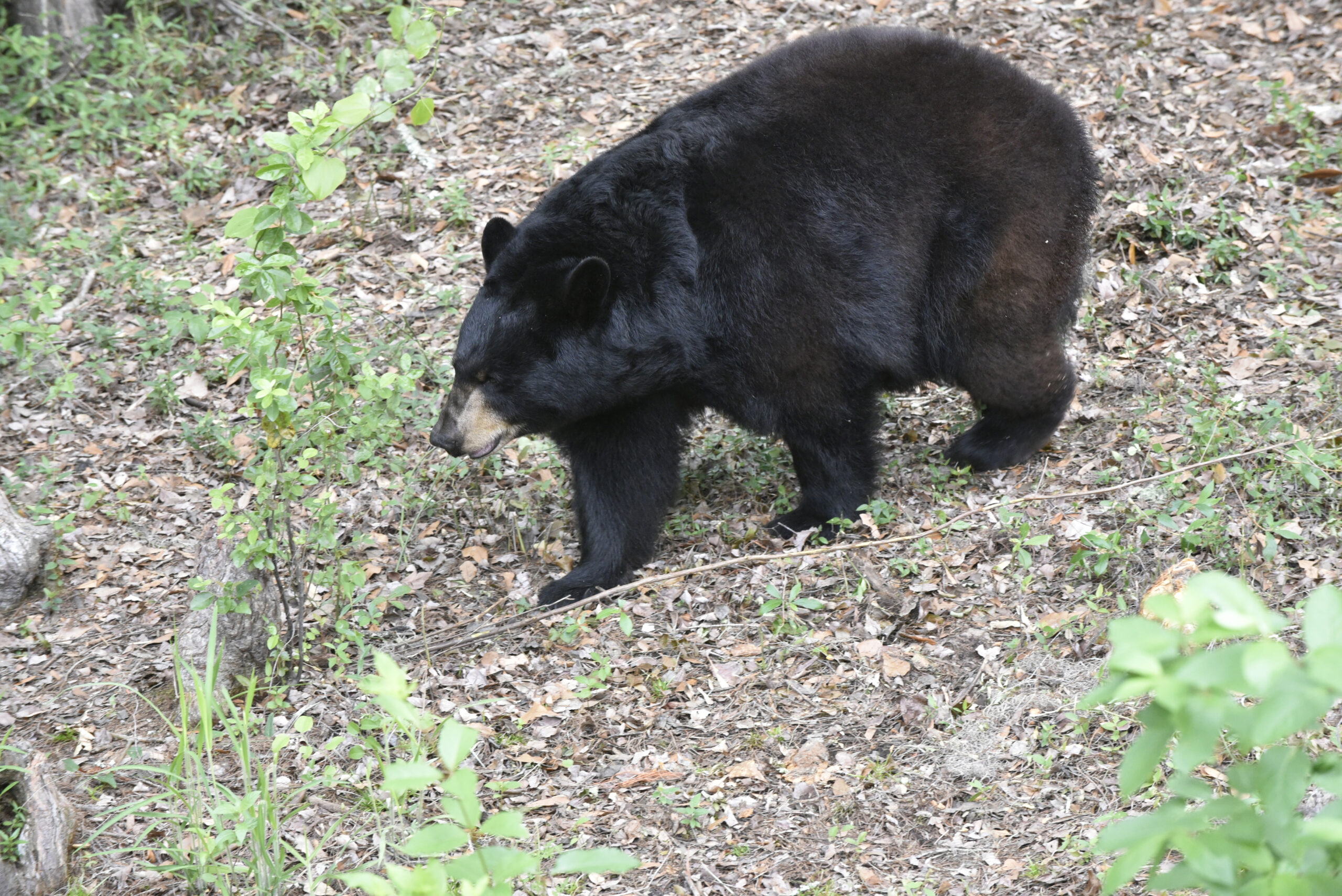
Most people who won permits to participate in the first Florida black bear hunt since 2015 came away empty-handed. Jeff Nemeth wasn’t one of them — he and his son harvested a 503-pound bear on a private plot in the Panhandle last month.

Nemeth, 57, of Inverness estimated he put in 100 hours of research to prepare and spent $4,000 to $5,000 in travel and gear fees. He plans to shell out an additional $5,000 to an Ocala taxidermist for a full-body mount of the 8-foot-3 animal.

“It’s a lifetime hunt,” he said.

Nemeth was one of 52 hunters to kill a Florida black bear out of 172 permits issued during the state’s first hunt in a decade, according to Florida Fish and Wildlife Conservation Commission figures. The controversial hunt — which took place from Dec. 6 to 28 — used a lottery system to grant permits to the limited number of hunters. Each permit holder was allowed to harvest one bear.

The Florida hunt exposed deep emotional divisions among animal rights activists and hunters. In social media forums and in dueling media interviews, the groups fiercely debated the morals and heritage of hunting, the science of bear biology and its ecosystem — arguing even about the Biblical aspects of whether God would approve.

Many animal rights activists entered the lottery to win permits with no plans to use them — only to keep them away from hunters. These activists said data the wildlife commission used to support the hunt, which showed 53% statewide increase in bear populations since 2002, was outdated because it was collected in 2014 to 2015.

For its part, the agency said Florida black bear population counts can’t be taken more frequently than the length of one generation, or 10 years. The Commission said the hunt was intended to slow bear population growth and manage the species’ numbers before they outgrow their habitat.

Florida plans to make the hunt an annual event, although details about next season’s dates have not been released. Hunter success rates and the number of unused permits will be used to evaluate 2025 data and inform future hunts, spokesperson Shannon Knowles said in an email.

“The goal was to put the permits in the hands of those who will use them for hunting,” Knowles said.

The ratio of hunting permits to bears hunted turned out to be similar to other states with similar hunt parameters, the Wildlife Commission said. It has promised a full harvest report to be released in the coming months.

Nemeth, a retiree, said he was impressed with how the Commission managed the hunt. A lifelong hunter, he moved to Florida five years ago from Michigan, where he often went bear hunting — but was never successful.

Nemeth secured a lease to hunt on private land in Eastpoint, southwest of Tallahassee and four hours north of his home. A few large, older bears had been seen on the property, scaring away deer. Nemeth scouted these “nuisance” animals for months, analyzing footage and laying out feed, before traveling with his son to make the kill in early December.

The first two days of the hunt, he said, were rainy and miserable. But the sun emerged on the third day, and he and his son, Rees Nemeth, 27, took their spots at a blind. The camouflaged structure let them observe and shoot undetected. Just before daybreak, they saw a bear come to a nearby corn pile to eat. They waited for a clean shot — and took it.

Nemeth said he plans to enjoy the dark red bear meat in stews and chilis, as well as grilled in teriyaki sauce.

“I’m not a trophy hunter,” he said. “I hunt for meat. My freezer is full of game — my two gators are in there, and I’ve got a couple pigs in there, a turkey, and we eat what we kill. And that’s how it is, you know, I think that’s the right way.”

Chuck Mitchell, 73, of Tallahassee feels differently. After spending $1,000 on lottery tickets, at $5 per entry for 200 chances, he also secured a hunting permit. But he did so to keep a bear from being killed. Each person could buy unlimited entries, although they couldn’t win more than one tag.

Mitchell has lived in Florida for 55 years and remembers the last bear hunt in 2015. No lottery system existed during that hunt; instead, the FWC sold an unlimited number of permits. The season was called off after just two days with 304 bears killed.

Although Mitchell describes himself as a hunter and fisher more than an animal rights activist, he doesn’t support what he described as killing bears for trophies. He kills only animals he can eat, he said, and bear meat can sometimes be unpalatable depending on the bear’s diet and fat content. While growing up in swampy North Carolina, he said, he would sooner kill and eat a raccoon or a possum than a bear.

He lives in Tallahassee adjacent to a nature preserve, where he often sees bears as close as 75 feet from his house. The shy animals never bother anyone, he said.

“You’re shooting something to prove you’re a big hunter,” he said. “Gun down a bear and call themselves a man.”

Not all bear hunters are men. Ashlyn Croff, 33, and her husband both entered the lottery to win a permit. She won; he didn’t. When she called to tell him, he hung up on her.

Croff has been hunting her entire life, heading out solo since she was 22 and “decided I don’t need any man to go with me.”

The Pensacola native hunted every day for 23 days to harvest a bear, occasionally letting her husband accompany her so as not to hurt his feelings. When she finally shot a 142-pound female in Wewahitchka, she was joined only by her 12-year-old son. It was one of the best experiences of her life, she said.

Croff knows the bear hunt had its critics. Like everyone who won a permit, she was offered $2,000 from Bear Warriors United, an Oviedo, Florida-based advocacy group, not to use her tag.

Although she appreciates these activists’ love for animals, she said, hunters love animals, too. Bears frequently attack her feeders and cameras, scaring off other game, like deer. That keeps her from putting sustainably caught food on her family’s table.

“While (activists are) eating their beef at home, a cow was killed for that. While they’re eating their hot dog, a little piggy was killed for that,” she said. “It’s the same exact thing, it’s just not a big, black, fuzzy bear that is so cute on all of the magazines and on TV.”

Activist Janis Ingham, 55, doesn’t eat bear, hamburgers or any other meat. The Casselberry resident has been a vegan for 38 years, a decision she made for ethical reasons. She bought 350 bear tags, winning one, out of concern that Florida’s decade-old bear counts were no longer accurate given recent development in Florida cutting into their habitats.

Ingham lives near the Black Bear Wilderness Area, a popular 7-mile hiking loop where she once spotted a bear herself. She described them as resilient, smart and social — a species to protect, not to hunt.

“This has become an awakening,” she said. “Many people … will pursue various avenues to try to put some guardrails in place so that this type of thing doesn’t have to happen again, where people have to buy lottery tickets to get a permit to try to protect a particular animal.”

Between about 40 and 50 activists won hunting permits. Unlike Mitchell, some didn’t pay the $5 required for an entry into the lottery system. Instead, they gave their names and information to large buyers who bought tickets on their behalf.

Angels in Distress, an anti-hunting nonprofit, partnered with Hurricane Pet Rescue to help people sign up and cover hunting license costs. The nonprofit’s director, Steve Rosen, told the Orlando Sentinel he spent $200,000 of his own money. Rosen declined to comment for this story, writing in all-caps via email, “Stop bothering me. You are only out for yourself, not the bears like most all media hacks.”

Levis Morales, a Broward County resident, heard about the hunt from his boss, who asked if he would be willing to sign up. He gave his information on a website, and a donor bought 300 tickets, the equivalent of $1,500, on his behalf. Morales was surprised to win a permit but proud to save a bear, he said.

Another permit winner, Karen Gray, who lives in Arizona, also gave her information to an animal rights group to buy permits on her behalf. A dog and cat rescue asked her if she would like to obtain a license so it would go unused and less bears would die, she said.

Gray declined to give the name of the rescue for fear of getting them in trouble or publicizing their plans. The rescue bought 350 tickets, costing $1,750, under her name.

“I hope it had some impact and less bears were murdered,” she said.

People from inside and outside Florida bought over 163,000 entries altogether, which would account for $817,000 in application fees alone. Out of the 172 permit winners, six came from outside the state, while the remainder were Florida residents.

The Wildlife Commission called the hunt a success. One hunter received a warning for a minor Wildlife Management Area violation, and no citations were issued, the agency said in a news release after the hunt. No wildlife violations were found.

___

This story was produced by Fresh Take Florida, a news service of the University of Florida College of Journalism and Communications. The reporter can be reached at [email protected]. You can donate to support our students here.


Source link

Continue Reading

Politics

Jennifer Winkler reports more than $105K raised as HD 74 GOP Primary intensifies

Published

on


Republican House District 74 candidate Jennifer Winkler is reporting a sharp uptick in fundraising as the GOP Primary field continues to take shape.

Winkler announced that she has raised nearly $105,000 between her campaign account and her affiliated political committee, Friends of Jennifer Winkler, since entering the race. That total includes roughly $50,000 raised during the fourth quarter of 2025, according to figures released by the campaign.

Winkler’s campaign brought in nearly $26,000 during the final quarter of the year, while her political committee raised just over $24,000. Winkler’s campaign said she has now surpassed the $105,000 mark heading into 2026.

“I am truly humbled by the incredible support and financial backing from so many friends and neighbors across our community,” Winkler said in a statement.

“Together, we have a clear mandate to keep Florida’s economy charging ahead while working to keep housing and insurance costs down for our residents. This campaign is all about connecting with every corner of our community and earning the trust of those looking for an effective representative in Tallahassee, and we are just getting started!”

Winkler is seeking the Republican nomination for HD 74. The seat will be open in 2026 due to incumbent James Buchanan facing term limits. Buchanan has filed to run for Senate District 22 that will be vacated by Sen. Joe Gruters, who is term-limited himself and recently took up the mantle as Chair of the Republican National Committee.

Winkler joins a crowded GOP Primary field that includes Kelly Ann Walker, Nick Pachota, Chris Felder and Les Nichols. Walker recently reported more than $250,000 cash on hand between her campaign and committee. Pachota has raised $89,035 as of September, while Felder has raised $3,883 and added $1,300 in loans. Nichols has raised $6,937 and taken $4,250 in loans as of December. That’s all according to their most recent reports or news releases.

Buchanan has already endorsed Pachota in the race.

The district spans communities across Sarasota County, including Sarasota, North Port and Venice. Republicans make up roughly half of registered voters in the district, with Democrats accounting for about 23% and the remainder registered as unaffiliated or with minor parties.

Winkler owns and operates The Peeples Insurance Agency, an independent insurance business she founded in 2014. Her campaign has emphasized small-business experience, workforce development, housing affordability and health care costs. She has lived in Sarasota County since 2010, is a graduate of the University of Central Florida, and “is the proud mom of two sons, Logan and Luke.”

The winner of the Republican Primary will advance to the General Election, where Democrat Nancy M. H. Simpson has filed, though additional candidates could still enter the race.


Source link

Continue Reading

Politics

Florida lands $209 million to strengthen rural hospitals statewide

Published

on


Florida’s rural hospitals are set to receive a major boost following the federal government’s announcement last week that the state will receive a $209 million award through the Rural Health Transformation Program (RHTP) for fiscal year 2026.

The Florida Hospital Association (FHA) applauded the award earlier this week, calling it the largest single federal investment in rural health care in the state’s history. The program is designed to improve access to care, modernize technology, strengthen the health care workforce, and drive innovation across Florida’s rural communities.

“Florida’s rural hospitals are lifelines in their communities, providing access to care for the families who live in rural areas,” said Mary C. Mayhew, president and CEO of the Florida Hospital Association. “This critical funding not only sustains these essential lifelines but strengthens them. By building a stronger workforce, implementing modern technologies and establishing collaborative partnerships across rural care providers, we can better meet the needs of every community from the Panhandle to the Glades.”

Florida is a major beneficiary of the nationwide effort to improve rural health care delivery. The RHTP will distribute a total of $50 billion nationally — $10 billion annually from 2026 through 2030 — to states approved for participation, according to the Centers for Medicare and Medicaid Services. Florida’s $209 million award represents the first tranche of funding under the five-year grant program.

The RHTP was established under the One Big Beautiful Bill, which was signed into law on July 4, 2025. FHA cited its collaboration with a broad group of stakeholders to produce more than 60 pages of data analysis and recommendations for the Florida Agency for Health Care Administration (AHCA) to consider as part of its application for federal funds.

AHCA is expected to seek legislative approval to expend the awarded funds. Once approved, the agency will issue a Request for Application, allowing regional collaboratives across the state to submit grant proposals in the coming months.

Florida’s rural hospitals continue to face significant challenges, including rising costs and low occupancy rates. Ensuring their long-term viability and preserving timely access to care for rural residents remain top priorities for FHA. Over the past 20 years, five rural hospitals in Florida have closed, and three others have transitioned to emergency- or urgent-care-only facilities.

“Floridians deserve timely access to quality care, no matter where they live,” Mayhew said. “The Rural Health Transformation Program provides a comprehensive framework and an influx of resources to ensure rural residents are not left behind as Florida’s health care system evolves.”


Source link

Continue Reading

Politics

Federal cuts put Florida’s home health care at risk

Published

on


Care at home helps people heal, manage chronic illness, and age with dignity in the place they feel safest. For more than 385,000 Floridians each year, home health care is not a luxury — it is essential. Skilled nurses, therapists, social workers, and aides help patients remain stable and independent in their homes, often preventing unnecessary hospitalizations.

The Centers for Medicare & Medicaid Services recently finalized changes to the Home Health Prospective Payment System for 2026. While CMS made adjustments in response to concerns from the home health community, the final rule still includes a 1.3% overall reduction in payments, totaling roughly $220 million less in federal funding nationwide. Even modest cuts threaten access to care, particularly for not-for-profit providers that reinvest every dollar into patient services.

These reductions arrive at a time when Floridians need more support, not less. Florida is home to 4.9 million residents age 65 and older — nearly 22% of the population — one of the highest proportions in the nation. That number continues to grow. Home health care allows older adults to remain independent, avoid preventable hospitalizations, and receive consistent care from professionals who understand their needs.

At Empath Health, the impact of at-home care is evident every day. Teams support individuals and families across the region through a coordinated approach to care. Each year, more than 80,000 Floridians are served through Empath Health’s Full Life Care model, which includes home health, palliative care, hospice, and Programs of All-Inclusive Care for the Elderly (PACE). This integrated approach ensures continuity while addressing physical, emotional, and social needs with compassion.

Care at home is not only preferred by patients; it is also a smart investment. Home-based care reduces hospital readmissions, lowers overall health care costs, and improves outcomes. Yet despite these benefits, Medicare home health has faced repeated payment reductions year after year. The cumulative impact has strained providers, contributed to agency closures in some communities, and increased pressure on hospitals and emergency departments.

When reimbursement fails to reflect the true cost of care, families feel the consequences directly: fewer home visits, longer wait times, and limited service availability. For patients recovering from surgery or managing conditions such as heart failure or COPD, delays in care can lead to avoidable complications or hospitalizations.

As a mission-driven, not-for-profit organization and a proud member of the National Alliance for Care at Home, Empath Health stands with providers nationwide who believe high-quality care should never be compromised. Protecting access to home-based care means protecting dignity, independence, and quality of life.

Floridians deserve to understand how federal payment decisions affect care in their own communities. Home health care is a cornerstone of Florida’s health care system, and its importance will only grow as the population ages. Sustaining access will require deliberate action from policymakers to ensure the long-term stability of this essential benefit.

Empath Health remains committed to standing beside families and advocating for the care they rely on. Home health care has long helped Florida families stay strong. Protecting access protects peace of mind, stability, and dignity for those who need it most.

___

Tarrah Lowry is COO of Empath Health.


Source link

Continue Reading

Trending

Copyright © Miami Select.