Connect with us

Politics

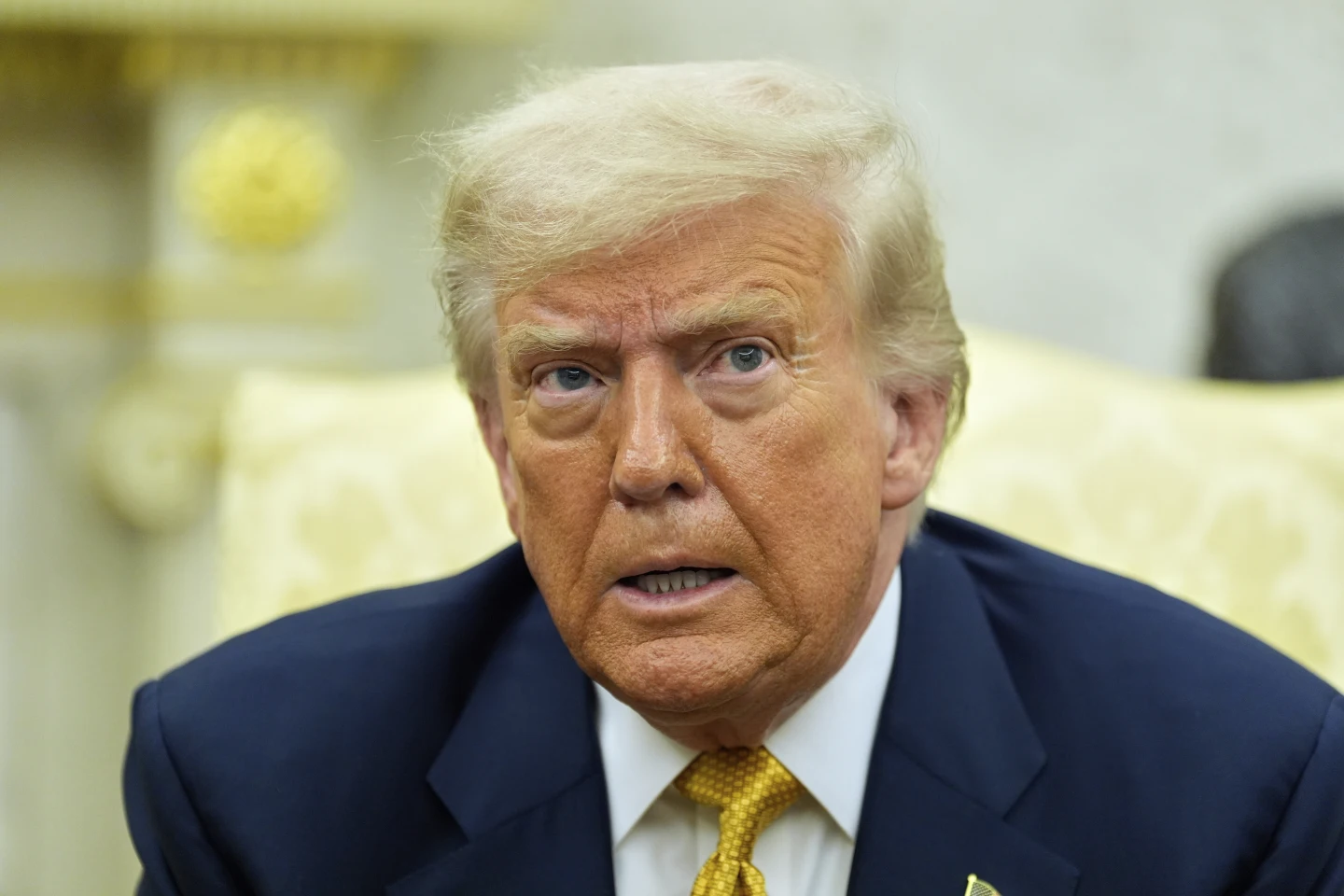
Federal judge tosses Donald Trump’s $15B defamation lawsuit against New York Times
Published

on


‘A complaint is not a megaphone for public relations or a podium for a passionate oration at a political rally.’

A Florida federal judge on Friday tossed out a 15 billion defamation lawsuit filed by President Donald Trump against The New York Times.

U.S. District Judge Steven Merryday ruled that Trump’s lawsuit was overly long and was full of “tedious and burdensome” language that had no bearing on the legal case.

“A complaint is not a megaphone for public relations or a podium for a passionate oration at a political rally,” Merryday wrote in a four-page order. “This action will begin, will continue, and will end in accord with the rules of procedure and in a professional and dignified manner.”

The Judge ruled that Trump has 28 days to file an amended complaint that should not exceed 40 pages in length.

The lawsuit named a book and an article written by Times reporters Russ Buettner and Susanne Craig that focuses on Trump’s finances and his pre-presidency starring role in television’s “The Apprentice.”

Trump said in the lawsuit that they “maliciously peddled the fact-free narrative” that television producer Mark Burnett turned Trump into a celebrity — “even though at and prior to the time of publications defendants knew that President Trump was already a mega-celebrity and an enormous success in business.”

The lawsuit also attacked claims the reporters made about Trump’s early business dealings and his father, Fred.

Trump also cited an article by Peter Baker last Oct. 20 headlined “For Trump, a Lifetime of Scandals Heads Toward a Moment of Judgment.”

___

Republished with permission of The Associated Press.


Post Views: 0


Source link

Continue Reading

Politics

Florida State Parks Foundation scores record financial impact for state facilities

Published

on


It was a very good year for the Florida State Parks Foundation, as the organization hit yet another record in terms of annual financial impact.

The nonprofit is dedicated to championing and promoting the Florida State Parks system for everyone to use. This year, the Foundation managed to engineer $2.187 million in total funding impact, which accounts for money from both external and internal sources that’s allocated to projects across the state.

External sources include grants, community partners and sponsorships, and grassroots donors. That makes up the majority of the group’s financial impact. Internal funding comes from the Foundation’s own annual budget allocation and typically goes toward recurring programs, such as Park Impact Grants, or for grant match requirements.

The organization has broken its funding record for four straight years now, bringing the total financial impact to more than $8 million since 2022.

Foundation Board President Matt Caldwell said the funding has been well spent on preservation, protection and sustainability for Florida’s parks across the state.

“It is an honor and privilege to serve our state parks, and we are proud to have made a major impact throughout the last 12 months,” Caldwell said. “It’s incredibly rewarding to look back and see the sheer volume and variety of projects, initiatives, campaigns and events that the Foundation has supported in 2025.”

The Foundation was established in 1993 and was initially named the Friends of Florida State Parks until 2018, when it was revised to its current moniker. The organization is dedicated to improving and promoting the 175 state parks in Florida and coordinates with an estimated 20,000 park volunteers.

There were some major triumphs for the Foundation this year. Among those was the involvement of the full-scale reconstruction of Fort Mose at the state park of the same name in St. Augustine. The Delores Barr Weaver Legacy Funds contributed $250,000 to state parks through the Foundation for developing habitat for manatees at Ellie Schiller Homosassa Springs Wildlife State Park. And the Foundation provided a fleet of new e-bikes for use by park rangers as part of a statewide partnership among other accomplishments.

“Our state parks are the best in the nation, and they raise the bar each and every year,” said Julia Gill Woodward, CEO of the Florida State Parks Foundation. “We are proud to work alongside them every single day, and we are already looking ahead to what will surely be an amazing year in 2026.”


Source link

Continue Reading

Politics

St. Pete LGBTQ+ Liaison Nathan Bruemmer on visibility, trust and community

Published

on


Nathan Bruemmer describes his first weeks as the LGBTQ+ Liaison for the City of St. Petersburg as “a baptism by fire.” 

St. Pete Mayor Ken Welch appointed Bruemmer to the role on Dec. 1. He said the work is ultimately about trust, visibility and meeting people where they are during a period of rapid political and legal change.

A Tampa Bay native and longtime St. Pete resident, Bruemmer told Florida Politics he’s focused on ensuring residents know there are “trusted folks locally,” particularly as LGBTQ+ residents across Florida navigate shifting laws and a contemptuous political climate. He framed the work as intensely local, emphasizing that for many people, city government is the most immediate and accessible level of public service.

Bruemmer said he’s still familiarizing himself with city operations just two weeks into the role. Still, he expects the role to involve significant public-facing outreach, education and partnership-building across departments and with community organizations. 

He pointed to arts and culture initiatives, housing affordability and homelessness as areas where St. Petersburg can continue reinforcing a sense of belonging, while also acknowledging the limits imposed by feasibility, funding and evolving state laws.

“For me, being from this area, this is my home. I think that feeling of safety and comfort and belonging, it really is the most important function of what we do as public servants,” Bruemmer said during a conversation with Florida Politics.

Florida Politics: Tell us about your background.

Bruemmer: I grew up in the Tampa Bay area. Born and raised in Tampa, but I have now, as an adult, spent more time in St. Pete. I’m a University of South Florida alum, a Stetson law alum, so I’m a local through and through. Former educator, I now teach at the collegiate level at the law school, I’m an attorney, and I’ve been a community advocate for a long, long time. So this opportunity I think is a natural transition for the work that I’ve done in the community, and I’m happy and proud to keep doing it just on behalf of the City of St. Petersburg.

FP: What are your goals for the LGBTQ+ Liaison role?

Bruemmer: I think a big part of it absolutely is visibility, is the community’s awareness that the City of St. Petersburg is taking care of its own. We’ve got a changing dynamic, both legally and politically, and at the heart of these things are our people whose lives are impacted every day. We’ve got a number of changing factors that we’ve got to be on the lookout for, and some of the best work happens locally, and that’s what the city has done and will continue to do. I’m just starting, so it’s a bit of a baptism by fire.

Our city is quite large, and there are a lot of programs that I’m still getting to know, but we’ve got a lot of public-facing community outreach work that we do. There’s a lot of education that needs to continue, partnerships that need to continue. 

Frankly, I think one of the biggest pieces for me is making sure folks know that there are trusted folks locally taking care of their needs. We can’t ignore that the political realities are shifting. We’re getting ready for another Legislative Session, and there are families in Florida living in fear as the laws have changed and confusion has continued to evolve. But we’ve got to stay rooted in those day-to-day needs to provide that security and take care of the community.

FP: Are there additional arts or cultural efforts in the works in response to Florida’s removal of LGBTQ+ street art at the behest of Gov. Ron DeSantis?

Bruemmer: We’ve been discussing a number of things. The Mayor had a great survey that was open with a number of responses, and then we’ve got community members engaging on social media with new ideas.

We’re going to continue researching what’s possible and the timing, but as of right now, I don’t have something specific that I can tell you about. But boy, are there some great ideas in the hopper. I think really it’s about feasibility, the economics and ensuring we’re keeping up to date on any changing laws we might see come forward in Session this year.

FP: As you’ve gotten to know the work of your predecessors, what stands out?

Bruemmer: I’ve known Jim Nixon and Eric Vaughn through their tenure. I worked with Jim Nixon when I was in leadership with St. Pete Pride. And so we created over many years a lot of really amazing, I think beautiful, private and public partnerships that showed the best of the city of St. Pete.

I don’t know when St. Pete Pride first began its roots, in resistance when the city of Tampa canceled Pride many, many years ago, how big and how impactful it would be as one of the largest LGBTQ celebrations in the Southeast. Nor that the economic impact would grow into the tens of millions of dollars. And that doesn’t include the folks who have moved here, opened small businesses and raised families. We don’t ever get to measure that, but that number is well beyond what we see in the economic impact studies.

FP: Is there anything new you want to bring to the table?

Bruemmer: I think we’re seeing a lot in the arts and culture space. You covered the bike racks; the community response. I think that positivity and hope, continuing to show that the sunshine does in fact shine here more brightly than anywhere else in the state, we’ve got to continue that. So a lot of arts and culture work.

But near and dear to my heart is work in education, housing and affordability issues. I worked in homeless advocacy for a number of years. In January, we’ve got our point-in-time count again. Every aspect of city services is going to be important to this, and having someone able to focus on that lens and translate and maybe find new opportunities.

FP: Why is this role important right now?

Bruemmer: We have seen the face of our government look more like the communities we serve over the decades. We’re still working toward the aspirational goal that our representation truly reflects the full tapestry of our community. In the meantime, we have found ways to encourage folks to trust the government and collaborate with the government to receive the services they are entitled to receive, and feel good about living where they live. To be happy with the place where you work and you live, and you play, and you raise your family, and you get to live out your version of the American Dream.

FP: What does the embrace from the City of St. Petersburg or the LGBTQ+ community signal to residents?

Bruemmer: I think it’s a sign of the times, and it’s awareness that I appreciate. I appreciate the leadership and the trust of the Mayor and our senior leadership. LGBTQ+ Floridians live all across our state; we have one of the largest LGBTQ+ populations in the country, based on research out of the Williams Institute, and I think it behooves us as public servants to be aware of the needs of our community members. 

FP: How would you describe St. Pete’s LGBTQ+ community?

Bruemmer: St. Pete’s really special. Having been in community work for a while and having been a part of a lot of community-based events, the number of folks who have moved here because of public-facing events like St. Pete Pride, or like Winter Pride, or like the Grand Prix or any of our oodles of art festivals. People get into the vibe, they enjoy the food, they hear the music downtown, and they just want to be here… It’s a gift, and it really makes this city really special. When I think about the size of some of our Pride celebrations used to be 20 years ago versus what they’ve grown to, how it just was a breath of fresh air coming out of COVID to relaunch and see those celebrations.

FP: Have you started meeting with community groups?

Bruemmer: We’ve got our large Pride celebrations starting after the new year. I’ve got meetings with the LGBT Chamber and other partner organizations. I’ve been in the community, and I will continue to do that, just wearing a different hat for the city. 

There are a lot of good things happening. Some of those things we will take the lead on, and other things we’ll be supporting. There’s great work coming into the city. I’m excited.

FP: How did you come to step into this role?

Bruemmer: I’ve worked in a variety of roles with the city for over a decade, with this administration and the prior administration. So I have done this work and been excited about my home for a long time, maybe unofficially assisting. I can’t even remember where the spark was, it is a political appointment, it is an appointment from the Mayor. But I think we were just talking about the changing dynamic. 

I really am at a moment for myself, personally and professionally. I have heard from so many constituents, I’ve been doing a tremendous amount of pro-bono work, and there are so many questions that folks are asking to clarify what these things mean and how we go about just getting our basic needs met, that it just became a natural progression. It was just really a matter of timing. It is a continuation of the work that folks who know me know that I will continue to do.

FP: What would you like the community to know?

Bruemmer: My work is about the community. I’m a resource. If folks have questions, my contact information’s on the website. I want folks to reach out. I’ve already received questions about different kinds of services we have here in the city, and whether it’s us helping directly or my providing a referral out to a nonprofit or partner agency, we’re here to help. Be on the lookout, there are a lot more good things coming. It is a lot more than a slogan; the idea that “we are St. Pete” is completely true. The warmest of welcomes the last two weeks, it’s just been amazing, and I’m grateful.


Source link

Continue Reading

Politics

Figgers Foundation to provide internet, cell service to people in 18 Florida counties

Published

on


The Figgers Foundation, a nonprofit that works to ensure quality education through effective technology and health access, is launching a new initiative providing free devices, three years of internet service and 4G LTE cell service to eligible Floridians in 18 counties.

Its new Florida Connect program is available to Floridians in the targeted counties who meet certain income requirements and who are enrolled in an eligible public assistance program. Recipients must be a student, job seeker, senior citizen or member of a low-income household to qualify. They must also demonstrate need for affordable internet access and devices and provide proof of residency.

The program is available in Bradford, DeSoto, Dixie, Gadsden, Gilchrist, Glades, Hamilton, Hardee, Hendry, Highlands, Jefferson, Lafayette, Levy, Madison, Okeechobee, Putnam, Taylor and Union counties.

The program provides a modern, 5G device that includes front and rear cameras for video calls and with capabilities for large and easy-to-read displays. There are no activation fees, credit checks or hidden charges for participants, and tech support is available. After 36 months, participants are asked to return devices so other families may benefit from the program.

“Christmas is a time for helping our neighbors, and that’s why I’m excited for our Foundation to be part of the Florida Connect program. This is a cost-free program for eligible Floridians, and I hope we have many families checking our website to see if they are eligible today,” Figgers Foundation founder Freddie Figgers said.

“If these devices help one child with school or help one parent find a job, then this program is hitting the target. Our mission is to support those families most in need — especially during the holidays.”

The Florida Connect devices are limited and available on a first-come, first-served basis. The 18 qualifying counties are located in underserved communities in the Tallahassee, Gainesville, Jacksonville, Tampa, Southwest Florida and Palm Beach areas.

Interested individuals can apply online, by filling out a form, adding a photo and validating residency. Eligible participants can then pick a device based on need, which will then be made available for pick up at a local site or delivered to the participant’s door.

The program aims to assist kids to stay in school or learn online and to help adults search jobs, build a résumé and connect with employers. Participants can also get help to stay healthy by accessing telehealth appointments.


Source link

Continue Reading

Trending

Copyright © Miami Select.