Connect with us

Business

Federal investigation underway after Nevada’s safety regulator dropped violations against Boring Co.

Published

on


Hello, Term Sheeters. It’s Jessica Mathews, filling in for Allie this morning and giving you a little update on the latest happenings in Las Vegas.

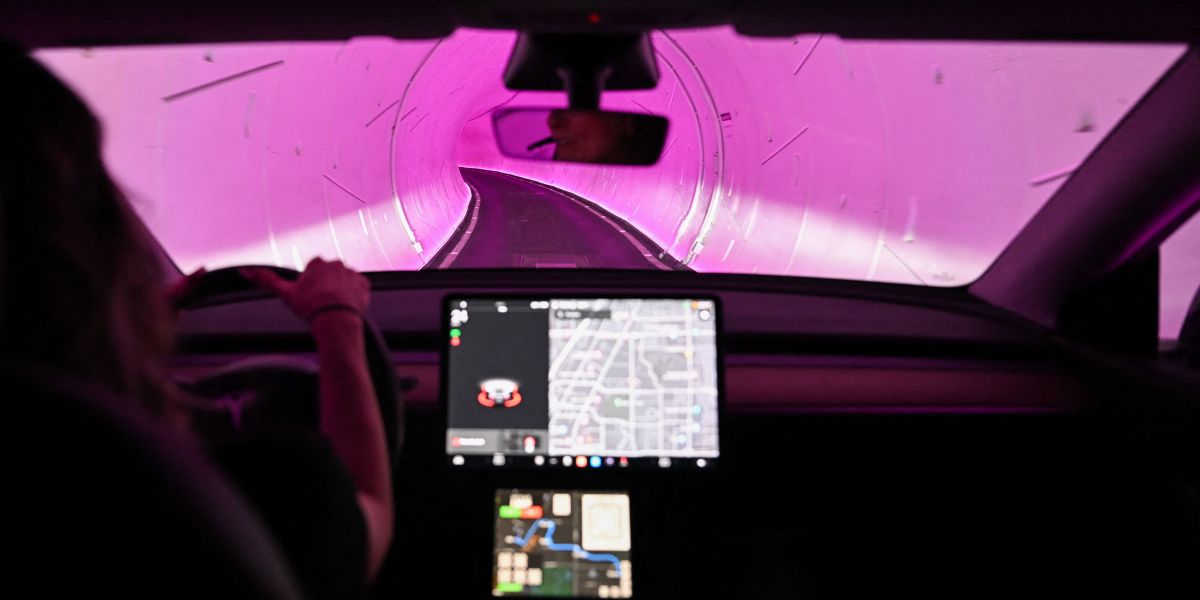
A few weeks ago, I filled you in on our latest reporting on Elon Musk’s $5.6 billion tunneling startup, the Boring Company. You may recall that Nevada’s state safety regulator had issued three “willful” citations against Boring Company, after a training drill during which two firefighters suffered burns at a Boring site. The citations prompted Boring Co. President Steve Davis to call up a former Tesla policy guy who now works in Nevada Governor Joe Lombardo’s office. Within 24 hours of that phone call, Boring executives had set up a meeting with senior regulators in the state, and the citations had been withdrawn. 

The withdrawal of the citations (which Nevada OSHA maintains was due to the violations not meeting legal requirements) was never documented in OSHA’s case file, and a public record that had referenced the meeting was altered. (State officials and regulators say that no supervisor ever gave direction to delete the record of the meeting.) 

A few weeks after all that transpired, Boring Company was caught illegally dumping wastewater into manholes around Las Vegas. One Boring manager was specifically called out in documents, as he apparently “feigned compliance” with county inspectors, only to start dumping the waste again as soon as he thought inspectors had left the site.

Both of these stories have caused somewhat of an uproar in Las Vegas. Residents have been asking their representatives about it at town halls and meetings. And Nevada Congresswoman Dina Titus sent a demand letter to Governor Lombardo, urging him to hold Elon Musk’s tunneling company accountable, make the company’s meetings with Nevada OSHA public, and answer a series of questions about how the investigation was handled. 

Now, as I reported this week, federal OSHA has opened an investigation into Nevada’s state OSHA plan. Federal OSHA received what’s called a “CASPA” complaint, a Complaint About State Plan Administration, after our story, and the agency decided it warranted a federal review. 

These investigations are a big deal and are meant to evaluate whether a state plan is at least as effective as federal OSHA—a requirement under U.S. law. The last time Nevada OSHA received this level of federal (and public) scrutiny was in 2008, when the Las Vegas Sun reported on the high death rate among construction workers at the Las Vegas Strip amid lax enforcement of regulations at Nevada OSHA. Federal regulators launched a “special study” into Nevada OSHA the following year, which found “a number of serious concerns” in the program and led to corrections in oversight and changes to its program.

We’ll be closely tracking the findings of this investigation once federal OSHA finishes its review.

Until then, thanks for following along. 

Jessica Mathews
X:
@jessicakmathews
Email: jessica.mathews@fortune.com

Submit a deal for the Term Sheet newsletter here.

Joey Abrams curated the deals section of today’s newsletter. Subscribe here.

VENTURE DEALS

Radiant, an El Segundo, Calif.-based developer of a portable nuclear microreactor designed to replace diesel generators, raised $300 million in Series D funding. Draper Associates and Boost VC led the round and were joined by others.

Ben, a London, U.K.-based employee benefits platform, raised $27.5 million in funding. Mercia Ventures led the round and was joined by existing investors Atomico, Cherry Ventures, DN Capital, and others.

Ankar, a London, U.K.-based AI-powered operating system for patents, raised $20 million in Series A funding. Atomico led the round and was joined by Index Ventures, Norrsken and Daphni.

HEN Technologies, a Hayward, Calif.-based developer of intelligent fire defense technology, raised $20 million in Series A funding. O’Neil Strategic Capital led the round and was joined by NSFO, Tanas Capital, and Z21 Ventures.

Arcads.ai, a San Francisco-based AI-powered platform designed for generating marketing videos, raised $16 million in seed funding. Eurazeo led the round and was joined by Alpha Intelligence Capital and others.

Clarity Pediatrics, a San Francisco-based telehealth platform for pediatric chronic care, raised $14.5 million in Series A funding. Jackson Square Ventures led the round and was joined by City Light Capital, MassMutual Catalyst Fund II, GingerBread Capital, and others.

Wearlinq, a San Francisco-based developer of a wireless cardiac monitor, raised $14 million in Series A funding. AIX Ventures led the round and was joined by SpringTide, Berkeley Catalyst Fund, Lightscape Partners, Amino Capital, and others.

Roamless, a San Francisco-based global mobile network operator, raised $12 million in Series A funding from Shorooq, Revo Capital, Finberg, and JIMCO.

AIR, a New York City-based AI-powered credit intelligence platform, raised $6.1 million in seed funding. Work-Bench Ventures and Lerer Hippeau led the round.

PRIVATE EQUITY

GI Partners agreed to acquire Netwatch, a Lake Forest, Calif.-based provider of AI-powered security services. Financial terms were not disclosed. 

Initial Group, backed by TPG, acquired Silver Tribe Media, a Los Angeles, Calif. and New York City-based platform for building YouTube and podcast businesses. Financial terms were not disclosed.

ProSites, backed by Rockbridge Growth Equity, acquired GeniusVets, a San Diego, Calif.-based veterinary marketing and engagement company. Financial terms were not disclosed.

StayTerra, backed by Garnett Station Partners and Bessemer Venture Partners, acquired a majority stake in Cape & Coast Premier Properties, a Cape San Blas, Fla.-based luxury vacation rental management company. Financial terms were not disclosed.

TA Associates acquired a majority stake in PairSoft, a Miami, Fla.-based provider of procure-to-pay automation and payment solutions. Financial terms were not disclosed.

Wateralia, backed by Ambienta, acquired Aquatec, a Victoria, Australia-based water and wastewater management company. Financial terms were not disclosed.

EXITS

IFS agreed to acquire Softeon, a Reston, Va.-based warehouse management software company, from Warburg Pincus. Financial terms were not disclosed.

TJC acquired Lindsay Precast, a Gainesville, Fla.-based manufacturer of prefabricated concrete and steel products, from MiddleGround Capital. Financial terms were not disclosed.

IPOS

Andersen Group, a San Francisco-based tax and financial advisory firm, raised $176 million in an offering of 11 million shares priced at $16 on the New York Stock Exchange.

FUNDS + FUNDS OF FUNDS

Highland Rim Capital, a Nashville, Tenn.-based private equity firm, raised $208 million for its debut fund focused on manufacturing, distribution, and business service companies. 

PEOPLE

Autotech Ventures, a Menlo Park, Calif.-based venture capital firm, hired Mike Abbott as a venture partner. Formerly, he was with General Motors. The firm also promoted David Le to operating partner.

General Atlantic, a New York City-based private equity firm, promoted Cornelia Gomez, Hilary Lindemann, Ryan McGrath, Ben Newman, Sudeep Poddar, and Varun Talukdar.


Source link

Continue Reading

Business

Rivian CEO says midprice EV sales are still 50% Tesla: ‘That’s not a reflection of a healthy market’

Published

on


It’s not that Americans don’t want electric vehicles, according to the chief executive of American EV-maker Rivian. It’s just that they don’t have many good options.

At the Fortune Brainstorm AI conference in San Francisco earlier this month, Rivian CEO RJ Scaringe pointed to the scant choices consumers have in picking a midprice EV, noting that Tesla has continued to dominate sales, making up about 50% of the market share, with few other competitors making an impression.

“That’s not a reflection of a healthy market with lots of choice,” Scaringe said. “If you think of it as a consumer, you have 300 different internal combustion engine choices at that price or lower, and you have maybe one highly compelling EV choice.”

EV demand in the U.S. has continued to lag behind other parts of the world, making up just about 5% of new car sales, according to November data from Edmunds. In China, meanwhile, EVs make up more than 50% of the auto market share, China Association of Automobile Manufacturers data shows. Battery-electric cars make up about 16% of the EU market share, per the European Automobile Manufacturers’ Association.

U.S. automakers are feeling the squeeze from middling demand, with Ford pivoting away from heavy EV investment, citing lackluster American interest. It announced this week it would take a $19.5 billion charge and refocus on gas- and hybrid-powered vehicles, discontinuing some larger EV models.

Sparking American’s EV curiosity

Scaringe hopes his automaker’s own focus on more affordable EVs can rev up demand in the sector. Rivian’s R1, a seven-seat premium SUV, starts at about $70,000 and can run up to about $120,000. The R2, expected to launch in the first half of next year, will have a $45,000 price tag.

“We see, with R2, an opportunity to really bring a whole host of new customers that haven’t had a choice that’s electric that really appealed to them yet,” Scaringe said.

Price appears to be at the forefront of the CEO’s mind. While automakers like Ford said the end of the $7,500 EV tax credit tempered demand for new cars, Scaringe reportedly took a different perspective. In a memo to employees, reported by the Wall Street Journal, Scaringe said the end of the incentive puts pressure on EV companies, including Rivian, to lower prices.

But increased competition has not always been greeted so fondly. Canada imposed a 100% tariff on Chinese EVs in 2024, hoping to protect the burgeoning domestic market of electric cars.  Scaringe, however, sees room for his rivals in the U.S.

“I really think the constraint isn’t the demand side. I think it’s the supply side,” Scaringe said. “I do think that the existence of choice will help drive more penetration, and it actually creates a unique opportunity in the United States.” 

This story was originally featured on Fortune.com


Source link

Continue Reading

Business

Stocks: ‘Big Short’ investor Michael Burry piles misery onto tech stocks

Published

on


The S&P 500 closed down 1.16% yesterday, marking four straight losing sessions for the index, which is now off 2.6%% from the all-time high it hit on Dec. 11. The decline was led, as usual, by technology stocks. Oracle was down 5.4% and its AI data center rival CoreWeave lost more than 7%.

Two things pummeled the tech sector:

First, “Big Short” investor Michael Burry published a chart from Wells Fargo on X showing that stocks now composed a greater portion of U.S. household wealth than real estate. That has happened only twice before in history, once in the 1960s and then again immediately before the dot com crash of 2000. “The last two times the ensuing bear market lasted years,” Burry said.

“Reasons for this are many but certainly include the gamification of stock trading, the nation’s gambling problem due to its own gamification, and a new ‘AI’ paradigm backed by trillions [of dollars] of ongoing planned capital investment backed by our richest companies and the political establishment. What could go wrong?” Burry argued.

Of course, Burry has a conflict of interest in the form of a $1.1 billion short bet against AI stocks Palantir and Nvidia. So take his doom-mongering with a pinch of salt.

Second, Oracle failed to close a deal for $10 billion in debt-based funding from Blue Owl Capital for a new AI data center in Michigan, according to the Financial Times. The company admitted it would not partner with Blue Owl but told the FT it was pressing ahead with the plan on schedule.

Wall Street is increasingly unimpressed with Oracle’s debt. “With over $100 billion in outstanding debt, investors continue to grow more concerned about the company’s borrowing to fund its AI ambitions,” Bespoke Investment Group told clients in an email this morning. 

Jim Reid and his colleagues at Deutsche Bank noted that the spread on Oracle’s credit default swaps—the yield premium that investors demand for the risk of buying them—which was already notably wider than comparable companies, got even wider.

“That FT report … heightened concerns around a potential AI bubble, and meant that Oracle’s five-year credit default swaps climbed to 156 basis points, their highest since the GFC [Great Financial Crisis],” they said. “So tech stocks led yesterday’s declines, with the [Magnificent Seven tech stocks] (-2.12%) having its worst day in over a month, led by a -3.81% slump for Nvidia.”

The net new supply of AI-related debt from all tech companies doubled this year to $200 billion, according to research by Goldman Sachs, and now accounts for 30% of all corporate debt issuance.

KKR published its 2026 “outlook” yesterday and it was notably sceptical about AI data center construction. In a section titled “Speculative Data Center Projects with Uncompetitive Cost Structures,” the private equity company wrote: “We see some excess exuberance in data centers … estimates point to almost $7 trillion in global data center infrastructure capital expenditures by 2030, an amount roughly equal to the combined GDP of Japan and Germany. As always, unit economics are key. Developers who focus on return on invested capital after power, capital and maintenance capex costs will do well, while those who focus on theoretical total addressable markets and lose sight of unit economics are likely to suffer.”

Economist Ed Yardeni told clients that “The Mag-7 may be undergoing a correction.”

“In recent weeks, investors have started to fret that the spending is depleting the Mag-7s’ cash flows and slowing profits growth. Before AI, the Mag-7 had lots of cash flow because their spending on labor and capital was relatively low. That changed once AI forced them to spend much more on both,” he said.

“We aren’t ruling out a Santa Claus rally over the remainder of the year. However, that is unlikely to happen if the S&P 500 continues to rotate away from the Magnificent-7 toward the Impressive-493, as we expect.”

The “the Impressive-493” is a reference to all the other stocks in the S&P 500 outside the Magnificent Seven which have done pretty well this year.

Here’s a snapshot of the markets ahead of the opening bell in New York this morning:

  • S&P 500 futures were up 0.39%  this morning. The last session closed down 1.16%. 
  • STOXX Europe 600 was up 0.21% in early trading. 
  • The U.K.’s FTSE 100 was up 0.29% in early trading. 
  • Japan’s Nikkei 225 was down 1.03%. 
  • China’s CSI 300 was down 0.59%. 
  • The South Korea KOSPI was down 1.53%. 
  • India’s NIFTY 50 was flat. 
  • Bitcoin was at $87K.
Join us at the Fortune Workplace Innovation Summit May 19–20, 2026, in Atlanta. The next era of workplace innovation is here—and the old playbook is being rewritten. At this exclusive, high-energy event, the world’s most innovative leaders will convene to explore how AI, humanity, and strategy converge to redefine, again, the future of work. Register now.


Source link

Continue Reading

Business

Intuit CEO says Gen Z is staving off recession by putting it on plastic: ‘Credit card balances are up 36-37%, but they still have jobs’

Published

on


A runaway affordability crisis is pushing Gen Z consumers to rack up their credit card balances to an all-time high.

As Intuit CEO, Sasan Goodarzi has a wealth of data at his disposal to piece together an outlook for America’s economy. The global financial technology company owns personal finance brands including TurboTax, QuickBooks, and Credit Karma. Goodarzi says while the job market is “still strong” Gen Z is still struggling with credit-card debt.

“Credit scores are lower than they’ve ever been, particularly with Gen Z,” Goodarzi told Editorial Director Andrew Nusca at Fortune Brainstorm AI last week. Credit balances across the board are also the highest they’ve been, Goodarzi added, but Gen Z are disproportionately hurting in this category, too.

“[Gen Z] credit card balances are up 36-37%,” Goodarzi added. But there’s one silver lining: “They still have jobs,” Goodarzi said. “And that’s what’s really keeping things together.”

When looking at median pay adjusted for inflation, Gen Z is faring better than previous generations at their age, according to a Pew Research Center report in 2024. But their purchasing power is lower than previous young generations as inflation continues to eat away at their paychecks. 

Despite inflation slowing since its pandemic spike, headline inflation ticked up to 3% in September, well above the Fed’s target rate of 2%, according to the Bureau of Labor Statistics.

A large portion of Gen Z resides in the lower half of the economy, with their median income totaling less than $50,000 in more than half of cities, according to a recent SmartAsset report. That’s lower than the median household income in 91% of cities SmartAsset surveyed last year.

In total, millennials and Gen Z, those born in 1981 or later, account for just 10.7% of America’s wealth, according to SmartAsset.

As inflation continues to drive up essential costs in grocery prices and energy bills, a K-shaped economy has emerged, with many Gen Zers stuck in the bottom half. Wealthier Americans who own financial and property assets have survived elevated inflation, while Americans with less financial means have been struck by sticker shock and rising energy prices. This has led to a downward trend in economic activity from low-income earners and an upward trend in assets owned by the wealthy, creating a “K” shape.

But it’s not just Gen Z experiencing the pinch.

“Everybody is being watchful about what they buy, what they don’t buy” and prices, Intuit’s Goodarzi said.

This story was originally featured on Fortune.com


Source link

Continue Reading

Trending

Copyright © Miami Select.