Connect with us

Politics

Federal DEI restrictions are creating confusion, upending safety and costing jobs in Orange County


Published

on


A company previously awarded a contract to operate red-light cameras in Orange County is protesting that award’s reversal, and the matter is expected to be discussed at next week’s County Commission meeting.

At the center of the controversy are federal restrictions on local diversity, equity and inclusion (DEI) programs and their impacts on local policymaking that is leading to uncertainty, job loss and delayed safety programming.

Verra Mobility operates red-light cameras nationwide providing end-to-end and enforcement systems that have been successful in reducing violations, including in nearby Hillsborough County. The company was the top-scoring vendor in a competitive bid process in Orange County and was ultimately awarded the county’s contract.

However, the company’s proposal included a scoring category for certified minority and women-owned subcontractors from Central Florida, a category that has been integral in the past and utilized broadly across localities regardless of political leanings.

But questions arose about compliance with an executive order restricting DEI programs requiring federal grant recipients to assert they have no such programs or face fines, and even potential criminal charges. Orange County receives $100 million in recurring federal grants, so a lot is on the line.

The executive order — and a subpoena from the state over its own anti-DEI Department of Government Efficiency — prompted Orange County Commissioners to begrudgingly suspend a vendor program for women and minority vendors in order to be in compliance.

Such is the board’s prerogative, and even obligation to constituents. However, the cancellation moved the goalposts on Verra Mobility’s proposal for the county’s red-light camera program and established no recourse to update the bid.

After removing the women- and minority-owned business scoring, Verra Mobility was no longer the top scorer — the company went from nearly 348 points to less than 298, moving it from the No. 1 spot to No. 2, behind NovoaGlobal.

Verra Mobility’s initial proposal was based on a scoring system that has now been trashed, and while the county is being diligent in protecting its access to federal resources, it has failed to offer a fair process, something officials even acknowledged at a public protest meeting regarding the bid.

Had the county rebid, Verra Mobility — and all other bidders — would have been able to create proposals based on current requirements, and Verra Mobility may have been able to adapt enough to maintain its top-scoring position.

The issue may seem catty to some — as long as a program is implemented by a reputable vendor, what’s the big deal?

Except that the deal is, indeed, quite large. Local businesses staffed up in anticipation of the work, including Prime Electrical, Just Write Consulting and other subcontractors that are now losing planned revenue and staffing investments because the Verra Mobility award was rescinded.

Just Write CEO Melissa Myers has extensive experience working with Orange County, including as a former member of its Minority and Women Business Enterprise Advisory Board. She pointed to something that other small-business leaders have privately expressed, that the bid cancellation has eroded confidence in the county procurement process and weakened long-standing protections for minority-owned firms.

“I’ve spent years advocating for equitable access to opportunity for small and minority-owned businesses. The rescoring and denial of our protest not only hurt my company, but it also sent a clear message to dozens of qualified firms that the rules can change mid-process, with no chance to compete fairly,” she said.

“We earned that contract on merit. To be removed without the opportunity to rebid undermines both trust in the system and the spirit of inclusion that Orange County once stood for.”

And she’s not alone. Julio Fuentes, President and CEO of the Florida State Hispanic Chamber of Commerce, called the Orange County issue a troubling trend unfolding statewide.

“When politics are injected into procurement, it creates uncertainty that shuts out small, minority-owned businesses. These companies are the backbone of Florida’s economy, not a political talking point,” he said.

Orange County appears to be among the first local governments to have a local safety project impacted by federal DEI compliance, but it will undoubtedly not be the last.

Local governments are clearly navigating challenging decisions when it comes to responding to both state and federal mandates affecting policymaking. The issue here is less about Orange County canceling anything with even a whiff of DEI, and more about ensuring that its changes are clearly — and, more importantly, fairly — implemented.

Orange County should rebid its red-light camera program, allowing all interested vendors to submit proposals that respond to actual bid criteria — not to previous iterations that are no longer relevant.

Until it does that, the county will send a message to any future vendor that goalposts move, and that’s an uncertainty we already know kills opportunity and enterprise.


Source link

Continue Reading

Politics

South Florida home sales show upbeat increases for Palm Beach and Broward counties, Miami-Dade still struggling


Published

on


Condominium closings also increased in Palm Beach and Broward counties in October.

South Florida single-family home sales for November saw some notable improvement in the year-over-year comparisons while Miami-Dade County is still lagging in the back of the pack.

The monthly analysis of the three coastal counties from the Elliman Report in South Florida was released in the past week and it shows solid property sales in Palm Beach and Broward counties. Both of those counties showed notable upticks in signed contracts on single-family home closings last month with Broward leading the way.

There were 387 homes sold in Broward in November. That’s a 98.5% jump in closing contracts over November 2024 when there 195 houses sold. While the annual comparison is upbeat, Broward saw a slight downturn in monthly sales. There were 466 homes sold in October, accounting for an 18.52% decrease in the monthly sales.

“All property types showed a combined annual gain in new signed contracts for the third time (this year), with outsized annual increases observed in both property types” of homes and condominiums, Elliman real estate analysts concluded about Broward property sales. “New listings across all property types combined have increased annually at a rising rate for the past three months. The number of new contracts signed above the $1 million threshold has shown annual growth for the sixth time in seven months.”

Palm Beach County also witnessed an increase in annual home sales. But it was more modest than Broward with 321 single-family contracts signed in November. That’s a 27.9% hike over November 2024 when there were 251 closings. But the monthly sales were down in Palm Beach County, too. There were 347 closings in October meaning November’s sales posed a 7.49% drop on the monthly ledger.

Miami-Dade is still struggling in home sales, though, as the county has lagged behind its northern neighbors for most of the year. There were 406 home closings in Miami-Dade in November, a 30.6% decline from November 2024 when there were 585. The monthly comparison was also off for Miami-Dade as there were 487 homes sold in October, representing a 16.63% drop in sales.

Condominium sales, which have been struggling in much of South Florida this year, showed some improvement. There were 354 condos sold in Broward in November, a 41.6% jump from a year ago. Palm Beach posted 309 condo sales last month, a 33.2% increase from November 2024. Miami-Dade was the only South Florida county with a dip in condo sales with 406 closings in November, a 30.6% decline from a year ago.


Source link

Continue Reading

Politics

University of Florida breaks ground on College of Dentistry building facelift and overhaul

Published

on


The original College of Dentistry building was errected half a century ago at UF.

The University of Florida (UF) College of Dentistry building is undergoing major renovations and a multi-phase overhaul that will add more than 100,000 square feet to the facility.

UF officials announced this month that the 11-story college “dental tower” is undergoing waterproofing and insulation upgrades. There is also a modernization of key spaces in the existing building and a new building addition that will tack on a new area that will cover the 100,0000 of additional space. The original building was erected 50 years ago and the new additions and upgrades are expected to be completed in five years.

“This project represents the largest investment made by the state of Florida in a medical science building at any state university,” said Mori Hosseini, UF Board of Trustees Chair in a news release. “We fought for this because we understand what it will deliver for our community – for our students, our faculty and families across Florida.”

Some of the brick exterior of the original building is being removed. Crews are “sealing” the structure with work that is designed to prevent water intrusion. When that’s complete they’ll modernize the front of the building with a panel system that blend with the new addition. Work on that element is set to begin in August.

“The transformation helps ensure that the College of Dentistry remains at the forefront of academic distinction education, research and clinical innovation for decades to come,” said c, Dean of the college in Gainesville.

When completed, the College of Dentistry will see every room modernized within the building. Technological upgrades will accompany the physical overhaul as well.

“The College of Dentistry faculty and students deserve a space that allows them to focus on the patient, and the patients deserve a building that puts them at ease,” said UF Interim President Donald Landry. “The research done here will be transformative and add to the glory of this institution.”


Source link

Continue Reading

Politics

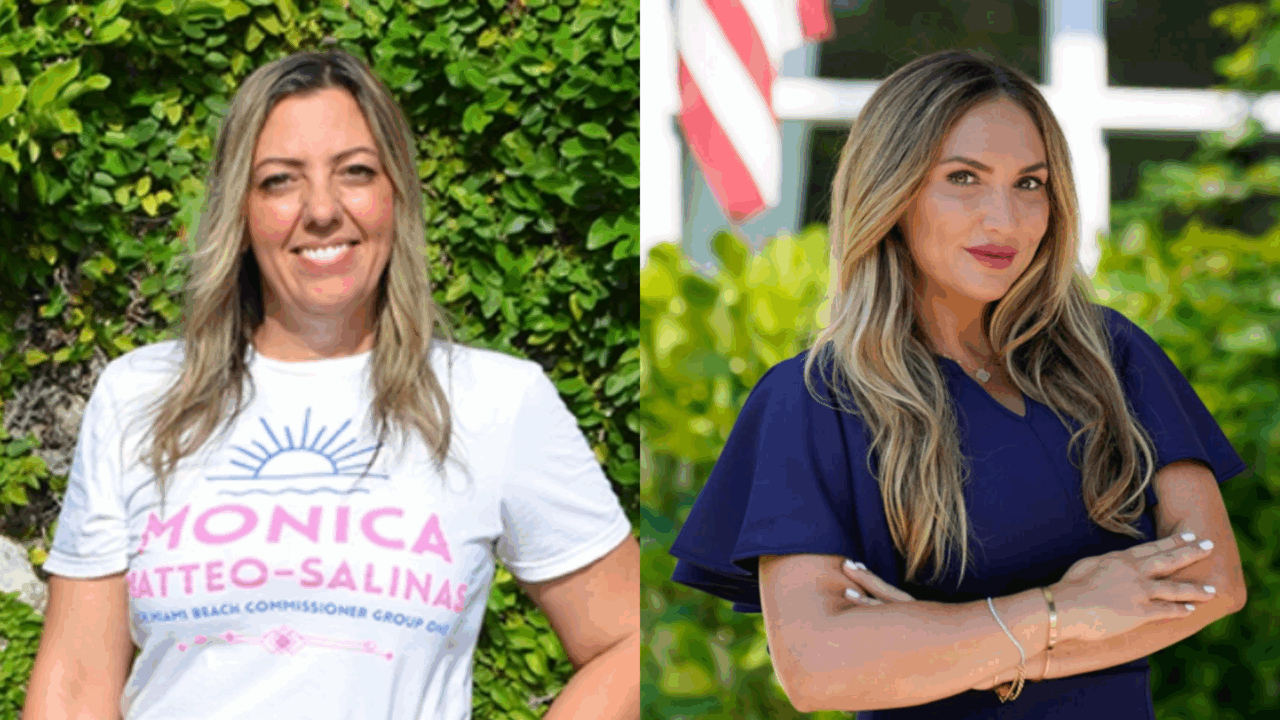
Monica Matteo-Salinas, Monique Pardo Pope square off in Miami Beach Commission runoff

Published

on


Early voting is underway in Miami Beach ahead of a Dec. 9 runoff that will decide the city’s only open Commission seat — a head-to-head contest between Monica Matteo-Salinas and Monique Pardo Pope for the Group 1 seat.

Matteo-Salinas, a Democrat and longtime City Hall aide, finished first last month with 23.2% of the vote. Pardo Pope, a Republican lawyer, advanced with 20.1%.

They outpaced four other candidates competing to succeed outgoing Commissioner Kristen Rosen Gonzalez last month, but neither captured a large enough share of the vote — more than 50% — to win outright.

The runoff has sharpened into a choice between two contrasting résumés, platforms and campaign narratives along with a late-cycle revelation about Pardo Pope that has drawn national headlines.

Voters are heading to the polls for the second time in just over a month as Miami Beach faces turbulence on multiple fronts, from state scrutiny over finances and charges that a local ordinance conflicts with Florida’s homelessness law to the removal of cultural landmarks due to their so-called “woke” significance and accusations of pay-for-play policymaking.

Matteo-Salinas, 46, has consolidated establishment support for her campaign, which centers on a promise to work on expanding trolley service, increasing the city’s affordable housing index and establishing a new “water czar” position in the city, paid by resort taxes.

She’s earned endorsements from several local pols, including Miami-Dade County Mayor Daniella Levine Cava, Miami Beach Commissioners Alex Fernandez, Laura Dominguez and Tanya Bhatt; and former Miami Beach Dan Gelber.

Groups backing her bid include the Miami Beach Fraternal Order of Police, LGBTQ groups SAVE Action PAC and Equality Florida Action PAC, and the public-safety-focused neighborhood group SOBESafe.

Pardo Pope, 45, has centered her messaging on public safety, investing in mental health, backing school choice initiatives, supporting homelessness services, encouraging “smart, thoughtful development” that preserves Miami Beach’s character while addressing flooding and roadway congestion, and alleviating cost-of-living issues for longtime residents and first-time homebuyers through “fair taxation.”

Though she has touted her guardian ad litem work as evidence of her temperament and commitment to service, that part of her record has drawn renewed scrutiny in recent weeks. A review of Pardo Pope’s case records with the Miami-Dade Clerk’s Office shows her listed as a guardian ad litem on just three cases — one of which she was discharged from after trying to get the mother in the case jailed.

She’s also been the subject of negative attention for omitting that her father was the convicted, Nazi-adoring serial killer Manuel Pardo, to whom she wrote several loving social media posts.

Pardo Pope has said that she forgave him in order to move forward with her life and asked voters to judge her on her own life and work.

Her backing includes the Miami-Dade Republican Party, Miami-Dade Commissioner René García, state Rep. Alex Rizo, former Miami Beach City Attorney Jose Smith, Miami Realtors PAC, the Venezuelan American Republican Club and Teach Florida PAC, a Jewish education group.

Two of her former Group 1 opponents, Daniel Ciraldo and Omar Gimenez, are also backing her.

Matteo-Salinas raised about $133,000 and spent $82,000 by Dec. 4. Pardo Pope raised about $190,000 — of which 29% was self-given — and spent close to $170,000.

Early voting runs through Sunday at four locations citywide. Election Day is Monday, Dec. 9.


Source link

Continue Reading

Trending

Copyright © Miami Select.