Connect with us

Business

FBI releases photos of person of interest in the assassination of Charlie Kirk

Published

on


OREM, Utah (AP) — The FBI released two photos of a person of interest in the assassination of Charlie Kirk, a close ally of President Donald Trump who played an influential role in rallying young Republican voters. The shooter, who fired a single shot from a distant roof, remained at large and unidentified on Thursday nearly 24 hours into the investigation.

The release of photos of a person in a hat, sunglasses and a long-sleeve black shirt, as well as a $100,000 reward for information leading to an arrest, reflected law enforcement’s urgent appeal for public help in locating the shooter, who vanished after jumping off the roof and fleeing through a wooded area near the Utah university where Kirk was killed in a targeted attack.

Investigators were sifting through potential clues, including a palm print and a shoe impression found near the scene, as well as a Mauser .30-caliber bolt-action rifle hidden in a towel in a wooded area near the university campus along what they suspect to be the path the shooter took while fleeing. Besides the spent cartridge recovered in the chamber, three other rounds were loaded in the magazine, according to information circulated among law enforcement and described to The Associated Press. The weapon and ammunition are being forensically analyzed by law enforcement at a federal lab for clues that could help identify the shooter or the motive.

The new information suggested at least modest progress in an investigation into a killing that law enforcement was treating as the latest instance of political violence to convulse the United States across the ideological spectrum. Yet key questions remained unanswered. Law enforcement had yet to identify the shooter or disclose a motive and acknowledged at a news conference Thursday that the suspect’s college-age appearance may have helped the person blend in on the college campus where Kirk was shot.

The Wednesday afternoon attack, carried out in a broad daylight as Kirk spoke about social issues at a Utah Valley University courtyard, was captured on grisly videos circulating on social media. The videos show Kirk speaking into a handheld microphone when suddenly a shot rings out. Kirk can be seen reaching up with his right hand as blood gushes from the left side of his neck. Stunned spectators gasp and scream before people start running away.

Trump, who was joined by Democrats in condemning the violence, said he would award Kirk the Presidential Medal of Freedom, the highest civilian honor in the U.S., while Vice President JD Vance and his wife, Usha, were set to visit with Kirk’s family in Salt Lake City. Vance posted a remembrance on X chronicling their friendship, dating back to initial messages in 2017, through Vance’s Senate run and ultimately praying after hearing of the shooting.

“So much of the success we’ve had in this administration traces directly to Charlie’s ability to organize and convene,” Vance wrote. “He didn’t just help us win in 2024, he helped us staff the entire government.”

Kirk’s casket was to be flown aboard Air Force Two from Utah to Arizona, where his his nonprofit political youth organization, Turning Point USA, is based.

Kirk was taking questions about gun violence

Kirk was speaking at a debate hosted by Turning Point at the Sorensen Center courtyard on campus.

The event, billed as the first stop on Kirk’s “The American Comeback Tour,” had generated a polarizing campus reaction. An online petition calling for university administrators to bar Kirk from appearing received nearly 1,000 signatures. The university issued a statement last week citing First Amendment rights and affirming its “commitment to free speech, intellectual inquiry, and constructive dialogue.”

Last week, Kirk posted on X images of news clips showing his visit was sparking controversy. He wrote, “What’s going on in Utah?”

Immediately before the shooting, he took questions from an audience member about gun violence.

“Do you know how many transgender Americans have been mass shooters over the last 10 years?” the person asked. Kirk responded, “Too many.”

The questioner followed up: “Do you know how many mass shooters there have been in America over the last 10 years?”

“Counting or not counting gang violence?” Kirk asked.

Then a shot rang out.

The shooter, who Gov. Spencer Cox pledged would be held accountable in a state with the death penalty, wore dark clothing and fired from a building roof some distance away.

Madison Lattin was watching a few dozen feet from Kirk’s left when she heard the bullet hit him.

“Blood is falling and dripping down, and you’re just like so scared, not just for him but your own safety,” she said.

She saw people drop to the ground in an eerie silence pierced immediately by cries. She and others ran. Some fell and were trampled in the stampede.

When Lattin later learned that Kirk had died, she wept, she said, describing him as a role model who had showed her how to fight for the truth.

About 3,000 people were in attendance, according to a statement from the Utah Department of Public Safety. The university police department had six officers working the event, along with Kirk’s own security detail, authorities said.

Condemnation from across the political spectrum

The shooting drew swift bipartisan condemnation as Democratic officials joined Trump and other Republican allies of Kirk in decrying the violence.

“The murder of Charlie Kirk breaks my heart. My deepest sympathies are with his wife, two young children, and friends,” said Gabrielle Giffords, the former Democratic congresswoman who was wounded in a 2011 shooting in her Arizona district.

The shooting appeared poised to become part of a spike of political violence that has touched a range of ideologies and representatives of both major political parties. The attacks include the assassination of a Minnesota state lawmaker and her husband at their house in June, the firebombing of a Colorado parade in June to demand Hamas release hostages and a fire set at the house of Pennsylvania’s governor, who is Jewish, in April. The most notorious of these events is the shooting of Trump during a Pennsylvania campaign rally last year.

___

Richer and Sherman reported from Washington. Associated Press writers Nicholas Riccardi in Denver; Michael Biesecker, Brian Slodysko, Lindsay Whitehurst and Michelle L. Price in Washington; Jesse Bedayn in Orem, Utah; Hallie Golden in Seattle; Hannah Schoenbaum in Salt Lake City; and Meg Kinnard in Chapin, S.C., contributed to this report.

Fortune Global Forum returns Oct. 26–27, 2025 in Riyadh. CEOs and global leaders will gather for a dynamic, invitation-only event shaping the future of business. Apply for an invitation.


Source link

Continue Reading

Business

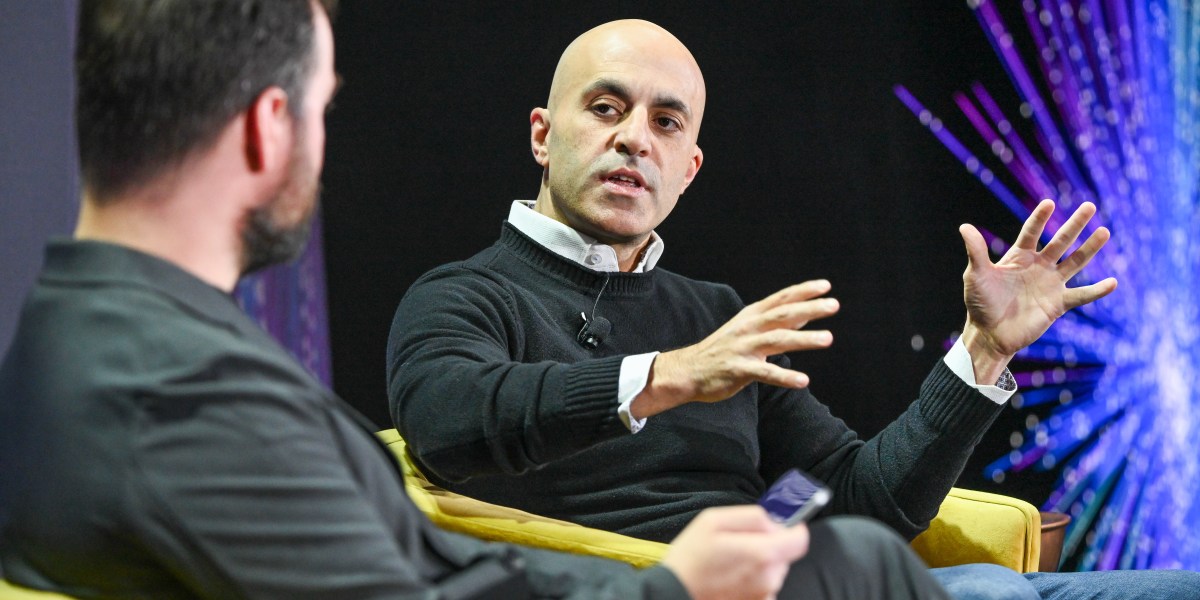
Databricks CEO Ali Ghodsi says company will be worth $1 trillion by doing these three things

Published

on


Ali Ghodsi, the CEO and cofounder of data intelligence company Databricks, is betting his privately held startup can be the latest addition to the trillion-dollar valuation club.

In August, Ghodsi told the Wall Street Journalthat he believed Databricks, which is reportedly in talks toraise funding at a $134 billion valuation, had “a shot to be a trillion-dollar company.” At Fortune’s Brainstorm AI conference in San Francisco on Tuesday, he explained how it would happen, laying out a “trifecta” of growth areas to ignite the company’s next leg of growth.

The first is entering the transactional database market, the traditional territory of large enterprise players like Oracle, which Ghodsi said has remained largely “the same for 40 years.” Earlier this year, Databricks launched a link-based offering called Lakehouse, which aims to combine the capabilities of traditional databases with modern data lake storage, in an attempt to capture some of this market.

The company is also seeing growth driven by the rise of AI-powered coding. “Over 80% of the databases that are being launched on Databricks are not being launched by humans, but by AI agents,” Ghodsi said. As developers use AI tools for “vibe coding”—rapidly building software with natural language commands—those applications automatically need databases, and Ghodsi they’re defaulting to Databricks’ platform.

“That’s just a huge growth factor for us. I think if we just did that, we could maybe get all the way to a trillion,” he said.

The second growth area is Agentbricks, Databricks’ platform for building AI agents that work with proprietary enterprise data.

“It’s a commodity now to have AI that has general knowledge,” Ghodsi said, but “it’s very elusive to get AI that really works and understands that proprietary data that’s inside enterprise.” He pointed to the Royal Bank of Canada, which built AI agents for equity research analysts, as an example. Ghodsi said these agents were able to automatically gather earnings calls and company information to assemble research reports, reducing “many days’ worth of work down to minutes.”

And finally, the third piece to Ghodsi’s puzzle involves building applications on top of this infrastructure, with developers using AI tools to quickly build applications that run on Lakehouse and which are then powered by AI agents. “To get the trifecta is also to have apps on top of this. Now you have apps that are vibe coded with the database, Lakehouse, and with agents,” Ghodsi said. “Those are three new vectors for us.”

Ghodsi did not provide a timeframe for attaining the trillion-dollar goal. Currently, only a handful of companies have achieved the milestone, all of them as publicly traded companies. In the tech industry, only big tech giants like Apple, Microsoft, Nvidia, Alphabet, Amazon, and Meta have managed to cross the trillion-dollar threshold.

To reach this level would require Databricks, which is widely expected to go public sometime in early 2026, to grow its valuation roughly sevenfold from its current reported level. Part of this journey will likely also include the expected IPO, Ghodsi said.

“There are huge advantages and pros and cons. That’s why we’re not super religious about it,” Ghodsi said when asked about a potential IPO. “We will go public at some point. But to us, it’s not a really big deal.”

Could the company IPO next year? Maybe, replied Ghodsi.


Source link

Continue Reading

Business

New contract shows Palantir working on tech platform for another federal agency that works with ICE

Published

on


Palantir, the artificial intelligence and data analytics company, has quietly started working on a tech platform for a federal immigration agency that has referred dozens of individuals to U.S. Immigration and Customs Enforcement for potential enforcement since September.

The U.S. Citizenship and Immigration Services agency—which handles services including citizenship applications, family immigration, adoptions, and work permits for non-citizens—started the contract with Palantir at the end of October, and is paying the data analytics company to implement “Phase 0” of a “vetting of wedding-based schemes,” or “VOWS” platform, according to the federal contract, which was posted to the U.S. government website and reviewed by Fortune.

The contract is small—less than $100,000—and details of what exactly the new platform entails are thin. The contract itself offers few details, apart from the general description of the platform (“vetting of wedding-based schemes”) and an estimate that the completion of the contract would be Dec. 9.Palantir declined to comment on the contract or nature of the work, and USCIS did not respond to requests for comment for this story.

But the contract is notable, nonetheless, as it marks the beginning of a new relationship between USCIS and Palantir, which has had longstanding contracts with ICE, another agency of the Department of Homeland Security, since at least 2011. The description of the contract suggests that the “VOWS” platform may very well be focused on marriage fraud and related to USCIS’ recent stated effort to drill down on duplicity in applications for marriage and family-based petitions, employment authorizations, and parole-related requests.

USCIS has been outspoken about its recent collaboration with ICE. Over nine days in September, USCIS announced that it worked with ICE and the Federal Bureau of Investigation to conduct what it called “Operation Twin Shield” in the Minneapolis-St. Paul area, where immigration officials investigated potential cases of fraud in immigration benefit applications the agency had received. The agency reported that its officers referred 42 cases to ICE over the period. In a statement published to the USCIS website shortly after the operation, USCIS director Joseph Edlow said his agency was “declaring an all-out war on immigration fraud” and that it would “relentlessly pursue everyone involved in undermining the integrity of our immigration system and laws.” 

“Under President Trump, we will leave no stone unturned,” he said.

Earlier this year, USCIS rolled out updates to its policy requirements for marriage-based green cards, which have included more details of relationship evidence and stricter interview requirements.

While Palantir has always been a controversial company—and one that tends to lean into that reputation no less—the new contract with USCIS is likely to lead to more public scrutiny. Backlash over Palantir’s contracts with ICE have intensified this year amid the Trump Administration’s crackdown on immigration and aggressive tactics used by ICE to detain immigrants that have gone viral on social media. Not to mention, Palantir inked a $30 million contract with ICE earlier this year to pilot a system that will track individuals who have elected to self-deport and help ICE with targeting and enforcement prioritization. There has been pushback from current and former employees of the company alike over contracts the company has with ICE and Israel.

In a recent interview at the New York Times DealBook Summit, Karp was asked on stage about Palantir’s work with ICE and later what Karp thought, from a moral standpoint, about families getting separated by ICE. “Of course I don’t like that, right? No one likes that. No American. This is the fairest, least bigoted, most open-minded culture in the world,” Karp said. But he said he cared about two issues politically: immigration and “re-establishing the deterrent capacity of America without being a colonialist neocon view. On those two issues, this president has performed.”


Source link

Continue Reading

Business

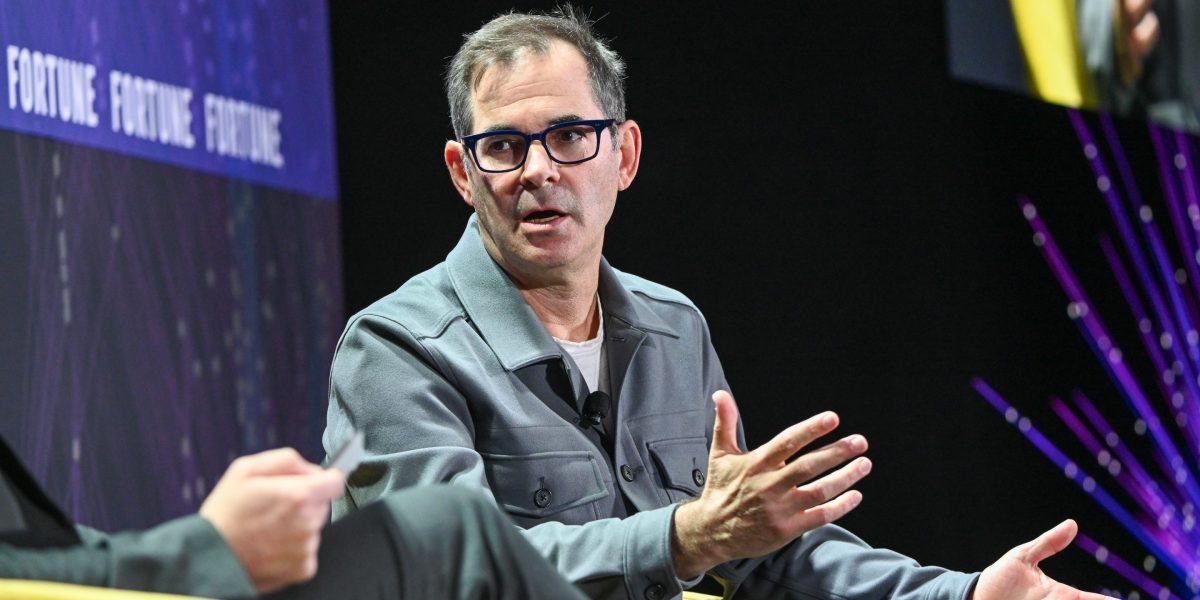
CoreWeave CEO: Despite see-sawing stock, IPO was ‘incredibly successful’ amid challenges of tariff timing

Published

on


CoreWeave has been rocked by dizzying stock swings—with its stock currently trading 52% below its post-IPO high—and a frequent target of market commentators, but CEO Michael Intrator says the company’s move to the public markets has been “incredibly successful. And he takes the public’s mixed reaction in stride, given the novelty of CoreWeave’s “neocloud” business which competes with established cloud providers like Amazon AWS and Google Cloud.

“When you introduce new models, introduce a new way of doing business, disrupt what has been a static environment, it’s going to take some people some time,” Intrator said Tuesday at Fortune’s Brainstorm AI conference in San Francisco. But, he added, more people are beginning to understand the CoreWeave’s business model.

“We came out into one of the most challenging environments,” Intrator said of CoreWeave’s March IPO, which occurred very close to President Trump’s “Liberation Day” tariffs in April. “In spite of the incredible headwinds, we’re able to launch a successful IPO.”

CoreWeave, which priced its IPO at $40 per share, has experienced frequent severe up-and-down price swings in the eight months since its public market debut. At its closing price of $90.66 on Tuesday, the stock remains well above its IPO price.

As Fortune reported last month, CoreWeave’s rapid rise has been fueled by an aggressive, debt-heavy strategy to stand up data centers at unprecedented speed for AI customers. And for now, the bet is still paying off. In its third-quarter results released in November, the company said its revenue backlog nearly doubled in a single quarter—to $55.6 billion from $30 billion—reflecting long-term commitments from marquee clients including Meta, OpenAI, and French AI startup Poolside. Both earnings and revenue came in ahead of Wall Street expectations.

But the numbers were not all celebratory. CoreWeave disclosed a further increase in the debt it has taken on to finance its expansion, and it revised its full-year revenue outlook downward—suggesting that, even with historic demand in the pipeline.

With media headlines calling CoreWeave a “ticking time bomb,” with critics calling out insider stock sales, circular financing accusations and an overreliance on Nvidia, Intrator was asked whether he felt CoreWeave was misunderstood.

“Look, we built a company that is challenging one of the most stable businesses that exist—that cloud business, these three massive players,” he said, referring to AWS, Microsoft Azure and Google Cloud.  I feel like it’s incumbent on CoreWeave to introduce a new business model on how the cloud is going to be built and run. And that’s what we’re doing.” 

He repeatedly framed CoreWeave not as a GPU reseller or traditional data-center operator but as a company purpose-built from scratch to deliver high-performance, parallelized computing for AI workloads. That focus, he said, means designing proprietary software that orchestrates GPUs, building and colocating its own infrastructure, and moving “up the stack” through acquisitions such as Weights & Biases and OpenPipe.

Intrator also defended the company’s debt strategy, saying CoreWeave is effectively inventing a new financing model for AI infrastructure. He pointed to the company’s ability to repurpose power sources, rapidly deploy capacity, and finance large-scale clusters as proof it is solving problems incumbents never had to face.

“When I look back at history of the company, it took us a year with with a company investor like Fidelity, before they were like, ‘Oh, I get it,’” he said. “So look, we’ve been public for eight months. I couldn’t be prouder of what the company has accomplished.” 


Source link

Continue Reading

Trending

Copyright © Miami Select.