Connect with us

Politics

Fast shipping is increasing emissions. Here’s why delivery has become more polluting
Published

on


It feels simple: You shop, find something you want and click to buy. It shows up today, overnight or tomorrow. We’ve gotten used to that speed. But that convenience comes with a climate cost.

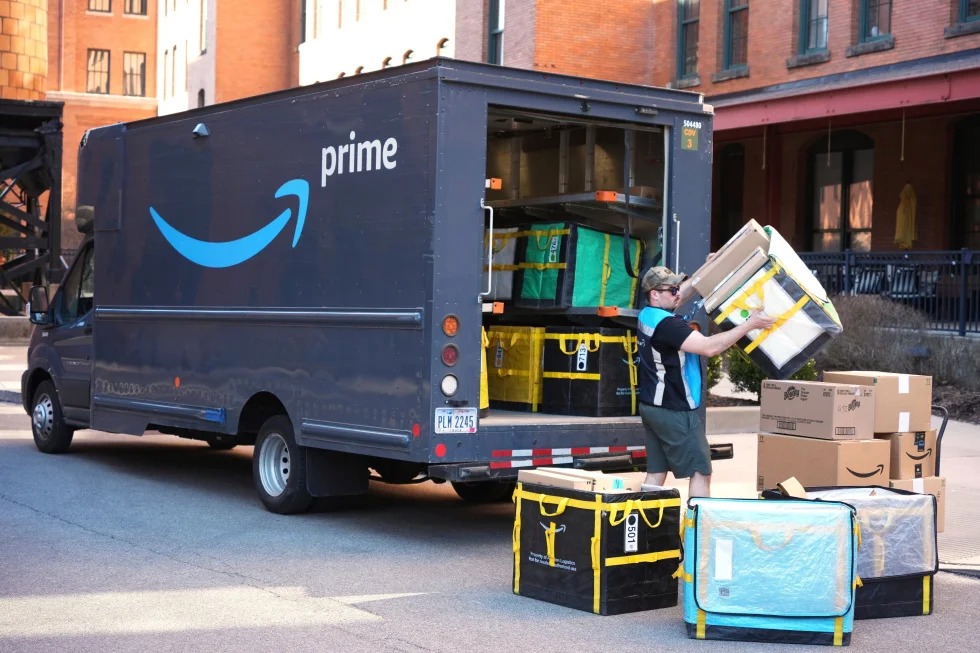
Multiple factors shape the environmental toll of a delivery. These include the distance from a fulfillment center, whether the shipment rides in a half-empty truck, how many trips a driver makes in the same area and the type of transportation used to move the package.

When customers choose faster shipping and earlier delivery dates, the system shifts from optimized routing to whatever gets the package out fastest, and that means higher emissions, said Sreedevi Rajagopalan, a research scientist at MIT’s Center for Transportation and Logistics. For example, trucks may leave warehouses before they’re full and drivers might loop the same neighborhood multiple times a day, she said.

“For the same demand, fast shipping definitely increases emissions 10 to 12%,” she said.

To meet tight delivery windows, retailers may rely on air freight, which produces far more emissions than other options such as trains, making it the most carbon-intensive.

“Given that companies want to be competitive in terms of speed, it comes at the cost of your efficiency,” Sreedevi said. “Vans are half full, and you make multiple rounds, multiple trips to the same location … your fuel consumption goes up, and you’re not able to consolidate.”

One way companies like Amazon try to minimize that is by placing their supply chain closer to customers to reduce mileage and improve speed for the customer. Their goal is to make the journey fast and effective, but reduce its emissions at the same time.

“By really leveraging our supply chain efficiencies that we have at scale, we’re able to both offer better speed and sustainability outcomes at the same time,” said Chris Atkins, director of Worldwide Operations Sustainability at Amazon.

The last mile

Getting items to customers’ doors from a fulfillment center — referred to as the “last mile” or “last kilometer” of shipping — is one of the hardest stages to make less polluting, Sreedevi said.

Emissions rise even more when customers place multiple small orders throughout the week.

“If I place an order this morning and then I place an order this evening and choose fast shipping, the company might have already processed my morning order and wouldn’t wait for my evening order to consolidate,” she said.

And sending more half-full trucks out on the road means more trips overall.

“Imagine you’re not only sending a half-full truck, you’re also bringing back that truck empty. … Emissions are going to go up,” Sreedevi said.

Reducing emissions

Consumers can lower emissions if they’re willing to wait even a tiny bit, and they’ll save money at the same time, said Christopher Faires, assistant professor of logistics and supply chain management at Georgia Southern University.

Delaying delivery by one to two days can result in a 36% reduction in carbon dioxide emissions, and three to four days pushes that reduction to 56%, so opting for standard or delayed shipping instead of next-day or two-day shipping helps, according to Sreedevi.

Amazon’s Atkins said changes to their network are cutting emissions linked to fast delivery. The company has expanded the use of electric delivery vans and shifted more packages to rail and to delivering by foot or bicycle in dense cities.

“Aviation is very carbon-intensive relative to ground shipping,” Atkins said. “One of the other things that Amazon and other logistics companies are looking at doing is: How do we mode-shift to less carbon intensive forms of transportation?”

Amazon says providing shipping options that encourage customers to consolidate orders have also helped. Data for the first nine months of 2025 shows that when customers chose a single delivery day for all items, it reduced more than 300 million delivery stops and avoided 100,000 tons (90,718 metric tons) of carbon emissions, according to Atkins.

Consumers change behavior when they know the impact

People are more likely to delay or consolidate orders once they understand the environmental impact of fast shipping, according to Sreedevi, who co-authored a 2024 study of delivery customers in Mexico.

“A significant number of consumers decided to wait for longer delivery or delayed their shipping when we showed them the environmental impact information in the form of trees,” Sreedevi said. “So it’s important that they are educated.”

While fast shipping isn’t likely to go away, experts say its climate impacts can be meaningfully reduced through small behavior shifts, both from shoppers and companies. Bundling orders, skipping the overnight option and choosing a single weekly delivery can all make a difference.

___

Republished with permission of The Associated Press.


Source link

Continue Reading

Politics

The Twelve Days of Christmas are brought to you by these Florida lobbyists and political organizations

Published

on


‘Tis the season.

After another long year, it’s finally time to relax, spend some time with family, and catch your breath before revving up for another Legislative Session.

The Legislature put us through a lot this year, with a Session that redefined the word “overtime” and a budget veto period better counted in hours than days. But that’s neither here nor there.

For now, it’s time to get in the Christmas spirit in the only way we know how: Connecting the lyrics of a holiday staple to Florida lobbyists and lobbying firms.

We’re once again using the classic carol “The 12 Days of Christmas” as our lens to combine the political with the Noel. The tune started “either as a children’s song or a Christmas carol in the late 18th or mid-19th century,” according to Mental Floss.

The site digs up some interesting details, including how the lyrics changed over the years. For instance, what we now sing as four “calling birds” has previously been “canary birds,” “mockingbirds,” and “collie birds,” an old term for blackbirds.

“Over the years, the song has been done and redone by everyone from the ChipmunksWinnie the PoohRen & Stimpy, to Lucille Ball and Ol’ Blue Eyes himself,” the story goes. “In Sinatra’s version, he replaces the traditional gifts of birds with things he’d like: ‘Five ivory combs, four mission lights, three golf clubs, two silken scarfs, and a most lovely lavender tie.’”

We’d be doing our readers a disservice if we didn’t mention that The Muppets and Twisted Sister have also covered the song (separately). We don’t want to imagine what that collab would look like.

All that goes to say: We don’t feel bad appropriating the song yet again.

With that …

On the first day of Christmas, my true love gave to me: A Partridge in a Pear Tree.

Sure, you can eat a partridge, but there are other, tastier birds further down the menu. And you won’t find any other fruit. Pears are quite possibly the original fruit, too — the word “pear” is derived from the early Semitic word “pirâ,” which means “fruit.” While fresh Florida pears are hard to find in the grocery store, they are perfect for pies, pear butter, jams and canning. Pears — and every other fruit and veggie grown in the state — have an important ally in the Florida Fruit & Vegetable Association, which looks out for the best interests of growers in Washington and Tallahassee. Their go-to guys are Gary Hunter and Kyle Langan of The Vogel Group. And during the Christmas season especially, organizations such as Feeding Florida — repped by the team at Johnson & Blanton — could always use an extra bushel or two of the fresh stuff.

On the second day of Christmas, my true love gave to me: Two Turtle Doves.

Turtle doves don’t have a lobbying presence in Florida. Really, they don’t have a presence at all — you’ll need to travel quite far to find one. Depending on migration patterns, it might take a Naval aviator to track some down. Those looking to learn about the history of flight can get a crash course at the National Naval Aviation Museum in Pensacola. When the museum needs a helping hand in Tallahassee, it turns to the team at Oak Strategies: Rob Bradley, Travis Cummings, Sydney Fowler and Jayer Williamson. If you’d rather cut to the chase, flying commercial is also an option — Jeff Johnston, Amanda Stewart, Anita Berry and Lauren Lange of Johnston & Stewart can direct you to a solid American Airlines booking agent.

On the third day of Christmas, my true love gave to me: Three French Hens.

Perhaps the French hens in question are Coucou de Rennes, one of the most prized chicken breeds in the world. Good luck snagging one, though, as they are among the rarest breeds — they nearly went extinct during World War I, but a handful of dedicated breeders brought them back from the brink. The hen may be hard to find, but despite Francophone Florida being short-lived, some relics of the past are still around today. In fact, there are remnants of the first French settlement in Florida, Fort Caroline, located in Jacksonville’s Arlington neighborhood. The City of Jacksonville’s lobbying team includes Marty FiorentinoDavis BeanMelissa BraudeCody McCloud and Joe Mobley of The Fiorentino Group. If your intent is to get the hen and get out, perhaps a specialized meal company such as GA Foods, represented by PinPoint Results, can source it for you.

On the fourth day of Christmas, my true love gave to me: Four Calling Birds.

Talk about a useless gift. Obviously, the easiest way to make a call these days is with a cellphone. And the biggest name in the business is AT&T. Ma Bell has one of the largest teams in the Capitol, with no fewer than 50 lobbyists on retainer in the Legislature. We’ll spare you a block of bold-face type and just list the firms: The Advocacy Partners, The Aleksander Group, Capital City Consulting, The Fiorentino Group, Greenberg Traurig, Heffley & Associates, Liberty Partners of Tallahassee, The Mayernick Group, Metz Husband & Daughton, Pittman Law Group, Ramba Consulting Group, Ronald L. Book PA and Shumaker Advisors Florida.

On the fifth day of Christmas, my true love gave to me: Five Golden Rings.

The familiar image of five glowing gold rings puts in mind Adams Street’s gold standards — the firms by which all other firms are measured. Last quarter, the five firms that topped the charts were The Southern Group, Ballard Partners, Capital City Consulting, Ron Book and Rubin Turnbull, with the team at GrayRobinson just a hair behind. There’s plenty to go around at each of these firms, but The Southern Group and Ballard Partners, in particular, are having banner years. The Southern Group approached the $11 million mark in Q3 and Ballard Partners wasn’t far back at $9.61 million.

On the sixth day of Christmas, my true love gave to me: Six Geese a Laying.

A half-dozen geese make an OK gift, but we’d rather have a goose that lays golden eggs. It’s important to note that the “golden goose” is not the same as the goose that laid golden eggs, though the former may hatch out of the latter. Either way, the Seminole Tribe of Florida is finally starting to capitalize on the golden egg factory they were granted in the 2021 Gaming Compact. Legal challenges kept the Tribe from rolling out its sports betting platform for a while, but the drama has been settled and the app is up and running. The Tribe’s lobbying team includes Hayden Dempsey of Greenberg Traurig; Charlie Dudley of Floridian Partners; Chris Moya and Jennifer Ungru of Jones Walker; Will McKinley and Angela Dempsey of PooleMcKinley; and Screven Watson of Screven Watson & Associates.

On the seventh day of Christmas, my true love gave to me: Seven Swans a Swimming.

Swans have the right idea. It may be a little chilly now, but in a few months, we’ll all be ready for a nice swim. But swimming in a pool that has been dormant for a while is kind of a hassle. Chlorine, bromine, pH, alkalinity … balancing it all out is like a chemistry test. Luckily, professional help is just a phone call away. Chances are your pool guy knows about the Florida Swimming Pool Association, a statewide group that promotes the industry and ensures its members are appropriately licensed and insured for the work they perform. When pool bills come up in the Legislature, FSPA turns to Jonathan KilmanCarlos CruzPaul LowellChristian MinorGerard O’Rourke and Elnatan Rudolph of Converge Public Strategies. If you’re looking for something a bit deeper, you won’t need to travel far to find a post-Panamax port. Just be sure to make contact through the proper channels before you put on your flippers — the folks at The Griffin Group can hook you up with number for the Tampa Port Authority.

On the eighth day of Christmas, my true love gave to me: Eight Maids a Milking.

We’re finally done with birds. From here on, the gifts are people. We’re not sure if that’s better or worse … we’ll have to think about it over a glass of milk. Speaking of which, all that milk is presumably coming from cows. Cattle is a major cog in Florida’s massive agriculture industry — just ask the Florida Cattleman’s Association, which fills the Capitol with a sea of cowboy hats every Session to advocate for ranchers and agriculture. The Florida Cattlemen’s Association is repped in-house by Governmental Affairs Director Samual Ard. As for where to hire milkmaids … well, we’re not so sure that’s a job anymore, but high-caliber skill bridge programs like Vets2PM could source you some solid prospects. Check in with Mike Corcoran, Jacqueline Corcoran, Matt Blair, Noah Corcoran, Jeff Hawes, Will Rodriguez and Carlos San Jose of Corcoran Partners for a reference.

On the ninth day of Christmas, my true love gave to me: Nine Ladies Dancing.

One of the best places to find nine dancing ladies is in the Tampa Bay area … we mean sophisticated, family-friendly dancing … at the David A. Straz Center for the Performing Arts. It hosts everything from ballet to the internationally renowned dance troupe Tango Fire. The Straz Center also hosts musical acts, screens films, and gives a mic to comedians. The Straz Center has the team at RSA Consulting Group — Ron Pierce, Natalie BrownMatt Herndon and Natalie King — working on its behalf in the Capitol.

On the 10th day of Christmas, my true love gave to me: 10 Lords a Leaping.

Aristocratic titles didn’t leap over the Atlantic to the New World, but some high-society pastimes did. Take golf, for instance. The game was a favorite of Scottish lords as far back as the late 13th century. While Scotland is still a golfing force, Florida is king. There are more than 1,300 golf courses in the Sunshine State, and a few of them make a cameo on millions of TVs during the PGA’s annual Florida swing. The PGA Tour has Marty Fiorentino, Davis Bean, Melissa Braude, Earl Jones Jr., Cody McCloud, and Joseph Mobley of The Fiorentino Group on retainer. Meanwhile, the Florida Golf Course Superintendents Association relies on Seth McKeel and David Shepp of The Southern Group.

On the 11th day of Christmas, my true love gave to me: 11 Pipers Piping.

In the years since voters greenlit the medical marijuana amendment, the state’s cannabis industry has grown like a weed. Trulieve is the biggest player in Florida, and while their recreational push fell short on Election Day last year, they’re still boasting more than 100 storefronts in the Sunshine State. They also have plenty of pipers helping them push pro-pot policies in the Legislature. The corps includes Nick Iarossi, Ron LaFaceMegan FayKaley Anne Flynn, Scott Ross and Chris Schoonover at Capital City Consulting; Katie Webb and Amanda Fraser of Colodny Fass; Sean Pittman of The Pittman Law Group; Brecht Heuchan of The Labrador Company; and Robert Schenck of The Legis Group.

On the 12th day of Christmas, my true love gave to me: 12 Drummers Drumming.

Top-notch drummers are hard to come by unless you’re on the campus of Florida A&M or Bethune-Cookman. While most universities claim their marching band is world-renowned, few take it as seriously as these two. As a 2021 write-up on the FAMU-BCU rivalry in The Atlantic put it, “football is the warm-up to the real show: the battle between bands, in the stands, and at halftime.” As awesome as it would be to see the Marching 100 or Marching Wildcats in the Rotunda, the FAMU and B-CU lobbying teams have it covered. FAMU’s team includes Brian BallardAbby Vail, Jeff Atwater, Carol BracyMathew Forrest and Chris Hansen of Ballard Partners as well as Shawn Foster and Danielle Thomas of Sunrise Consulting Group. Representing Bethune-Cookman are Yolanda Cash Jackson, LaToya Sheals and Jileah Wilder of Becker.


Source link

Continue Reading

Politics

After missing deadline, DOJ says it may need a ‘few more weeks’ to finish releasing Jeffrey Epstein files

Published

on


The Justice Department said Wednesday that it may need a “few more weeks” to release all of its records on the late sex offender Jeffrey Epstein after suddenly discovering more than a million potentially relevant documents, further delaying compliance with last Friday’s congressionally mandated deadline.

The Christmas Eve announcement came hours after a dozen U.S. Senators called on the Justice Department’s watchdog to examine its failure to meet the deadline. The group, 11 Democrats and a Republican, told Acting Inspector General Don Berthiaume in a letter that victims “deserve full disclosure” and the “peace of mind” of an independent audit.

The Justice Department said in a social media post that federal prosecutors in Manhattan and the FBI “have uncovered over a million more documents” that could be related to the Epstein case — a stunning 11th hour development after department officials suggested months ago that they had undertaken a comprehensive review that accounted for the vast universe of Epstein-related materials.

The post did not say when the Justice Department was informed of the newly uncovered files. In a letter last week, Deputy Attorney General Todd Blanche said Manhattan federal prosecutors already had more than 3.6 million records from sex trafficking investigations into Epstein and his longtime confidant Ghislaine Maxwell, though many were copies of material already turned over by the FBI.

The Justice Department said its lawyers are “working around the clock” to review the documents and remove victims names and other identifying information as required by the Epstein Files Transparency Act, the law enacted last month that requires the government to open its files on Epstein and Maxwell.

“We will release the documents as soon as possible,” the Department said. “Due to the mass volume of material, this process may take a few more weeks.”

The announcement came amid increasing scrutiny on the Justice Department’s staggered release of Epstein-related records, including from Epstein victims and members of Congress. Republican U.S. Rep. Thomas Massie of Kentucky, a co-sponsor of the transparency act, posted Wednesday on X: “DOJ did break the law by making illegal redactions and by missing the deadline.”

After releasing an initial wave of records on Friday, more batches were posted over the weekend and on Tuesday. The Justice Department has not given any notice when more records might arrive.

Records that have been released, including photographs, interview transcripts, call logs, court records and other documents, were either already public or heavily blacked out, and many lacked necessary context. Records that hadn’t been seen before include transcripts of grand jury testimony from FBI agents who described interviews they had with several girls and young women who described being paid to perform sex acts for Epstein.

Other records made public in recent days include a note from a federal prosecutor from January 2020 that said Trump had flown on the financier’s private plane more often than had been previously known and emails between Maxwell and someone who signs off with the initial “A.” They contain other references that suggest the writer was Britain’s former Prince Andrew. In one, “A” writes: “How’s LA? Have you found me some new inappropriate friends?”

The Senators’ call Wednesday for an Inspector General audit comes days after Minority Leader Chuck Schumer, a New York Democrat, introduced a resolution that, if passed, would direct the Senate to file or join lawsuits aimed at forcing the Justice Department to comply with the disclosure and deadline requirements. In a statement, he called the staggered, heavily redacted release “a blatant cover-up.”

Republican U.S. Sen. Lisa Murkowski of Alaska joined Democratic U.S. Sens. Richard Blumenthal of Connecticut and Jeff Merkley of Oregon, in leading the call for an Inspector General audit. Others signing the letter were Democratic U.S. Sens. Amy Klobuchar of Minnesota, Adam Schiff of California, Dick Durbin of Illinois, Cory Booker and Andy Kim of New Jersey, Gary Peters of Michigan, Chris Van Hollen of Maryland, Mazie Hirono of Hawaii, and Sheldon Whitehouse of Rhode Island.

“Given the (Trump) Administration’s historic hostility to releasing the files, politicization of the Epstein case more broadly, and failure to comply with the Epstein Files Transparency Act, a neutral assessment of its compliance with the statutory disclosure requirements is essential,” the Senators wrote. Full transparency, they said, “is essential in identifying members of our society who enabled and participated in Epstein’s crimes.”

___

Republished with permission of The Associated Press.


Source link

Continue Reading

Politics

U.S. stocks rose again in 2025 after overcoming turbulence from tariffs and Donald Trump’s fight with the Fed

Published

on


It was a scary good year for investors.

It was scary because the U.S. stock market plunged to several historic drops on worries about everything from President Donald Trump’s tariffs to interest rates to a possible bubble in artificial-intelligence technology. In the end, though, it was a great year for anyone with the stomach to stick through the swings.

S&P 500 index funds, which sit at the heart of many savers’ 401(k) accounts, returned more than 18% in 2025 through Dec. 11 and set a record high that day. It’s their third straight year of big returns.

Here’s a look at some of the surprises that shaped financial markets along the way:

Tariff tremors

Trump dropped the biggest surprise on “Liberation Day” in April, when he announced a sweeping set of tariffs that were more severe than investors expected.

It immediately triggered worries about a possible recession and spiking inflation. The S&P 500 plunged nearly 5% on April 3 for its worst day since the 2020 COVID crash. The very next day, it dropped 6% after China’s response raised fears of a tit-for-tat trade war.

The tariffs’ impact went beyond the stock market. The value of the U.S. dollar fell, and fear even shook the U.S. Treasury market, which is seen as perhaps the safest in existence.

Trump eventually put his tariffs on pause on April 9 after seeing the U.S. bond market get “queasy,” as he put it, which sent relief through Wall Street. Since then, Trump has negotiated agreements with countries to lower his proposed tariff rates on their imports, helping calm investors’ nerves.

Wall Street motored higher through a remarkably calm summer thanks to euphoria around artificial-intelligence technology and strong profit reports from companies. The market also got a boost from three cuts to interest rates by the Federal Reserve.

Trade worries can still cause havoc in markets, and Trump sent stocks spiraling as recently as October with threats of higher tariffs on China.

Trump and the Fed

Another surprise was how hard, and how personally, Trump lobbied to get the Federal Reserve to lower interest rates.

The Fed has traditionally operated separately from the rest of Washington, making its decisions on interest rates without having to bend to political whims. Such independence, the thinking goes, gives it freedom to make unpopular moves that are necessary for the economy’s long-term health.

Keeping interest rates high, for example, could slow the economy and frustrate politicians looking to please voters. But it could also be the medicine needed to get high inflation under control.

As inflation stubbornly remained above the Fed’s 2% target, the central bank kept rates steady through August. This drew Trump’s ire — even though it was his own trade policies that were driving fears about inflation higher.

Trump continuously picked on Fed Chair Jerome Powell, even giving him the nickname “Too Late.” Their tense relationship reached a head in July when Trump, in front of cameras, accused Powell of mismanaging the costs of a renovation of the Fed’s headquarters. Powell, in turn, shook his head.

Even though Wall Street loves lower rates, the personal attacks caused some queasiness in financial markets because of the possibility of a less independent Fed. Powell’s turn as Fed Chair is set to expire in May, and the wide expectation is that Trump will choose a replacement more likely to cut rates.

Good but not first

“America first” didn’t extend to global markets. Even as U.S. stocks soared to another double-digit gain, many foreign markets fared even better.

The technology frenzy that helped fuel gains for the S&P 500 and the Nasdaq composite drove Korea’s KOSPI higher in 2025, enjoying its biggest gain in more than two decades. South Korea is a technology hub and companies including Samsung and SK Hynix surged amid the focus on artificial intelligence investments and advancements.

Japan’s Nikkei 225 had a double-digit gain for a third straight year. Besides the focus on AI and the technology sector, the gains were boosted in October and November following national elections and plans for a $135 billion stimulus package.

European markets also had a strong year. Germany’s DAX got a boost as the government announced plans to ramp up spending on infrastructure and defense, which could fuel economic growth in Europe’s largest economy.

The European Central Bank spent the first half of the year cutting interest rates, which helped give financial markets across Europe a boost. France’s CAC 40 was a laggard, up 10% as of Monday.

Crypto’s ups and downs

Even with a reputation for volatility, cryptocurrencies still managed to surprise market watchers.

Bitcoin dropped along with most other assets early in the year as Trump’s trade policies scared investors away from riskier investments.

The most widely used cryptocurrency roared back as the White House and Congress threw their support behind digital assets and the Trump family launched a number of crypto ventures. Retail investors joined in by pouring money into bitcoin ETFs, stock-like investments that allowed them to benefit from the run-up in price without having to actually store bitcoin in digital wallets. Some companies, notably Strategy Inc., made buying and holding crypto the crux of their business and their stocks jumped.

Bitcoin and hit a high around $125,000 in early October. But, almost as quickly, digital assets tanked as investors worried the prices for shining stars such as tech stocks and crypto had jumped too high. As of Monday afternoon, bitcoin traded around $89,400, down roughly 28% from the peak and 4% below where it started the year.

What’s ahead?

Many professional investors think more gains could be ahead in 2026.

That’s because most expect the economy to plod ahead and avoid a recession. That should help U.S. companies grow their profits, which stock prices tend to track over the long term. For companies in the S&P 500, analysts are expecting earnings per share to rise 14.5% in 2026, according to FactSet. That would be an acceleration from the 12.1% growth estimated for 2025.

___

Republished with permission of The Associated Press.


Source link

Continue Reading

Trending

Copyright © Miami Select.