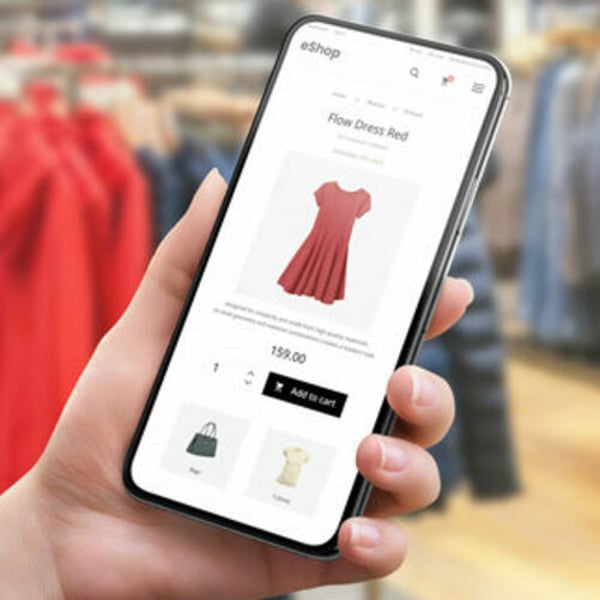
70% of European online shoppers buy clothing, footwear and accessories, placing the category well ahead of multimedia products (56%) and streaming subscriptions (46%), according to 2024 figures recently published by Ecommerce Europe, the online retail confederation.
Shutterstock
The ranking shows that 31% of consumers also buy perfumes and cosmetics online, and 26% buy sports equipment, based on a Eurostat survey that feeds into Ecommerce Europe’s annual benchmark report on the various European e-commerce markets.
The report indicates that 83% of Europeans place orders with domestic sellers, and 33% with sellers from other European countries. In addition, 16% of customers said they had ordered from a seller whose nationality they did not know, and 20% had placed orders with sellers based outside the EU. This last figure is identical to that in the previous report, although its evolution is being closely monitored amid the rise of Chinese platforms Shein and Temu.
Ecommerce Europe
“This year marks a significant shift in perspective at the European level on issues such as competitiveness and simplification. However, the urgency of the situation remains unaddressed,” said Luca Cassetti, secretary general of Ecommerce Europe. According to director general Christel Delberghe, “Europe urgently needs to step up enforcement to ensure that all companies, whether based in the EU or not, meet the same obligations, with consistent and rigorous implementation across all Member States.”
Company sizes and areas of activity
The annual report also highlights a technological gap between smaller and larger companies. Among companies with more than 250 employees, 46% and 41% report high and very high “digital intensity” (measured against criteria such as connection speed, remote working, automation, etc.), whereas among SMEs, 40% and 27% report low and very low levels, respectively.
Breakdown of purchasing types by country – Ecommerce Europe
Western Europe (France, Germany, the UK, Ireland, and the Benelux countries) remained the driving force behind European e-commerce in 2024, according to the benchmark report, accounting for 64% of B2C online sales. Southern Europe (Portugal, Spain, Italy, and Greece) ranked second, with 19% of overall turnover.
“In absolute figures for 2023, Western Europe, Southern Europe and Central Europe (9%) generated 569, 166, and 79 billion euros respectively,” says Ecommerce Europe. “Northern Europe (6%) came just behind Central Europe with 56 billion euros, followed by Eastern Europe (2% of the total with 17 billion).”
This article is an automatic translation. Click here to read the original article.
The Louvre Museum closed its doors to thousands of disappointed visitors on Monday as staff launched a strike to protest working conditions at the Paris landmark, two months after a shocking robbery.
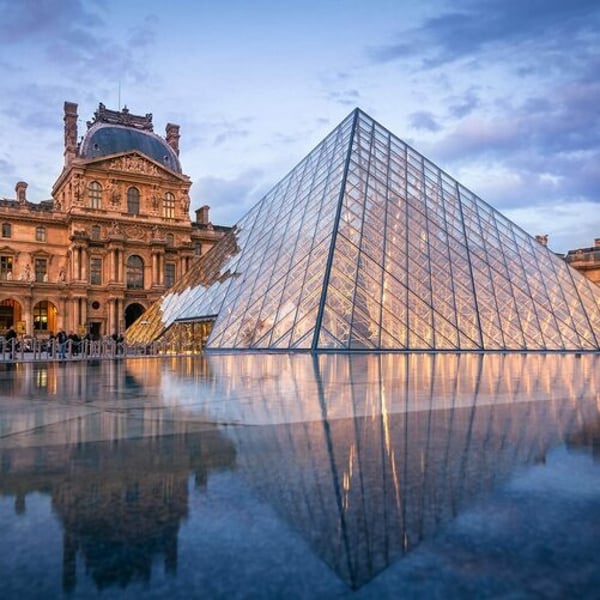
The glass entrance to the Louvre in Paris, France – DR
Workers are demanding extra staff and measures to tackle overcrowding, adding to the woes of the world’s most visited museum just as France is gearing up for the Christmas holidays.
The strike comes nearly two months after the museum was victim of an embarrassing daylight heist that saw crown jewels worth $102 million stolen.
“We are closed,” a security agent told visitors on Monday morning, according to an AFP journalist. “Come back in a few hours.”
Around 400 employees voted unanimously to continue their strike at a general meeting, the CGT and CFDT unions said.
“I’m very disappointed, because the Louvre was the main reason for our visit in Paris, because we wanted to see the ‘Mona Lisa’,” said 37-year-old Minsoo Kim, who travelled from Seoul to Paris with his wife for their honeymoon.
Natalia Brown, a 28-year-old tourist from London, said she was also disappointed. “At the same time, I understand why they’re doing it, it’s just unfortunate timing for us.”
Speaking on the eve of the action, Christian Galani, from the hard-left CGT union, said the strike would have broad support across the museum’s 2,200-strong workforce.
“We’re going to have a lot more strikers than usual,” Galani said. “Normally, it’s front-of-house and security staff. This time, there are scientists, documentarians, collections managers, even curators and colleagues in the workshops telling us they plan to go on strike.”
All have different grievances, adding up to a picture of staff discontent inside the institution, just as it finds itself in a harsh public spotlight following the shocking robbery on October 19.
Reception and security staff complain they are understaffed and required to manage vast flows of people, with the home of Leonardo da Vinci’s “Mona Lisa” welcoming several million people beyond its planned capacity each year.
A spontaneous walk-out protest on June 16 this year led the museum to temporarily close.
The Louvre has become a symbol of so-called “over-tourism”, with the 30,000 daily visitors facing what unions call an “obstacle course” of hazards, long queues, and sub-standard toilets and catering.
Documentarians and curators are increasingly horrified by the state of disrepair inside the former royal palace, with a recent water leak and the closure of a gallery due to structural problems underlining the difficulties.
“The building is not in a good state,” chief Louvre architect Francois Chatillon admitted in front of lawmakers last month during a parliamentary hearing.
Under-fire Louvre boss Laurence des Cars, who faces persistent calls to resign, warned the government in January in a widely publicised memo about leaks, overheating and the declining visitor experience.
After the memo, French President Emmanuel Macron announced a massive renovation plan for the museum, expected to cost 700 million to 800 million euros (up to $940 million).
Questions continue to swirl since the break-in over whether it was avoidable and why a national treasure such as the Louvre appeared to be so poorly protected.
Two intruders used a portable extendable ladder to access the gallery containing the crown jewels, cutting through a glass door with angle grinders in front of startled visitors before stealing eight priceless items.
Investigations have since revealed that only one security camera was working outside when they struck, that guards in the control room did not have enough screens to watch the coverage in real time, and that police were initially misdirected.
Major security vulnerabilities were highlighted in several studies seen by management of the Louvre over the last decade, including a 2019 audit by experts at the jewellery company Van Cleef & Arpels.
Their findings stressed that the riverside balcony targeted by the thieves was a weak point and could be easily reached with an extendable ladder- exactly what transpired in the heist.
Dr Martens announced its independent non-executive director Robert Hanson has been continuing to purchase the brand’s stock, in what looks like a further positive sign for the global footwear retailer.
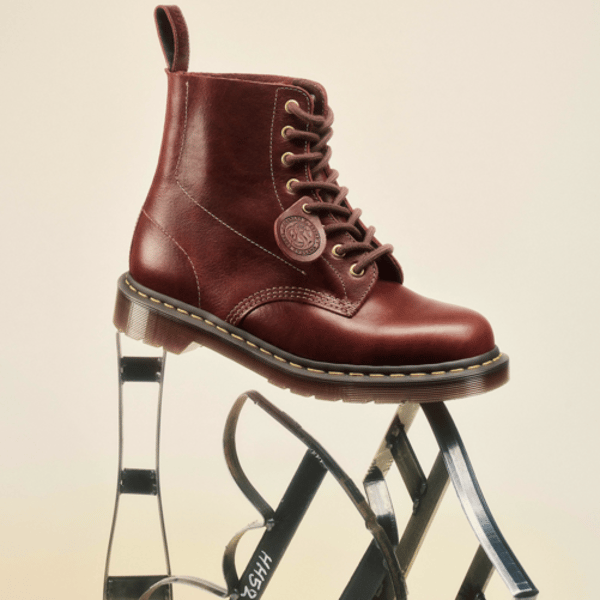
Dr Martens
In a release to the London Stock Exchange, Dr Martens said Hanson has just purchased another 104,000 shares, worth over £80,000. This is in addition to the 96,000 shares he purchased a week ago (8 December) to the tune of around £75,000.
Hanson, who joined the Dr Martens’ board in March as a non-executive director and was previously president of Americas at Levi’s as well holding CEO roles at American Eagle Outfitters. He looks to be banking on a positive future for Doc Martens (and his post) with directorship purchases taken as a sign they’re expecting an improving performance in the markets and at retail.
Dr Martens is currently working through a recovery from a major period of weakness and it seems to be yielding results. Its first half update in November showed progress, with the America recovering.
Six-month results for the FY26 period to late September showed the execution of its new strategy on track with full-price DTC revenue rising 6%.
But there were some negative figures with overall revenue on a reported basis dipping by 0.8% to £322 million. However, it would have risen by 0.8% at constant currency rates.
Leonard Paris is entering a period of transition: the brand and Georg Lux, its creative director since January 2021, have announced the end of their collaboration. In a statement issued by the house, Georg Lux describes this as “a precious chapter” in his career and notes the privilege of engaging with the brand’s heritage while imprinting it with his personal vision.
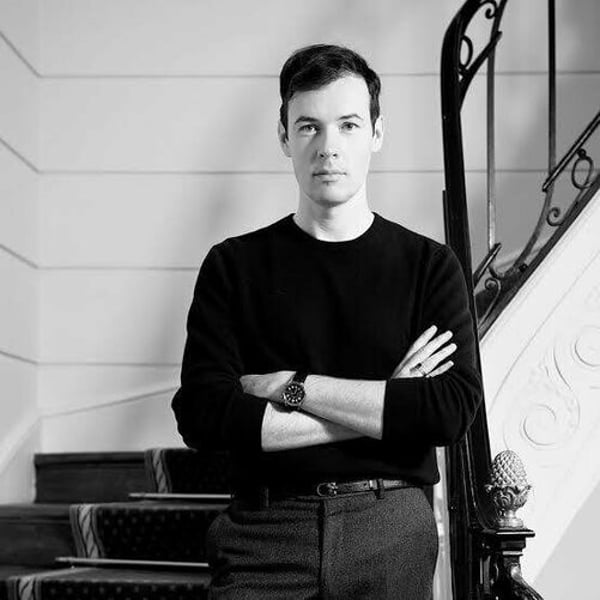
Georg Lux joined the house in 2021
The German designer joined the French luxury house to support a reinterpretation of its historic DNA. His collections sought to marry Leonard’s visual heritage, particularly its work with silk jersey and floral prints, with a more contemporary vocabulary tailored to an international clientele.
The end of a ‘fruitful’ collaboration
Yuichi Nishi, president of Leonard Paris, hailed the collaboration as ‘fruitful’ and highlighted the creative director’s ability to honour the house’s fundamental codes while showing creative boldness. The brand said it is approaching this transition “with serenity and ambition,” and announced that the details of the new creative direction will be unveiled shortly.
This change comes as Leonard faces a significant downturn in its business. According to the company’s financial statements for the year ending December 31 2024, net revenue totalled €6.77 million, compared with €7.26 million in 2023, confirming a pattern of erosion in recent years.
Declining financial results
This decline was accompanied by a net loss in 2024, following a loss already recorded the previous year, despite shareholder support and efforts to reposition the brand creatively. Georg Lux’s departure comes at a pivotal moment, when artistic renewal intersects with the brand’s economic challenges.
Acquired in 2022 by its long-standing Japanese partner Sankyo Seiko, Leonard has for several years been working to consolidate its positioning in a luxury market undergoing profound transformation, marked by intensifying competition and the greatly expanded communications capabilities of the major groups.
This article is an automatic translation. Click here to read the original article.