
Politics
Far narrower politics-on-campus bill moves to House floor as its Senate companion sits unheard
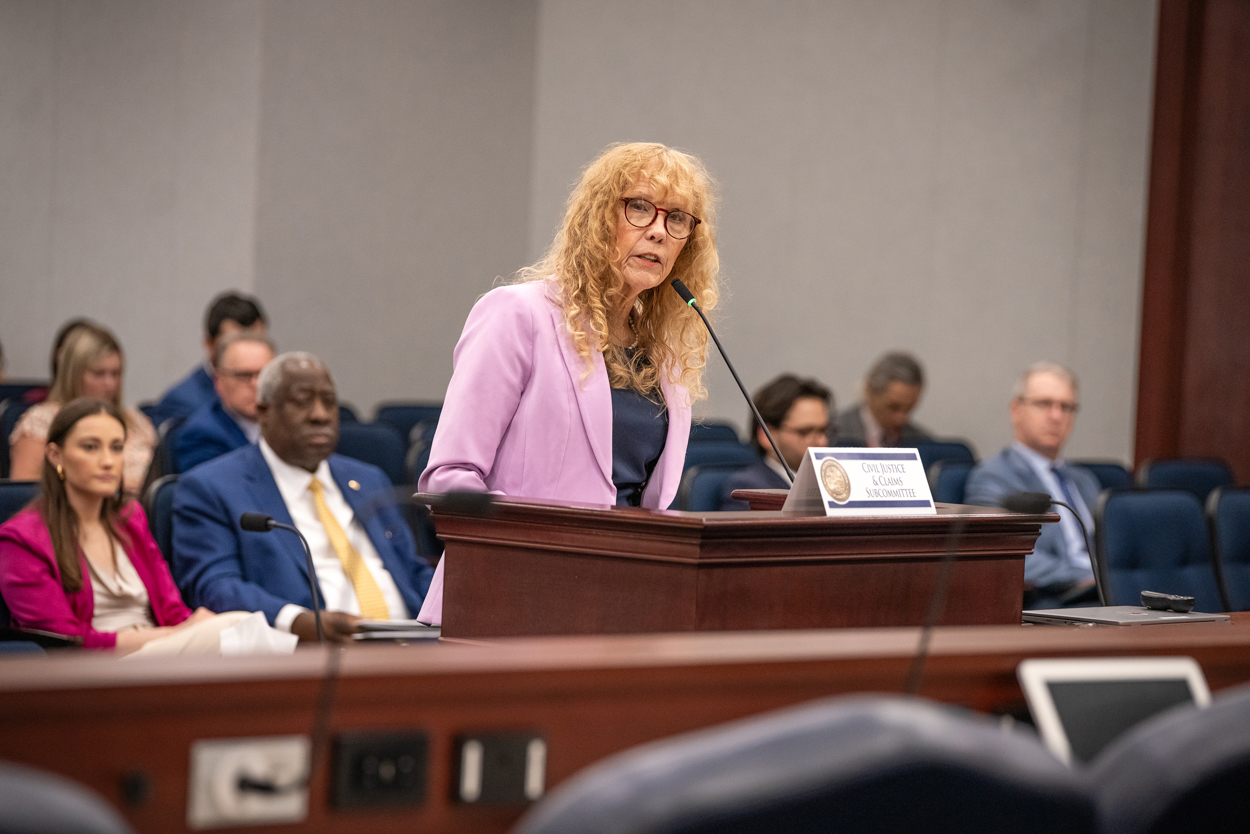
A significantly pared-down version of legislation meant to crack down on hyperpartisanship on college and university campuses is bound for a House floor vote after clearing its second and final Committee hurdle.
But while the bill (HB 725) appears poised for approval in the lower chamber, its Senate companion remains unheard — imperiling the likelihood it’ll pass this Session unless it’s absorbed into other legislation with more bicameral success.
Members of the House Education and Employment Committee voted 19-1 for HB 725, which would require Florida’s public colleges and universities to provide clearer guidance on free speech and political activity.
Highland Beach Republican Rep. Peggy Gossett-Seidman, the measure’s sponsor, noted that her legislation wouldn’t impose new rules; instead, it would merely provide clarity to higher education institutions that are now “all over the place” in enforcing existing regulations.
“This is about information,” she said. “We are taking the federal guidelines and our (state) policies in place and formatting it to be a very understandable process.”
HB 725 would require each public institution of higher education to inform students, teachers and faculty online and during orientation about the Campus Free Expression Act, which protects First Amendment activities like protests, speeches and leafleting in outdoor areas on campus while banning restrictive “free speech zones.”
The bill would also direct the Board of Governors and the State Board of Education to adopt rules and regulations outlining limits on political campaign activity by state universities and Florida College System institutions, consistent with their status as tax-exempt entities.
One month before a Primary, each institution would have to email employees and prominently post online a summary of permissible political activities, such as nonpartisan voter registration events and candidate forums open to all qualified candidates, and prohibited activities, including campaigning while on duty or implying institutional endorsement.
“I don’t think Florida even knows that we have these policies in our university system,” Gossett-Seidman said. “So, we’re going to define it, put it out there and we’re going to show the way.”
HB 725, in its current form, is markedly different from the measure Gossett-Seidman filed last year, re-filed in September and replaced in December, before she substituted new language this month to pare down its scope.

As originally written, HB 725 would have created an extensive regulatory framework governing political activity on higher-ed campuses. It would have required institutions to promote debates, grant equal access to candidates, mandate prior approval for candidates and political entities before they appear on campus, restrict partisan activity, regulate student political organizations, prohibit the use of institutional property and emails for campaigns, require annual staff training, mandate compliance monitoring by state Boards and require post-election reporting to state officials.
The Committee substitute heading to the floor, conversely, largely centers on notification, guidance and rulemaking requirements.
Opponents of the legislation — including Orlando Democratic Rep. Rita Harris, who cast the sole “no” vote but didn’t argue against the measure Thursday — appeared either to have not acquainted themselves with the bill’s current language or to still be wary of its potential impacts.
Samantha Kaddis of the nonprofit CLEO Institute said getting students to register to vote and learn about coming elections is already difficult, and HB 725 “really feels like it’s inhibiting campus activity.”
“I don’t understand how this is fair,” she said. “If there’s a bigger presence of one political party on campus, that’s OK in my mind if it facilitates discussion and conversation and debate and hosts events and tabling on campus. That’s a good thing, to host political conversation regardless of what party.”
Several members of the panel praised Gossett-Seidman for being responsive, communicative, engaging and open to suggestions. Miami Democratic Rep. Wallace Aristide, an education professional who voted against HB 725 in its first Committee stop this month, encouraged detractors of the bill to reach out to her, saying she’s willing to talk.
“I’m going to support this bill. I didn’t support it the first time, but we went over it and we talked about it and we discussed it, and that’s what I appreciate about you,” he told Gossett-Seidman.
“This allows something that’s needed more in our society than ever. People with varying opinions, people that think different, people that come from different cultural backgrounds — we’ve got to be able to talk to one another. … It’s OK if you’re in a college that people listen to varying opinions. I think sometimes when we’re young, we just stay in a bubble. We just listen to certain groups of people. We don’t listen to anybody else.”
Rep. Lisa Dunkley, a Sunrise Democrat, said the bill “promotes balance and fair treatment,” much like Gossett-Seidman.
“(We’re) so suspicious of folks who have different opinions than us, and we have walls up,” she said. “And these walls close our ears.”
Hialeah Republican Rep. Alex Rizo commended Gossett-Seidman for the work she put into her bill, adding that it was evident, based on recent conversations, that she worked to “clarify a lot and kind of filter out the noise and stay on signal.”
“Instead of putting up barriers, what you’re doing is saying, ‘This is open to all students, and that we don’t want a thumb placed on the scale at our institutions,’” he said. “We want an open marketplace of ideas and expression, and I think that’s exactly what this bill does.”
The upper-chamber companion of Gossett-Seidman’s bill (SB 1736) by Stuart Republican Rep. Gayle Harrell is substantively identical to HB 725 as originally written.
It still awaits a first hearing before the first of three Committees to which it was referred in mid-January.
Sine Die is scheduled for March 13.