Connect with us

Business

Experts say the high failure rate in AI adoption isn’t a bug, but a feature: ‘Has anybody ever started to ride a bike on the first try?’

Published

on


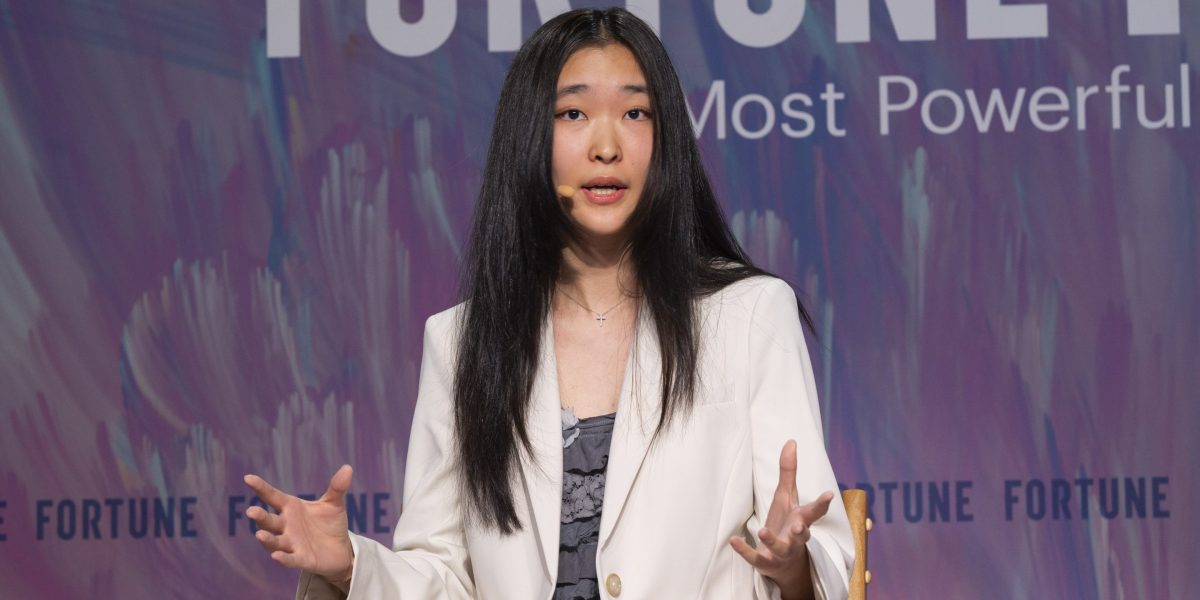
Despite mounting skepticism about artificial intelligence in the enterprise, three leaders from Microsoft, Bloomberg Beta, and an AI startup gathered at Fortune‘s Most Powerful Women conference last week with a unified message: high failure rates are not a bug in AI adoption—they’re a feature of learning how transformative technology actually works.

The panel discussion, titled “Working it out: How AI is transforming the office,” tackled head-on a widely circulated MIT study suggesting that approximately 95% of enterprise AI pilots fail to pay off. The statistic has fueled doubts about whether AI can deliver on its promises, but the three panelists—Amy Coleman, executive vice president and chief people officer at Microsoft; Karin Klein, founding partner at Bloomberg Beta; and Jessica Wu, co-founder and CEO of Sola—pushed back forcefully on the narrative that failure signals fundamental problems with the technology.

“We’re in the early innings,” Klein said. “Of course, there’s going to be a ton of experiments that don’t work. But, like, has anybody ever started to ride a bike on the first try? No. We get up, we dust ourselves off, we keep experimenting, and somehow we figure it out. And it’s the same thing with AI.”

Klein went further, encouraging the audience to become what she called “vibe coders,” or people who use accessible AI tools to build applications without traditional programming backgrounds. Coleman echoed Klein’s perspective, saying “this is all about experimentation.”

“We’re on that jagged frontier, which is we’re going to have some wins, and then we’re going to see that trough, and then we’re going to have some more wins,” she added.​

The Microsoft executive, who shared that her own CEO challenged the senior leadership team to vibe code, emphasized that creating the right organizational culture matters more than the technology itself. “I think the study is really important because it actually reflects how many people feel right now, which is, is it really something that’s going to help me at work? Will it give me more joy and take away the toil?” Coleman said.

Wu provided important context in an attempt to reframe the MIT findings. “I think the actual study says that only 5% of the AI tools people are testing are making it into production. What’s really interesting is if you actually take a step back and look at what percent of studies of IT tools being brought in actually made it into production before AI, it actually wasn’t particularly high either,” she said, noting success rates for large enterprise technology deployments historically hovered around 10% or lower.

Wu’s company, Sola, builds what she described as “agentic process automation” tools that help enterprises automate manual back-office work. She emphasized that the sheer volume of AI experimentation happening now makes lower success rates inevitable. “My guess is, there’s a lot more tools happening right, there’s a lot more tools to test, there’s a lot more things being brought in,” she said. “At the same time, AI is very new. It’s going to hallucinate. You’re going to have to work with experimentation in ways that previous [generations] wouldn’t have.”

The conversation moved beyond defending failure rates to discussing what successful AI implementation actually requires. Coleman stressed the importance of building “AI fluency” across workforces and recommended a collaborative approach where technical experts work alongside business users. “How do we pair somebody that’s really good at either tech or continuous improvement, or some of these other sort of breakthrough ways to look at processes, and sit side-by-side and not make something for you, but do something with you so they could learn how to actually put AI into your workflow,” she said.

Coleman also pushed back against the notion that enthusiasm for AI diminishes the value of human work. “The more we talk about AI, the more people think that we don’t trust humans,” she said. “It’s really important that we’re talking about the criticality of humans in all these workflows. So, it’s about talking about what time I get freed up to do what I can uniquely do as a human.”

Wu outlined what she sees in successful customer deployments: a combination of top-down leadership support and bottom-up engagement from employees who understand daily workflows. “Leadership really enabling employees to test and build things safely obviously, but giving people the flexibility to experiment, try new tools, encourage them to use and build AI and help them build fluency,” she said. “Your companies are full of people that live and breathe the business and they’ve been around for decades, sometimes even centuries. And so for AI to be deployed really effectively, you need the tool to work really alongside the people who are doing the work every single day.”

Klein emphasized that experimentation doesn’t require enterprise-scale deployments. “We also see startups working side by side, bringing engineers and business leaders together,” she said. “Even if we’re in a regulated industry, we can be trying this in our personal lives and you know using on the weekend for nonsensitive information and just starting to see some of how this technology works because that’s really where you’re going to get the gains, and advancements, and big ideas.”

When an audience member asked what organizational conditions must be true for AI transformation to succeed, Coleman’s answer revealed the cultural shift she believes is necessary. “You have to be okay with failure. You have to be okay with messy,” she said. “We’re talking about the entry point of this transformation. You have to be okay with experimentation, and you have to be okay with that jagged up and down.”

She added that companies need to embrace what she called “a learning organization” where “managers need to stop assessing tasks and start teaching learning.” The key conditions, she said, include “vulnerability and courage” as organizations navigate technology that moves faster than previous transformations.

The discussion underscored a central tension facing enterprises: the risk of moving too slowly on AI adoption may ultimately exceed the risk of experimentation itself.

You can watch the full discussion from Fortune‘s Most Powerful Women event below:

For this story, Fortune used generative AI to help with an initial draft. An editor verified the accuracy of the information before publishing.


Source link

Continue Reading

Business

CEO gives job candidates live feedback in interviews—and if they ‘get offended’ they’re not a fit

Published

on


For most candidates, feedback on how their interview went arrives days after an interview—if it arrives at all. But one CEO has decided that waiting is a waste of time. Instead, he’s started delivering his critiques to candidates on the spot (sometimes in front of a full panel) as part of the interview test. 

“Started to give candidates direct feedback during the interview process,” Gagan Biyani (who goes by @gaganbiyani) revealed in a recent X post. “Often in public during our panel interviews or live at the end of my 1:1 with them.”

The CEO of Maven, an education platform, and cofounder of another e-learning provider, Udemy, said it’s the “most telling part” of the interview—and often a deciding factor in whether they get offered the job or not. 

“If this is their nightmare, [the] candidate freezes up or even gets offended,” Biyani added it highlights straight away that they are “not a fit” for the company. “If this is exciting, they are more likely to join.”

The California-based chief revealed that he typically reserves the test for applicants that he wants to move forward with. But sometimes, Biyani admitted he’ll even throw the feedback test to candidates he liked who aren’t the perfect fit for the role.

And there’s no right or wrong answer per se—he’s even happy for candidates to scrap what they said moments earlier and pivot based on the critique: “No matter what, we expect the candidate to take the feedback in real-time and change their answers from then on out.” 

Mixed reactions to the interview tactic: ‘If your company doesn’t care about psychological safety, run this test’

The interview tactic has drawn a mixed response. Some commented that they “love it” and that it’s a great way to gauge a candidate’s ability to receive criticism and whether that can thrive under transparent communications. Many others were not so sure. 

“Publicly critiquing someone in a high-stakes, power-imbalance situation like this isn’t a test of ‘coachability.’ It’s a test of who is willing to suppress their nervous system response to humiliation, stress, and social threat in exchange for a job,” the most-liked response read. “Freezing, discomfort, or offense in that context isn’t fragility, it’s biology…. And filtering people out based on how well they override that isn’t selecting for resilience or a growth mindset. It’s selecting for compliance under pressure.”

Others highlighted that a candidate’s reaction in a high-stakes interview setting could be very different from day-to-day in the role, that some need time to sleep on feedback before responding, that it’s a “dehumanising” approach that would raise HR’s eyebrows, and ultimately could result in losing talent.

Career coach Kyle Elliott, EdD, echoed that “in 10 years of coaching more than 1,000 clients, no one has ever reported facing this type of situation.”

While feedback is perfectly normal, he said that the fact that it’s one-sided, based on a single interview without any prior rapport, with a job offer hinging on the response makes it problematic—and is unlikely to actually help test a candidate’s ability to do the job they’ve applied for. “This just reads like an insensitive science experiment.”

“If your company doesn’t care about psychological safety, likes to put people on the spot, and triggers trauma responses, I suppose you could run this test, Elliott added. “Otherwise, your interview process should mirror the candidate’s day-to-day work environment to get the best talent possible.”

How to handle live feedback in an interview

Live feedback is uncommon, but as Lewis Maleh, CEO of the global executive recruitment agency Bentley Lewis, warned, it is growing in popularity.

“We are seeing more companies experiment with stress testing candidates in various ways to assess how they perform under pressure,” he told Fortune. “I’ve heard of some tech CEOs and startup founders doing similar things, particularly in high-pressure roles where quick thinking and resilience are critical. But it’s definitely not mainstream practice.”

Maleh sees the logic. “If you’re hiring for a role where receiving feedback, adapting quickly, and performing under pressure are essential, testing those skills in real time makes sense,” he said. But “it absolutely can be cruel depending on how it’s executed.” Public critiques can intimidate even brilliant candidates, potentially ruling out top talent who simply don’t thrive in that scenario.

Either way, with tech companies often setting the pace for unconventional hiring and retention practices, similar tests could become more common across other sectors.

Maleh’s advice to candidates? Practice receiving feedback in real time. 

“Ask friends or mentors to critique your work or ideas on the spot and practice responding thoughtfully rather than defensively,” he added. “You can also use your favourite LLM chat (ChatGPT, Gemini, Grok) and ask it to “act as a very harsh interviewer” to give you practice.” 

“Focus on staying calm, asking clarifying questions, and showing you can incorporate feedback quickly.”

But don’t forget that interviews are a two-way street: “Remember that if a company’s interview process feels excessively harsh or performative, that might tell you something about their culture too.”


Source link

Continue Reading

Business

A divided Fed meets today as Wall Street watches for 4 key words from Powell: ‘in a good place’
Published

on


The chances of the Fed delivering another interest rate cut tomorrow are 90%, according to bets tracked by the CME FedWatch Fed funds futures index. But Wall Street has already priced that in. The S&P 500 ticked down 0.35% yesterday but remained near its all-time high and futures were flat this morning. In fact, traders have already moved on from the decision itself, which they regard as a done deal, even though the Federal Open Markets Committee is sharply divided over whether a cut should actually take place.

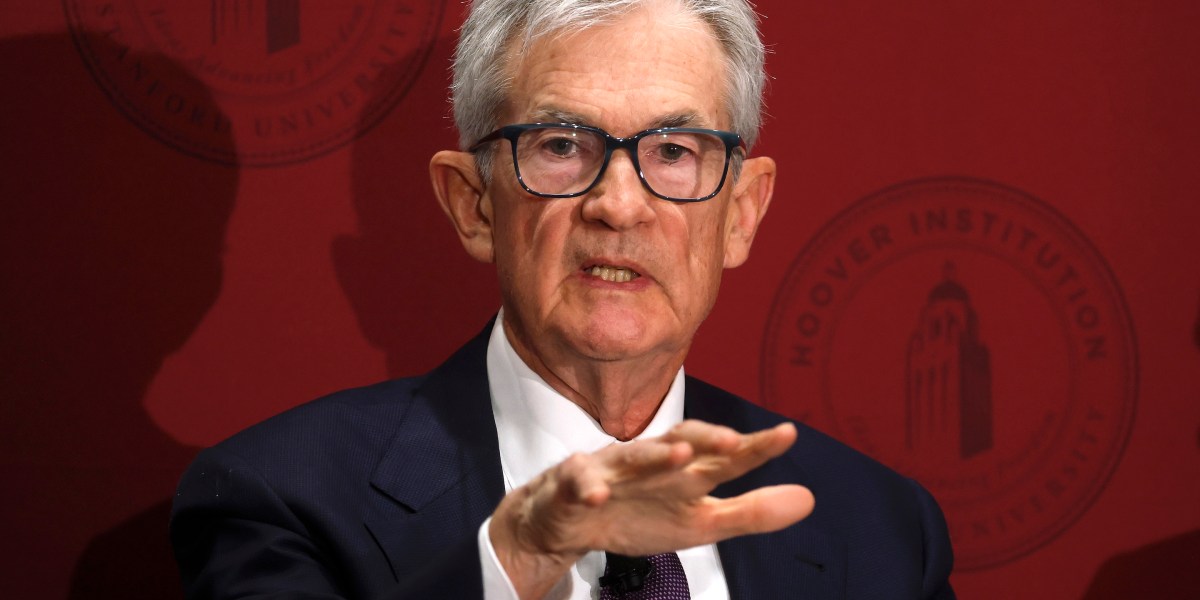
Instead, they will be looking closely for any change in wording or tone in U.S. Federal Reserve Chairman Jerome Powell’s official statement after today’s meeting and tomorrow’s new rate announcement, and in his remarks to the press when he takes questions. 

Jefferies analysts Thomas Simons and Michael Bacolas will be watching for whether Powell says four words in particular: “In a good place.” If he says that phrase, it perhaps implies that he is not leaning toward a further rate cut in January. If he does not use that phrase, he may be open to more cuts after this month.

“The most important aspect of the Fed’s communication on Wednesday is going to be whether Powell characterizes policy as ‘in a good place’, as he did for the first several months of 2025 when the Fed was on hold, or if he repeats his description of policy being ‘modestly restrictive’ or ‘somewhat above neutral’. In the case of the latter, the door will remain open to further cuts in early 2026,” they told clients in a note seen by Fortune. “We do not expect that he will say policy rates are ‘in a good place’, but that will be the phrase to watch out for.” 

The context, of course, is that Powell is famously guided by the data. No matter what he says tomorrow, his decision in January will be based on incoming macroeconomic information between then and now.

And it’s not just Powell’s decision. He presides over an FOMC that is almost evenly divided against itself. Roughly half its members are wary of creating further new rounds of cheaper money that may be inflating a bubble in the stock market. The other half sees an economy on the verge of faltering, with rising unemployment, that needs easier money to avoid recession.

At the last Fed meeting, “there was a sharp division beneath the surface” of the FOMC, according to Macquarie’s David Doyle and Chinara Azizova. “Eight of 19 participants saw the policy rate in the 3.5 to 3.75% range [below where it is now at 3.75%]. This division is likely to remain apparent in the December update.”

“Given the likelihood for dissents, the growing differences in forward-looking policy projections are likely to be addressed. The chair is likely to emphasize that this is to be expected when the dual mandate is in tension due to rising unemployment and still elevated inflation,” they said.

Unemployment is trending upward, as shown in this chart from Macquarie:

At Goldman Sachs, chief U.S. economist David Mericle is also looking for signs of dissent. “There will most likely be two hawkish dissents in the statement, and we expect five participants to register soft dissents,” he told clients. “But we are not sure that all of this would add up to meaningful new information for the market.” 

Those dissents will hinge on how Fed members feel about the employment market, which seems to be weakening by the day. 

“It is not realistic to expect the FOMC to box itself in too much by signaling a very strong bias toward a pause in January because if the labor market is still actively softening at that point, a cut might be appropriate. In fact, participants will be even more uncertain than usual about what will be appropriate at the next meeting because we are now two employment reports behind schedule,” Mericle told clients.

Goldman estimates that U.S. job growth is below the “breakeven” rate vs job cuts:
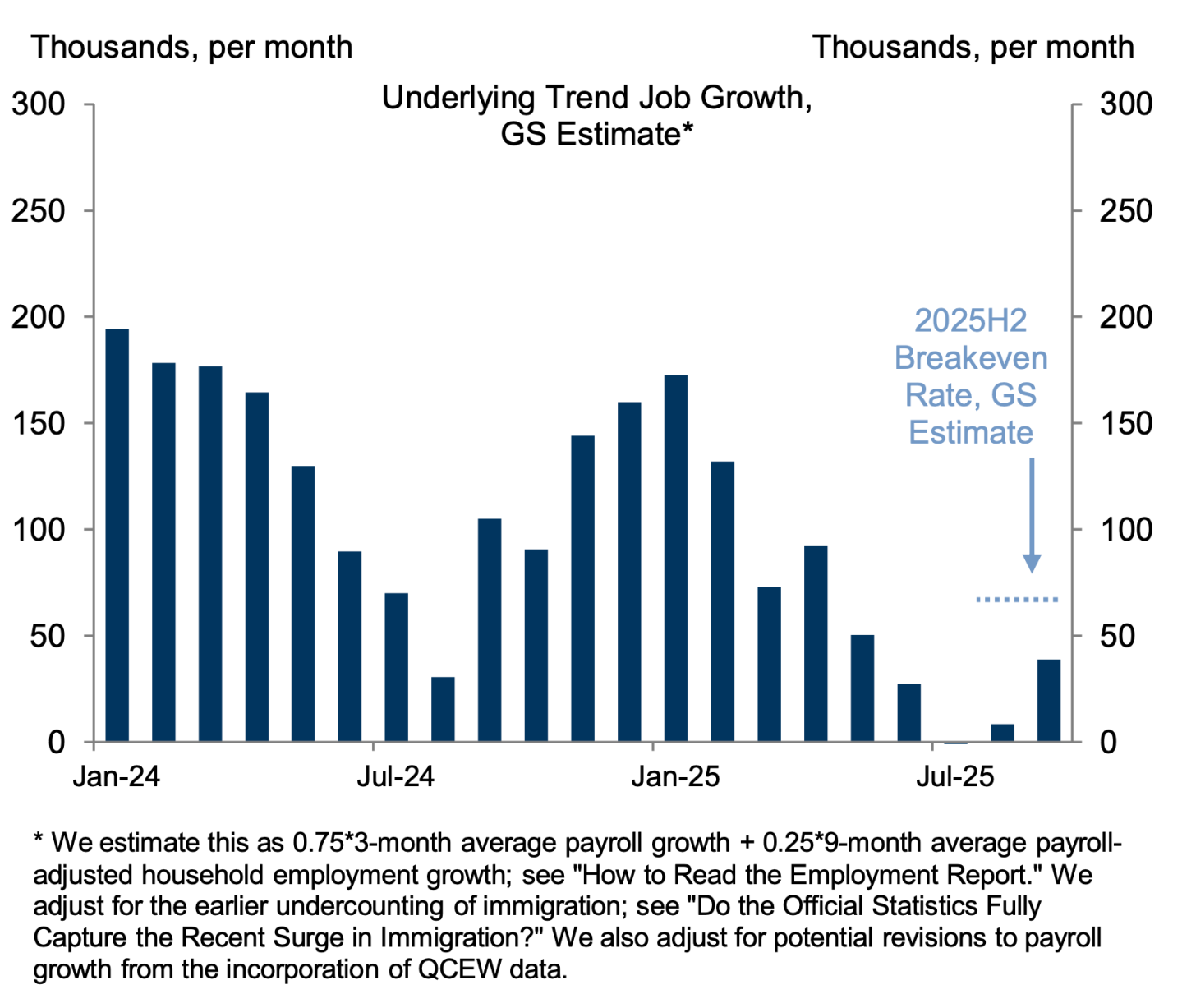
Those missing employment reports—cancelled by the U.S. government shutdown—will leave the Fed more dependent than usual on anecdotal or imperfect private employment data. The Fed’s “beige book,” a periodic summary of quotes from American businesses, shows that employers are increasingly not creating new jobs. 

“Last week’s Beige Book suggested that labor demand is weakening via less hiring rather than layoffs – a fragile equilibrium in the labor market that will keep the Fed in a risk management mindset,” Oxford Economics analyst Michael Pearce.

Private employer data is equally gloomy, according to Bill Adams, chief economist for Comerica Bank in Dallas. ADP, Revelio Labs, and Challenger, Gray, & Christmas—three companies that compile private market jobs data—all saw payrolls falling in the last few months, he told Fortune. “Challenger, Gray, & Christmas reported employers announced plans for 71,000 job cuts in November, up 24% from the same month last year. They cited restructuring, market and economic conditions, and artificial intelligence as key reasons for layoff announcements,” he said. 

If the labor market continues to deteriorate, then it becomes less likely that Powell will say interest rates are “in a good place” and more likely that the Fed will deliver future cuts in 2026.

Here’s a snapshot of the markets ahead of the opening bell in New York this morning:

  • S&P 500 futures were flat this morning. The last session closed down 0.35%. 
  • STOXX Europe 600 were flat in early trading. 
  • The U.K.’s FTSE 100 was flat in early trading. 
  • Japan’s Nikkei 225 was up 0.14%. 
  • China’s CSI 300 was down 0.51%.
  • The South Korea KOSPI was down 0.27%.
  • India’s NIFTY 50 was down 0.47%. 
  • Bitcoin slid to $90K.


Source link

Continue Reading

Business

Key questions to stay grounded in the AI frenzy

Published

on


Pop quiz: How do you know if you’re witnessing a real wave of technology transformation, and not just a tech flash in the pan? 

Answer: Look at the stack. In a true technology wave, the whole stack changes, not just one layer, says Kindred Ventures’ Steve Jang. And if you look at AI, he says, that’s exactly what’s going on: “Right now you’re seeing it all the way from chips all the way up through the application layer.”

Jang, Kindred’s founder and managing partner, was speaking at Fortune’s Brainstorm AI conference in San Francisco on Monday, on a panel to discuss how VCs are thinking about these bubbly times in the AI market. His point is that the angst over the AI bubble is kind of besides the point. What really matters is whether the underlying tech transformation is real or not. 

Sapphire Ventures partner Cathy Gao, who was also on the panel, said that valuations for some companies have clearly climbed far beyond any sort of fundamentals. But she also noted that the growth curves of certain companies right now “far outstrip the growth curves of companies we’ve ever seen before.”

To help sift through the hype in this environment and find the startups with real staying power, Gao said she uses a three-question test.

First, is the startup’s product a “feature” or a “workflow?” The stand-outs, she says, are “companies that are able to actually embed and fully overtake an existing workflow, while building significant switching costs.”

Second, is distribution built-in? People don’t want to learn how to use another tool, says Gao. The key qualities here are whether the tool is “integrated in usability and in all the other solutions that it needs to be in order for the workflow to be fully functional?”

And finally, does the company get stronger over time? This is called “compounding durability,” says Gao. “With every new user, does the solution get better, does it get cheaper, does it get faster?”

We’ll have more questions, and answers, at Brainstorm AI today. Watch the livestream here.

See you tomorrow,

Alexei Oreskovic
X:
@lexnfx
Email:alexei.oreskovic@fortune.com
Submit a deal for the Term Sheet newsletter here.

Joey Abrams curated the deals section of today’s newsletter.Subscribe here.

Venture Deals

UnconventionalAI, a San Francisco-based developer of chips and computer systems designed for AI, raised $475 million in seed funding. AndreessenHorowitz and Lightspeed led the round and were joined by Sequoia, LuxCapital, DCVC, FutureVentures, JeffBezos, and others.

Airwallex, a San Francisco and Singapore-based payments and banking platform for businesses, raised $330 million in Series G funding. Addition led the round and was joined by T. Rowe Price, Activant, Lingotto, and RobinhoodVentures.

BlueCurrent, a Hayward, Calif.-based developer of silicon solid-state batteries, raised $80 million in a Series D extension from Amazon, KochDisruptiveTechnologies, PiedmontCapital, RusheenCapitalPartners, and Allen& Company.

Crown, a São Paulo, Brazil-based stablecoin issuer, raised $13.5 million in Series A funding. Paradigm led the round.

ResembleAI, a Mountain View, Calif.-based security platform for enterprise AI, raised $13 million in funding from SonyInnovationFund, BerkeleyFrontierFund, ComcastVentures, CraftVentures, and others.

Scowtt, a Seattle Wash.-based AI-powered advertising optimization platform, raised $12 million in Series A funding. InspiredCapital led the round and was joined by LiveRampVentures, Angeles Investors, and AngelesVentures.

Equixly, a Verona, Italy-based agentic AI platform designed for API security testing, raised €10 million ($11.6 million) in Series A funding. 33NVentures led the round and was joined by existing investors.

Private Equity

ContextLogic agreed to acquire US Salt Parent Holdings, a Watkins Glen, N.Y.-based producer of evaporated salt products, from private equity funds managed by EmeraldLakeCapitalManagement for $907.5 million. 

Exits

BerkshirePartners agreed to acquire UnitedFlowTechnologies, an Irving, Texas-based provider of process and equipment solutions for water and wastewater systems, from H.I.G.Capital. Financial terms were not disclosed.


Source link

Continue Reading

Trending

Copyright © Miami Select.
