Connect with us

Business

Executives from Zillow, Experian, Okta, and Salesforce say AI agents are more than just hype, but big questions around security and trust remain

Published

on


Welcome to Eye on AI! In this edition…agentic AI at Brainstorm Tech…Microsoft to buy AI from Anthropic in partial shift from OpenAI…Oracle shares skyrocket on announcement of massive AI deals…AI is coming for YouTube creators.

I’m on my way back from Fortune Brainstorm Tech, where I spent the week in the mountains of Park City, Utah, with about 300 AI-focused executives—and I’m still thinking about AI agents. (I probably should be thinking about the wind in the evergreens and the first hints of fall color, but that’s life on the AI beat.)

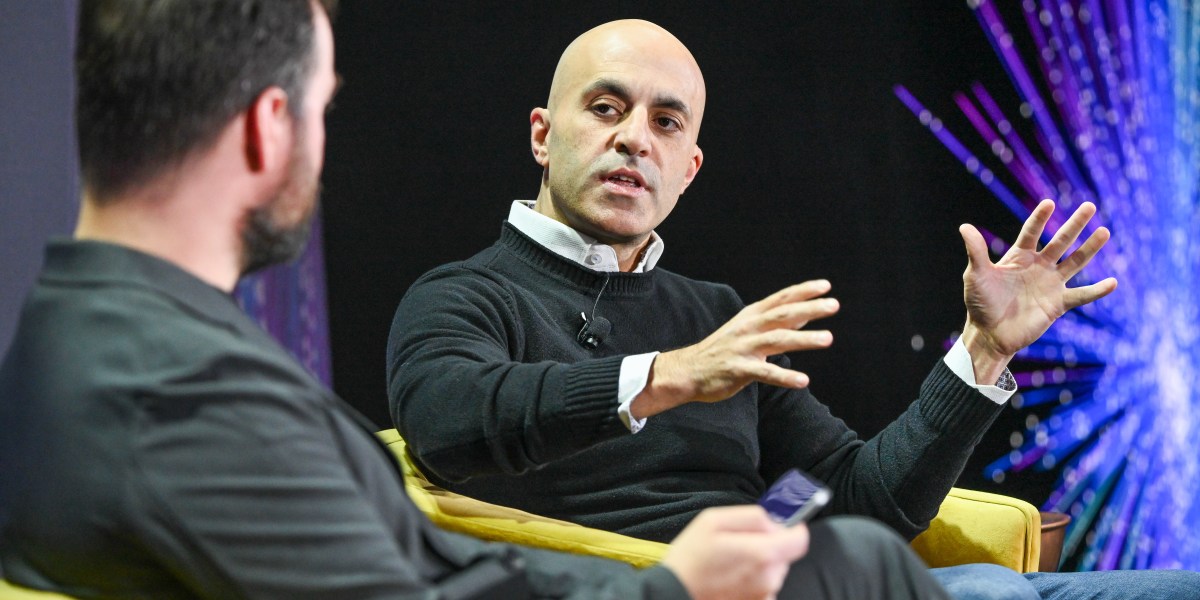
One of the most popular panels I moderated was on AI agents: autonomous software systems that can perceive their environment, make decisions, and take actions toward goals with little or no human intervention. Full disclosure: The session was sponsored by Salesforce, which has a major stake in the space with its Agentforce platform.

But the conversation went far beyond one company’s pitch. Leaders from Zillow, Experian, and Okta joined to discuss how agentic AI is beginning to take shape inside large enterprises. Their consensus: Agents aren’t just souped-up chatbots. While it’s still early days, they represent a shift from tools that simply follow instructions to systems that can act on context—ideally within the guardrails companies set.

Shibani Ahuja, senior vice president of Enterprise IT Strategy at Salesforce, shared what I consider to be a really useful “maturity model” that helped me understand the evolution of AI agents within enterprise companies:

  • Level 0: The copilots we all know—tools like ChatGPT, Claude, or Gemini that retrieve information and respond to prompts.
  • Level 1: Agents that not only surface information but also recommend next actions (say, suggesting how to resolve a customer support ticket).
  • Level 2: Agents that begin autonomously handling routine tasks in siloed data environments—scheduling meetings, sending follow-up emails, or pulling from internal calendars and email systems.
  • Level 3: The real turning point—agents that can orchestrate workflows across multiple domains. Think an agent managing a sales pipeline by combining CRM data, support tickets, and financial reports to deliver a full customer picture.
  • Level 4: Still largely aspirational—a world of “any-to-any” agent interoperability, where systems talk to one another across organizations. Imagine agents from different platforms collaborating to process orders, manage inventory, and route customer feedback in real time.

Nicholas Stevens, vice president of product for AI and home loans at Zillow, offered a concrete example of where the company is on this maturity scale—which, to my ear, sounded like Level 1 edging into Level 2. Zillow owns Follow Up Boss, one of the largest CRMs for real estate professionals, where AI is being used to lighten the load of human real estate agents juggling calls, notes, follow-ups, and property tours.

At first, Stevens explained, the tools are basic—summarizing calls or drafting a message that a human agent can edit. But over time, they begin taking on more autonomous tasks, like sending a pre-approval letter or booking a tour. The progression isn’t just about the technology, he said, but about user trust. Many real estate agents prefer to review and customize outputs early on. Yet as the system learns their tone, quirks, and even emoji preferences, they become more comfortable handing off responsibility.

Kathleen Peters, chief innovation officer at Experian, said the company already has conversational agents that recommend actions and now carry them out—for example, walking a customer through the steps to boost a credit score. On the B2B side, Experian’s agents are helping financial institutions assess risk in loan and credit card underwriting, shifting decision-making power from data science teams to product managers and even retail bankers. Looking ahead, Peters said the next step is “agents talking to agents, especially with a number of our partners like Zillow.” 

One of the things I’m particularly concerned about, though, is agent security—especially as companies start implement protocols like MCP (Model Context Protocol), a framework that standardizes how LLMs connect to and interact with external data sources, tools, and services. When I asked how many in the room had already implemented MCP in their organizations, many raised their hand. Bhawna Singh, chief technology officer of cybersecurity platform Okta, put my concern into perspective: She pointed out that before MCP, there wasn’t even a common understanding to start from regarding AI agents. While it’s early days, she said, and she acknowledged that MCP opens up a new attack surface that boosts the risk of malicious or spoofed agents, having a standard is a big step forward. Clearly, though, many enterprises won’t be able to get to Level 3 or Level 4 without more confidence in the safety and security of protocols like MCP.

Salesforce’s Ahuja agreed that the future was not about building agents that are “wild and free.” Instead, it would be about setting deterministic parameters for the things that must be consistent and reliable, while allowing adaptive reasoning where richer, more context-dependent answers are valuable.

I came away a bit surprised at how seriously these executives are taking the journey towards implementing AI agents across industries. They seemed realistic yet optimistic, even though there is plenty of hype out there–just six months ago, my former colleague Sage Lazarro wrote in Eye on AI that some AI agent customers said the reality did not match the hype. Maybe it’s just like some of the young trees that were swaying outside my hotel window in Park City: growing fast, not yet fully mature, but still well worth watching.

With that, here’s the rest of the AI news.

Sharon Goldman
sharon.goldman@fortune.com
@sharongoldman

FORTUNE ON AI

Cohere looks to shed its underdog status with a star AI hire, new CFO, and $7 billion valuation—chasing ‘ROI over AGI’ —by Sharon Goldman 

For OpenAI’s chief revenue officer, research chops rather than ‘big marketing efforts’ is the key to winning customers —by Sharon Goldman

AI for chemistry startup CuspAI raises $100 million in new venture capital funding —by Jeremy Kahn

AI IN THE NEWS

Microsoft to buy AI from Anthropic in partial shift from OpenAI. Microsoft is breaking from its deep reliance on OpenAI by bringing Anthropic’s Claude models into Office 365, according to The Information, marking its biggest move yet to diversify AI providers. In the coming weeks, the company will announce that Office Copilot features in Word, Excel, PowerPoint, and Outlook will be powered by a mix of Anthropic and OpenAI technology. Executives say Anthropic’s models, hosted on AWS, outperformed OpenAI’s in key areas like generating financial functions in spreadsheets and producing more polished PowerPoint decks. While the shift could be seen as a bargaining tactic amid tense negotiations with OpenAI over its restructuring and IPO ambitions, insiders emphasize that Microsoft is simply going with the best-performing models. 

Oracle shares skyrocket on announcement of massive AI deals. The Wall Street Journal reported Oracle shares soared nearly 40% after the company disclosed a string of multibillion-dollar AI-related contracts, signaling far greater traction in the cloud infrastructure race than expected. The software giant reported $455 billion in outstanding contract revenue for the quarter ending Aug. 31—more than four times last year’s level—and said additional mega-deals could soon push that figure above $500 billion. CEO Safra Catz called it an “astonishing quarter,” citing demand for Oracle Cloud Infrastructure from OpenAI, Meta, and Elon Musk’s xAI, among others. Analysts noted the backlog, which includes the $500 billion Stargate supercomputer venture with SoftBank and OpenAI, makes Oracle’s long-term revenue targets highly achievable. Once seen as a cloud laggard, Oracle is now positioning itself as a central player in supplying infrastructure for the AI boom, aided by Larry Ellison’s close ties with tech leaders like Elon Musk and Nvidia’s Jensen Huang.

AI is coming for YouTube creators. According to reporting from The Atlantic, YouTube creators like Jon Peters, who built an audience of over a million subscribers by sharing woodworking tutorials, now face the threat of obsolescence as their videos are being quietly scraped to train AI. Researchers have identified more than 15 million YouTube videos in AI training datasets—often without creators’ knowledge or permission—including instructional, news, and educational content. Tech companies such as Microsoft, Meta, Amazon, and Nvidia have used these datasets to develop generative video tools that can churn out custom clips, raising unresolved legal questions about copyright and fair use. While companies argue the practice is lawful, critics warn it could undermine creators’ livelihoods as AI-generated videos increasingly compete with and even overshadow authentic human-made work.

AI CALENDAR

Oct. 6-10: World AI Week, Amsterdam

Oct. 21-22: TedAI San Francisco. Apply to attend here.

Dec. 2-7: NeurIPS, San Diego

Dec. 8-9: Fortune Brainstorm AI San Francisco. Apply to attend here.

EYE ON AI NUMBERS

116%

That’s how much consumer spending on AI tools has surged year-over-year in the first half of 2025, according to a new report from intelligence firm Consumer Edge.

OpenAI leads the pack, grabbing 40% of the market as subscriptions to ChatGPT Pro jumped more than 1,000% over the past year. But some upstarts are gaining ground: Perplexity’s AI search tool is growing fast, while Elon Musk’s xAI has already reached two-thirds of its scale.

The biggest shift is in video, where tools like Runway and Invideo are making it easy for anyone to create explainer clips or even cinematic scenes, fueling more than 50% growth in the category. AI is also finding a home in the workplace: Apps like Otter.ai and Fireflies.ai are becoming everyday meeting companions, while health care and engineering tools are expanding at breakneck pace.

The report says the takeaway is clear—consumers aren’t just experimenting anymore. AI is becoming a staple in how people work, create, and spend.



Source link

Continue Reading

Business

Databricks CEO Ali Ghodsi says company will be worth $1 trillion by doing these three things

Published

on


Ali Ghodsi, the CEO and cofounder of data intelligence company Databricks, is betting his privately held startup can be the latest addition to the trillion-dollar valuation club.

In August, Ghodsi told the Wall Street Journalthat he believed Databricks, which is reportedly in talks toraise funding at a $134 billion valuation, had “a shot to be a trillion-dollar company.” At Fortune’s Brainstorm AI conference in San Francisco on Tuesday, he explained how it would happen, laying out a “trifecta” of growth areas to ignite the company’s next leg of growth.

The first is entering the transactional database market, the traditional territory of large enterprise players like Oracle, which Ghodsi said has remained largely “the same for 40 years.” Earlier this year, Databricks launched a link-based offering called Lakehouse, which aims to combine the capabilities of traditional databases with modern data lake storage, in an attempt to capture some of this market.

The company is also seeing growth driven by the rise of AI-powered coding. “Over 80% of the databases that are being launched on Databricks are not being launched by humans, but by AI agents,” Ghodsi said. As developers use AI tools for “vibe coding”—rapidly building software with natural language commands—those applications automatically need databases, and Ghodsi they’re defaulting to Databricks’ platform.

“That’s just a huge growth factor for us. I think if we just did that, we could maybe get all the way to a trillion,” he said.

The second growth area is Agentbricks, Databricks’ platform for building AI agents that work with proprietary enterprise data.

“It’s a commodity now to have AI that has general knowledge,” Ghodsi said, but “it’s very elusive to get AI that really works and understands that proprietary data that’s inside enterprise.” He pointed to the Royal Bank of Canada, which built AI agents for equity research analysts, as an example. Ghodsi said these agents were able to automatically gather earnings calls and company information to assemble research reports, reducing “many days’ worth of work down to minutes.”

And finally, the third piece to Ghodsi’s puzzle involves building applications on top of this infrastructure, with developers using AI tools to quickly build applications that run on Lakehouse and which are then powered by AI agents. “To get the trifecta is also to have apps on top of this. Now you have apps that are vibe coded with the database, Lakehouse, and with agents,” Ghodsi said. “Those are three new vectors for us.”

Ghodsi did not provide a timeframe for attaining the trillion-dollar goal. Currently, only a handful of companies have achieved the milestone, all of them as publicly traded companies. In the tech industry, only big tech giants like Apple, Microsoft, Nvidia, Alphabet, Amazon, and Meta have managed to cross the trillion-dollar threshold.

To reach this level would require Databricks, which is widely expected to go public sometime in early 2026, to grow its valuation roughly sevenfold from its current reported level. Part of this journey will likely also include the expected IPO, Ghodsi said.

“There are huge advantages and pros and cons. That’s why we’re not super religious about it,” Ghodsi said when asked about a potential IPO. “We will go public at some point. But to us, it’s not a really big deal.”

Could the company IPO next year? Maybe, replied Ghodsi.


Source link

Continue Reading

Business

New contract shows Palantir working on tech platform for another federal agency that works with ICE

Published

on


Palantir, the artificial intelligence and data analytics company, has quietly started working on a tech platform for a federal immigration agency that has referred dozens of individuals to U.S. Immigration and Customs Enforcement for potential enforcement since September.

The U.S. Citizenship and Immigration Services agency—which handles services including citizenship applications, family immigration, adoptions, and work permits for non-citizens—started the contract with Palantir at the end of October, and is paying the data analytics company to implement “Phase 0” of a “vetting of wedding-based schemes,” or “VOWS” platform, according to the federal contract, which was posted to the U.S. government website and reviewed by Fortune.

The contract is small—less than $100,000—and details of what exactly the new platform entails are thin. The contract itself offers few details, apart from the general description of the platform (“vetting of wedding-based schemes”) and an estimate that the completion of the contract would be Dec. 9.Palantir declined to comment on the contract or nature of the work, and USCIS did not respond to requests for comment for this story.

But the contract is notable, nonetheless, as it marks the beginning of a new relationship between USCIS and Palantir, which has had longstanding contracts with ICE, another agency of the Department of Homeland Security, since at least 2011. The description of the contract suggests that the “VOWS” platform may very well be focused on marriage fraud and related to USCIS’ recent stated effort to drill down on duplicity in applications for marriage and family-based petitions, employment authorizations, and parole-related requests.

USCIS has been outspoken about its recent collaboration with ICE. Over nine days in September, USCIS announced that it worked with ICE and the Federal Bureau of Investigation to conduct what it called “Operation Twin Shield” in the Minneapolis-St. Paul area, where immigration officials investigated potential cases of fraud in immigration benefit applications the agency had received. The agency reported that its officers referred 42 cases to ICE over the period. In a statement published to the USCIS website shortly after the operation, USCIS director Joseph Edlow said his agency was “declaring an all-out war on immigration fraud” and that it would “relentlessly pursue everyone involved in undermining the integrity of our immigration system and laws.” 

“Under President Trump, we will leave no stone unturned,” he said.

Earlier this year, USCIS rolled out updates to its policy requirements for marriage-based green cards, which have included more details of relationship evidence and stricter interview requirements.

While Palantir has always been a controversial company—and one that tends to lean into that reputation no less—the new contract with USCIS is likely to lead to more public scrutiny. Backlash over Palantir’s contracts with ICE have intensified this year amid the Trump Administration’s crackdown on immigration and aggressive tactics used by ICE to detain immigrants that have gone viral on social media. Not to mention, Palantir inked a $30 million contract with ICE earlier this year to pilot a system that will track individuals who have elected to self-deport and help ICE with targeting and enforcement prioritization. There has been pushback from current and former employees of the company alike over contracts the company has with ICE and Israel.

In a recent interview at the New York Times DealBook Summit, Karp was asked on stage about Palantir’s work with ICE and later what Karp thought, from a moral standpoint, about families getting separated by ICE. “Of course I don’t like that, right? No one likes that. No American. This is the fairest, least bigoted, most open-minded culture in the world,” Karp said. But he said he cared about two issues politically: immigration and “re-establishing the deterrent capacity of America without being a colonialist neocon view. On those two issues, this president has performed.”


Source link

Continue Reading

Business

CoreWeave CEO: Despite see-sawing stock, IPO was ‘incredibly successful’ amid challenges of tariff timing

Published

on


CoreWeave has been rocked by dizzying stock swings—with its stock currently trading 52% below its post-IPO high—and a frequent target of market commentators, but CEO Michael Intrator says the company’s move to the public markets has been “incredibly successful. And he takes the public’s mixed reaction in stride, given the novelty of CoreWeave’s “neocloud” business which competes with established cloud providers like Amazon AWS and Google Cloud.

“When you introduce new models, introduce a new way of doing business, disrupt what has been a static environment, it’s going to take some people some time,” Intrator said Tuesday at Fortune’s Brainstorm AI conference in San Francisco. But, he added, more people are beginning to understand the CoreWeave’s business model.

“We came out into one of the most challenging environments,” Intrator said of CoreWeave’s March IPO, which occurred very close to President Trump’s “Liberation Day” tariffs in April. “In spite of the incredible headwinds, we’re able to launch a successful IPO.”

CoreWeave, which priced its IPO at $40 per share, has experienced frequent severe up-and-down price swings in the eight months since its public market debut. At its closing price of $90.66 on Tuesday, the stock remains well above its IPO price.

As Fortune reported last month, CoreWeave’s rapid rise has been fueled by an aggressive, debt-heavy strategy to stand up data centers at unprecedented speed for AI customers. And for now, the bet is still paying off. In its third-quarter results released in November, the company said its revenue backlog nearly doubled in a single quarter—to $55.6 billion from $30 billion—reflecting long-term commitments from marquee clients including Meta, OpenAI, and French AI startup Poolside. Both earnings and revenue came in ahead of Wall Street expectations.

But the numbers were not all celebratory. CoreWeave disclosed a further increase in the debt it has taken on to finance its expansion, and it revised its full-year revenue outlook downward—suggesting that, even with historic demand in the pipeline.

With media headlines calling CoreWeave a “ticking time bomb,” with critics calling out insider stock sales, circular financing accusations and an overreliance on Nvidia, Intrator was asked whether he felt CoreWeave was misunderstood.

“Look, we built a company that is challenging one of the most stable businesses that exist—that cloud business, these three massive players,” he said, referring to AWS, Microsoft Azure and Google Cloud.  I feel like it’s incumbent on CoreWeave to introduce a new business model on how the cloud is going to be built and run. And that’s what we’re doing.” 

He repeatedly framed CoreWeave not as a GPU reseller or traditional data-center operator but as a company purpose-built from scratch to deliver high-performance, parallelized computing for AI workloads. That focus, he said, means designing proprietary software that orchestrates GPUs, building and colocating its own infrastructure, and moving “up the stack” through acquisitions such as Weights & Biases and OpenPipe.

Intrator also defended the company’s debt strategy, saying CoreWeave is effectively inventing a new financing model for AI infrastructure. He pointed to the company’s ability to repurpose power sources, rapidly deploy capacity, and finance large-scale clusters as proof it is solving problems incumbents never had to face.

“When I look back at history of the company, it took us a year with with a company investor like Fidelity, before they were like, ‘Oh, I get it,’” he said. “So look, we’ve been public for eight months. I couldn’t be prouder of what the company has accomplished.” 


Source link

Continue Reading

Trending

Copyright © Miami Select.