That gap is what Eigen is betting on. The stealth AI startup has raised a $15 million seed round from Benchmark with Pinterest founder Ben Silbermann and Dreamer founder David Singleton (who later sold his company to Meta) joining as angel investors, Fortune learned exclusively.
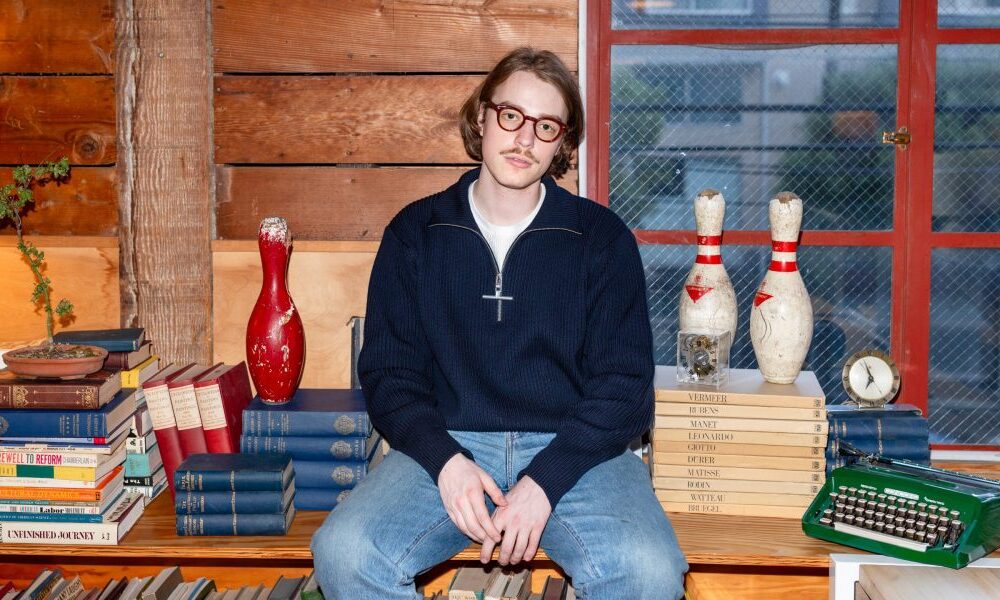
Scherer, the company’s 22-year-old founder, grew up in a village of fewer than 1,000 people outside Frankfurt, Germany. He left high school at 17, taught himself to code, and arrived in San Francisco in May 2025 on a one-way flight and an O-1 visa. Before that, he helped scale Augment—a Paris-based alternative MBA for entrepreneurs—from near-zero to over $1 million in monthly revenue.
Benchmark partner Sarah Tavel had spent years hunting for the right company in the AI social space. “I’d long felt that one of the most important consumer opportunities in the AI era was going to be something that felt like a friend,” she told Fortune. “Companies like Replika and Character.ai were the first to show the potential here, and although I met with several founders going after this opportunity, most felt like they created more loneliness, not less. Then I met Paul.”
Scherer isn’t building another Replika. Product details remain deliberately vague, but he frames Eigen’s thesis against the hyper-personalization logic that defines modern tech. “Everyone is racing to build your AI best friend,” he told Fortune. “What we’re doing is asking: what would this world look like if it was perfect for all of us, not just each of us individually?” The goal, he says, is to create shared, synchronous experiences that bind people together rather than atomize them. The team isn’t ready to outline what exactly that technology looks like, and recognizes it’s hard to imagine what it might resemble. But the market, Scherer says, is clear.
Half of U.S. adults reported feeling isolated in the APA’s 2025 Stress in America survey. Meanwhile, the global AI companion market—valued at $37.12 billion in 2025—is projected to reach $552.49 billion by 2035, according to Precedence Research.
Silbermann sees Eigen as a different kind of answer. “Paul described an AI friend who enriches relationships with your real friends, not replaces them,” he told Fortune. “What I hope stays consistent is Eigen’s passion for building products that are pro-social, genuinely helpful, and fun.”
To build it, Scherer is assembling what he calls a “U-shaped” team. Deeply experienced tech veterans will work alongside unusually young creative builders, skipping the conventional middle. Engineers think like product managers; the company has also hired a screenwriter. Nearly all its engineers, Scherer said, are former founders.
Tavel was taken as much by the quality of Scherer’s thinking as by the vision itself. “The elements of Paul’s vision were completely contrarian and when I pushed him, deeply thought through,” she told Fortune.
The seed capital will go toward hiring—specifically, Scherer says, building “the best team on earth.” Whether that team will be able to create the synchronous, shared experiences Eigen pitches is the question the company is now funded to answer.