Connect with us

Business

Exclusive: Ankar, which uses AI to streamline patent filing, secures $20 million Series A funding

Published

on


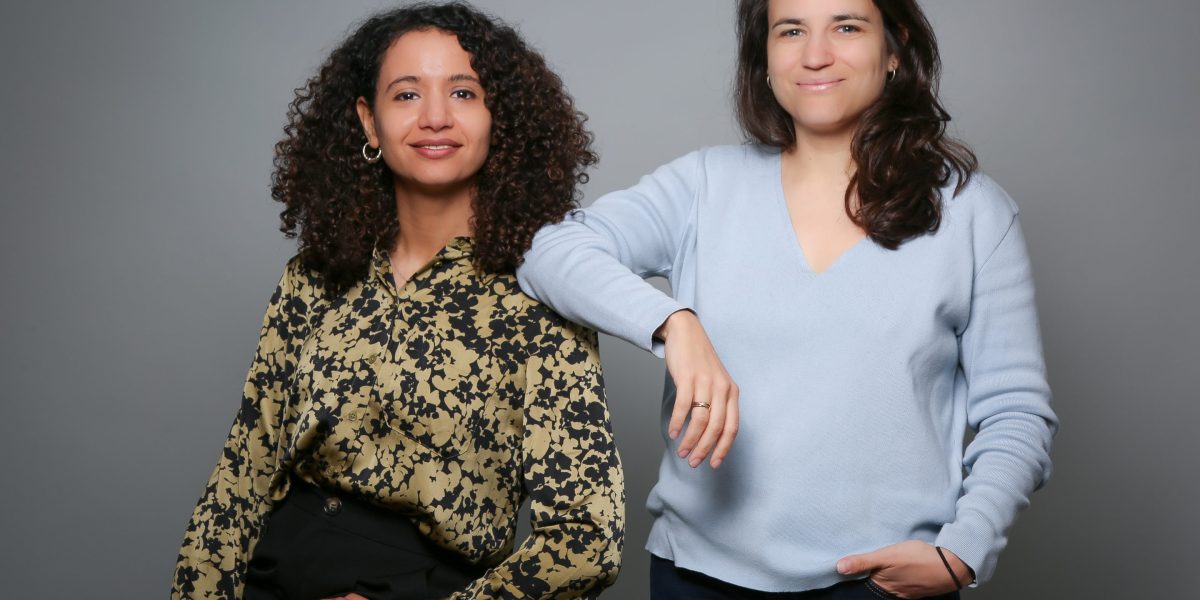
Two former Palantir employees hoping to use AI to transform the process for filing and managing patents have secured $20 million in investment for their London-based startup, Ankar.

The Series A funding round for Ankar was led by venture capital firm Atomico, with participation from Index Ventures, Norrsken, and Daphni. The company had announced a £3 million ($4 million) seed round in May that was led by Index, with support from Daphni and Motier Ventures.

Ankar was founded by Tamar Gomez and Wiem Gharbi in 2024. The pair met while working at Palantir, where they both encountered the time-consuming process of trying to obtain patents for new technology. Gomez, who has a business background, worked as a development strategist for Palantir, while Gharbi, who is a data scientist by training, worked on machine learning applications. They took the name Ankar for their new company from the name of an omniscient and powerful knight found in pre-Islamic poetry. 

“We are trying to turn IP that has been viewed as a cost center for a very long time into more of a strategic and competitive asset that we need today in a world that is becoming more and more competitive,” Gharbi, who is Ankar’s chief technology officer, told Fortune

The new funding for Ankar comes as intellectual property has become increasingly critical to corporate value. Intangible assets like IP now represent up to 90% of the value of S&P 500 companies, according to the World Intellectual Property Organization. Yet the systems for protecting those assets remain stubbornly outdated, according to Gomez and Gharbi, who say they witnessed how time-consuming and difficult it is to obtain a patent when they were working at Palantir.

“To go from something that’s in the head of the inventor—an innovation—to something that is a bankable asset that can be leveraged by the company in the form of a patent took years, basically,” Gomez, who is Ankar’s CEO, said. “The tools to do so were incredibly legacy or just non-existent. It was like a hodgepodge of manual processes.”

Patent attorneys can spend weeks searching multiple databases and reading patent filings to try to determine the extent to which, if any, prior patents might conflict with the new invention they were hoping to protect. Then it can take many more weeks to craft a patent application with the right arguments to try to overcome any objections from patent examiners. Securing a patent can take up to 24 months.

Ankar wants to use large language models to streamline that process. Because these models can search for phrasing that has the same meaning, even if it doesn’t use the exact same keywords, they can quickly surface patent filings from databases that previously would have taken multiple searches and hours of reading to discover.

The startup’s invention discovery tool searches across 150 million patent applications and 250 million scientific publications and produces reports assessing how “novel” an invention is and what claims have already been made by previously patented inventions that might be similar (what’s known in the patent world as “prior art.”) The platform helps inventors harvest their ideas and guides patent attorneys through drafting applications, including spotting gaps in existing patents where claims for a new invention might get the most traction. It also supports patent lawyers when they have to respond to possible challenges from patent examiners, giving them a single view of the entire history of the application process.

“Patent claims are basically the scope of protection for your invention—like, what are the most important pieces of my invention that I want to protect? [Ankar’s] tool can help suggest an initial set of claims and then help the patent attorney think through potential options for broadening these claims,” Gharbi said. “So it’s no longer about just helping you kind of generate words, because we think that the value of just generating words is going to decrease over time. It’s going to become more about like, how do I generate the best qualities of the scope of protection?”

The company has secured some notable early customers, including global cosmetics giant L’Oréal and global law firm Vorys. Ankar says that so far its customers have reported an average 40% boost in productivity, with hundreds of hours shifted to high-value strategic work.

Jean-Yves Legendre, competitive IP intelligence manager at L’Oréal, praised Ankar in a statement, saying that the startup “understood patents, spoke our language, and adapted to our needs.”

Many global companies, particularly in automotive, electronics, and R&D-heavy sector are redoubling efforts to protect their intellectual property, concerned that generative AI will make it easier for competitors to replicate product designs, architectures, and processes. At the same time, many companies are eager to record and protect their IP because they want to use it to train or fine-tune their own AI models to help boost productivity.

Ankar plans to use the new funding to double its current 20-person headcount and expand its engineering, product, design, and go-to-market teams across Europe and the U.S.


Source link

Continue Reading

Business

After GOP fights about antisemitism, JD Vance rejects ‘purity tests’

Published

on


Vice President JD Vance said Sunday the conservative movement should be open to everyone as long as they “love America,” declining to condemn a streak of antisemitism that has divided the Republican Party and roiled the opening days of Turning Point USA’s annual convention.

After a long weekend of debates about whether the movement should exclude figures such as bigoted podcaster Nick Fuentes, Vance came down firmly against “purity tests.”

“I didn’t bring a list of conservatives to denounce or to de-platform,” Vance said during the convention’s closing speech.

Turning Point leader Erika Kirk, who took the helm after the assassination of her husband, Charlie Kirk, has endorsed Vance as a potential successor to President Donald Trump, a helpful nod from an influential group with an army of volunteers.

But the tension on display at the four-day gathering foreshadowed the treacherous political waters that Vance, or anyone else who seeks the next Republican presidential nomination, will need to navigate in the coming years. Top voices in the “Make America Great Again” movement are jockeying for influence as Republicans begin considering a future without Trump, and there is no clear path to holding his coalition together.

Defining a post-Trump GOP

The Republican Party’s identity has been intertwined with Trump for a decade, but he’s constitutionally ineligible to run for reelection despite his musings about serving a third term. Tucker Carlson said people are wondering, “who gets the machinery when the president exits the scene?”

So far, it looks like settling that question will come with a lot of fighting among conservatives. The Turning Point conference featured arguments about antisemitism, Israel and environmental regulations, not to mention rivalries between leading commentators.

Ben Shapiro, co-founder of the conservative media outlet Daily Wire, used his speech on the conference’s opening night to denounce “charlatans who claim to speak in the name of principle but actually traffic in conspiracism and dishonesty.”

“These people are frauds and they are grifters and they do not deserve your time,” Shapiro said. He specifically called out Carlson for hosting Fuentes for a friendly interview on his podcast.

Carlson brushed off the criticism when he took the stage barely an hour later, and he said the idea of a Republican “civil war” was “totally fake.”

“There are people who are mad at JD Vance, and they’re stirring up a lot of this in order to make sure he doesn’t get the nomination,” he said. Carlson described Vance as “the one person” who subscribes to the “core idea of the Trump coalition,” which Carlson said was “America first.”

Turning Point spokesperson Andrew Kolvet framed the discord as a healthy debate about the future of the movement, an uncomfortable but necessary process of finding consensus.

“We’re not hive-minded commies,” he wrote on social media. “Let it play out.”

If you love America, you’re welcome in the movement, Vance says

Vance acknowledged the controversies that dominated the Turning Point conference, but he did not define any boundaries for the conservative movement besides patriotism.

“We don’t care if you’re white or black, rich or poor, young or old, rural or urban, controversial or a little bit boring, or somewhere in between,” he said.

Vance didn’t name anyone, but his comments came in the midst of an increasingly contentious debate over whether the right should give a platform to commentators espousing antisemitic views, particularly Fuentes, whose followers see themselves as working to preserve America’s white, Christian identity. Fuentes has a growing audience, as does top-rated podcaster Candace Owens, who routinely shares antisemitic conspiracy theories.

“We have far more important work to do than canceling each other,” he said.

Vance ticked off what he said were the accomplishments of the administration as it approaches the one-year mark, noting its efforts at the border and on the economy. He emphasized efforts to end diversity, equity and inclusion policies, drawing applause by saying they had been relegated to the “dustbin of history.”

“In the United States of America, you don’t have to apologize for being white anymore,” he said.

Vance also said the U.S. “always will be a Christian nation,” adding that “Christianity is America’s creed, the shared moral language from the Revolution to the Civil War and beyond.”

Those comments resonated with Isaiah White-Diller, an 18 year-old from Yuma, Arizona, who said he would support Vance if he runs for president.

“I have my right to be Christian here, I have my right to say whatever I want,” White-Diller said.

Turning Point backs Vance for president

Vance hasn’t disclosed his future plans, but Erika Kirk said Thursday that Turning Point wanted Vance “elected for 48 in the most resounding way possible.” The next president will be the 48th in U.S. history.

Turning Point is a major force on the right, with a nationwide volunteer network that can be especially helpful in early primary states, when candidates rely on grassroots energy to build momentum. In a surprise appearance, rapper Nicki Minaj spoke effusively about Trump and Vance.

Vance was close with Charlie Kirk, and they supported each other over the years. After Kirk’s assassination on a college campus in Utah, the vice president flew out on Air Force Two to collect Kirk’s remains and bring them home to Arizona. The vice president helped uniformed service members carry the casket to the plane.

Emily Meck, 18, from Pine City, New York, said she appreciated Vance making space for a wide variety of views.

“We are free-thinkers, we’re going to have these disagreements, we’re going to have our own thoughts,” Meck said.

Trump has spoken highly of both Vance and Secretary of State Marco Rubio as potential successors, even suggesting they could form a future Republican ticket. Rubio has said he would support Vance.

Asked in August whether Vance was the “heir apparent,” Trump said “most likely.”

“It’s too early, obviously, to talk about it, but certainly he’s doing a great job, and he would be probably favorite at this point,” he said.


Source link

Continue Reading

Business

Tariff refunds are unlikely because that would be ‘very complicated,’ Hassett says

Published

on


National Economic Council Director Kevin Hassett offered more of a practical reason than a legal argument on the future of President Donald Trump’s global tariffs.

Lower courts have ruled that the so-called reciprocal tariffs invoked under the International Emergency Economic Powers Act are illegal, though the Supreme Court will have a final say.

In an interview on CBS News’ Face the Nation on Sunday, Hassett predicted that the justices will rule in the White House’s favor.

“And I also think that if they didn’t find with us, that it’s going to be pretty unlikely that they’re going to call for widespread refunds, because it would be an administrative problem to get those refunds out to there,” he added, explaining that whoever made the actual tariff payment would be in line to get a refund.

That’s as Trump has vowed that foreign countries would pay the tariffs, though importers in the U.S. have been footing the bill with many companies passing along at least a portion of the costs to consumers.

Hassett said the eventual payer of a tariff “depends on elasticities of supply and demand,” while noting Chinese companies have slashed their prices to offset tariff costs.

“But the people who pay the tariff, if there is a refund, the people who actually paid for the good, the importer, in most cases, they’re the ones who would be the first line of defense for refunding the tariff,” he said. “But I really, really don’t think that’s going to happen, it’d be very complicated. And then that person would be responsible for allocating the tariff refund to the appropriate folks.”

Hassett added, “Yes, it is a mess, and that’s why I think the Supreme Court wouldn’t do it.”

Trade experts have pointed out that the federal government already issues millions of refunds every year for income taxes, suggesting tariff refunds wouldn’t be so daunting.

Through late September, about $90 billion of the $174 billion in tariff revenue generated up to then came from the IEEPA duties.

Meanwhile, companies are already positioning themselves to get their money back in the event the Supreme Court strikes down the tariffs.

Late last month, Costco filed a lawsuit in the U.S. Court of International Trade, joining dozens of other companies suing over the IEEPA duties.

The warehouse club chain said it needed to go to court due to the uncertainty that refunds will be guaranteed if the Supreme Court rules the tariffs are illegal.

Wall Street expects that to happen as justices largely seemed skeptical of the Trump administration when they heard arguments for the case.

But other tariffs invoked under separate laws would be unaffected by a Supreme Court decision, and fresh tariffs could be imposed to replace the IEEPA levies.

In a recent interview with the Wall Street Journal, Trump warned that if the Supreme Court strikes down his global tariffs, his alternatives are not as “nimble, not as quick.”

 “I can do other things, but it’s not as fast. It’s not as good for national security,” he added. 


Source link

Continue Reading

Business

Waymos froze, blocked traffic during San Francisco power outage

Published

on


Waymo’s driverless ride services were a high-profile victim of a power outage that affected large swaths of San Francisco, with cars freezing mid-ride across the city and disrupting traffic.

After traffic lights went dark at major intersections Saturday, social media videos showed multiple cars stopped in the middle of the street with their hazard lights flashing.

The power failures, which at one point affected 130,000 customers, closed stores and disrupted transit during the busy holiday shopping period — including many Waymo cars, Alphabet Inc.’s self-driving taxi service. 

Michele Riva, 30, was going home Saturday evening in a Waymo car when the outage happened. His car had kept moving when they were in a less transited area of the city, even with passengers crossing on the street, he said. He was only a minute away from his destination when the car stopped in front of a “very dense intersection” and non-working traffic lights, he said, without giving him any notice.

“I stayed in the Waymo for a couple of minutes, just to see,” said Riva, who is an engineer working in artificial intelligence. “The problem was that, at the beginning, there were a lot of people crossing the streets because there were no traffic lights. So I believe the Waymo just didn’t know what to do.”

PG&E Corp., which blamed the outage on a fire in a substation, began restoring most of the service Saturday evening. By Sunday morning, PG&E said it has restored service for 110,000 customers, but 21,000 remain without electricity. 

Riva tried contacting customer support for about three minutes while he was stuck in the immobile car, but gave up after the wait time became too long as the service was overwhelmed with other passengers’ calls. He decided to get out of the Waymo and walk the couple of blocks left to his home.

On Sunday, the Waymo app showed a notification to some customers saying the service for the Bay Area is paused, affecting at least seven cities.

“Our teams are working diligently and in close coordination with city officials, and we are hopeful to bring our services back online soon,” a Waymo spokesperson said in a statement Sunday.

Riva tried ordering another Waymo ride on Sunday before he saw the message.

“At the end of the day, I know it was an unpleasant situation for the other drivers, but I believe it really was all about safety — I believe it’s better safe than sorry,” Riva said. “I hope they will account for that in the future, because it’s truly a good service.”

Tesla Inc.’s CEO Elon Musk posted on X that his companies’ robotaxis — a direct competitor of Waymo — were “unaffected” by the power outage.


Source link

Continue Reading

Trending

Copyright © Miami Select.