Connect with us

Business

Eventbrite’s CEO quit a cushy career in Hollywood to launch the $225 million company with her own money: ‘If it’s a disaster, we’ll just be broke’

Published

on


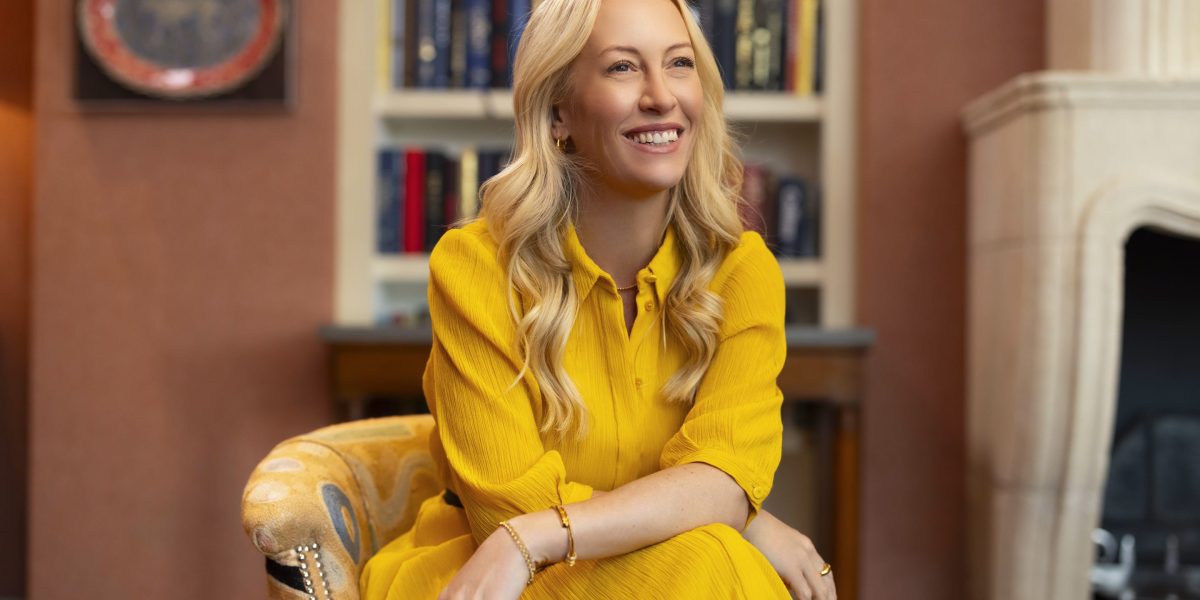
Most people would jump at the idea of working on hit TV shows like Friends, Jackass, and The Shield, but Eventbrite CEO Julia Hartz left it all behind to pursue her passion of bringing people together. 

Just five years into her rising TV career—where she’d climbed the ranks to junior executive at FX—Hartz tossed the towel in on her 9-to-5 to launch Eventbrite in 2006, bootstrapping the company entirely with her husband and fellow cofounder Renaud Visage. 

The pitch was: “Come work on something that doesn’t exist. We’ll use our own money to fund it, and if it’s a disaster, we’ll just be broke,’” Hartz tells Fortune. 

Eventbrite is now estimated to be worth $225 million, and offers events ranging from wrestling classes, to comedy shows, to cheese raves with Queer Eye star Antoni Porowski.

But it all started when Hartz and her husband—serial entrepreneur and early PayPal investor Kevin Hartz—assembled a dream team to get Eventbrite off the ground. They recruited fellow cofounder Visage to come on board as chief technology officer, and the trio of entrepreneurs decided to chuck $250,000 of their own money to get Eventbrite running, moving to San Francisco.

Hartz had to sacrifice her job to put all her energy into Eventbrite, skirting the route other entrepreneurs have gone down: juggling a full-time job while scaling a company on the side. Instead, she found it best to wipe her slate clean and leave her TV career behind to pursue Eventbrite. It was a professional gamble that paid off in the long run. 

“I’ve seen entrepreneurs do that, and I think that that’s a clever way to gain validation and product market fit, without putting yourself in such a perilous state,” Hartz says. “I did not do that.”

Inspiration struck during her 9-to-5 job in TV working on Friends and The Shield

Hartz started working at just the age of 14—pouring coffees in cafes, and driving kids to after-school activities—and hasn’t taken her foot off the gas since. 

While attending Pepperdine University, she worked as an intern on the set of hit TV-show Friends, later scoring an internship at MTV in the series development department. It was a “magical” experience that eventually landed her a job at the station—once she graduated, Hartz went straight into developing shows including Jackass, The Shield, and Rescue Me across MTV and FX. Part of her job entailed researching fandom events, and suddenly, something clicked. 

“I remember going to this fandom event that was insanely niche, and feeling the energy of the people in the room, it just stuck with me,” Hartz says. “It was this palpable, kinetic energy…When we started Eventbrite, I was thinking about that all along: ‘How do we enable the people who gather others around these niche passion areas and create this magic?’”

While most couples may wring their hands at the idea of putting their finances on the line to launch a company together, Hartz’s partner was enthusiastic about going all-in on a light bulb moment. 

In fact, the Gen X CEO’s nearly 20-year success may have never panned out if it wasn’t for her husband Kevin—who’s success investing in the then little-known startup called PayPal—persuaded her to take the leap into entrepreneurship.

“It’s only serial entrepreneurs who can convince someone of that,” Hartz says. “We made it on less than a quarter of a million dollars…I’m really, really proud of it.”

Scaling a business idea into a $225 million ticketing giant

Once Hartz made the decision to leave TV forever, she packed her things into boxes, and drove up the coast of California to settle in her company’s new headquarters: San Francisco. The Silicon Valley hub had the tech connections and industry access to help get things off the ground. So just like that, she set up shop in Potrero Hill, the “warehouse district”.

“I was moving saw horses and plywood into a windowless phone closet on Monday, in this warehouse district in San Francisco, going in my head, ‘Wait, what if he’s crazy?’ Well, it’s a little late for that,” Hartz says. “I’ve been working since I was 14 with no break. So it was really important to me that I be working on day one.”

Eventbrite was able to get things off the ground thanks in part to perfect timing; in the mid-2000s, social media platforms were looking to bring together its users in real life. Facebook made Eventbrite one of its first connect partners, solidifying a huge new customer base looking for community events to partake in. 

Then 2008 came, and thousands of workers from all across the U.S. were being laid off in droves during the financial crisis. Hartz said “the world collapsed” in those dire years, and people were desperate for community while facing hardship. It was a tough era for corporate American workers, but was an opportunity for Eventbrite to bring them together. Over the next decade the business would amass a total of $373 million in equity funding through 11 fundraising rounds, according to Pitchbook, attracting investors like Tiger Global Management, Sequoia Capital and Square.

The ticketing platform has since amassed a fanbase in nearly 180 countries—in 2024 alone, it had distributed 83 million paid tickets for over 4.7 million events. With 89 million monthly users, people are scoring seats at events ranging from a sunset Bach concert in Central Park to a house music cruise on the Hudson river. 


Source link

Continue Reading

Business

SpaceX to offer insider shares at record-setting valuation

Published

on


SpaceX is preparing to sell insider shares in a transaction that would value Elon Musk’s rocket and satellite maker at a valuation higher than OpenAI’s record-setting $500 billion, people familiar with the matter said.

One of the people briefed on the deal said that the share price under discussion is higher than $400 apiece, which would value SpaceX at between $750 billion and $800 billion, though the details could change. 

The company’s latest tender offer was discussed by its board of directors on Thursday at SpaceX’s Starbase hub in Texas. If confirmed, it would make SpaceX once again the world’s most valuable closely held company, vaulting past the previous record of $500 billion that ChatGPT owner OpenAI set in October. Play Video

Preliminary scenarios included per-share prices that would have pushed SpaceX’s value at roughly $560 billion or higher, the people said. The details of the deal could change before it closes, a third person said. 

A representative for SpaceX didn’t immediately respond to a request for comment. 

The latest figure would be a substantial increase from the $212 a share set in July, when the company raised money and sold shares at a valuation of $400 billion.

The Wall Street Journal and Financial Times, citing unnamed people familiar with the matter, earlier reported that a deal would value SpaceX at $800 billion.

News of SpaceX’s valuation sent shares of EchoStar Corp., a satellite TV and wireless company, up as much as 18%. Last month, Echostar had agreed to sell spectrum licenses to SpaceX for $2.6 billion, adding to an earlier agreement to sell about $17 billion in wireless spectrum to Musk’s company.

Subscribe Now: The Business of Space newsletter covers NASA, key industry events and trends.

The world’s most prolific rocket launcher, SpaceX dominates the space industry with its Falcon 9 rocket that launches satellites and people to orbit.

SpaceX is also the industry leader in providing internet services from low-Earth orbit through Starlink, a system of more than 9,000 satellites that is far ahead of competitors including Amazon.com Inc.’s Amazon Leo.

SpaceX executives have repeatedly floated the idea of spinning off SpaceX’s Starlink business into a separate, publicly traded company — a concept President Gwynne Shotwell first suggested in 2020. 

However, Musk cast doubt on the prospect publicly over the years and Chief Financial Officer Bret Johnsen said in 2024 that a Starlink IPO would be something that would take place more likely “in the years to come.”

The Information, citing people familiar with the discussions, separately reported on Friday that SpaceX has told investors and financial institution representatives that it is aiming for an initial public offering for the entire company in the second half of next year.

A so-called tender or secondary offering, through which employees and some early shareholders can sell shares, provides investors in closely held companies such as SpaceX a way to generate liquidity.

SpaceX is working to develop its new Starship vehicle, advertised as the most powerful rocket ever developed to loft huge numbers of Starlink satellites as well as carry cargo and people to moon and, eventually, Mars.


Source link

Continue Reading

Business

U.S. consumers are so strained they put more than $1B on BNPL during Black Friday and Cyber Monday

Published

on


Financially strained and cautious customers leaned heavily on buy now, pay later (BNPL) services over the holiday weekend.

Cyber Monday alone generated $1.03 billion (a 4.2% increase YoY) in online BNPL sales with most transactions happening on mobile devices, per Adobe Analytics. Overall, consumers spent $14.25 billion online on Cyber Monday. To put that into perspective, BNPL made up for more than 7.2% of total online sales on that day.

As for Black Friday, eMarketer reported $747.5 million in online sales using BNPL services with platforms like PayPal finding a 23% uptick in BNPL transactions.

Likewise, digital financial services company Zip reported 1.6 million transactions throughout 280,000 of its locations over the Black Friday and Cyber Monday weekend. Millennials (51%) accounted for a chunk of the sizable BNPL purchases, followed by Gen Z, Gen X, and baby boomers, per Zip.

The Adobe data showed that people using BNPL were most likely to spend on categories such as electronics, apparel, toys, and furniture, which is consistent with previous years. This trend also tracks with Zip’s findings that shoppers were primarily investing in tech, electronics, and fashion when using its services.

And while some may be surprised that shoppers are taking on more debt via BNPL (in this economy?!), analysts had already projected a strong shopping weekend. A Deloitte survey forecast that consumers would spend about $650 million over the Black Friday–Cyber Monday stretch—a 15% jump from 2023.

“US retailers leaned heavily on discounts this holiday season to drive online demand,” Vivek Pandya, lead analyst at Adobe Digital Insights, said in a statement. “Competitive and persistent deals throughout Cyber Week pushed consumers to shop earlier, creating an environment where Black Friday now challenges the dominance of Cyber Monday.”

This report was originally published by Retail Brew.


Source link

Continue Reading

Business

AI labs like Meta, Deepseek, and Xai earned worst grades possible on an existential safety index

Published

on


A recent report card from an AI safety watchdog isn’t one that tech companies will want to stick on the fridge.

The Future of Life Institute’s latest AI safety index found that major AI labs fell short on most measures of AI responsibility, with few letter grades rising above a C. The org graded eight companies across categories like safety frameworks, risk assessment, and current harms.

Perhaps most glaring was the “existential safety” line, where companies scored Ds and Fs across the board. While many of these companies are explicitly chasing superintelligence, they lack a plan for safely managing it, according to Max Tegmark, MIT professor and president of the Future of Life Institute.

“Reviewers found this kind of jarring,” Tegmark told us.

The reviewers in question were a panel of AI academics and governance experts who examined publicly available material as well as survey responses submitted by five of the eight companies.

Anthropic, OpenAI, and GoogleDeepMind took the top three spots with an overall grade of C+ or C. Then came, in order, Elon Musk’s Xai, Z.ai, Meta, DeepSeek, and Alibaba, all of which got Ds or a D-.

Tegmark blames a lack of regulation that has meant the cutthroat competition of the AI race trumps safety precautions. California recently passed the first law that requires frontier AI companies to disclose safety information around catastrophic risks, and New York is currently within spitting distance as well. Hopes for federal legislation are dim, however.

“Companies have an incentive, even if they have the best intentions, to always rush out new products before the competitor does, as opposed to necessarily putting in a lot of time to make it safe,” Tegmark said.

In lieu of government-mandated standards, Tegmark said the industry has begun to take the group’s regularly released safety indexes more seriously; four of the five American companies now respond to its survey (Meta is the only holdout.) And companies have made some improvements over time, Tegmark said, mentioning Google’s transparency around its whistleblower policy as an example.

But real-life harms reported around issues like teen suicides that chatbots allegedly encouraged, inappropriate interactions with minors, and major cyberattacks have also raised the stakes of the discussion, he said.

“[They] have really made a lot of people realize that this isn’t the future we’re talking about—it’s now,” Tegmark said.

The Future of Life Institute recently enlisted public figures as diverse as Prince Harry and Meghan Markle, former Trump aide Steve Bannon, Apple co-founder Steve Wozniak, and rapper Will.i.am to sign a statement opposing work that could lead to superintelligence.

Tegmark said he would like to see something like “an FDA for AI where companies first have to convince experts that their models are safe before they can sell them.

“The AI industry is quite unique in that it’s the only industry in the US making powerful technology that’s less regulated than sandwiches—basically not regulated at all,” Tegmark said. “If someone says, ‘I want to open a new sandwich shop near Times Square,’ before you can sell the first sandwich, you need a health inspector to check your kitchen and make sure it’s not full of rats…If you instead say, ‘Oh no, I’m not going to sell any sandwiches. I’m just going to release superintelligence.’ OK! No need for any inspectors, no need to get any approvals for anything.”

“So the solution to this is very obvious,” Tegmark added. “You just stop this corporate welfare of giving AI companies exemptions that no other companies get.”

This report was originally published by Tech Brew.


Source link

Continue Reading

Trending

Copyright © Miami Select.