Connect with us

Fashion

Europe’s luxury sector is ‘ economic powerhouse’ but needs more support – ECCIA report

Published

on


A new report on the high-end and luxury sector in Europe shows that it’s a “€986 billion economic powerhouse driving jobs, tourism and craftsmanship”.

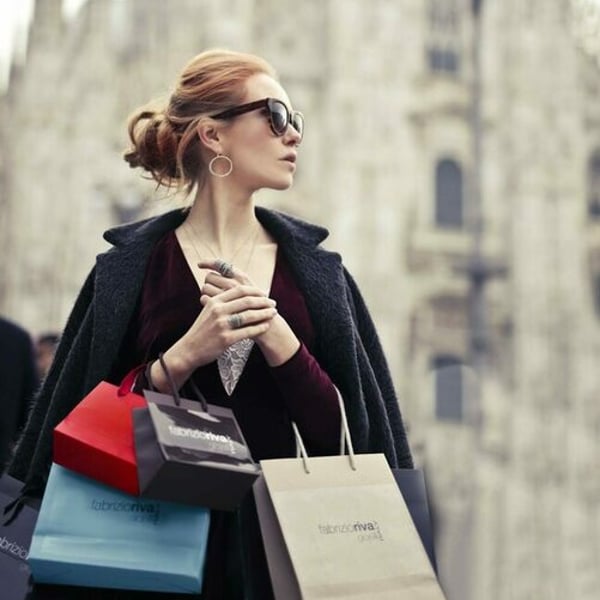
Photo: Pexels

The study comes from the European Cultural and Creative Industries Alliance (ECCIA), which includes EU countries and the UK, and shows that Europe’s high-end/luxury sector represents 5% of the continent’s GDP and that it “continues to drive economic growth, preserve cultural heritage, and champion excellence well beyond the continent”. 

The study was conducted by Bain & Company for ECCIA and also said that the sector has global leader status with 70% global market share. And for personal goods, that share is 80%. But the prospects are “clouded” due to “external challenges such as tariffs and emerging global trade uncertainty”.

That’s a worrying situation given that the sector employees as many as 2 million people throughout Europe and further concerns include the difficulty of attracting and retaining the next generation of skilled artisans.

“European luxury goods continue to dominate global markets, with the latest figures demonstrating a strong performance over the past five years and a solid position for growth within the global high-end and luxury market — rooted in the sector’s unique resilience and its ability to adapt and seize opportunities in emerging markets,” said Claudia D’Arpizio of Bain & Company. 

And she added that “while these new findings show that the sector accounts for 11.5% of total European exports, high-end and luxury goods are much more than economic drivers.

Luxury represents Europe’s soft power

“The brands, through their products and experiences, also represent the ultimate expression of the soft power Europe wields through its creativity, innovation, and craftsmanship — Europe’s unique ‘artisanal intelligence’. This sector is a creative powerhouse that invests up to 5% of revenues in education and training, and up to 3% in sustainability and innovation, which contribute to social prosperity, cultural preservation, and economic growth across Europe’s clusters of excellence”. 

But as mentioned, the sector has huge challenges to deal with, notably “escalating geopolitical tensions, rising tariffs, and protectionist trade policies, especially between the US and China which make up 35%-45% of the global revenues for the sector”.

“It’s tempting to assume that this the sector is shock-proof from some of the economic turbulence we’ve been seeing…. [but] we are sensitive to the some of the warning signs,” said Michael Ward, the MD of luxury London retailer Harrods who’s also president of ECCIA. “European high-end and luxury brands supported 2 million jobs in 2024, with 160,000 new jobs created since 2019, outpacing broader EU labour market growth. Tariff measures threaten to disrupt global demand, drive up costs, and force companies to reconsider supply chains as we focus on profitability and call for greater stability.”

The reports shows that the high-end/luxury sector is also key for 40% of international travellers who cite luxury as a reason for visiting Europe. And high-spending tourists represent up to 25% of tourism-generated value.

One aim of the report is to publicise the need for “smart and urgent policy support to safeguard one of Europe’s cultural and economic treasures”.

Among the measure the body is calling for are strengthened intellectual property rights (IPR) and more power given to combat counterfeiting.

It also wants to see a boost to the EU’s legislative framework to help brands enforce their selective distribution networks against unauthorised distributors, protecting brand image and investments while ensuring consumer safety.

And it’s calling for more EU support for craftsmanship and skills development, as well as support for free trade agreements, simplifying procedures for obtaining EU visas and encouraging VAT-free shopping for non-EU tourists.

The ECCIA, established in 2010, is composed of seven European cultural and creative industries organisations — Altagamma (Italy), Circulo Fortuny (Spain), Comité Colbert (France), Gustaf III Kommitté (Sweden), Laurel (Portugal), Meisterkreis (Germany) and Walpole (UK). Between them they represent 750 brands and cultural institutions. 

Copyright © 2025 FashionNetwork.com All rights reserved.


Source link

Continue Reading

Fashion

Clarks fêtes 200th year, opens Milan pop-up with Candiani, expands global e-tail presence

Published

on


Translated by

Nicola Mira

Published


December 5, 2025

British footwear brand Clarks is celebrating its 200th anniversary this year. In Italy, the brand is marking the bicentennial by opening a pop-up space within the Candiani Denim Store, in piazza Mentana 3 in Milan, where customers are able to personalise their Clarks shoes throughout December.

Clarks shoes can be personalised at the Candiani Denim Store in Milan – Clarks

From December 2 to 9, the Milanese store by Candiani, a premium Italian denim producer with its own jeans line, is hosting a Clarks pop-up shop. Visitors will have the opportunity to explore the British footwear brand’s history, its signature models, and learn about some of the leading figures who have worn Clarks and helped define its identity, influencing generations. A documentary about Clarks’s 200 years in business, entitled From Somerset to the World, will be screened inside the pop-up shop. The shop will showcase a selection of Clarks Originals models, including the Wallabee, Desert Boot and Desert Trek, as well as several items from the Fall/Winter 2025-26 collection, reinterpreting materials, shapes and colours with a contemporary feel.
 
In parallel with the pop-up shop (where a special event was staged on Thursday December 4), throughout December the Candiani Denim Store is giving Clarks customers the chance to create a personalised version of their shoes, choosing from two Clarks Originals models, the Wallabee and the Desert Boot. The limited-edition shoes will feature a personalised denim fob, and customers will be able to choose from an extensive library of patterns and designs. The motif chosen will be lasered directly on to the shoes at Candiani Custom, the denim brand’s urban micro-factory for bespoke jeans located next to the store.

FashionNetwork.com has had the opportunity to talk about Clarks’s distribution plans in Italy with Fabio Antonini, CEO of 3A, the company that has been distributing the British brand’s men’s and women’s lines since the Fall/Winter 2025-26 season.
 
FashionNetwork.com: Clarks has been busy overhauling its retail presence in Italy. What are the implementation steps, and what have the initial results been?

Fabio Antonini: Unlike the previous distributor, whose strategy was chiefly aimed at monobrand stores, we have rejigged Clarks’s distribution model by focusing on the wholesale channel and on a strong presence in multibrand stores. This is enabling us to rapidly extend our territorial footprint, making the brand more accessible and better integrated within the Italian market.

Fabio Antonini, CEO of 3A

FN: How many more Clarks corners are you planning to open in 2026 in Italy? And what about Clarks’s monobrand presence? Are you considering other initiatives like the one with Candiani?

FA: We currently don’t have any plans for new corners or monobrand stores. Our strategy is focused on the wholesale channel and multibrand retailers. The initiative with Candiani was developed as a special project to celebrate Clarks’s 200th anniversary. Over the next few years, we will assess new collaborations and special projects, in line with the brand’s future requirements.
 
FN: In how many multibrand stores is Clarks currently distributed, and how many more are you planning to reach?

FA: In 2025, we have made Clarks available at 433 clients for a total of 619 doors [in Italy]. Next year, we’re expecting to grow the number of clients served by approximately 10%.
 
FN: Clarks recently announced and deployed a strategy designed to boost its position in global e-marketplaces, is it also being implemented in Italy?

FA: Clarks’s new global strategy is set to make the brand even more accessible and reachable by online consumers. Its expanded presence on new global marketplaces is making Clarks easier to access in Italy too, strengthening its online presence and making it easier for consumers to buy.
 
FN: What revenue result did 3A reach in fiscal 2024, how much did it grow by, and what is your forecast for 2025?

FA: In 2024, 3A generated a revenue of approximately €110.3 million, up 4.84% over the €105.2 million recorded in 2023. We’re expecting to grow at a similar rate in 2025.

Clarks

FN: Have there been new entries or other changes within 3A’s brand portfolio?

FA: Yes, there have been changes. Our portfolio includes underwear by Nike, Jordan, Calvin Klein and Tommy Hilfiger, as well as footwear and other products by Clarks, Converse Shoes, Nike Swim, Nike, Jordan, Converse Apparel Kids, Lacoste Kids, Huggies Apparel and Crep Protect.

We’re pursuing a strategy aimed at introducing new lines with a distribution exclusive, to further enrich our portfolio also in terms of brand quality. Some new lines will feature as early as spring 2026.

Brand background

Clarks was founded in Street, Somerset, in 1825, when Cyrus Clark opened a tannery with his brother James. It began shoemaking by using leather offcuts to create slippers. In 1950, Clarks created the revolutionary Desert Boot shoes. Since then, Clarks has built an archive of over 22,000 models that have been worn across generations all over the world.
 
In fiscal 2024, Clarks’s parent company C&J Clark Ltd reported a revenue drop of 9.4%, to £901.3 million (approximately €1.07 billion), and a pre-tax loss of £39.3 million. This led the company to overhaul the Clarks brand, cutting overheads, modifying the marketing approach, and repositioning the range. The brand’s retail strategy too has been reappraised, streamlining the store fleet and developing initiatives like the Milanese pop-up store.
 
Clarks, in typically innovative fashion, is also expanding its online presence with several new launches on global e-tailers like Shein, Walmart, Target, Secret Sales and TikTok Shop. In the UK, Clarks has recently been introduced on Shein and Secret Sales, while in Europe it will be available at Secret Sales Netherlands and Dress for Less later this year. In the Americas, it has been featured on eBay for the last five years, and has recently reached Shop Simon, Shein and Walmart, while it will be available on Target this month.

Clarks has recently returned to Tottenham Court Road in London, with a new retail concept
Clarks has recently returned to Tottenham Court Road in London, with a new retail concept – Clarks

Clarks is also aiming to consolidate its presence on TikTok Shop. It launched on the Chinese social shopping channel in Singapore and Malaysia last year, and this year it has reached the UK and the Americas, with Europe set to follow in 2026. This expansion drive follows the September announcement of the first Clarks-owned digital marketplace, which is set to be launched in the UK in early 2026.
 
Candiani is an Italian family company founded in 1938 and based in Robecchetto con Induno, near Milan, in the Ticino Park Nature Reserve. Besides owning the store in piazza Mentana in Milan, with the Candiani Custom micro-factory for bespoke jeans, Candiani owns among others the patent for Coreva, the first and only biodegradable and compostable stretch denim available on the market.

Copyright © 2025 FashionNetwork.com All rights reserved.


Source link

Continue Reading

Fashion

Brioni parts ways with design director Norbert Stumpfl

Published

on


Published


December 5, 2025

Another creative director departure at a major brand is shaking up the fashion industry. It is now the turn of Austrian designer Norbert Stumpfl to leave Brioni. The label has just confirmed the end of its collaboration with the designer in a statement. Stumpfl had designed Brioni’s collections for the past seven years.

Brioni – Spring-Summer 2026 – Menswear – Milan – ©Launchmetrics/spotlight

The fashion house founded in 1945, which in 1952 became the first menswear brand to stage a fashion show (in Florence’s legendary Sala Bianca), has expressed its “deep gratitude for the contribution he has made over the years. During his tenure at Brioni, Norbert interpreted with precision the concepts of lightness and discretion, contributing to the evolution of the men’s wardrobe with a modern approach that pays homage to tradition,” Brioni said.

Federico Arrigoni, CEO of Brioni, said, “Our journey continues, and the Maison will continue to consolidate its tradition- perfection of craftsmanship, exceptional materials, and innovation in tailoring techniques- to create true masterpieces, from formalwear to leisurewear and accessories. Brioni pursues its mission of defining the contemporary codes of Italian elegance, while elevating its mastery of high tailoring and bespoke craftsmanship for those who lead and accept nothing but the exceptional.”

Since 2011, Brioni has been part of the Paris-based French luxury group Kering. From 2018 until his departure, the brand’s collections were designed by Norbert Stumpfl, the acclaimed Austrian menswear couturier, celebrated for his blend of impeccable tailoring and cutting-edge fabrics- among his creations were dinner jackets woven with 24-carat gold threads and enzyme-treated silk-linen blends with a soft, distinctive handle. During his tenure, Brioni also expanded masterfully into womenswear, expressing discreet luxury with rare aplomb.

A pinnacle of Roman sartorial luxury, the Italian label marked its 80th anniversary in late November with an exhibition of its superb tailoring and a gala dinner at the Chiostro del Bramante in Rome.

This article is an automatic translation.
Click here to read the original article.

Copyright © 2025 FashionNetwork.com All rights reserved.


Source link

Continue Reading

Fashion

Another original Hermes Birkin bag sells for $2.86 million

Published

on


By

AFP

Published


December 5, 2025

An Hermes handbag that once belonged to Jane Birkin was sold for $2.86 million (2.45 million euros) at auction in Abu Dhabi on Friday, just months after the record-breaking sale of her first bag from the French brand, Sotheby’s said.

Jane Birkin with one of her signature Hermes bags – Sotheby’s

Hermes first created the design for the British singer and actress in 1984 and it has gone on to become a modern and highly prized classic, sought by fashionistas the world over. The first prototype was sold for 8.58 million euros ($10 million) at a Sotheby’s auction in Paris in July, smashing previous price records for a handbag.

The one sold on Friday was a ‘Birkin Voyageur,’ which was gifted to the former wife of French singing legend Serge Gainsbourg in 2003. The final sale price was around six times times higher than the estimated price range of $230,000-$430,000 given before the sale.

“Jane Birkin’s handbag legacy continues to captivate collectors,” Sotheby’s said in a statement sent to AFP, adding that bidding took place over 11 minutes between six collectors. The new owner was a phone buyer and has not been identified.

The handbag was one of four owned by the late celebrity, who used to sell them to raise money for charitable causes. It has a handwritten inscription in French inside from Birkin that reads: “My Birkin bag, my globetrotting companion.”

A third Hermes bag owned by Birkin is set to go under the hammer on December 15 at the Hotel Drouot auction house in Paris. It was entrusted by the late star to her friend and biographer Gabrielle Crawford, who is selling it to help fund the future Jane Birkin Foundation, Drouot said in a statement.

Produced in very limited numbers, the modern Birkin bag manufactured by Hermes has maintained an aura of exclusivity and is beloved by celebrities such as the Kardashians, Jennifer Lopez, and Victoria Beckham. The most expensive fashion item ever sold at auction was a pair of ruby red slippers worn by actor Judy Garland from The Wizard of Oz in 1939, which sold for $32.5 million in 2024 in Dallas, Texas, according to Sotheby’s.

Copyright © 2025 AFP. All rights reserved. All information displayed in this section (dispatches, photographs, logos) are protected by intellectual property rights owned by Agence France-Presse. As a consequence you may not copy, reproduce, modify, transmit, publish, display or in any way commercially exploit any of the contents of this section without the prior written consent of Agence France-Presses.


Source link

Continue Reading

Trending

Copyright © Miami Select.