Connect with us

Business

Europe residency gets harder to buy as Trump sells gold card

Published

on


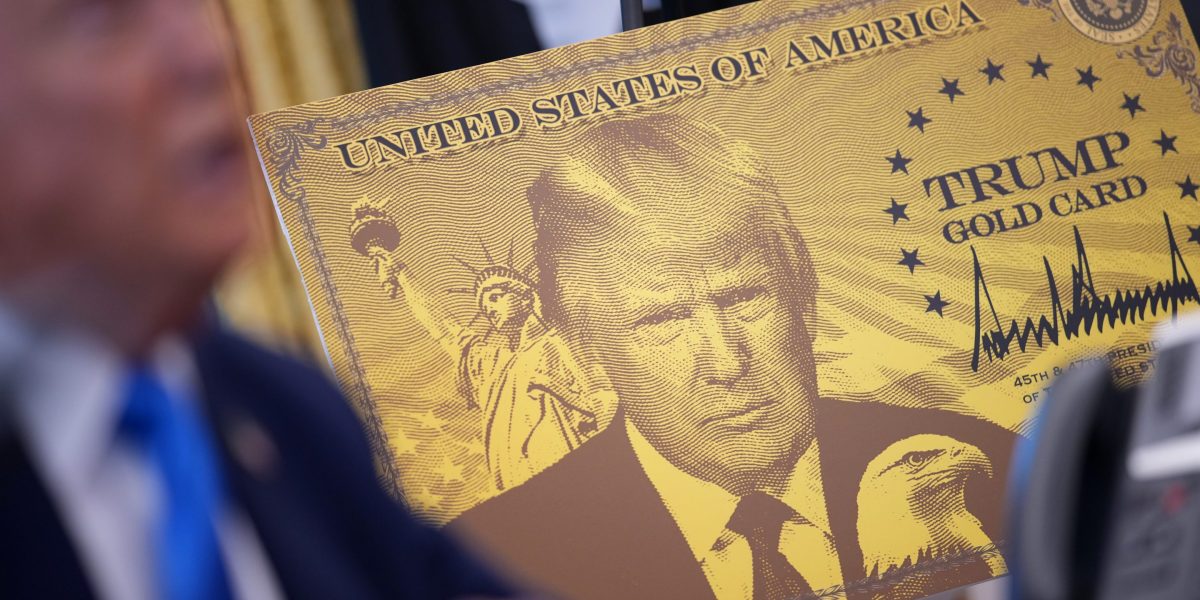
While President Donald Trump is creating new options for the world’s wealthy to move to the US, Europe has been heading in the opposite direction. 

The continent is pulling back on its so-called golden visa programs after they failed to deliver the hoped-for benefits and in some cases backfired. That’s especially true for Portugal, where one of Europe’s most popular programs led to foreigners bidding up homes at the expense of locals.

In most but not all cases, the threshold for residency in Europe was much lower than the $1 million price tag on the Trump Gold Card — part of a broader upheaval of US immigration policy, which includes charging companies a $100,000 to hire college-educated workers from abroad.

Here’s an overview of Europe’s golden visa programs: 

Portugal

The country ended the real estate path to a residency permit in 2023 in a bid to ease property prices. But an alternative route still exists. 

Aimed at bolstering Portugal’s capital base, applicants must put at least €500,000 ($590,000) into an approved investment or venture capital fund. To qualify, the entities need to have more than 60% of resources in domestic assets, including bonds, stocks or local projects like farming and solar panels.

If opting to donate to a non-profit group, the amount goes down to €250,000, or as low as €200,000 if the organization benefits an area with a low-population density. The program has been popular with US, Brazilian and Chinese nationals.

Wealthy foreigners only have to spend one week a year in Portugal for the first year, and 14 days every subsequent two-year period to qualify for a fast-track to residency. 

It’s had some strange effects like increasing the value of avocado farms and contributing to stock market gains. A classic-car museum in a small village has also raised money to improve its collection.

UK

A special visa for foreigners who invest significant sums in Britain has been discussed as part of Prime Minister Keir Starmer’s plans to blunt the economic blow from recent tax hikes and wider curbs on work permits.

An investor visa is possible for people willing to fund sectors seen as strategically important, such as artificial intelligence, clean energy and life sciences, Bloomberg previously reported. 

While the British government is wary about reviving problems associated with past golden visa programs, an investor visa could signal that the UK is charting a different course from the EU, which is trying to curb migration incentives aimed at the rich. 

Separately, the UK is considering plans to waive some visa fees for top global talent, the Financial Times reported on Monday. 

Greece

Investors from outside the European Union can obtain a golden visa in Greece by buying residential property worth €800,000 in Athens, the second-largest city of Thessaloniki or on islands with a population of more than 3,100 people.

Elsewhere in the country, the home has to be worth at least €400,000. Alternatively, an investment of €250,000 can be made in a commercial property that is converted for residential use. 

In all cases, the properties can’t be used for short-term rentals and must be larger than 120 square meters (1,300 square feet).

Other options for obtaining residency include making investments of varying amounts in Greek government bonds, technology startups or renovating historical buildings.

Citizens from China and Turkey are the top two groups who have received Greek golden visas, while demand from the UK increased after Brexit. Israeli applications have risen amid the ongoing Gaza conflict, while more recently demand from the US has grown, according to official figures.

The residence permit is issued for five years and can be renewed indefinitely, provided the investment is maintained. Investors who obtain the visa aren’t obliged to reside in Greece.

Hungary

The country shut down its original golden visa program in 2017 amid corruption concerns, but brought back a new version last year. The relaunch aimed to attract wealthy foreigners while addressing some of the criticisms levelled at the earlier program. It also sought to channel investment into the local economy without overheating the housing market.

Applicants can now qualify in two ways. One option is putting at least €250,000 into an approved real estate investment fund. These investments must be held for five years, and the fund is required to invest at least 40% of its net assets in Hungarian residential property. 

The second path involves a €1 million donation to a higher-education institution operated by a public-interest trust.

The permit is granted for up to 10 years and can be renewed once for another decade, making it one of the longest-term residency options in Europe. 

Importantly, Hungary scrapped the earlier €500,000 direct residential property purchase route at the start of this year, meaning investors can no longer qualify by buying real estate outright.

Italy

The country introduced a special visa aimed at attracting foreign investors in late 2017. In exchange for a strategic investment, the program allows non-EU citizens a renewable two-year residency permit.

Investments that count toward the visa include at least €2 million in Italian state bonds, €500,000 in an Italian company or €250,000 in an innovative Italian startup. Alternatively, applicants can also make a philanthropic donation of at least €1 million in sectors of public interest. 

The Investor Visa for Italy — suspended for citizens from Russia and Belarus — is only for individuals, but recipients can apply for residency permits for spouses, children and elderly parents.

Numbers on the program are scarce. As of the end of 2021, there had been 64 applications from 20 different nationalities and 50 people were accepted for a total of €40 million in investments. Prime Minister Giorgia Meloni’s administration has not provided further updates on the program. 

Spain

Prime Minister Pedro Sanchez’s government last year ended its golden visa program for foreign property buyers in a bid to increase the amount of affordable housing available to locals.

The program, which granted residence permits to non-EU citizens who invest at least €500,000 in a house in Spain, attracted thousands of people. Investors were mainly from China, Russia, the US and UK. 

Like some similar programs, it was launched in the wake of the 2008 financial crisis, when Spain was desperate for funds, but it became a political liability for Sanchez with the economy growing and Spaniards struggling to afford homes. 

Ireland

With a now-thriving economy, Ireland ended its golden visa program in February 2023 following a review of its “appropriateness.” Introduced by the Irish government in 2012 for non-EU nationals with a personal wealth of at least €2 million, applications were dominated by wealthy Chinese individuals.

The government continued to process applications received by the Feb. 15 deadline, approving 535 visas in 2024 — 97% of which were from Chinese nationals. In the first six months of 2025, Ireland approved 208 applications including 185 Chinese and 11 US individuals.

It’s expected to take a number of years to process the remaining applications received up to the deadline, the Department of Justice said.

The Netherlands

A program to attract foreign investors by offering residency in exchange for a €1.25 million investment was discontinued in April last year because of a lack of interest. 

Less than 10 permits were issued over the past years, according to the Dutch Immigration Service’s website. Even after rules were relaxed, the Netherlands didn’t receive more applicants.

Malta 

Europe’s top court banned a program by Malta that provided a so-called golden passport, in other words offering ciitizenship in exchange for investment. It was last the EU member state that had such a program.

The European Court of Justice decision from late April specified that an EU member state could not issue a passport unless an applicant had a “genuine link” to the nation, addressing a key criticism of loose rules. 

The European Commission, the EU’s executive branch, has long warned that golden visa programs expose the bloc to money laundering and security risks. The war in Ukraine also generated concern that sanctioned individuals may have used them to acquire access to the bloc.

North Macedonia

The country has a citizenship-by-investment program, allowing foreigners to get citizenship if they invest in North Macedonia, which is a candidate for EU membership. The amount ranges from €200,000 in a government-approved fund to €400,000 in a new business facility that creates at least 10 jobs — retail and hospitality sectors are excluded. 


Source link

Continue Reading

Business

Binance has been proudly nomadic for years. A new announcement suggests it’s chosen an HQ

Published

on


For years, Binance has dodged questions about where it plans to establish a corporate headquarters. On Monday, the world’s largest crypto exchange made an announcement that indicates it has chosen a location: Abu Dhabi, the capital of the United Arab Emirates.

In its announcement, Binance reported that it has secured three global financial licenses within Abu Dhabi Global Market, a special economic zone inside the Emirati city. The licenses regulate three different prongs of the exchange’s business: its exchange, clearinghouse, and broker dealer services. The three regulated entities are named Nest Exchange Limited, Nest Clearing and Custody Limited, and Nest Trading Limited, respectively.

Richard Teng, the co-CEO of Binance, declined to say whether Abu Dhabi is now Binance’s global headquarters. “But for all intents and purposes, if you look at the regulatory sphere, I think the global regulators are more concerned of where we are regulated on a global basis,” he said, adding that Abu Dhabi Global Market is where his crypto exchange’s “global platform” will be governed.

A company spokesperson declined to add more to Teng’s comments, but did not deny Fortune’s assertion that Binance appears to have chosen Abu Dhabai as its headquarters.

Corporate governance

The Abu Dhabi announcement suggests that Binance, which has for years taken pride in branding itself as a company with no fixed location, is bowing to the practical considerations that go with being a major financial firm—and the corporate governance obligations that entails.

When Changpeng Zhao, the cofounder and former CEO of Binance, launched the company in 2017, he initially established the exchange in Hong Kong. But, weeks after he registered Binance in the city, China banned cryptocurrency trading, and Zhao moved his nascent trading platform. Binance has since been itinerant. “Wherever I sit is going to be the Binance office,” Zhao said in 2020.

The location of a company’s headquarters impacts its tax obligations and what regulations it needs to follow. In 2023, after Binance reached a landmark $4.3 billion settlement with the U.S. Department of Justice, Zhao stepped down as CEO and pleaded guilty to failing to implement an effective anti-money laundering program.

Teng took over and promised to implement the corporate structures—like a board of directors—that are the norm for companies of Binance’s size. Teng, who now shares the CEO role with the newly appointed Yi He, oversaw the appointment of Binance’s first board in April 2024. And he’s repeatedly telegraphed that his crypto exchange is focused on regulatory compliance.

Binance already has a strong footprint in the Emirates. It has a crypto license in Dubai, received a $2 billion investment from an Emirati venture fund in March, and, that same month, said it employed 1,000 employees in the country. 


Source link

Continue Reading

Business

Leaders in Congress outperform rank-and-file lawmakers on stock trades by up to 47% a year

Published

on


Stocks held by members of Congress have been beating the S&P 500 lately, but there’s a subset of lawmakers who crush their peers: leadership.

According to a recent working paper for the National Bureau of Economic Research, congressional leaders outperform back benchers by up to 47% a year.

Shang-Jin Wei from Columbia University and Columbia Business School along with Yifan Zhou from Xi’an Jiaotong-Liverpool University looked at lawmakers who ascended to leadership posts, such as Speaker of the House as well as House and Senate floor leaders, whips, and conference/caucus chairs.

Between 1995 and 2021, there were 20 such leaders who made stock trades before and after rising to their posts. Wei and Zhou observed that lawmakers underperformed benchmarks before becoming leaders, then everything suddenly changed.

“Importantly, whilst we observe a huge improvement in leaders’ trading performance as they ascend to leadership roles, the matched ‘regular’ members’ stock trading performance does not improve much,” they wrote.

Leadership’s stock market edge stems in part from their ability to set the regulatory or legislation agenda, such as deciding if and when a particular bill will be put to a vote. Setting the agenda also gives leaders advanced knowledge of when certain actions will take place.

In fact, Wei and Zhou found that leaders demonstrate much better returns on stock trades that are made when their party controls their chamber.

In addition, being a leader also increases access to non-public information. The researchers said that while companies are reluctant to share such insider knowledge, they may prioritize revealing it to leaders over rank-and-file lawmakers.

Leaders earn higher returns on companies that contribute to their campaigns or are headquartered in their states, which Wei and Zhou said could be attributable to “privileged access to firm-specific information.”

The upper echelon also influences how other members of Congress vote, and the paper found that a leader’s party is much more likely to vote for bills that help firms whose stocks the leader held, or vote against bills that harmed them. And stocks owned by leadership tend to see increases in federal contract awards, especially sole-source contracts, over the following one to two years.

“These results suggest that congressional leaders may not only trade on privileged knowledge, but also shape policy outcomes to enrich themselves,” Wei and Zhou wrote.

Stock trades by congressional leaders are even predictive, forecasting higher occurrences of positive or negative corporate news over the following year, they added. In particular, stock sales predict the number of hearings and regulatory actions over the coming year, though purchases don’t.

Investors have long suspected that Washington has a special advantage on Wall Street. That’s given rise to more ETFs with political themes, including funds that track portfolios belonging to Democrats and Republicans in Congress.

And Paul Pelosi, former House Speaker Nancy Pelosi’s husband, even has a cult following among some investors who mimic his stock moves.

Congress has tried to crack down on members’ stock holdings. The STOCK Act of 2012 requires more timely disclosures, but some lawmakers want to ban trading completely.

A bipartisan group of House members is pushing legislation that would prohibit members of Congress, their spouses, dependent children, and trustees from trading individual stocks, commodities, or futures.

And this past week, a discharge petition was put forth that would force a vote in the House if it gets enough signatures.

“If leadership wants to put forward a bill that would actually do that and end the corruption, we’re all for it,” said Rep. Anna Paulina Luna, R-Fla., on social media on Tuesday. “But we’re tired of the partisan games. This is the most bipartisan bipartisan thing in U.S. history, and it’s time that the House of Representatives listens to the American people.”


Source link

Continue Reading

Business

Macron warns EU may hit China with tariffs over trade surplus

Published

on


French President Emmanuel Macron warned that the European Union may be forced to take “strong measures” against China, including potential tariffs, if Beijing fails to address its widening trade imbalance with the bloc.

“I’m trying to explain to the Chinese that their trade surplus isn’t sustainable because they’re killing their own clients, notably by importing hardly anything from us any more,” Macron told Les Echos newspaper in an interview published on Sunday.

“If they don’t react, in the coming months we Europeans will be obliged to take strong measures and decouple, like the US, like for example tariffs on Chinese products,” he said, adding that he had discussed the matter with European Commission President Ursula von der Leyen.

Macron has just returned from a three-day state visit in China, where he pressed for more investment as Paris seeks to recalibrate its relationship with the world’s second-largest economy. France’s goods trade deficit with China reached around €47 billion ($54.7 billion) last year, according to the French Treasury. Meanwhile, China’s goods trade surplus with the EU swelled to almost $143 billion in the first half of 2025, a record for any six-month period, according to data released by China earlier this year.

Tensions between France and China escalated last year after Paris backed the EU’s decision to impose tariffs on Chinese electric vehicles. Beijing retaliated by imposing minimum price requirements on French cognac, sparking fears among pork and dairy producers that they could be targeted next.

‘Life or Death’

Macron said the US approach to China was “inappropriate” and had worsened Europe’s position by diverting Chinese goods toward the EU market.

“Today, we’re stuck between the two, and it’s a question of life or death for European industry,” Macron said, while noting that Germany — Europe’s biggest economy — doesn’t entirely share France’s stance.

In addition to Europe needing to become more competitive, the European Central Bank too has a role to play in strengthening the EU’s single market, Macron said, arguing that monetary policy should take growth and jobs into account, not just inflation, he said.

He also said the ECB’s decision to continue selling the government bonds it holds risks pushing up long-term interest rates and weighing on economic activity.

“Europe must — and wants to — remain a zone of monetary stability and credible investment,” Macron said.


Source link

Continue Reading

Trending

Copyright © Miami Select.