Mario Jorge Machado, president of the European textile industry confederation Euratex, was in Paris on September 16 to take part in an exceptional gathering of European federations, determined to stand up to the ultra-fast-fashion players Shein and Temu. The battle adds to the fallout from the U.S. tariff war, which is pushing producers in Asia to redirect output to Europe, where manufacturers continue to invest in improving their processes. There is, therefore, an urgent need for political action, the Euratex president tells FashionNetwork.com.
Mário Jorge Machado – MG/FNW
FashionNetwork: The first half of the year was marked by great uncertainty over U.S. tariffs. Do you expect Asian exports to Europe to increase as a result of Washington’s measures?
Mario Jorge Machado: The acceleration of Asian imports is already affecting Europe. Between January and June, European imports from Asian countries rose by 20%–30%. At the same time, prices fell by 15%–20%. This shows that Asian manufacturers are already offloading in Europe the garments they can no longer sell in the U.S. That is another form of unfair competition, because it amounts to product dumping in Europe. And the anti-dumping process is so complicated, so costly and so time-consuming that SMEs are unable to find the means to protect themselves against this new form of unfair competition. We are trying to maintain an open market in Europe, but this enables such unfair competitors to flout our rules and destroy our industry.
FNW: A European industry that invests in improving its production…
MJM: The situation is indeed very dangerous for an industry in which we have invested so much in decarbonisation, innovation, sustainability, reducing water consumption and the management of chemicals. We have done a great deal of work and made huge investments which, ultimately, should be reflected in our products.
And yet we see companies closing and textile jobs disappearing in Europe. We have already seen that over the last eighteen months, around 100,000 textile jobs have been lost in Europe. This is unacceptable. In a sector that employs 1.3 million people, this means that nearly 10% of European textile jobs have gone, and nothing has been done about it.
MJM: Yes, Euratex is working on this at various levels in Brussels, which involves not only the commission, but also the council and parliament. We have already organised a dinner at the European Parliament with MEPs, to which we invited CEOs from across Europe so they could explain what is happening in the sector. And fairness is indeed a subject we return to frequently. We are also seeing tariff barriers being erected. We do not believe that is the right solution. We continue to believe in treaties, trade, free trade and fair trade. But we cannot play this game alone: if everyone else plays their cards under the table and only Europeans lay theirs on the table, we will lose. We cannot be naïve. We must defend our values and our industry.
FNW: Should we look beyond the textile industry for answers?
MJM: I say this very often: this is not just a problem for the textile industry. Textiles and clothing remain leading industries globally. And it is a sector where we are under unfair attack. We have to defend ourselves against those who do not play fair. How can we do this? As an industry alone, we cannot defend ourselves, because we are subject to the rule of law. It is the rule of law that must protect industry in Europe. We must comply. And that is the right way to proceed. We must comply with social and environmental standards, and with all applicable taxes in Europe. And that is normal. That is how things are supposed to be. But then, as Europeans, we cannot allow those who do not comply with all these rules to come here and sell their products.
FNW: So it’s transparency that should differentiate textile players?
MJM: We advocate transparency. Brands selling in Europe must be transparent about how they produce, both socially and environmentally. And if they do not produce properly—or if, at the very least, they do so abusively—they should not be rewarded for having low costs: their production costs may be low, but the environment pays the price.
Yet European companies that pass the cost of improved production through to the product find themselves squeezed out of the market by brands that do not comply with the same requirements, while their customers have no idea what lies behind the products they buy.
FNW: So there’s still work to be done with European consumers?
MJM: Clothing buyers assume that if they purchase a product and Europe allows it to be marketed, it is safe and regulated. As Europeans, we tend to believe we are protected when we buy something. We think the product is controlled and that we can buy it safely. But that is not true.
Faced with very low-priced products from outside Europe, the European Commission and European politicians are endangering the lives of European consumers by failing to take appropriate safety measures. At the same time, they are rewarding companies that offer cheaper products because they do not pass the real costs on to the price of the product. These companies are rewarded with access to European consumers. In the end, the textile companies that do the right thing are the ones that disappear from the market. This is totally unacceptable. We therefore need action from political leaders.
This article is an automatic translation. Click here to read the original article.
Fine jewellery brand Senco Gold & Diamonds has expanded its men’s offering and launched new brand ‘Aham,’ designed to cater to modern Indian grooms with a range of gold, diamond, and platinum options.
A look from Senco Gold & Diamonds’ new brand Aham – Senco Gold & Diamonds – Facebook
“Aham draws inspiration from the evolving equal relationships of modern Indian couples where the groom’s style is now as significant as the bride’s,” said Senco Gold & Diamonds’ director and head of marketing and designs Joita Sen in a press release. “What we’ve seen in most Indian weddings so far is the groom looking on indulgently as his better half glitters in her wedding jewellery. With Aham, we wanted to change that narrative and have the couple dazzle equally in their Senco adornments! Each piece of this collection allows the groom the freedom to express his personal style, most naturally and effortlessly.”
Now available in Senco Gold & Diamonds’ pan-India brick-and-mortar stores, online, and on the Senco shopping app, Aham’s ‘Wedding Season Collection’ presents a contemporary take on traditional wedding jewellery. The label’s maiden collection features over 800 designs including kadas, platinum wristwear, diamond-set rings, and more minimalist cufflinks, along with a selection of fusion pieces in two-tone styles.
Senco Gold & Diamonds’ parent company Senco Gold Limited was incorporated in Kolkata in 1994, according to its website. The business counts over 175 stores in India.
Gucci owner Kering and private equity firm Ardian said on Tuesday they had completed a joint venture agreement for a New York property deal valued at $900 million.
Kering’s brands include Saint Laurent, Gucci, and Balenciaga – Reuters
Under the deal concluded earlier this year, Kering is contributing the property at 715-717 Fifth Avenue in New York to a newly created joint venture with Ardian, the companies said in a joint statement. Ardian will hold a 60% stake in this, with Kering retaining 40% and receiving $690 million in net proceeds.
The transaction is part of Kering’s broader strategy to secure control of high-profile retail locations while also raising cash. In January, Kering said it had transferred three of its Paris real estate assets to a new joint venture with Ardian, freeing up 837 million euros in proceeds.
“Like the investment agreement already signed in Paris, this transaction allows us to secure another long term highly prominent retail location for our houses while enhancing our financial flexibility,” said Kering chief operating officer Jean-Marc Duplaix, commenting on the New York Ardian deal.
London’s Selfridges continues to be the pop-up destination of choice in London’s West End (Harrods has that status in Knightsbridge) and one of the world’s best known labels will be there as of January.
Dior
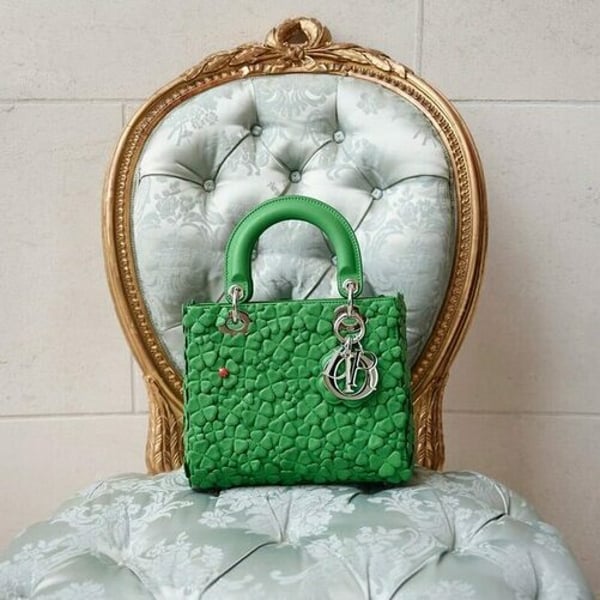
Dior, which already has a strong presence in the London flagship will be unveiling its first pop-up boutique for its new summer 2026 creations inside the in-demand Corner Shop.
That’s important because it will celebrate the launch of Jonathan Anderson’s first collection.
Running from 8 January to 28 February, the unique space will “reveal a playful world like a waking dream”. The company said the summer 2026 menswear collection “breathes a certain spontaneity into the art of dressing, while the womenswear line radiates freshness, with leather goods presented alongside exquisite creations. An exceptional selection that expresses the reinvented essence of Dior”.
Dior is currently inviting customers to book appointments and said it will “extend the experience through a curated selection of exclusive events at the pop-up boutique”.
That includes notebook personalisation with “a nod to Versailles-style gilding, personalised detailing applied by an expert [that] promises to add a truly signature touch”. And there’s also bookmark calligraphy where visitors can add their initials to a bookmark, inspired by the newest Dior Book Tote designs by Anderson.
The news of the pop-up comes in the same week that Dior unveiled its super-sized flagship concept House of Dior Beijing. That five-storey space dwarfs the Selfridges space but underscores the ambitious plans LVMH has for the brand, the huge investment Dior is putting into its global growth and its targeting of key luxury markets.







 Politics8 years ago