Connect with us

Business

EU indefinitely freezes Russian assets to prevent Hungary and Slovakia from vetoing support Ukraine

Published

on


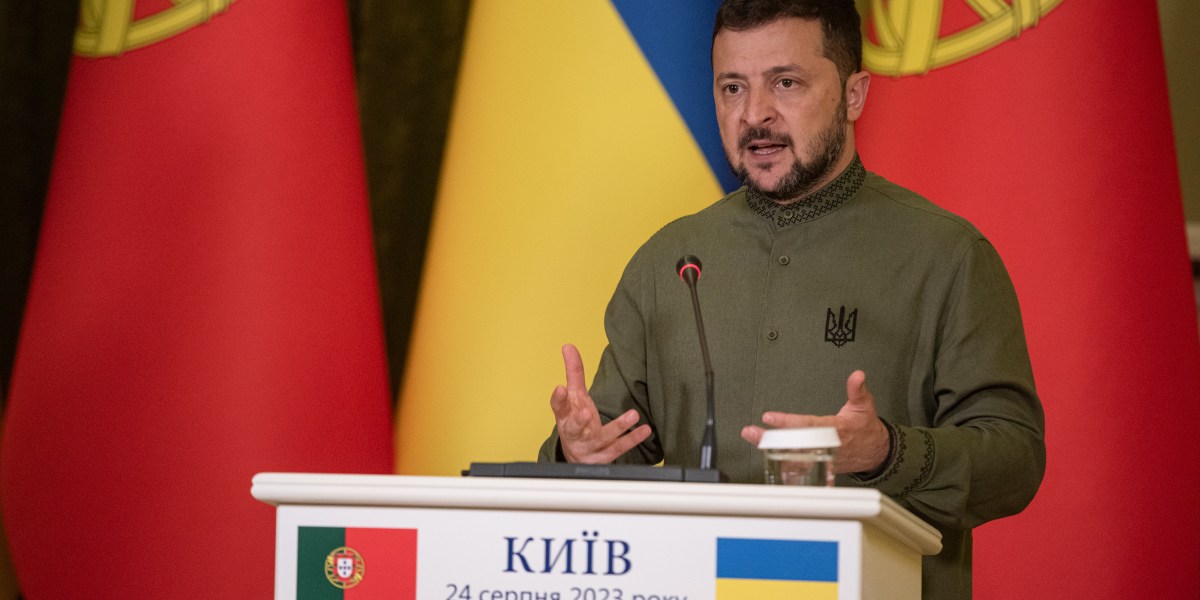
The European Union on Friday indefinitely froze Russia’s assets in Europe to ensure that Hungary and Slovakia, both with Moscow-friendly governments, can’t prevent the billions of euros from being used to support Ukraine.

Using a special procedure meant for economic emergencies, the EU blocked the assets until Russia gives up its war on Ukraine and compensates its neighbor for the heavy damage that it has inflicted for almost four years.

EU Council President António Costa said European leaders had committed in October “to keep Russian assets immobilized until Russia ends its war of aggression against Ukraine and compensates for the damage caused. Today we delivered on that commitment.”

It’s a key step that will allow EU leaders to work out at a summit next week how to use the tens of billions of euros in Russian Central Bank assets to underwrite a huge loan to help Ukraine meet its financial and military needs over the next two years.

“Next step: securing Ukraine’s financial needs for 2026–27,” added Costa, who will chair the Dec. 18 summit.

The move also prevents the assets, estimated to total around 210 billion euros ($247 billion), from being used in any negotiations to end the war without European approval.

28-point plan drafted by U.S. and Russian envoys stipulated that the EU would release the frozen assets for use by Ukraine, Russia and the United States. That plan, which surfaced last month, was rejected by Ukraine and its backers in Europe.

French Foreign Minister Jean-Noël Barrot wrote on X that the EU decision means that “no one will decide in place of the Europeans the use of these funds.”

Hungary and Slovakia object

The vast majority of the funds — around 193 billion euros ($225 billion) at the end of September — are held in Euroclear, a Belgian financial clearing house.

The money was frozen under sanctions that the EU imposed on Russia over the war it launched on Feb. 24, 2022, but these sanctions must be renewed every six months with the approval of all 27 member countries.

Hungary and Slovakia oppose providing more support to Ukraine, but Friday’s decision prevents them from blocking the sanctions rollover and make it easier to use the assets.

Hungarian Prime Minister Viktor Orbán – Russian President Vladimir Putin’s closest ally in Europe – said on social media that it means that “the rule of law in the European Union comes to an end, and Europe’s leaders are placing themselves above the rules.”

“The European Commission is systematically raping European law. It is doing this in order to continue the war in Ukraine, a war that clearly isn’t winnable,” he wrote. He said that Hungary “will do everything in its power to restore a lawful order.”

In a letter to Costa, Slovak Prime Minister Robert Fico said that he would refuse to back any move that “would include covering Ukraine’s military expenses for the coming years.”

He warned “that the use of frozen Russian assets could directly jeopardize U.S. peace efforts, which directly count on the use of these resources for the reconstruction of Ukraine.”

But the commission argues that the war has imposed heavy costs by hiking energy prices and stunting economic growth in the EU, which has already provided nearly 200 billion euros ($235 billion) in support to Ukraine.

Belgium, where Euroclear is based, is opposed to the “reparations loan” plan. It says that the plan “entails consequential economic, financial and legal risks,” and has called on other EU countries to share the risk.

Russia takes court action

Russia’s Central Bank, meanwhile, said on Friday that it has filed a lawsuit in Moscow against Euroclear for damages it says were caused when Moscow was barred from managing the assets. Euroclear declined to comment.

The Belgian clearing house has around 17 billion euros ($20 billion) in Russia and it’s unclear what would happen to that money if the legal challenge or others like it succeed.

In a separate statement, the Central Bank also described wider EU plans to use Russian assets to aid Ukraine as “illegal, contrary to international law,” arguing that they violated “the principles of sovereign immunity of assets.”

But EU Economy Commissioner Valdis Dombrovskis brushed off the suit, saying that the decision is “legally robust,” and that he expects Russia “to continue to launch speculative legal proceedings to prevent the EU from upholding international law.”

Chris Weafer, CEO of Macro-Advisory Ltd. Consultancy, said that the timing of the court action is “clearly linked” to the EU’s intention to use the frozen assets.

“The Russian Central Bank is making clear that it will respond with legal actions against all countries involved in the decision to take the Russian money,” he said.

Friday’s EU decision came hours after Germany summoned the Russian ambassador in Berlin following allegations of sabotage, disinformation campaigns, cyberattacks and interference in its elections.

___

Associated Press journalists Karel Janicek in Prague, Sylvie Corbet in Paris, Katie Marie Davies in Manchester, England and Stefanie Dazio in Berlin contributed to this report.


Source link

Continue Reading

Business

‘There are a lot of people concerned he’s not the same old Chuck Grassley’: Where has the oversight chief gone under Trump 2.0?

Published

on


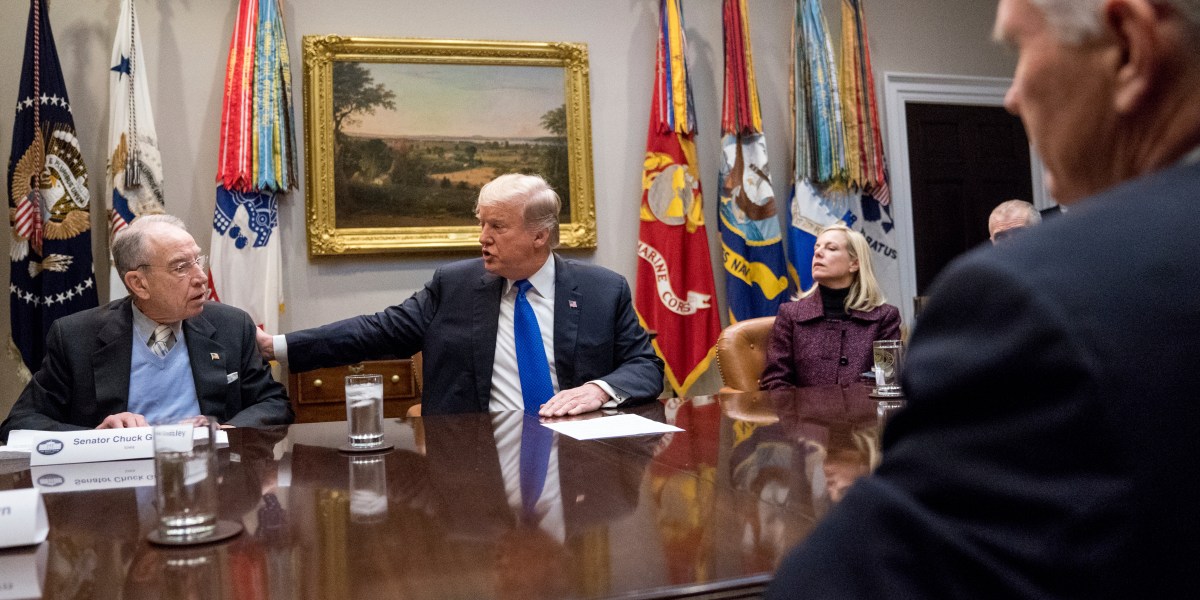
As President Donald Trump’s top law enforcement officials were firing and forcing out waves of Justice Department veterans, Sen. Chuck Grassley denounced a “political infection” that had poisoned FBI leadership.

The Iowa Republican was not criticizing FBI Director Kash Patel or Attorney General Pam Bondi. In a July statement, he directed his ire at the FBI’s “extreme lack of effort” in investigating Democrat Hillary Clinton’s use of a private email server as secretary of state a decade ago.

Trump loyalists have roiled the Justice Department, shattering norms and leading to a mass exodus of veteran officials, but the 92-year-old chairman of the Senate Judiciary Committee has remained focused on the past.

Critics say Grassley’s reluctance to challenge the Trump administration has even extended to a defining issue: His support for whistleblowers making claims of fraud, waste and abuse.

In an interview, Grassley insisted he has not abandoned his oversight role. He said he has felt compelled to investigate issues under earlier presidents to avoid a repeat of what he described as politically motivated prosecutions carried out against Trump and his allies.

“Political weaponization is being brought to the surface and being made more transparent because this administration is the most cooperative of any administration — Republican or Democrat,” Grassley said.

Grassley has acknowledged that Congress has ceded a great deal of power to the current administration, a concession he says makes his own oversight more crucial.

“It’s going to enhance the necessity for it,” he said.

Grassley is known for his focus on oversight

Grassley, upon entering Congress in 1975, quickly developed a reputation for exposing corruption and waste. He once drove to the Pentagon in his orange Chevy Chevette to demand answers from officials about their purchase of $450 hammers and $7,600 coffee pots.

He was among the chief proponents in Congress of laws to shield employees who revealed such waste and sponsored the landmark 1989 Whistleblower Protection Act. He also has played a key role in empowering inspectors general, internal watchdogs tasked with rooting out misconduct.

“He has been the conscience of the Senate on whistleblower protection rights for decades,” said Tom Devine, legal director for the Government Accountability Project. In the current Congress, he has co-sponsored legislation boosting protections for whistleblowers in the FBI and CIA.

“No one is close to having his impact,” Devine said. “That hardly means that we always agree with his judgment calls about policy.”

Criticized for not taking on Trump administration

Trump and Grassley are not always in alignment. This past week, for example, they tussled over the pace of confirmation of administration nominees.

Even so, Democrats and good government advocates say Grassley has been conspicuously silent as the administration has investigated Trump’s perceived enemies, fired agents who worked on politically sensitive cases and upended the Justice Department’s longstanding post-Watergate independence.

Some whistleblowers have been loath to trust him with revelations that might harm the administration, according to interviews with more than a dozen current and former U.S. officials, or their attorneys, several of whom spoke on condition of anonymity because they feared retaliation.

“There are a lot of people concerned he’s not the same old Chuck Grassley,” said Eric Woolson, author of a 1995 biography of Grassley who once served as a Grassley campaign spokesman.

Grassley rejected that criticism, saying whistleblowers call him regardless of who is in the White House. His office’s online portal has received more than 5,300 complaints in 2025, about the same level as past years, staffers reported.

“His entire career, he’s the guy people will trust,” said Jason Foster, a former chief investigative counsel to Grassley who founded Empower Oversight, a group that has advocated on behalf of FBI agents disciplined under the Biden administration.

Staunch Trump ally

Many of Grassley’s recent actions, however, suggest he has evolved from being a fiercely independent moderate eager to sniff out fraud to being a stalwart Trump ally, according to Democrats and whistleblower advocates.

Some were particularly alarmed at Grassley’s dismissal of witnesses who raised concerns about the June nomination of Emil Bove, a high-ranking Justice Department official and former Trump lawyer, to a lifetime federal appeals court seat.

Among several officials who came forward was Justice Department lawyer Erez Reuveni, who said he was fired for refusing to go along with Bove’s plans to defy court orders and withhold information from judges to advance the administration’s aggressive deportation goals.

Grassley said his staff tried to investigate some of the claims but that lawyers for one whistleblower would not give his staff all the materials they requested in time. Instead of delaying the hearing to dig further, Grassley circled the wagons behind Trump’s nominee.

The “vicious rhetoric, unfair accusations and abuse directed at Mr. Bove,” Grassley said in a speech, have “crossed the line.”

Stacey Young, a former Justice Department lawyer who founded Justice Connection, a network of department alumni mobilized to uphold the department’s traditionally apolitical workforce, said she was disappointed Grassley has not used his influence to condemn firings at the department.

“How is the congressional majority not screaming bloody murder? We are watching the near decimation of DOJ in real-time, and Congress is sitting by doing nothing,” she said. “Does Sen. Grassley think it’s OK that people get fired for doing their jobs?”

At a September oversight hearing, Grassley passed up a chance to grill Patel on a series of terminations of line agents and high-level supervisors, including five whose abrupt and still-unexplained dismissals had generated headlines weeks earlier.

When Democrats pressed Patel about his use of the bureau’s plane for personal reasons, Grassley chided Senate colleagues for their disinterest in the travel practices of previous directors.

Grassley has also been an eager conduit for an FBI leadership seeking to expose what it insists was misconduct and overreach in an investigation during the Biden administration into Trump’s efforts to overturn the 2020 election.

He has released batches of sensitive documents from that investigation, known as “Arctic Frost,” that he says have been furnished by FBI whistleblowers or that have been labeled as “Produced by FBI Director Kash Patel.” The records are not the type of documents federal law enforcement would typically make public on its own.

Advocates dismayed over Grassley response to IG firings

Whistleblower advocates said they were dismayed when Grassley failed to take a robust stance when Trump, within days of taking office, fired without cause some inspectors general.

Even some Republican-appointed inspectors general accused Trump of violating a law requiring the White House to provide 30-day notice and rationale to Congress. If any Republican were going to stand up for them, some of the fired inspectors general said, they expected it to be Grassley.

“He has been uncharacteristically silent,” said Mark Greenblatt, a Trump appointee at the Interior Department who was among those fired. ”It is unimaginable that the Grassley of a few years ago, the man who held nominees and fired off blistering threats at the smallest provocation to protect inspectors general, would be so silent in the face of these assaults.”

Grassley responded to the purge by sending Trump a letter requesting officials “immediately” spell out their case-by-case specific reasons for the dismissals.

It took the White House eight months to respond. In a two-page letter, it reasserted presidential authority to fire inspectors general at will and made no attempt to explain its rationale other than to cite “changed priorities.”

___

Associated Press writer Ryan J. Foley in Iowa City, Iowa, contributed to this report.


Source link

Continue Reading

Business

Jamie Dimon says soft skills like emotional intelligence and communication are vital as AI cuts jobs

Published

on


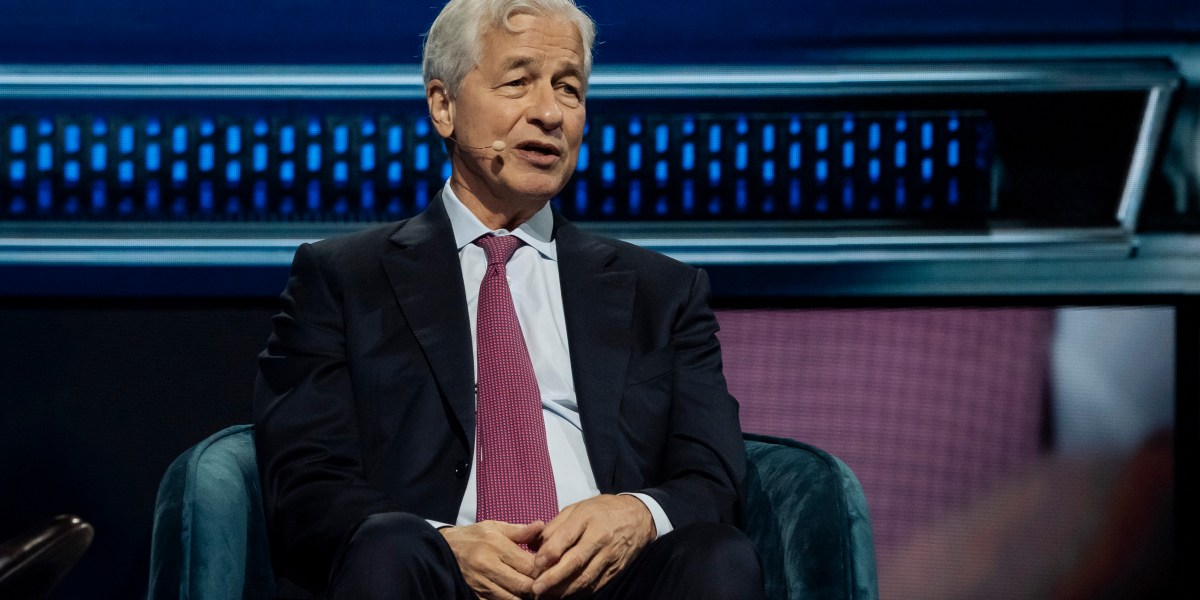
AI is transforming the job industry, and eliminating some roles in the process. But Jamie Dimon says soft skills will be more important than ever in the AI era.

Last weekend, JPMorgan Chase’s CEO toldFox News’ Sunday Morning Futures that he doesn’t believe AI will lead to dramatic cuts in the labor force within the next year, but “it will eliminate jobs.” 

“My advice to people would be critical thinking, learn skills, learn your EQ [emotional quotient], learn how to be good in a meeting, how to communicate, how to write. You’ll have plenty of jobs,” Dimon said. 

He added that rapid AI implementation may disrupt some workers faster than it will take to retrain them, but that the government and companies need to help smooth the transition. He floated ideas for how to help workers in the AI age, including relocation and income assistance.

“The next job may be a better job, but they have to learn how to do the job,” Dimon said. “You can earn quite a bit of money with skills.”

Since 2023, employers have explicitly cited artificial intelligence for more than 70,000 announced job cuts as they automate grunt work and reorganize teams around new tools. As companies continue to adopt the tech, CEOs are doubling down on the importance of soft skills.

In late November, Microsoft CEO Satya Nadella said that as AI takes over more analytical and technical tasks, emotional intelligence and empathy are becoming increasingly important.

“IQ has a place, but it’s not the only thing that’s needed in the world,” Nadella said on an episode of Axel Springer CEO Mathias Döpfner’s MD Meets podcast

IBM CEO Ginni Rometty toldFortune in 2023 that when generative AI fully integrates into the workforce, it will put a premium on soft skills like collaboration, judgment, and critical thinking. This kind of adaptability is what humans do best, and can’t be taught with a degree, she added.

“Those are where people can upskill [when] generative AI really redefines what skills are needed for any role—despite where you went to college or what expertise you have going into it.”


Source link

Continue Reading

Business

In a continent cracking down on immigration, Spain embraces migrants

Published

on


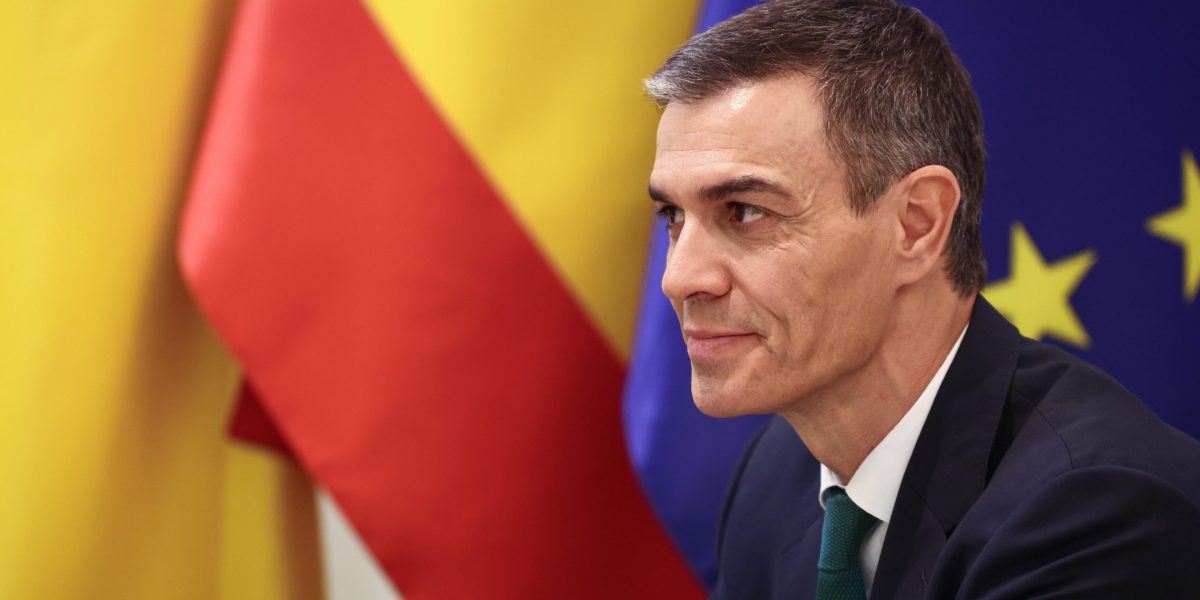
With most European leaders talking tougher about immigration amid a rise in far-right populism and Trump administration warnings that they could face “civilizational erasure” unless they tighten their borders, Spanish Prime Minister Pedro Sánchez stands apart.

The Iberian nation has taken in millions of people from Latin America and Africa in recent years, and the leftist Sánchez regularly extols the financial and social benefits that immigrants who legally come to Spain bring to the eurozone’s fourth-largest economy.

Spain’s choice, Sánchez often says, is between “being an open and prosperous country or a closed and poor one.”

His words stand in stark contrast to other Western leaders, and so far, his bet seems to be paying off. Spain’s economy has grown faster than any other EU nation for a second year in a row, due in part to newcomers boosting its aging workforce.

“Today, Spain’s progress and strong economic situation owe much to the contribution of the migrants who have come to Spain to develop their life projects,” Sánchez said in July after anti-migrant clashes rocked a small southern Spanish town.

Europe’s shifting mood

Sánchez’s immigration approach, including his remarks about immigrants’ contributions to Spanish society, is consistent with those of the country’s past progressive governments, said Anna Terrón Cusi, a senior fellow at the Migration Policy Institute think tank who previously worked on immigration policy for multiple Spanish governments, including Sánchez’s.

“What has changed a lot internally is that there is now very anti-immigration rhetoric from Vox, especially against Muslim immigrants,” she said, referring to the far-right Spanish party that has been polling third, behind the ruling Socialists and center-right People’s Party. “But Sánchez, unlike other European leaders, responds by directly and strongly confronting this narrative.”

Centrist leaders across Europe are facing rising pressure from anti-immigrant far-right parties, despite a significant decrease in illegal border crossings into the EU over the past two years.

In France, where the once-ostracized National Rally far-right party has built support, centrist President Emmanuel Macron now speaks about what he refers to as “the migration problem.”

“If we don’t want the National Rally to come to power, we must address the problem that feeds it,” Macron said last year after France passed new restrictions that he described as “a shield” needed to “fight illegal immigration” while helping to “better integrate” migrant workers.

While running to be German chancellor this year, Friedrich Merz vowed to toughen the country’s migration policy. Days after he was elected, Germany boosted its border security efforts. And in recent weeks, it has presented new figures suggesting a rise in deportations of rejected asylum-seekers and a drop in the number of new asylum-seekers.

Political risks in Spain

Sánchez’s progressive government, too, has seen pro-immigration proposals stall.

Last year, it amended Spain’s immigration law to facilitate residency and work permits to hundreds of thousands of immigrants living in the country illegally. At the time, Migration Minister Elma Saiz said Spain needed to add as many as 300,000 taxpaying foreign workers per year to sustain its state benefits, including for pensions, health care and unemployment. Critics, though, said the changes to the law had many shortcomings and even hurt some migrants instead.

more ambitious amnesty proposal later also endorsed by Sánchez’ progressive government stalled in Parliament due to its thorny politics.

“There were some voices that pointed out that (the amnesty) could have a very big social impact,” said Cecilia Estrada Villaseñor, an immigration researcher at the Pontifical Comillas University in Madrid. She added, “there is a European context that comes into play. We belong to the European Union, and right now the balance lies in a different place.”

Curbing migrant arrivals by boat from Africa

Sánchez’s government, in conjunction with the EU, has also paid African governments to help stop migrants, from reaching Spanish shores, including many would-be asylum-seekers.

Most immigrants in Spain enter the country legally by plane. But the relatively few who arrive on Spanish shores in smugglers’ boats dominate headlines and are routinely held up by far-right politicians and media as a sign of what’s wrong with the government’s stance.

Last year, amid steep rises in the number of people making the dangerous sea crossing from Africa’s west coast to the Canary Islands, Sánchez traveled to Mauritania with EU Commission President Ursula von der Leyen, who pledged 210 million euros (around $247 million) of EU money to help the northwestern African country curb migration.

The efforts seem to be working. Migrant arrivals to the Canary Islands this year are down 60%, which even the government’s critics say is because of governments in Africa stepping up border controls.

But rights advocates blame Sánchez’s policies for the violent deaths of migrants in Spain and abroad, such as the 2022 flashpoint in the Spanish enclave of Melilla, in North Africa. In that instance, sub-Saharan migrants and asylum-seekers scaled a border fence, which sparked clashes with authorities in which 23 migrants died.

In an interview with The Associated Press a week later, Sánchez defended how Moroccan and Spanish police responded, calling the attempt “an attack on Spain’s borders.”

In response to questions from the AP, a spokesperson from the prime minister’s office said, “our migration policy is effective and responsible.”

Latin American migrants

Spain is home to millions of migrants from Latin America, who are fast-tracked for Spanish citizenship and generally integrate easily because of the shared language.

More than 4 million people from Latin America were living in Spain legally in 2024, according to government figures. The current leading countries of origin for Spain’s immigrants are Morocco, Colombia and Venezuela.

Spain’s central bank estimates the country will need around 24 million working-age immigrants over the next 30 years to sustain the balance between workers and retirees-plus-children.

But economists say Spain’s millions of immigrants have added fuel to another political fire — the country’s increasingly unaffordable housing market. José Boscá, an economist at the University of Valencia, said alongside pressures from overtourism and short-term rentals in cities, Spain hasn’t built enough housing to accommodate its new residents.

“If you integrate so many people, but you don’t build more housing, there could be problems,” Boscá said.

In response, Sánchez’s government has pledged to fund more construction — especially of public housing — and also floated measures to crack down on wealthy foreigners buying second homes in the country.

___

Associated Press reporters Kirsten Grieshaber in Berlin, Sylvie Corbet in Paris and Renata Brito in Barcelona, Spain, contributed to this story.


Source link

Continue Reading

Trending

Copyright © Miami Select.