Connect with us

Business

Elon Musk says humans are ‘pre-programmed to die’ and longevity is ‘solvable’, raising huge questions about the future of health

Published

on


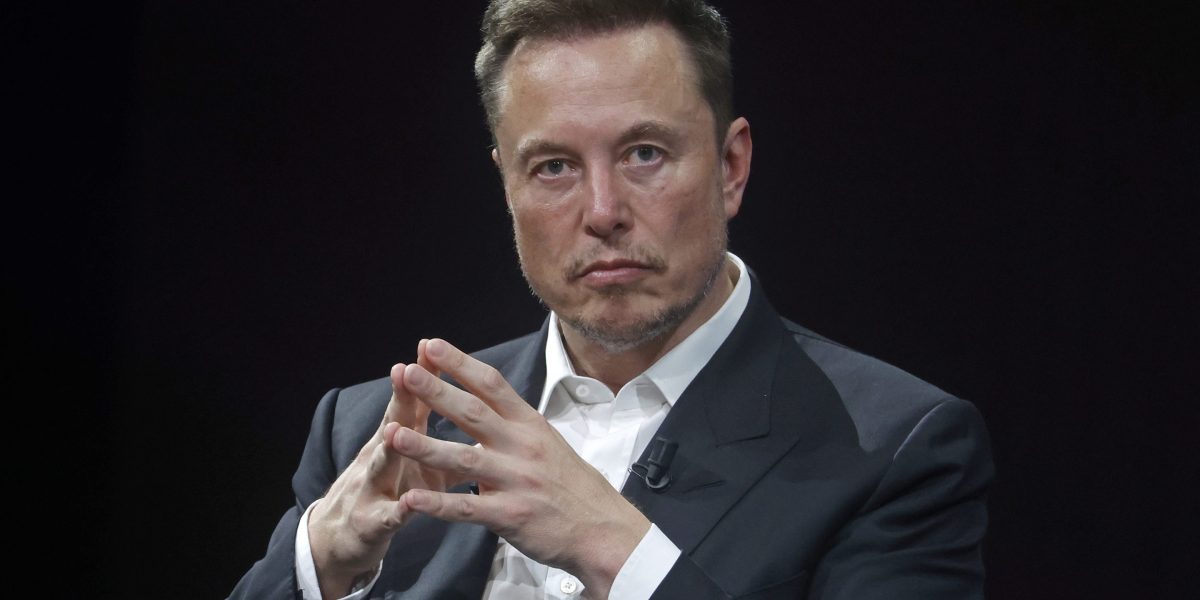
Elon Musk is full of bold predictions, but none may be as controversial as his conclusion that a longer human lifespan is something that can be engineered.

The 54-year-old Tesla boss apparently sees longevity as merely a problem to be overcome—and one with a solution that’s not “particularly hard” at that, he said during an interview on the Moonshots with Peter Diamandis podcast last week.

“You’re pre-programmed to die. And so if you change the program, you will live longer,” he said.

Take, for instance, that every part of the body ages in sync, he argued. Something must be at the root of such synchronization—something that can be identified and potentially altered.

“When you consider the fact that your body is extremely synchronized in its age, the clock must be incredibly obvious,” he said. “Nobody has an old left arm and a young right arm. Why is that? What’s keeping them all in sync?”

​In fact, synchronous aging involves a variety of biological factors, including genetics and hormones that help synchronize aging across tissues, according to researchers.

The future of medicine

Musk’s commentary comes at a moment when AI and robotics are set to blur the boundaries between medicine and tech. As part of this revolution, humanoid robots may replace human surgeons, and, in the process, elevate medical care within five years to a much better state than what’s currently available, Musk claimed. 

Automation and robotics have already changed healthcare, Musk added, citing LASIK, a procedure that uses a computer-controlled laser to reshape a person’s eyes and improve vision.

“I wouldn’t want the best ophthalmologist with the steadiest hand out there with a hand laser on my eyeball. It’s going to be like that,” Musk said.

While human surgeons take years to gain the experience and skills necessary to operate, humanoid robots like Tesla’s Optimus could potentially do a better job—without the risk of human error. 

“Everyone will have access to medical care that is better than what the president receives right now,” he said. 

To be sure, Musk’s confidence about increasing longevity runs contrary to his longtime discomfort with the social consequences of an extended lifespan. Unlike some of his billionaire peers who have poured millions into longevity-focused startups, Musk has previously said he’d “prefer to be dead” than live to 100 with dementia or as a burden to society.

“If we live for too long, I think it ossifies society—there’s no changing of the leadership because leadership never dies,” he said.

This story was originally featured on Fortune.com


Source link

Continue Reading

Business

CEOs are increasingly worried about an economic downturn, inflation, and an asset bubble bust
Published

on


Good morning. The World Economic Forum published its 2026 Global Risks Report this morning, ahead of its annual meeting in Davos, Switzerland next week. This annual survey of more than 1,300 global leaders and experts shows a fascinating divide in perceptions of short-term and longer-term risks. Most are anxious about physical conflict in the short term, ranking ‘geoeconomic confrontation’ as the most pressing global risk over the next two years. Misinformation and disinformation came second, with societal polarization coming third. Collectively, economic risks showed the largest jump, with more concerns about an economic downturn, inflation and an asset bubble burst

When asked to rank the impact of global risks over the next decade, though, the physical environment came first, with extreme weather events, biodiversity loss and a ‘critical change to Earth systems’ topping the list. The specter of adverse outcomes from AI technologies is seen as a longer-term threat. You can read the full report here.

Why does it matter? For one thing, this is not a public opinion poll but rather a survey of global elites: the political leaders, CEOs, and experts charged with shaping policy in their countries and setting strategy for their companies. Their job is to identify, prioritize and deal with the risks of today and tomorrow. It’s also a global survey, which illustrates how perceived risks like climate change are playing out in different parts of the world.

WEF’s main value, in my view, is in creating a place for leaders with diverse backgrounds and points of view to learn from each other, to talk about the big problems and partner on the big opportunities. It can also be a place of more talking than listening, with too little focus on those who can’t afford to gather at a Swiss ski resort. But I’ve found it’s a place where leaders are often more reflective, relaxed and ready to debate. 

This year, Fortune will create even more opportunities to foster those discussions through expanded programming and coverage. I’ll be joined on the ground by a team that includes editor in chief Alyson Shontell, AI editor Jeremy Kahn, and Kamal Ahmed, executive editorial director for the U.K. and Europe. We’ll bring you dispatches and insights in CEO Daily all week, along with videos, vodcasts and articles. In addition to C-suite lunches, partner events and annual gatherings like Fortune’s Most Powerful Women reception and the Global Leadership dinner, we’re creating Fortune @USA House, a special afternoon program of newsmaker conversations and analysis at USA House, followed by a VIP reception on Jan. 21, when President Trump is expected to speak in Davos. 

Curious to know what global risks are on your radar and what you’d like to ask the leaders we meet next week.

Contact CEO Daily via Diane Brady at diane.brady@fortune.com

Top news

Saks Global files for bankruptcy 

The parent company of Saks Fifth Avenue, Neiman Marcus, and Bergdorf Goodman has filed for bankruptcy roughly a year after an ill-fated merger put the high-end department stores under one roof. Saks Global executive chairman Richard Baker, who briefly served as its CEO, orchestrated the deal, which flopped due to the company’s debt load and slumping luxury sales. Former Neiman CEO Geoffroy van Raemdonck will lead Saks through its bankruptcy

China’s record trade surplus

China recorded the largest trade surplus ever in 2025—$1.19 trillion, up 20% from the year prior—as it flooded the world with goods and services, despite U.S. tariffs intended to stifle China’s exporting power. (China’s trade surplus with the U.S. shrank 22%.) Another big driver of the surplus is China’s relatively low imports as Beijing pushes for an economy that’s self-reliant. 

Dimon v. Trump

President Donald Trump said JPMorgan CEO Jamie Dimon was “wrong” to criticize the DOJ’s crimination investigation of Fed Chair Jerome Powell. “I think it’s fine what I’m doing,” Trump said. “We have a bad Fed person.” Dimon has expressed concern that the probe “chips away” at Fed independence. 

Delta’s K-shaped earnings

Delta Airlines reported earnings on Tuesday, posting $58.3 billion in full-year revenue on the back of strong demand for its premium offerings. On the earnings call, CEO Ed Bastian said demand for more price-sensitive offerings is “struggling greatly,” with the airline only logging gains among more affluent customers.

What Apple and Google’s partnership means

Earlier this week, Apple announced a partnership with Google to integrate the latter’s AI technology into the iPhone, including an upgrade to the Siri digital assistant. The deal is a significant endorsement of Google’s AI capabilities, and likely spells bad news for competitor OpenAI.

McKinsey’s new AI test for job candidates

McKinsey is asking graduate candidates to use its in-house AI assistant to complete tests that are part of its notoriously tough screening process. The pilot is intended to replicate how the top-tier consulting firm expects its new hires to get work done. 

Meta’s new performance review platform

Meta is joining the likes of Amazon and X in debuting a new performance review platform that values employee output over effort, according to internal documents obtained by Business Insider. “While our employees have always been held to a high-performance, impact-based culture, this new direction allows for more frequent feedback and recognition in a more efficient way,” a Meta spokesperson told Fortune.

The markets

Around the watercooler

Watercooler

U.S workers just took home their smallest share of capital since 1947, at least by Sasha Rogelberg

Why the $38 trillion national debt doomed Fed independence regardless of the Trump/Powell drama, top economist says by Eva Roytburg

Carhartt CEO says they always focused on blue-collar workers—but hipsters came anyway: ‘We welcome anyone … that wants to celebrate hard work’ by Nick Lichtenberg

Gen X CEO uses AI versions of Steve Jobs and Warren Buffett as a ‘fantasy board of directors’ to help him prepare for meetings and performance reviews by Preston Fore

CEO Daily is compiled and edited by Joey Abrams, Claire Zillman and Lee Clifford.


Source link

Continue Reading

Business

ASEAN chair Philippines starts 2026 on ‘weaker footing’ after corruption scandal, trade tensions
Published

on


The Philippines is on a “weaker footing” heading into 2026, thanks to corruption scandals and a complicated trade environment, testing President Ferdinand “Bongbong” Marcos Jr. as he assumes the chairmanship of the Association of Southeast Asian Nations (ASEAN).

Malaysia, the previous chair, had a busy 2025, needing to handle both the effects of U.S. President Donald Trump’s steep tariffs on Southeast Asian economies, and a violent border conflict between member countries Thailand and Cambodia.

Marcos, now leading the 11-nation bloc, has bold plans for his chairmanship in 2026, including signing a pact to integrate the region’s digital economy. But he has economic problems closer to home.

Investor confidence has withered in the wake of a corruption scandal, as probes discovered that $2 billion in government funding for flood management projects had disappeared. Since September, the Philippines has been rocked by investigations into misallocated funds, tight links between politicians and contractors, substandard materials and “ghost projects.” Marcos’s approval ratings have dropped amid the scandal.

The corruption scandal has sparked greater public outrage due to the Philippines’ continual problems with tropical storms and flooding. In November, Typhoon Kalmaegi wreaked havoc on portions of central Philippines, causing a death toll of over 200 and economic losses of more than $60 million, from damage to crops and farmland alone.

The news has put the Philippines’ economy on a “weaker footing,” says Lavanya Venkateswaran, senior ASEAN economist at OCBC Bank. Third-quarter GDP growth fell to a four-year low of 4%, prompting Manila to slash growth targets for 2026 through 2028. 

“The authorities will need to prioritize addressing administrative and bureaucratic challenges to restore confidence in public administration,” Venkateswaran says, pointing to persistent inefficiencies like corruption, uneven digitalization and excessive red tape, which hinder economic growth in the Philippines. 

Challenging trade dynamics

The Philippines also occupies a complex position in world trade. Manila boasts closer security ties with the U.S., which officials at times present as an asset as Washington embraces “friendshoring” and supply chains based in friendly countries. Yet economists are skeptical that relatively friendly relations with Washington will confer a trade advantage.

The U.S. and the Philippines signed a trade deal last July that set a 19% tariff on U.S.-bound exports from the Southeast Asian country. In exchange, the Philippines agreed to remove tariffs on key U.S. goods, including agricultural and pharmaceutical products. 

Closer to home, the nation also faces strong competition from ASEAN peers like Singapore, Malaysia, Indonesia and Vietnam, both in terms of attracting foreign investment and connecting into global supply chains. 

In the immediate aftermath of “Liberation Day”, when the U.S. imposed steep tariffs on the rest of the world, some Philippine officials hoped that a relatively lower import duty on the island nation might give it a competitive advantage over other Southeast Asian countries. Yet the U.S.’s recent trade deals with major Asian trading partners has eroded that gap: Vietnam and Malaysia now have tariffs of 20% and 19% respectively, compared to 19% for the Philippines.

The Philippines also has a long-running territorial dispute with China over islands in the South China Sea. Over $5 trillion worth of trade passes through the region annually, and conflict could disrupt critical shipping lanes through the waterway. 

The biggest problem for the country, however, is its limited manufacturing depth, says Andrew Tsang, the senior economist at the ASEAN+3 Macroeconomic Research Office (AMRO). Unlike its peers like Vietnam, the Philippines relies heavily on imported intermediate goods, used as inputs in manufacturing. That means the country has struggled to integrate itself into regional supply chains. “Without faster investment execution and industrial upgrading, the Philippines risks missing the next wave of supply-chain reconfiguration,” he cautions.

Wielding ASEAN leadership

Despite these challenges, experts are hopeful that the Philippines can use its ASEAN chairmanship to rebuild its reputation and strengthen investor trust. 

With its new position, the country “gains a valuable convening role to advance regional priorities on connectivity, resilience, the digital economy, and supply chains,” says Tsang of AMRO.

The Philippines can also leverage multilateral accords like the ASEAN Digital Economy Framework Agreement (DEFA)—which the bloc is set to sign in 2026—to secure its own future by setting broader goals which benefit all neighbors.

The agreement, slated to be the world’s first regional digital economy agreement, would boost not just the country’s business process outsourcing (BPO) industry, but also create a $2 trillion unified digital market across Southeast Asia. This way, “a small business in Mindanao can sell to a customer in Jakarta as easily as they do at home,” explains Nona Pepito, a professor of economics at the Singapore Management University (SMU).

The Philippines can also help make regional supply chains more resilient. It can “lead a push to weave the bloc’s diverse strengths—like Vietnamese manufacturing, Thai automotive parts, and Philippine electronics—into a single, unbreakable ASEAN factory that is shielded from the U.S.-China trade wars,” she adds.

Finally, experts say the country should also invest in equipping its population with digital literacy skills, while pushing for regional standards in AI ethics.

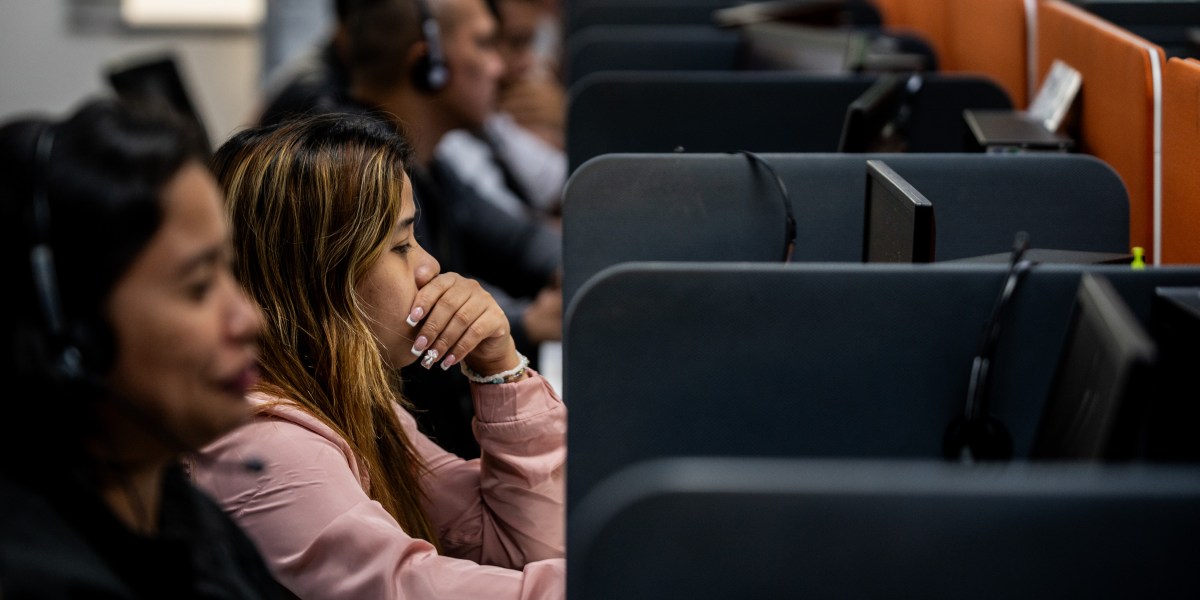
The Philippines’ services sector is a pillar of the country’s growth and a major employer, yet AI could threaten jobs in the BPO sector. Investing in training could help workers find new employment opportunities and avoid getting automated out of a job. 

“The key macroeconomic risk lies in the speed of adjustment,” says Tan Sook Rei, a senior lecturer at Singapore’s James Cook University (JCU). “Whether 2026’s opportunity translates into durable economic gains will ultimately depend on credibility, execution, and governance.”


Source link

Continue Reading

Business

What Apple’s AI deal with Google means for the two tech giants, and for OpenAI

Published

on


Apple and Google’s surprise AI partnership announcement on Monday sent shockwaves across the tech industry (and lifted Google’s market cap above $4 trillion). The two tech giants’ deal to infuse Google’s AI technology into Apple’s mobile software, including in an updated version of the Siri digital assistant, has major implications in the high-stakes battle to dominate AI and to own the platform that will define the next generation of computing.

While there are still many unanswered questions about the partnership, including the financial component and the duration of the deal, some key takeaways are already clear. Here’s why the deal is good news for Google, so-so news for Apple, and bad news for OpenAI.

The deal is further validation that Google has got its AI mojo back

When OpenAI debuted ChatGPT in November 2022, and throughout a good part of the next two years, many industry observers had their doubts about Google’s prospects in the changing landscape. The search giant at times appeared to be floundering as it raced to field models that could be as capable as OpenAI’ s ChatGPT and Anthropic’s Claude. Google endured several embarrassing product debuts, when its Bard chatbot and then its successor Gemini models got facts wrong, recommended glue as a pizza topping, and generated images of historically anachronistic Black Nazis.

But today, Google’s latest Gemini models (Gemini 3) are among the most capable on the market and gaining traction among both consumers and businesses. The company has also been attracting lots of customers to its Google Cloud, in part because of the power of its bespoke AI chips, called tensor processing units (or TPUs), which may offer cost and speed advantages over Nvidia’s graphics processing units (GPUs) for running AI models.

Apple’s statement on Monday that “after careful consideration” it had determined that Google’s AI technology “provides the most capable foundation for Apple Foundation Models” served as Gemini’s ultimate validation—particularly given that until now, OpenAI was Apple’s preferred technology provider for “Apple Intelligence” offerings. Analysts at Bank of America said the deal reinforced “Gemini’s position as a leading LLM for mobile devices” and should also help strengthen investor confidence in the durability of Google’s search distribution and long-term monetization.

Hamza Mudassir, who runs an AI agent startup and teaches strategy and policy at the University of Cambridge’s Judge School of Business, said Apple’s decision is likely about more than just Gemini’s technical capabilities. Apple does not allow partners to train on Apple user data, and Mudassir theorized that Apple may have concluded Google’s control over its ecosystem—such as owning its own cloud—could provide data privacy and intellectual property guarantees that perhaps OpenAI or Anthropic couldn’t match.

The deal also likely translates directly into revenue for Google. Although the financial details of the were not disclosed, a previous report from Bloomberg suggested Apple was paying Google about $1 billion a year for the right to use its tech.

The bigger prize for Google may be the foot-in-the-door the deal provides to Apple’s massive distribution channel: the approximately 1.5 billion iPhone users worldwide. With Gemini powering the new version of Siri, Google may get a share of any revenue those users generate through product discovery and purchases made through a Gemini-powered Siri. Eventually, it might potentially even lead to an arrangement that would see Gemini’s chatbot app pre-installed on iPhones.

For Apple, the implications of the deal are a bit more ambivalent

Apple’s Tim Cook

David Paul Morris/Bloomberg via Getty Images

The iPhone maker will obviously benefit from giving users a much more capable Siri, as well as other AI features, at an attractive cost and while guaranteeing user privacy. Dan Ives, an equity analyst who covers Apple for Wedbush, said in a note the deal provided Apple with “a stepping stone to accelerate its AI strategy into 2026 and beyond.”

But Apple’s continuing need to rely on partners—first OpenAI and now Google—to deliver these AI features is a worrisome sign, suggesting that Apple, a champion of vertical integration, is still struggling to build its own LLM.

It’s a problem that has dogged the company since the beginning of the generative AI era: For months last year several Apple Intelligence features were delayed, and the long-awaited debut of an updated Siri has been pushed back numerous times. These delays have taken a toll on Apple’s reputation as a tech leader and angered customers, some of whom filed a class action lawsuit against the company after the AI features promoted in ads for the iPhone 16 weren’t initially available on the device.

When Apple CEO Tim Cook promised an updated version of Siri would be released in 2026, many assumed it would be powered by Apple’s own AI models. But apparently those models are not yet ready for prime time and the new Siri will be powered by Google instead.

Daniel Newman, an analyst at the Futurum Group, said that 2026 is a “make-or-break year” for Apple. “We have long said the company has the user base and distribution that allows it to be more patient in chasing new trends like AI, but this is a critical year for Apple,” Newman said.

Cook has shaken up the ranks, installing a new head of AI who previously worked at Google on Gemini. And, if the delays turn out to be related to Apple’s specific requirements around things like privacy, it may ultimately prove to have been worth the wait. Ideally, Apple would want an AI model that matches the capabilities of those from OpenAI, Anthropic, and Google but which is compact enough to run entirely on an iPhone, so that user data does not have to be transmitted to the cloud. It’s possible, said Mudassir, that Apple is grappling with technical limitations involving the amount of power these models consume and how much heat they generate. Partnering with Google buys Apple time to make breakthroughs in compression and architecture while also getting Wall Street “off its back,” he said.

Apple defenders note that the company is rarely a first mover in new technology—it was not the first to create an MP3 player, a smartphone, wireless earphones, or a smart watch, yet it came from behind to dominate many of those product categories with a combination of design innovation and savvy marketing. And Apple has a history of learning from partners for key technology, such as chips, before ultimately bringing these efforts in-house.

Or, in the case of internet search, Apple simply partnered with Google for the long-term, using the Google engine to handle search queries in its Safari browser. The fact that Apple never developed its own search engine has not hurt its growth. Could the same principle hold true for AI?

But the Apple-Google tie up is almost certainly bad news for OpenAI
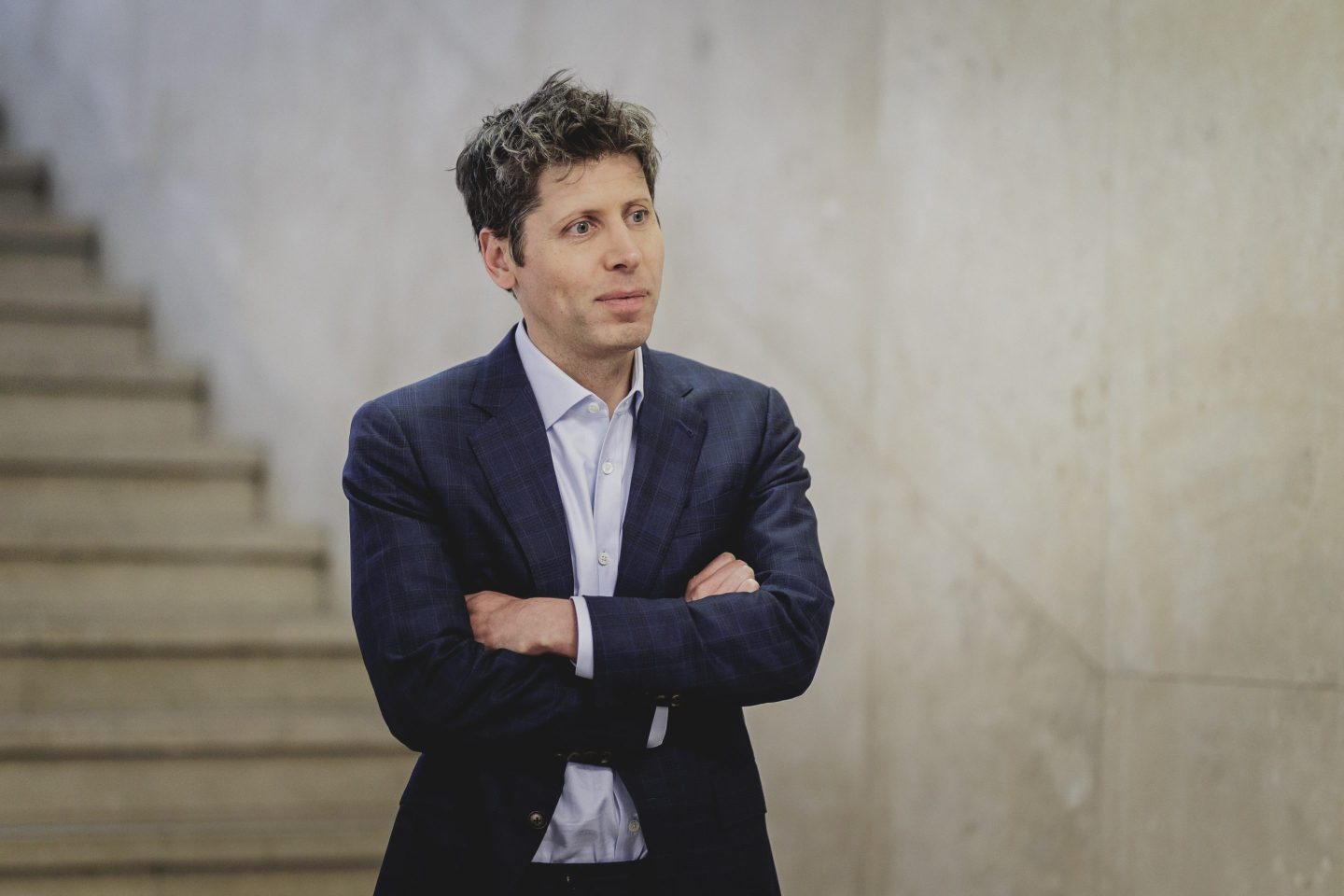
OpenAI CEO Sam Altman

Florian Gaertner/Photothek via Getty Images

While the Google partnership is not exclusive, meaning that Apple may continue to rely on OpenAI’s models for some of its Apple Intelligence features and OpenAI still has a chance to prove its models’ worth to Cupertino, Apple’s decision to go with Google is definitely a blow. At the very least, it solidifies the narrative that Google has not only caught up with OpenAI, but has now edged past it in having the best AI models in the market.

Deprived of built-in distribution through Apple’s customer base, OpenAI may find it harder to grow its own user base. The company currently boasts more than 800 million weekly users, but recent reports suggest that the rate of usage may be slowing. OpenAI CEO Sam Altman has noted that many people currently see ChatGPT as synonymous with AI. But that perception could fray if Apple users find delight in using Gemini through Siri and come to see Gemini as the better model.
.
Altman told reporters last month that he sees Apple as his company’s primary long-term rival. OpenAI is in the process of developing a new kind of AI device, with help from Apple’s former chief designer Jony Ive, that Altman hopes will rival the phone as the primary way consumers interface with AI assistants. That device may debut this year. As long as Apple was dependent on ChatGPT to power Siri, OpenAI had a good view into the capabilities its new device would be competing against. OpenAI is unlikely to have as much insight into Apple’s AI capabilities going forward, which may make it harder for the upstart to position its new device as an iPhone killer.

OpenAI has to hope its new device is a hit that may enable it to cement users into a closed ecosystem, not dissimilar to the one Apple has built around its hardware device and iOS software. This “walled garden” approach is one way to keep users from switching to rival products when they offer broadly similar capabilities. OpenAI will also have to hope its AI researchers achieve breakthroughs that give it a more decisive and long-lasting edge over Google. That might convince Apple to rely more heavily on OpenAI again in the future. Or, it could obviate the need for OpenAI to have distribution on Apple’s devices at all.



Source link

Continue Reading

Trending

Copyright © Miami Select.